
A pawnbroker is a business that lends money to people in exchange for personal items of value, known as collateral. These items can be anything from jewelry to electronics.
Pawnbrokers typically operate in a storefront setting and are licensed to conduct business. They often display a sign indicating their business hours and the types of items they accept as collateral.
To get a loan from a pawnbroker, you'll need to bring in an item of value and agree on a loan amount and interest rate. The pawnbroker will then hold onto the item until you repay the loan, plus interest, or a specified period of time passes.
The loan amount is usually a fraction of the item's total value, and the interest rate can be steep. For example, if you pawn a $100 item, you might get a loan of $50, with a 20% interest rate.
On a similar theme: Is There a Limit for Private Student Loan Amount
History
The history of pawnbroking dates back to ancient China about 3,000 years ago. It was a way for peasants to get short-term credit from pawnbrokers working independently.

Pawnbroking also existed in ancient Greece and Rome, with the Roman jurisprudence influencing contemporary Western law on the subject. The Roman Empire spread its culture, taking pawnbroking with it.
Crusaders in France brokered their land holdings to monasteries and diocese to raise funds for their wars. This was a type of collateralized loan, where the Church would receive crop returns in exchange.
In 1338, King Edward III pawned his jewels to raise money for his war with France, and King Henry V did the same in 1415. This shows that even royalty used pawnbroking to raise funds.
The Monte di Pietà movement, founded by Barnaba Manassei in 1450, provided financial assistance in the form of no-interest loans secured with pawned items. It spread through Italy and Europe, and was later adopted in New Spain by Pedro Romero de Terreros.
Additional reading: Student Loans in France
How Pawnshops Work
Pawnshops work by accepting items as collateral for loans, with the most common items being jewelry, electronics, collectibles, and tools. They also accept vehicles as security for loans, known as vehicle pawning or auto pawning.
The pawning process begins when a customer brings an item into a pawn shop, where the pawnbroker assumes the risk that the item might have been stolen. However, many jurisdictions require pawnbrokers to establish positive identification of the seller and hold items for a period of time to allow for tracking of stolen goods.
Pawnbrokers assess items for their condition and marketability by testing them and examining them for flaws, scratches, or other damage. They also consider the supply and demand for the item in the community or region.
To determine the value of an item, pawnbrokers use guidebooks, catalogs, Internet search engines, and their own experience. Some pawnbrokers are trained in the identification of gems, or employ a specialist to assess jewelry.
Pawnshops often set up their own screening criteria to avoid buying stolen property, and may give a list of newly pawned items to police to help track stolen goods.
Explore further: Is This Loan Secured by a Property You Own
Operations and Regulations
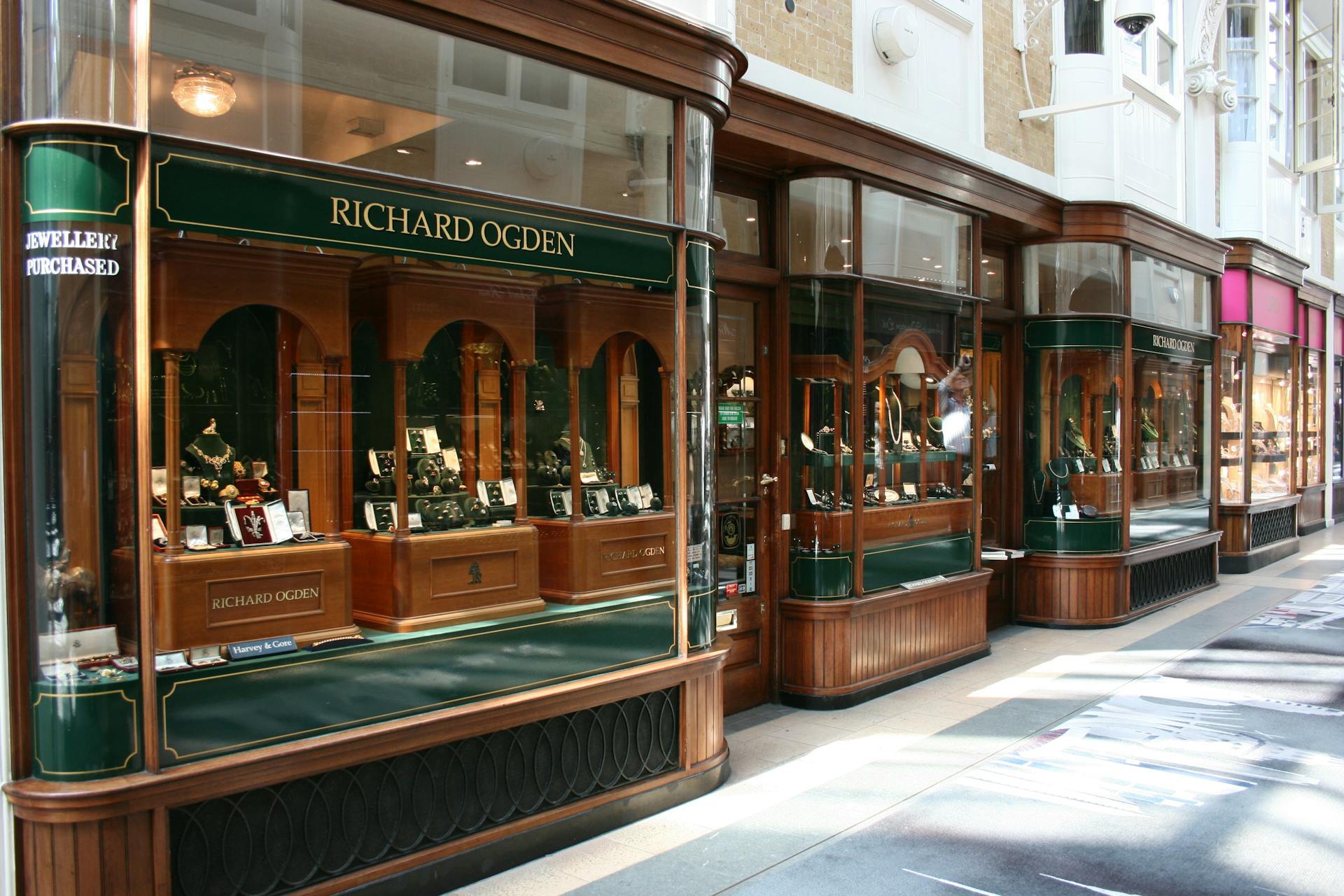
Pawnbrokers are licensed and regulated to ensure they operate fairly and transparently. They must adhere to strict guidelines, including maintaining accurate records of transactions.
In the United States, pawnbrokers are regulated by the Truth in Lending Act, which requires them to disclose certain information to customers, such as the interest rate and fees associated with a loan. This law protects consumers from unfair lending practices.
To obtain a pawnbroker license, individuals must meet specific requirements, including passing a background check and completing a training program. This ensures that pawnbrokers have the necessary knowledge and skills to operate a business.
On a similar theme: Pawnbrokers in Hong Kong
Auxiliary Operations
Pawnshops often engage in auxiliary operations beyond their core lending business. These can include selling brand-new retail items that are in demand in the neighborhood of the store.
Some pawnshops may sell musical instruments or firearms, depending on their location.
Pawnshops also trade used items, as long as the transaction turns a profit for them. This can include buying items outright, in which case the money is a straight payment for the item.
Pawnshops may offer layaway plans on sales, subject to conditions such as a down payment, regular payments, and forfeiture of previously paid amounts if the item is not paid off.
Pawnshops also provide financial services, including fee-based check cashing and payday loans.
Permits
Permits are a crucial aspect of any construction project, and it's essential to understand the different types and requirements.
To start, you'll need to obtain a building permit, which is usually issued by the local government or building department. This permit is required for any construction project that involves building, altering, or demolishing a structure.
A zoning permit is also necessary if your project involves changing the use of a property or building. For example, if you're converting a residential property into a commercial space, you'll need to obtain a zoning permit.
Environmental permits are required for projects that involve working with or near sensitive ecosystems. This includes projects that involve wetlands, waterways, or other environmentally sensitive areas.
Special permits, such as a grading permit, may be required for projects that involve significant changes to the land. This includes projects that involve clearing or grading large areas of land.
It's worth noting that permits can be complex and time-consuming to obtain, so be sure to plan ahead and allow plenty of time for the permitting process.
Additional reading: First Time Homeowner Loan Virigina
Industry Insights
The pawnbroking industry is a significant player in the US economy. Over 11,000 pawnbrokers operate in the country.
These businesses serve a large customer base, with 30 million people using their services every year.
The industry's revenue is substantial, reaching $14.5 billion annually.
For more insights, see: Mortgage Lending Industry
Upscale Pawnshops
Upscale pawnshops have a more refined reputation than their traditional counterparts, often referred to as "loan offices" due to the negative historical connotations associated with the term "pawn shop".
These upscale pawnshops have been around since the early 20th century and cater to a higher-end clientele, including professionals like doctors, lawyers, and bankers.
Some upscale pawnshops are even located in the upper floors of office buildings, further blurring the lines between traditional pawnshops and other financial institutions.
Upscale pawnshops often accept higher-value merchandise in exchange for short-term loans, such as wine collections, jewelry, large diamonds, fine art, cars, and unique memorabilia.
These types of loans are often sought by individuals dealing with business revenue shortfalls and other expensive fiscal issues.
Upscale pawnshops have also gained popularity through their feature on reality television shows.
A fresh viewpoint: Amortising Term Loan
Industry
In the United States, there are over 11,000 pawnbrokers. This is a significant number, considering the industry's revenue is $14.5 billion.
The US industry serves 30 million customers, which is a substantial portion of the population. I've seen people visit pawnshops for various reasons, and it's clear that they're a vital part of many communities.
The number of pawnshops in the US has grown rapidly, with a significant increase from 6,900 in 1988 to 13,000 by 1998. This rapid growth can be attributed to the rise in poverty levels during that time.
In Asia
In Asia, pawnbroking is a thriving industry with unique characteristics in each country. In Hong Kong, the traditional practice involves a counter that's typically higher than average for security, and customers can only offer belongings by holding up their hands.
The symbol of a pawn shop in Hong Kong is a bat holding a coin, representing fortune and benefits. In Japan, the symbol is a circled number seven, as "shichi" sounds similar to the word for "pawn".
In Malaysia, the majority of pawnbrokers are Malaysian Chinese, who make up 25% of the population. A valid and licensed pawnshop in Malaysia must declare itself as a "pajak gadai" or a pawn shop, and meet specific requirements such as bulletproof counters and CCTV.
In the Philippines, pawnshops are privately owned businesses regulated by the Bangko Sentral ng Pilipinas. They traditionally have Spanish names starting with "Agencia de Empeños", and offer various financial services such as remittance and microfinancing.
In India, the Marwari Jain community pioneered the pawnbroking business, and pawn shops are often run as part of jewelry stores. Agents called "saudagar" work with needy people to motivate them to become involved in the business.
In Indonesia, there is a state-owned company called Pegadaian that provides a range of pawnbroking services, including Sharia-compliant options. The company accepts high-value items as collateral and offers additional services like safe deposit boxes and gold trading.
Here's a brief overview of pawnbroking in some Asian countries:
Pawnbroker
A pawnbroker is a person who lends money at interest on the security of an article pawned.
The role of a pawnbroker involves lending money to individuals who need immediate cash, but may not have the financial means to access it through traditional means.
Pawnbroking is the practice of lending money at interest on the security of an article pawned, which can include items such as jewelry, electronics, or other valuable possessions.
A pawnbroker will typically assess the value of the item being pawned and offer a loan based on that value, with interest added to the amount borrowed.
The interest rate charged by a pawnbroker can vary depending on the item being pawned, the amount borrowed, and the length of time the loan is outstanding.
Readers also liked: Conventional Loan Max Loan Amount
Featured Images: pexels.com