
Patenting your idea can be a game-changer for inventors and entrepreneurs, but it's not without its challenges.
Protecting your intellectual property can give you a competitive edge in the market, as it prevents others from copying or selling your idea without permission.
The cost of patenting can be a significant barrier for many inventors, with fees ranging from $5,000 to $20,000 or more, depending on the complexity of the invention and the jurisdiction.
However, the benefits of patenting can far outweigh the costs, as it allows you to control the use and distribution of your invention and potentially earn significant royalties.
A patent can also give you the freedom to license your invention to other companies, which can be a lucrative source of income.
What is a Patent
A patent is a type of personal property that can be sold, assigned, or transferred.
To qualify for a patent, an invention must be new, useful, and not obvious. This includes a new process, act, or method, as well as a new use of a known process, machine, or composition of matter or material.
Design patents are issued for a term of 14 years, while basic or plant patents (excluding design patents) are issued for a term of 20 years from the date of application.
An inventor can file a provisional patent application, which requires less documentation and lower fees than a regular application. This allows the inventor to claim "patent pending" status for the invention.
If a patented invention or discovery is made while working for a company, and on company time with company facilities and materials, the employer receives an irrevocable, nonassignable, nonexclusive, royalty-free license to use it.
Patent Process
The patent process can be complex, but I'll break it down for you. To start, you'll need to file an application with the USPTO, which must include a specification, claims, an oath or declaration, and fees.
The USPTO will then review your application against prior art, and the patent examiner may accept, reject, or object to your application. This is a crucial step, as it determines the fate of your patent.
Appeals from rejections can be made to the Patent Trial and Appeal Board, and ultimately to the Federal Circuit, if necessary.
Determining if Your Invention Should Be Protected
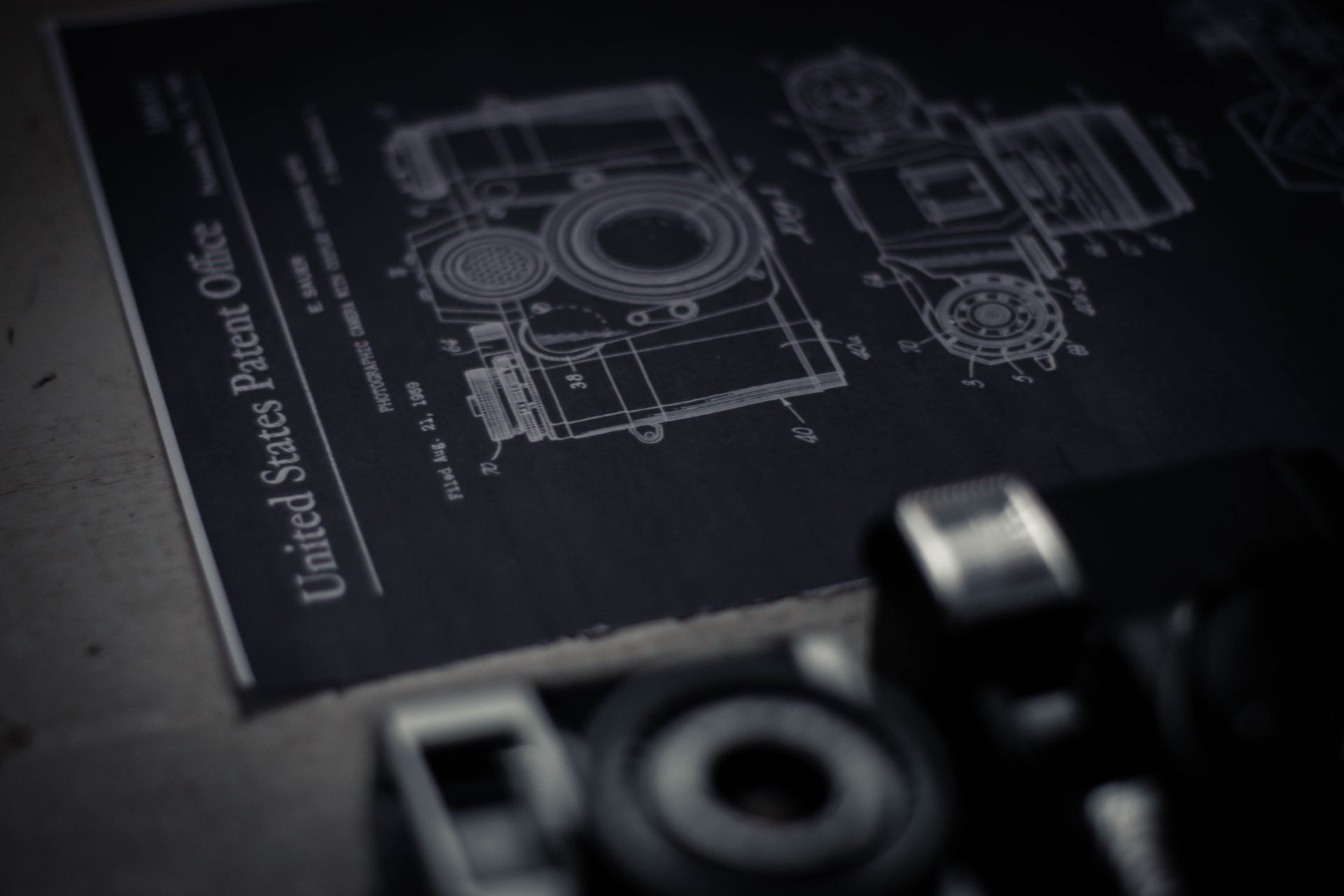
To determine if your invention should be protected, start by asking yourself three key questions: "Is my invention novel?", "Is my invention non-obvious?", and "Is my invention useful?".
The answer to the first question can be found by conducting a U.S. patent search and reviewing prior art to see if your invention meets the requirement of something new and unique.
Inventions can certainly build upon what's been created before, but there must be something new and unique about it, such as a function that goes beyond what current inventions can do, to qualify for a patent.
To determine if your invention is non-obvious, consider whether it's something that one might simply stumble upon without effort. If it's not, then it likely meets the non-obviousness requirement.
The usefulness of an invention is also crucial, as it must be useful to earn patent protection.
You can't patent human beings or the biological process for their generation, artistic creations, mathematical models, or plans, schemes or other purely mental processes.
Here are the five principal requirements for patentability:
Non-National Treatment in Application
Non-national treatment in the application procedure is governed by international agreements.
The Paris Convention for the Protection of Industrial Property prohibits non-national treatments in national patent offices.
This treaty ensures that juristic and natural persons who are nationals or domiciled in a state party to the Convention enjoy the same advantages in other countries as nationals.
The TRIPS Agreement explicitly prohibits any discrimination in patent rights, stating that patents shall be available and enjoyable without discrimination as to the place of invention or whether products are imported or locally produced.
The patent system internalizes externality by granting the inventor a property right over their invention.
Governing Laws
The patent process is governed by specific laws to ensure a fair and efficient system. The United States Patent and Trademark Office (USPTO) is responsible for administering patent laws.
The USPTO is headed by the Under Secretary of Commerce for Intellectual Property and Director of the USPTO, who is appointed by the President and confirmed by the Senate. This position oversees the entire patent process.

The patent process is governed by the Leahy-Smith America Invents Act (AIA), which was passed in 2011 and made significant changes to patent law. The AIA introduced a first-to-file system, where the first inventor to file a patent application is granted the patent.
Patent applications must include a detailed description of the invention, including drawings and diagrams to help illustrate the concept.
Patent Benefits
Having a patent can be a game-changer for inventors and entrepreneurs.
You'll have exclusive commercial rights to your invention, giving you a monopoly in the market. This means you're the only one who can manufacture, sell, and distribute your invention without infringing on someone else's patent.
Freedom to licence someone else to manufacture your invention on agreed terms is another key benefit. This removes the risk that they could steal your idea and sell it as their own.
The right to take legal action against others who manufacture, use, and/or sell your invention without your permission is also a major advantage. This gives you a powerful tool to protect your intellectual property and prevent others from profiting from your hard work.
If you experience issues with a registered patent attorney, you can lodge a complaint with the Trans-Tasman IP Attorneys Board.
Patent Challenges

Patent challenges can be a complex and time-consuming process.
In most jurisdictions, third parties can challenge the validity of a patent at the national patent office through opposition proceedings.
These proceedings can also be taken to court, where the challenging party tries to prove that the patent should never have been granted.
There are several grounds for challenges, including that the claimed subject matter is not patentable, was not new, or was obvious at the time of application.
Sensitive Military Technologies
If you're working on a patent application related to military technologies, be aware that it may require a security assessment.
The Commissioner of Patents can prohibit the publishing of certain patent applications in the interests of national security.
Military technologies that may require further assessment include military weapons, missiles, drones, vehicles, or aircraft.
These are examples of sensitive technologies that may need special handling.
Military communication, detection, or surveillance systems are also subject to security assessment.

Nuclear activities, including the production of nuclear weapons or explosive devices, require careful consideration.
Nuclear reactor components, including Nuclear Fusion research, may also require a security assessment.
Enrichment of nuclear material, reprocessing of irradiated nuclear material, or the production of heavy water are examples of sensitive nuclear technologies.
If your application deals with any of these technologies, contact the Commissioner of Patents before filing your application.
You can contact them for further information on the filing process and how to securely treat potentially classified information and applications.
Here are some examples of sensitive military technologies that require a security assessment:
- Military weapons, missiles, drones, vehicles, or aircraft
- Military communication, detection, or surveillance systems
- Nuclear activities including the production of nuclear weapons or explosive devices
- Nuclear reactor components including Nuclear Fusion research
- Enrichment of nuclear material, reprocessing of irradiated nuclear material or the production of heavy water
Challenges
Challenges can arise in the patent process, and it's essential to understand how they work.
In most jurisdictions, third parties can challenge the validity of a patent through opposition proceedings at the national patent office.
There are several grounds for challenging a patent, including the claimed subject matter not being patentable at all.
The challenging party must prove that the patent should never have been granted, which can be a complex and time-consuming process.
The grounds for challenge include the claimed subject matter not being new or being obvious to a person skilled in the art at the time of filing.
Fraud committed during prosecution can also be a reason for challenging a patent, such as misrepresenting inventors or discovery dates.
Infringement
Patent infringement occurs when a third party makes, uses, or sells a patented invention without authorization from the patentee.
Infringement includes literal infringement, which is performing a prohibited act that is protected against by the patent. This can be a product that is basically the same as the patented invention with just a few modifications.
The Doctrine of Equivalents protects against someone creating a product that is basically the same as the patented invention with just a few modifications. This doctrine is used to prevent someone from creating a product that is substantially similar to the patented invention.
Contributory infringement occurs when a company helps another company create a patented product or sells a patented product that was created by another company. This can be a way for a company to participate in another's infringement.
Inducement to infringement occurs when a party induces or assists another party in violating a patent. An example of this is a company paying another party to create a patented product to reduce their competitor's market share.
Gray market goods can be a problem for patent owners, especially if the country where the goods are being sold has a policy of international exhaustion. This means that the patent owner may not be able to enforce their patent rights in that country even if they have a patent for the product.
Patent History and Statistics
The history of patents dates back to 1474 when the first patent was granted to Johannes Gutenberg, allowing him to print books.
The first patent law was enacted in Venice, Italy in 1474, after Gutenberg's invention.
Patent applications have been on the rise, with over 3.2 million patent applications filed worldwide in 2020 alone.
The United States Patent and Trademark Office (USPTO) is one of the largest patent offices in the world, receiving over 600,000 patent applications annually.
The average patent application takes around 18-24 months to process, from initial filing to grant.
Patent Costs and Litigation
Patent costs can add up quickly, with the European Patent Office estimating an average cost of around €32,000 to obtain and maintain a European patent for a 10-year term.
The cost of obtaining a patent in the US was estimated to be between $10,000 and $30,000 in 2000. Patent litigation can increase costs significantly, with legal costs reaching up to a million dollars per case, not including associated business costs.
Annual fees for pending applications are charged by the European Patent Office, and in some countries, such as Russia, fees are due every year with minimal change. In the US, payments are due every 4th year after the grant date, with the amount due increasing each time.
A 2023 study found that the full term maintenance rate of issued US patents has been fairly constant at 40-50% since 1992. Full term patents have more issued claims and receive on average more citations than earlier expired patents.
For more insights, see: Business Patent Cost
Here are some examples of patent maintenance fees in different countries:
Infringement suits can be defended on invalidity grounds or by showing no infringement, and venue is limited to the defendant's state of incorporation or a district where it has a regular place of business and committed acts of infringement.
Patent Types and Ownership
Patent types and ownership are crucial aspects of the patent process. In most countries, including the US, the inventor(s) are the only ones who can initially apply for a patent, although it can be assigned to a corporate entity later.
The type of patent you apply for depends on the nature of your invention. There are three main types: utility, design, and plant patents. Utility patents protect new and useful processes, machines, and compositions of matter, while design patents protect the unique look of an article of manufacture.
Utility patents are the most common type and can be granted for any new and useful process, machine, article of manufacture, or composition of matter. Design patents, on the other hand, protect the ornamental design of an article of manufacture, like the distinctive look of the Coca-Cola bottle.
Plant patents can be granted for any new and distinct variety of plant. The ownership of a patent can be transferred to a corporate entity or other parties, which can increase the liquidity of the patent as property.
Ownership
In most countries, both individuals and corporate entities can apply for a patent, but the rules vary.
In the United States, only the inventor(s) can apply for a patent, although they may assign it to a corporate entity later. This is different from most European countries, where the employer may automatically own the invention if it was made during work hours or as part of their job duties.
Applications by artificial intelligence systems have been rejected in the US, UK, and European Patent Office because they're not considered natural persons. This means that AI systems can't own patents, at least not yet.
The inventors, their successors, or assignees become the patent owners when it's granted. If multiple people own a patent, the laws of the country and any agreements between them may affect how they can use and exploit the patent.
Here are some ways patent ownership can be affected:
- Each owner may have the right to license or assign their rights to another person.
- Some countries prohibit such actions without the permission of the other owner(s).
The ability to assign ownership rights makes patents more liquid as property. Inventors can get a patent and then sell it to someone else, who then owns the patent and has the same rights as the original inventor.
Types of
There are several types of patents that can protect different aspects of an invention. Utility patents protect new and useful processes, machines, manufactures, or compositions of matter for twenty years from filing, subject to maintenance fees.
Design patents, on the other hand, protect new, original, and ornamental designs for articles of manufacture. They last fifteen years from issuance for applications filed on or after May 13, 2015.
Plant patents protect new and distinct asexually reproduced plants, lasting twenty years from filing. This type of patent can be useful for inventors who develop new varieties of plants.
A utility patent can be granted for any new and useful process, machine, article of manufacture, or composition of matter, or any new and useful improvement thereof. This type of patent is often associated with inventions that have a functional purpose.
Here are the main types of patents:
- Utility patents
- Design patents
- Plant patents
- Reissue patents
Reissue patents correct errors in already issued patents. This type of patent can be useful for inventors who need to correct mistakes in their original patent application.
Patent Application and Approval
Filing a patent application with the USPTO requires including a specification, claims, an oath or declaration, and fees.
The patent examiner reviews the application against prior art, and may accept, reject, or object. This is a crucial step in the patent process.
International protection can be sought under the Patent Cooperation Treaty, which is governed by sections 351-376 of the US Code.
Appeals from rejections may proceed to the Patent Trial and Appeal Board and ultimately to the Federal Circuit, as outlined in sections 134 and 141 of the US Code.
Patent Criticism and Initiatives
Patent criticism and initiatives have been ongoing for centuries, with many experts arguing that patents can hinder innovation and waste resources. Critical perspectives emerged in the nineteenth century, based on the principles of free trade, and have continued to evolve to this day.
Many critics argue that patents block innovation and waste resources that could be used to improve technology. For example, low-quality patents can hamper innovation and commercialization, while blocking fundamental knowledge with patents creates a "tragedy of the anticommons" that prevents future innovations.
Patent critics include prominent economists and academics, such as Joseph Stiglitz, who have proposed alternative solutions to patents, like prizes to advance solutions to global problems. Some have also argued for the abolition of patents entirely, citing the lack of clear evidence that patents provide significant incentives to inventive activity.
Several initiatives have been launched to challenge patents that are deemed illegitimate or suppress innovation. These include the Patent Busting Project, an Electronic Frontier Foundation initiative that challenges patents that limit online expression, and Ask Patents, a forum for crowdsourcing prior art to invalidate patents.
Gender Gap
The gender gap in patents is a significant issue that has been present for centuries. In England, the first patent granted to a woman was to Mrs. Amye Everard Ball in 1637 for a tincture of saffron.
Historically, married women in the US were unable to own property in their own name and were prohibited from rights to their own income, including income from their inventions. This meant they couldn't obtain patents.
The historical gender gap has lessened over time, but disparity still exists. In the UK, only 8% of inventors were female as of 2015.
Internal bias within the patent system and underrepresentation in STEM sectors contribute to the gender gap. Women are also underrepresented in traditionally "patent-intensive" sectors.
The fact that women were historically precluded from obtaining patents has had a lasting impact on the number of female inventors.
Criticism
Patent criticism has been ongoing for centuries, with many experts questioning the effectiveness and fairness of the patent system. Critical perspectives emerged in the 19th century, arguing that patents block innovation and waste resources.
Some of the criticisms include low-quality patents that hamper innovation and commercialization, blocking the use of fundamental knowledge with patents, and weakening the public domain and innovation that comes from it. These criticisms have been echoed in contemporary times, with many arguing that patents slow down innovation and hinder progress.
Patent thickets, or overlapping sets of patent rights, have been particularly criticized for slowing down innovation. Broad patents have also been seen as a hindrance to companies commercializing products and innovation. In some cases, these broad patents are held by non-practicing entities, also known as patent trolls, which do not contribute to innovation.
The costs of dealing with patent trolls can be staggering. In 2011, United States business entities incurred $29 billion in direct costs because of patent trolls. Lawsuits brought by patent assertion companies made up 61% of all patent cases in 2012.
Some experts have argued that patents apply a "one size fits all" model to industries with differing needs, which is especially unproductive for the software industry. Rent-seeking by owners of pharmaceutical patents has also been a focus of criticism, as the high prices they enable puts life-saving drugs out of reach of many people.
The effectiveness of patents in providing incentives for innovation has also been questioned. As Boldrin and Levine conclude, "Our preferred policy solution is to abolish patents entirely and to find other legislative instruments, less open to lobbying and rent seeking, to foster innovation when there is clear evidence that laissez-faire undersupplies it."
Here are some of the key criticisms of patents:
- Patents block innovation and waste resources.
- Low-quality patents hamper innovation and commercialization.
- Patents weaken the public domain and innovation that comes from it.
- Patent thickets slow down innovation.
- Broad patents hinder companies commercializing products and innovation.
- Rent-seeking by owners of pharmaceutical patents puts life-saving drugs out of reach of many people.
Anti Biopiracy Dispositions
The WIPO's Intergovernmental Committee on Intellectual Property and Genetic Resources, Traditional Knowledge and Folklore has made significant progress after two decades of drafting. It adopted the WIPO Treaty on Intellectual Property, Genetic Resources and Associated Traditional Knowledge (GRATK Treaty) in May 2024.
The GRATK Treaty mandates patent disclosure requirements for patents based on genetic resources and associated traditional knowledge to prevent them from being granted. This is a major step towards protecting indigenous communities' rights.
The treaty complements the Nagoya Protocol to the Convention on Biological Diversity and its system of Access and Benefit-Sharing. This system ensures that countries and organizations access genetic resources in a responsible and sustainable way.
Representatives of Indigenous peoples view the GRATK Treaty as a "first step towards guaranteeing just and transparent access to these resources." This shows that the treaty has the potential to make a positive impact on indigenous communities.
Patent Myths and Facts
Patent costs are often misunderstood. A provisional application costs $100, and filing a standard patent starts at $400, with annual fees to keep your patent active. If you use a patent attorney, it will cost more, typically between $4,000 and $7,000 to file a provisional application, including legal fees.
Filing a standard patent will also cost a similar amount. It's essential to ask your attorney for a cost estimate upfront to avoid surprises. You can also consider doing some research and searching online to get a better understanding of the costs involved.
If you're worried about big corporations stealing your idea, keep in mind that having a patent will deter many businesses from trying to copy it in the first place. Very few patent infringement matters ever get to court, with most reaching commercial settlement beforehand. Having a patent will also ensure you get a seat at the negotiating table if a business does infringe on your idea.
What Is Not Patentable
When it comes to what can't be patented, it's essential to know the limits. You can't patent human beings or the biological process for their generation, as confirmed by the Supreme Court in various cases, including Diamond v. Chakrabarty.
Patents don't cover laws of nature, physical phenomena, or abstract ideas, which are excluded under 35 U.S.C. § 101. This means that mathematical models, for instance, can't be patented.
Artistic creations, such as music, literature, or visual art, are also not eligible for patent protection. This is because they fall under the category of "plans, schemes or other purely mental processes", which can't be patented.
You can't patent plans, schemes, or other purely mental processes. This includes business methods, which were initially allowed as processes in State Street Bank & Trust Co. v. Signature Financial Group, but later limited in subsequent cases.
Here's a summary of what can't be patented:
- Human beings or the biological process for their generation
- Artistic creations
- Mathematical models
- Plans, schemes or other purely mental processes
Common Myths About
Let's set the record straight about patents. Here are some common myths that just aren't true.
It doesn't cost an arm and a leg to get a patent. A provisional application can be filed for as little as $100, and the cost to file a standard patent starts at $400. Other fees apply over time, including annual fees to keep your patent active.
Most patent applications can be filed for between $4,000 and $7,000, including legal fees. It's a good idea to ask your attorney for a cost estimate upfront.
If you're worried that big corporations will steal your idea, remember that having a patent will deter many businesses from trying to copy it in the first place. Very few patent infringement matters ever get to court, with most reaching commercial settlement beforehand.
You don't need to worry about a "patent police" enforcing your rights. It's your responsibility to ensure that your IP isn't infringed. Keep an eye on competitors' products and do an occasional search online to see if anyone has copied your invention.
Here are some key facts to keep in mind about patent infringement:
- If your invention is protected by a patent, it will deter many businesses from trying to copy it in the first place.
- Very few patent infringement matters ever get to court, with most reaching commercial settlement beforehand.
- If a business does infringe on your idea, having a patent will ensure you get a seat at the negotiating table.
Featured Images: pexels.com