
The OTC market and Nasdaq are two different platforms for buying and selling securities, but they have distinct characteristics that set them apart. The OTC market is a decentralized network of brokers and dealers who trade securities that are not listed on a major exchange.
The OTC market is home to many small and mid-sized companies, often referred to as "penny stocks." These companies may not meet the listing requirements of major exchanges like the Nasdaq.
Trading on the OTC market can be less liquid than trading on the Nasdaq, meaning that it may take longer to buy or sell a security. However, the OTC market also offers a wider range of investment opportunities for small investors.
The Nasdaq, on the other hand, is a major exchange that lists many well-established companies, such as tech giants like Apple and Google. The Nasdaq is known for its high liquidity, making it easier to buy and sell securities quickly.
You might enjoy: Investors Buy Stock at the
What Is Over-the-Counter?
The OTC Market is operated by OTC Markets Group, which is also publicly traded on the OTC.
The OTC Market provides real-time quote services to traders through OTC Link.
OTC penny stocks are considered riskier than NYSE or Nasdaq stocks because they don't meet the proper asset base requirements or minimum price thresholds.
Many OTC stocks are smaller companies, but it's not a requirement – some of the world's largest companies, like Heineken and Nintendo, are also traded on the OTC.
The OTC Market allows U.S. traders to access international giants like Bayer and Roche Holding Ag, which are not listed on major exchanges.
Expand your knowledge: Who Are the Traders in Stock Exchange
Trading on OTC vs NASDAQ
Trading on OTC vs NASDAQ can be a complex decision, but understanding the key differences can help. The OTC market is a decentralized exchange, meaning trades are facilitated by a network of dealers and brokers rather than a single exchange.
This approach allows for more flexibility in trading hours and can be beneficial for companies with limited liquidity. In contrast, the NASDAQ is a centralized exchange with strict rules and regulations.
The NASDAQ is home to many high-profile companies, including tech giants like Apple and Google, which can provide a sense of security for investors. However, the OTC market offers a wider range of investment opportunities, including smaller companies and international stocks.
Take a look at this: Stock Exchange
Differences in Trading Platforms
Trading on OTC vs NASDAQ requires a deep understanding of the differences between trading platforms.
The OTC (Over-the-Counter) market is a decentralized market where trades are executed directly between two parties, often with less stringent regulations.
In contrast, NASDAQ is a centralized exchange with a strict set of rules and regulations to ensure fair and transparent trading.
OTC trading platforms often have lower fees compared to NASDAQ, which can be beneficial for smaller traders.
However, NASDAQ's centralized platform provides real-time market data and advanced trading tools that can be a significant advantage for experienced traders.
The OTC market is more suitable for trading less liquid stocks, while NASDAQ is better suited for trading highly liquid stocks.
On the other hand, NASDAQ's high liquidity can lead to higher volatility, making it riskier for traders.
OTC trading platforms usually have a wider range of stocks available for trading, including smaller companies and international stocks.
Expand your knowledge: Stock Traders Almanac
Trading on NYSE
The New York Stock Exchange (NYSE) is one of the most prestigious stock exchanges in the world.
NYSE is a traditional stock exchange where companies are listed and their shares are traded. Companies listed on the NYSE are required to meet strict financial standards and adhere to best practice corporate governance.
NYSE is considered a higher level of exchange compared to the OTC, and it's where you'll find well-established companies with strong financials. Companies listed on the NYSE are also subject to stricter regulations and oversight.
NYSE is home to many iconic companies, but it's not the only game in town.
Intriguing read: Shanghai Stock Exchange STAR Market
Regulatory Obligations and Safeguards
The OTC market is subject to the Securities and Exchange Commission's (SEC) rules and regulations, including the Securities Act of 1933 and the Securities Exchange Act of 1934.
OTC companies must comply with the SEC's disclosure requirements, which include filing periodic reports and statements with the SEC.
Companies listed on NASDAQ, on the other hand, must comply with the NASDAQ listing rules, which require them to maintain a minimum market value of shares outstanding and meet certain corporate governance standards.
NASDAQ-listed companies are also subject to the SEC's rules and regulations, including the Securities Act of 1933 and the Securities Exchange Act of 1934.
If this caught your attention, see: Icici Securities Share Price
Examining Safeguards

The Pink Sheet stocks have much less stringent reporting requirements compared to other tiers of OTC penny stocks. This lack of oversight can be a major concern for investors.
There are no financial standards or disclosure requirements for companies listed on the Pink Open Market. This means investors have limited access to critical information.
A wide spectrum of companies, including foreign companies, penny stocks, and shells, are traded on the Pink Open Market. This diversity can also bring a higher risk of fraudulent activity.
Each tier of OTC penny stocks has its own fee schedule, which can range from $5,500 to as high as $23,000 per year. This can be a significant expense for companies looking to list on the market.
See what others are reading: Open Market
Analyzing Regulatory Obligations
Regulatory obligations can be complex and time-consuming to navigate, but understanding the key requirements is essential for compliance. Regulatory bodies issue guidelines and standards that must be met.
The first step in analyzing regulatory obligations is to identify the relevant laws and regulations that apply to your organization. This may involve conducting a thorough review of existing policies and procedures.

Regulatory obligations can vary significantly depending on the industry and jurisdiction. For example, the European Union's General Data Protection Regulation (GDPR) imposes strict data protection requirements on organizations operating within its member states.
Compliance with regulatory obligations can have significant consequences for non-compliance, including fines and reputational damage. Failing to meet regulatory requirements can result in costly penalties and damage to your organization's reputation.
Regulatory bodies often provide guidelines and resources to help organizations understand and meet their obligations. These resources can be a valuable source of information and support.
Understanding the regulatory landscape is crucial for organizations operating in multiple jurisdictions. This can involve navigating complex webs of laws and regulations, as well as ensuring compliance with different standards and guidelines.
For another approach, see: Otc Market Data Package
Listing and Reputation
Meeting financial and regulatory requirements is crucial for a company to list on a major exchange. This includes meeting listing requirements for price per share, total value, corporate profits, daily or monthly trading volume, revenues, and Government reporting requirements.
A company's financial health plays a significant role in its reputation. Companies that meet these requirements are more likely to be taken seriously by investors and the public.
To be approved for listing, a company must fill out an application and provide various financial statements to verify its standards.
Readers also liked: Current Financial Market Sentiment Indicators
Listing Reputation Assessment
Listing Reputation Assessment is a crucial step in evaluating the credibility of a listing. This assessment helps determine if the listing is genuine or fake.
A reputable listing should have a consistent and accurate description, including features and amenities. This information should match what's visible in photos and videos.
A high-quality listing photo should showcase the property's best features, such as natural light and architectural details. This can help build trust with potential buyers.
A fake listing might include exaggerated or misleading information to attract more views and interest. This can lead to wasted time and resources for buyers.
Buyers should carefully review the listing description and photos to ensure they match what they're looking for. This can help avoid disappointment and frustration down the line.
The accuracy of the listing description and photos can also impact the seller's reputation. A seller who provides accurate and detailed information can build trust with potential buyers.
Here's an interesting read: Ticker Symbol S
Examining the Reach

The reach of a market is a crucial factor to consider when evaluating investment options. Market accessibility determines the availability of a particular market for potential investors.
OTC Pink offers a broad geographic reach, allowing investors to explore opportunities beyond domestic markets and diversify their portfolios. This is due to its accessibility to a vast range of companies, including international ones.
NASDAQ, on the other hand, predominantly focuses on U.S.-based companies, limiting the geographic reach for investors who are specifically interested in international investments. This is a significant consideration for investors with a global investment strategy.
The OTC Pink market is known for its minimal regulatory requirements, making it accessible to small and emerging companies that may not meet the stringent listing criteria of major exchanges like NASDAQ. This aspect offers investors the opportunity to invest in early-stage companies with potential growth prospects.
NASDAQ adheres to rigorous listing standards, ensuring that companies listed on the exchange meet specific financial and reporting requirements. This offers investors a higher level of assurance, but may limit accessibility for companies that are still in their developmental stages.
On a similar theme: Logitech International Investor Relations

NASDAQ is renowned for its higher liquidity compared to OTC Pink, enabling investors to buy and sell shares more easily. This is particularly beneficial for investors who require quick trades or wish to invest significant amounts.
The reputation and perception of a market can significantly impact its accessibility. NASDAQ's well-established reputation often attracts a larger pool of investors, including institutional investors, who may be more inclined to invest in companies listed on NASDAQ.
Financial Considerations
The OTC market and NASDAQ both have unique financial considerations that investors should be aware of.
The OTC market has lower listing fees compared to the NASDAQ, with some estimates suggesting they can be up to 90% lower.
Investors in the OTC market also need to be aware that there is no centralized exchange, which can make it more difficult to buy and sell securities.
NASDAQ, on the other hand, has higher listing fees, but also offers more liquidity and a wider range of trading options.
OTC market investors often have to deal with the added complexity of finding a market maker to provide liquidity for their security.
NASDAQ's higher listing fees can be a barrier for some companies, but the exchange offers more resources and support for its listed companies.
Mechanics of Trading
The mechanics of trading in the OTC market are a bit more complex than those in the NASDAQ.
The OTC market is a decentralized market where trades are executed through a network of brokers and dealers, allowing for more flexibility in trading hours and execution.
This flexibility comes with a higher risk of market manipulation and a lack of transparency, making it essential for traders to be cautious and do their due diligence.
In contrast, the NASDAQ is an electronic exchange that uses a matching engine to match buy and sell orders, providing a more transparent and efficient trading environment.
Analyzing Trading Volume
Trading volume can be a crucial indicator of market momentum, and it's often used in conjunction with other metrics to gauge the overall health of a market.
In general, a high trading volume can indicate a strong trend, as more investors are buying or selling a particular asset.
A low trading volume, on the other hand, can suggest a lack of interest in a particular asset, which may be a sign of a potential reversal.
In a bull market, trading volume tends to increase as more investors buy into the trend, while in a bear market, trading volume often decreases as investors sell off their assets.
As we discussed earlier, a trading range is typically defined by a high and low price range over a given period, and trading volume can help identify the strength of a trend within that range.
In the example of Apple stock, we saw how trading volume increased significantly during the bull run, indicating a strong trend.
In contrast, during the bear market, trading volume decreased, suggesting a loss of interest in the stock.
Explore further: List of Stock Market Crashes and Bear Markets
Mechanics of Dual Listing
Companies looking to dual list on a major exchange must meet certain financial and regulatory requirements, including listing requirements for price per share, total value, corporate profits, and trading volume.
To be eligible for dual listing, a company must be approved for listing by the major exchange by filling out an application and providing financial statements.
A company's stock may need to meet daily or monthly trading volume requirements to be eligible for dual listing.
There's no new initial public offering (IPO) when a stock is dual listed on a major exchange, it simply goes from being traded on the OTC market to being traded on the major exchange as well.
Dual listing requires companies to adhere to the stringent guidelines of the major exchange, including high financial standards and best practice corporate governance.
Companies that qualify for the OTCQX market, the highest level in the OTC, are considered candidates to uplist to become listed stocks.
Suggestion: Companies That Are Publicly Traded
Pros and Cons
The OTC market and NASDAQ have their own set of advantages and disadvantages.
One major con of the OTC market is the lack of transparency and regulation, which can make it difficult for investors to make informed decisions.
A significant pro of the OTC market is the ability to trade in smaller companies and less liquid stocks, which can be beneficial for investors looking to diversify their portfolios.
However, this lack of regulation also means that investors are more susceptible to scams and other fraudulent activities.
The NASDAQ, on the other hand, is a highly regulated market that provides a high level of transparency and oversight, which can give investors more confidence in their investments.
But, the NASDAQ's strict listing requirements can make it difficult for smaller companies to go public, limiting their access to capital.
Cons
Lack of liquidity is a major issue with OTC penny stocks, as many brokers and investment firms won't trade them.
This leads to light trading volumes, making it difficult to buy or sell shares quickly. As a result, investors may be stuck with their shares for an extended period.
Looser reporting requirements in OTC penny stocks create a higher risk due to unavailable information.
Should You Buy?
You should buy penny stocks if you're willing to do your research and understand the risks involved. Many top marijuana stocks are only accessible via the OTC, and some foreign-headquartered companies are dually listed in foreign markets and on the US OTC.
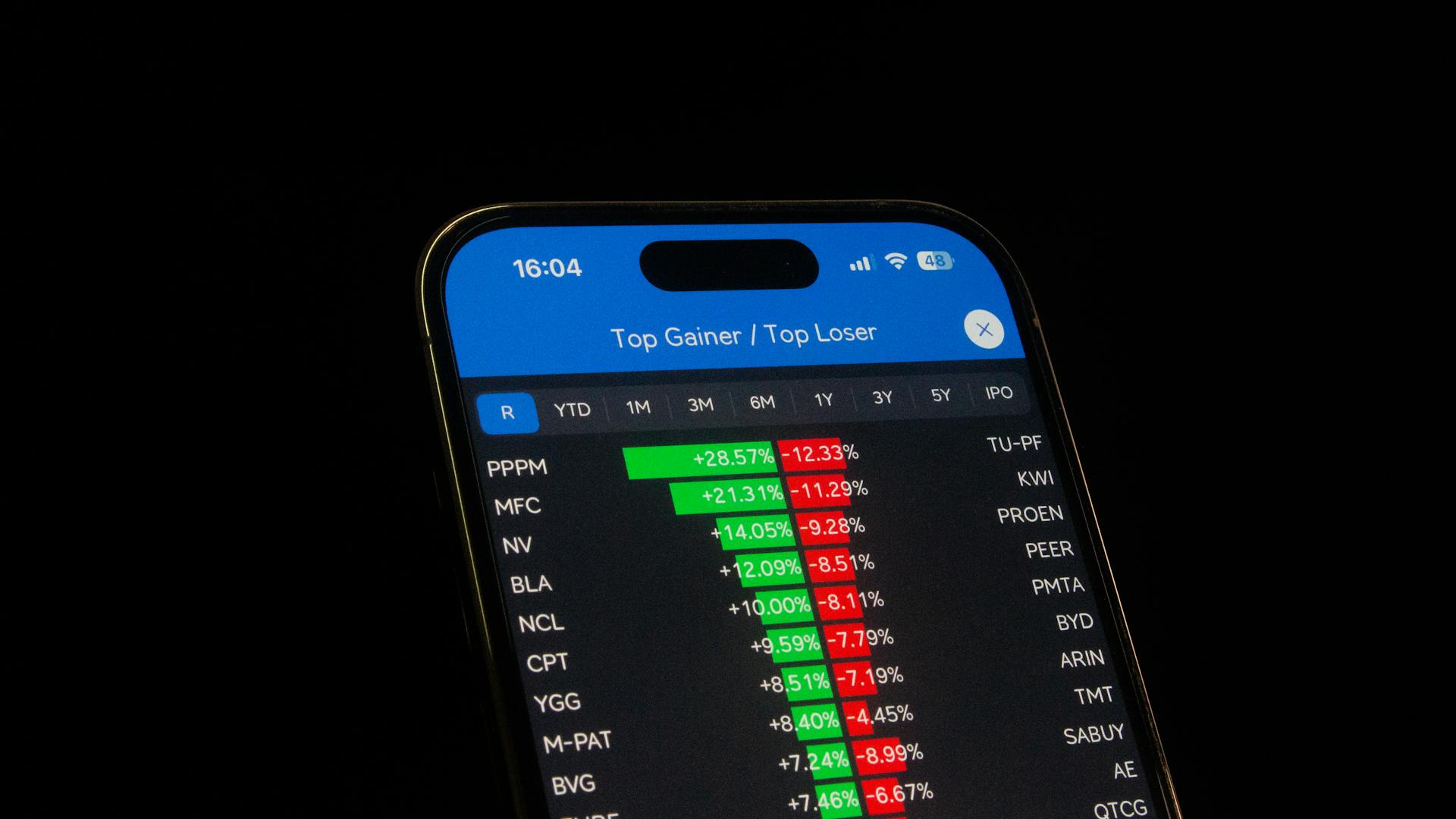
Not all penny stocks on the OTC are bad, but it's true that some companies on the OTC and Pink Sheets have been known for fraud and manipulation. However, thousands of other companies on the OTC are worth looking into.
Liquidity isn't necessarily a concern on the OTC, as some listed penny stocks don't trade more than 20,000 shares a day.
Consider reading: Bt Group Share Price Lse
Overview and Comparison
The OTC market and Nasdaq have some key differences. Securities listed on the OTC market are not listed on a major exchange like the Nasdaq, and instead trade through a broker-dealer network.
Securities on the OTC market are usually low-priced and thinly traded, whereas those on the Nasdaq are highly traded and priced higher. Companies that list on the Nasdaq must meet financial and listing requirements, which vary by exchange.
To list on the Nasdaq, companies typically need to have a minimum number of publicly-held shares held at a specific value, and they must file financial disclosures and other paperwork before they can begin listing.
Here's an interesting read: Publicly Traded Companies by Sector
Comparing the Criteria

To be listed on a major exchange, companies must meet financial and listing requirements, which vary by exchange, and have a minimum number of publicly-held shares held at a specific value.
Companies listed on major exchanges are usually highly traded and priced higher than those that trade OTC.
Securities that trade OTC, on the other hand, are usually low-priced and are thinly traded.
To be eligible for the OTCQB, companies must be current in their reporting and undergo an annual verification and management certification process.
Companies on the OTCQB must also meet a $0.01 bid test and may not be in bankruptcy.
Securities on major exchanges are required to file financial disclosures and other paperwork before they can begin listing.
Different Exchanges
American depository receipts, or ADRs, often trade on the OTC, representing stocks that trade on foreign exchanges. This is where companies like Luckin Coffee (OTC: LKNCY) ended up after being delisted from major exchanges.
Companies that go into bankruptcy proceedings often find themselves trading on the OTC, with a "Q" added to their stock symbol.
The OTC has different tiers, including OTCQX, OTCQB, and Pink Sheets. Each tier has its own set of requirements, established by OTC Markets Group.
Recommended read: Wash Trade Rule
Frequently Asked Questions
Is it risky to buy OTC stocks?
Yes, buying OTC stocks can be riskier due to limited transparency and public information, which may lead to price uncertainty. If you're considering OTC stocks, it's essential to carefully evaluate the risks and do thorough research before investing.
Featured Images: pexels.com