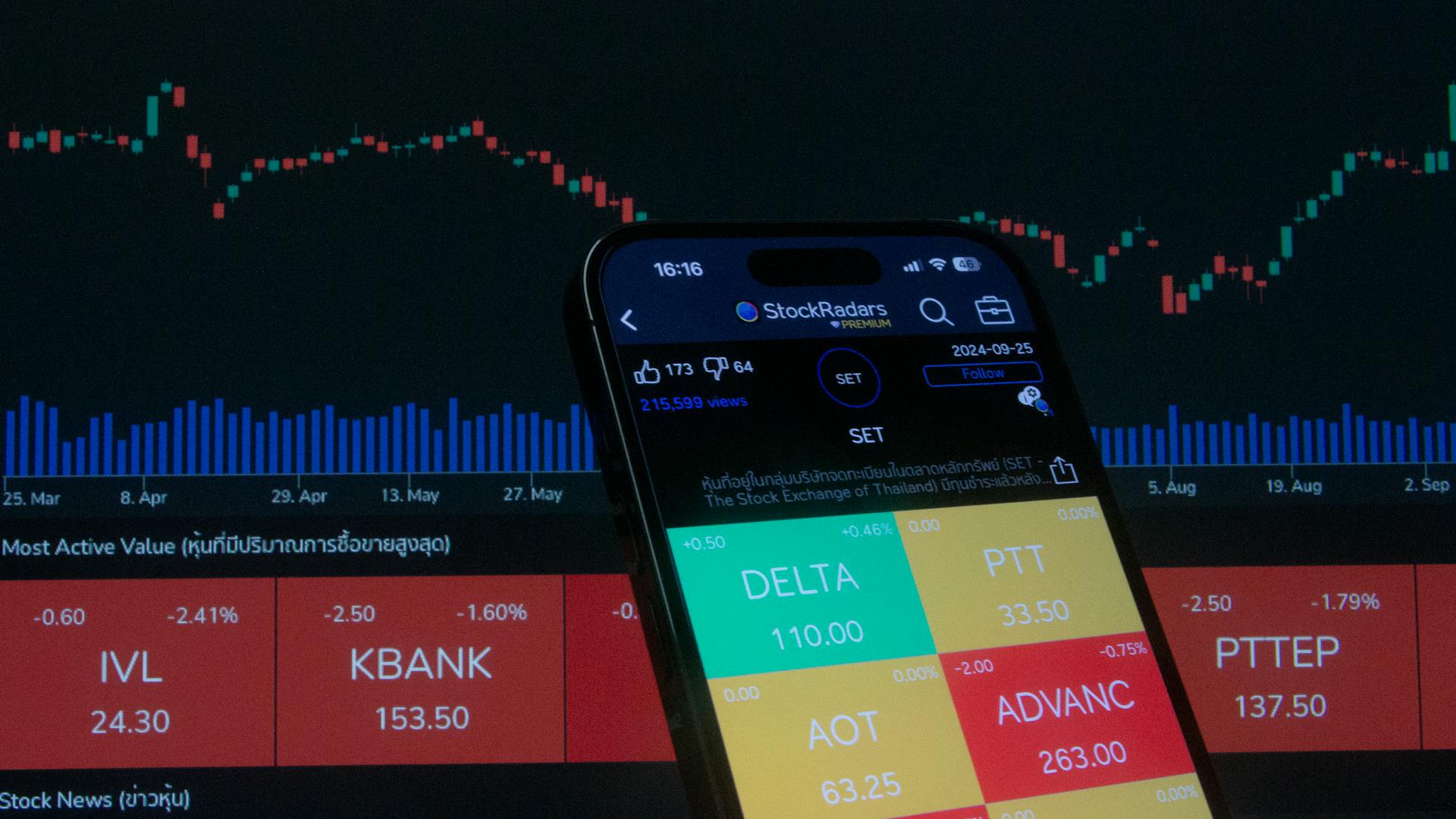
The OTC Bulletin Board (OTCBB) is a platform that allows companies to list their securities without going through the formal process of registering with the Securities and Exchange Commission (SEC).
The OTCBB is a quotation service that provides current market information for over-the-counter (OTC) securities, which are not listed on a major stock exchange.
It's like a marketplace where buyers and sellers can trade securities, but without the strict regulations of a major exchange.
The OTCBB is operated by the Financial Industry Regulatory Authority (FINRA), which is responsible for ensuring that trading on the platform is fair and orderly.
Intriguing read: Securities and Exchange Board of India
What is the OTC Bulletin Board?
The OTC Bulletin Board, or OTCBB, was created in 1990 as a response to the Penny Stock Reform Act of 1990. This act required the Securities and Exchange Commission to develop an electronic quotation system for stocks that couldn't be listed on a major exchange.
The OTCBB offered real-time quotes, last-sale prices, and volume information for OTC equity securities. Companies listed on the OTCBB had to file current financial statements with the SEC or another relevant federal regulator.
Stocks traded on the OTCBB were not part of any major exchanges, primarily because they tend to be small and volatile. This made meeting listing requirements difficult.
Only a select few OTCBB stocks successfully moved from the OTC market to a major exchange.
A unique perspective: Trading over the Counter Stocks
Key Differences and Considerations
The OTC Bulletin Board (OTCBB) was a vital alternative for small companies that couldn't meet the listing requirements for national exchanges. This meant they could still raise capital and trade their securities.
A key difference between the OTCBB and major exchanges like NASDAQ is the listing requirements. To trade on the OTCBB, a company only needed to remain current with its SEC filings, whereas major exchanges like NASDAQ require companies to meet stringent standards for revenue, market capitalization, and corporate governance.
Liquidity on the OTCBB was often very low, making it difficult to buy or sell shares without affecting their price. This led to a wide bid-ask spread, where the price to buy a stock was significantly higher than the price to sell it.
Here are the key differences between the OTCBB and major exchanges at a glance:
- Listing Requirements: OTCBB (current SEC filings) vs. Major Exchanges (revenue, market capitalization, corporate governance)
- Liquidity: OTCBB (low) vs. Major Exchanges (higher)
Key Takeaways
The OTCBB was a regulated quotation service for over-the-counter (OTC) securities provided by the Financial Industry Regulatory Authority (FINRA). It was discontinued in 2020 as OTC Markets Group's platforms took over the majority of U.S. OTC stock trading and data.

To give you an idea of the OTCBB's scope, it offered up-to-the-minute quotes, last-sale prices, and volume information. This was a valuable resource for investors looking to stay informed about OTC stocks.
One of the requirements for companies listed on the OTCBB was that they had to file current financial statements with the Securities and Exchange Commission (SEC) or another relevant federal regulator. This ensured a level of transparency and accountability.
Only a select few OTCBB stocks were able to successfully transition to a major exchange. The success rate was relatively low, which is worth considering for investors looking to make a move.
Here are some key facts about the OTCBB's replacement:
- OTC Markets Group took over the majority of U.S. OTC stock trading and data.
- FINRA decided to wind down the OTCBB services in 2020.
Key Differences: Major Exchanges
Trading on a major exchange like NASDAQ comes with its own set of rules and regulations. Companies like Apple and Microsoft have to meet stringent standards for revenue, market capitalization, and corporate governance to trade on the NASDAQ.

Liquidity, or the ease with which you can buy or sell a stock, is generally much higher on major exchanges. This means you can more easily offload shares without affecting the price.
The quality and stability of companies trading on major exchanges are typically higher due to the stricter listing requirements.
Trading and Listing on OTCBB
Trading on the OTCBB is similar to trading on other exchanges, with investors opening accounts with a broker who places buy and sell orders.
Market makers play a crucial role in ensuring trades go through at the quoted price and volume. They must pay a fee of six dollars per security per month for all securities they quote on the board.
Companies issuing OTC securities don't have to meet listing standards like those on major exchanges, but they must not be delinquent in their filings to the SEC. This stipulation is the only requirement for being quoted on the OTCBB.
For more insights, see: Trading on Plus500
What Was Listed?
Securities that were listed on the OTCBB included stocks, warrants, units, and ADRs.
The OTCBB listed a variety of securities, but it's worth noting that the specific types of securities listed are not explicitly mentioned in the article.
To be eligible for listing on the OTCBB, a company's security must be sponsored by a market maker, who will quote a price for the security.
Market makers were responsible for ensuring that trades went through at the quoted price and volume, making them a crucial part of the trading process on the OTCBB.
Discover more: Otc Market Groups
How Companies Are Listed
Companies that issue securities on the OTCBB are not "listed" on the board, but rather "quoted".
The OTCBB does not have the same listing standards as major exchanges, such as the Nasdaq.
To maintain their OTC security quote on the board, companies must not be delinquent in their filings to the Securities and Exchange Commission.
Companies on the OTCBB don't have to meet the same requirements as those on major exchanges, but they still need to follow some basic guidelines.
Which App for Trading
You're looking to trade on the OTCBB, but which app should you use? The truth is, no app allowed you to trade on the OTCBB directly. Investors traded stocks through brokerage apps that had their prices quoted on the OTCBB.
The OTCBB was a price-quoting service, and it provided the necessary information for investors to make informed decisions. This means you needed to have a brokerage account to execute trades.
You can't trade on the OTCBB without a brokerage account, so make sure you have one set up before attempting to trade.
Intriguing read: Ameritrade Brokerage Account
A unique perspective: Where to Trade Otc Stocks
Risks and Precautions
The OTC Bulletin Board (OTCBB) may have been a lifeline for small companies, but it's essential to understand the risks involved. The OTC world is infamous for its risks, including fraud and manipulation.
Trading on the OTCBB was not as heavily regulated as national exchanges, making it a fertile ground for unscrupulous activities. The lack of transparency and public information can make it difficult to separate legitimate companies from those with unproven business models or on the brink of failure.
The OTCBB was a quotation service, not an actual exchange, and all securities traded OTC were handled by a web of market makers who input different quotes and trades through a secure computer network.
Poor liquidity and lack of reliable information about the company are two key risks to trading OTC stocks. Thinly traded stocks can make it difficult to buy or sell shares quickly.
Investors need to be cautious and do exhaustive research before diving into the speculative frenzy of the OTC markets.
A fresh viewpoint: Penny Stocks Otc
Comparison and Purpose
The OTC Bulletin Board (OTCBB) was created to bring order to the unlisted stock market, providing investors and brokers with real-time price quotes, last-sale prices, and daily trading volume.
Its primary purpose was to offer a reliable platform for OTC stocks, which was a significant improvement over the chaos that existed before.
The OTCBB was operated by FINRA, a well-established regulatory body, which gave it a level of credibility and trustworthiness that other OTC quotation services lacked.
Here's a comparison of the OTCBB and Pink Sheets, two popular OTC quotation services:
vs. Pink Sheets
The OTCBB and pink sheets are both quotation services for stocks that trade OTC. The OTCBB was operated by FINRA, while the pink sheets are operated by a private company.
Listing standards are generally laxer for the pink sheets, allowing some stocks to trade that might not have been eligible for the OTCBB.
Stocks listed on the OTCBB were usually registered with the SEC, except for those not legally required to do so. Stocks on the pink sheets, on the other hand, might not file regular reports and might not list with the SEC.
There are other quotation services beyond the OTCBB and pink sheets, and it's also possible to buy stocks not listed on either directly from a broker.
Purpose
The purpose of a platform can make all the difference in how it's used and appreciated. The primary job of the OTCBB was to bring a degree of order to the chaotic world of unlisted stocks.

It provided investors and brokers with access to real-time price quotes. This allowed them to make informed decisions quickly.
By offering last-sale prices and daily trading volume, the OTCBB gave users a clear picture of the market. This information was crucial for investors to understand the market trends and make smart investments.
Here are the key features of the OTCBB's purpose:
- Real-time price quotes
- Last-sale prices
- Daily trading volume
Frequently Asked Questions
Does the OTCBB still exist?
The OTCBB was officially closed by FINRA on November 8, 2021. It no longer operates as a trading platform.
Featured Images: pexels.com