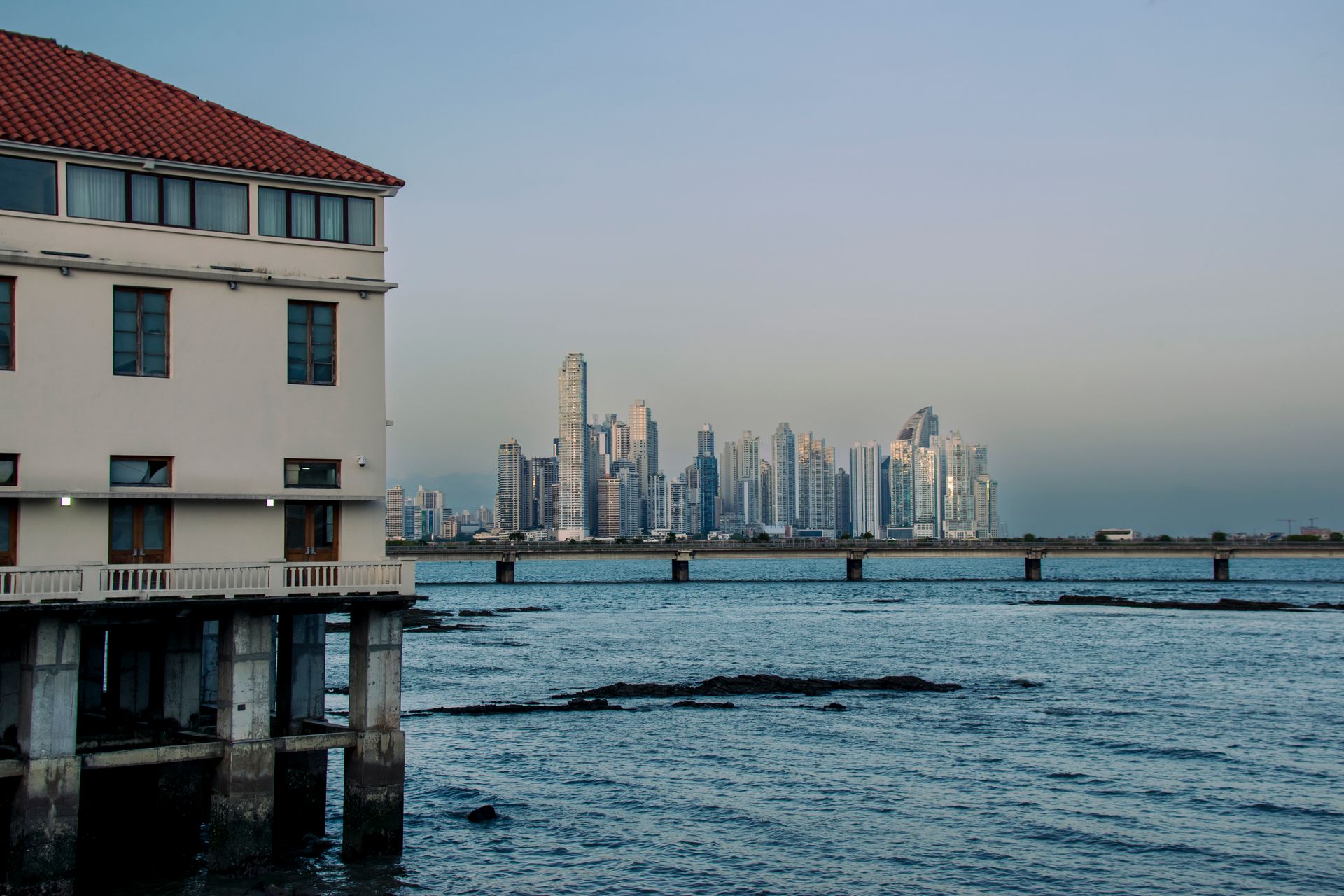
Mossack Fonseca was a Panamanian law firm that played a significant role in the global offshore banking system.
The firm was founded in 1973 by Jürgen Mossack and Ramón Fonseca Mora, and it quickly gained a reputation for helping wealthy individuals and companies set up secret offshore companies.
Mossack Fonseca's clients included politicians, celebrities, and business executives from all over the world, with some estimates suggesting that the firm helped set up over 214,000 offshore companies.
The firm's services included helping clients set up shell companies, which are essentially empty companies that exist only on paper, and providing them with bank accounts and other financial instruments.
Additional reading: Is Oasdi and Medicare Included in Federal Withholding
Controversies and Scandals
The firm's troubles started when it was accused of helping foreign citizens circumvent their local tax laws and even international sanctions.
Mossack Fonseca's secrecy attracted clients with questionable goals, and it developed sophisticated methods to hide asset ownership.
Germany issued international arrest warrants for the firm's founders in October 2020.
Argentine Money Laundering
In 2014, MF Corporate Services was subpoenaed by a hedge fund seeking to recover money from the Argentinian government.
The hedge fund alleged that MF had created shell companies to pass money from the government to Lázaro Báez, an ally of the Kirchner family.
Jürgen Mossack testified under oath that M.F. Corporate Services (Nevada) Ltd. had no affiliation with the Panamanian Mossack Fonseca, but the Panama Papers show that it was in fact a wholly owned subsidiary.
A Nevada judge ruled that the subpoena against Mossack Fonseca was valid, despite the firm's claim that it did not own MF Corporate Services.
Mossack Fonseca was fighting an order that it turn over the details of 123 shell companies created by an associate of a former President of Argentina.
This case highlights the complexities of international money laundering and the challenges of uncovering hidden relationships between companies.
A different take: Shell Bank
Secrecy and Controversy
Mossack Fonseca's secrecy was a magnet for clientele with questionable goals. The firm's operations were shrouded in mystery, making it a haven for the elite's shadowy financial activities.
The firm's founder claimed that it simply helped clients achieve privacy, but this secrecy facilitated tax evasion, money laundering, and other illicit activities.
Germany issued international arrest warrants for the two founders of Mossack Fonseca on October 20, 2020.
Mossack Fonseca's role in facilitating illicit activities gradually came under scrutiny. Reports and investigative pieces hinted at the firm's opaque dealings.
The firm created shell companies to obscure asset ownership, making it difficult to track the flow of money.
Mossack Fonseca tried to hide its relationship with MF Corporate Services, a wholly owned subsidiary, by deleting emails and other computer footprints.
The Panama Papers
The Panama Papers were a massive leak of confidential documents from Mossack Fonseca, a Panamanian law firm, that revealed how clients hid billions of dollars in tax havens.
The leak, which occurred on April 3, 2016, consisted of 11.5 million files that dated back to the 1970s and were given to the German newspaper Süddeutsche Zeitung by an anonymous source.
Mossack Fonseca claimed that the coverage of the leak had "misrepresented" their work, but the firm acknowledged that they had a responsibility to ensure their clients were complying with anti-money laundering regulations.
The firm's clients were primarily professional clients, such as international financial institutions and trust companies, who were regulated in their jurisdictions and were obliged to perform due diligence on their clients.
Mossack Fonseca informed clients that their files had been obtained through a hack of the company's email server, and the firm's information security was criticized for being poor, with old versions of key tools being used.
The leak led to a series of raids on the firm's local offices in Panama, Peru, and El Salvador, and the firm eventually shut down due to the economic and reputational damage inflicted by the leak.
In 2020, prosecutors in Cologne, Germany issued international arrest warrants for the firm's founders, Ramón Fonseca and Jürgen Mossack, on charges of accessory to tax evasion and forming a criminal organization.
The founders of the law firm have been on trial since 2023 in a court in Panama City for alleged money laundering, with the prosecution seeking up to 12 years in prison for Mossack and Fonseca.
Additional reading: Prevention of Money Laundering Act, 2002
Key Information
Mossack Fonseca was a law firm based in Panama that employed about 600 people in more than 40 countries.
The firm's practice areas included trust services, intellectual property, commercial law, international business structures, and investment advisory services.
Mossack Fonseca was among the world's largest providers of offshore financial services.
The firm's global reach and diverse services were a testament to its reputation and influence in the industry.
The firm shut down in 2018 due to the Panama Papers scandal, which had a significant impact on its reputation and operations.
Here are some key statistics about Mossack Fonseca's size and scope:
- 600 people employed
- More than 40 countries
Legacy and Impact
Mossack Fonseca's legacy is a cautionary tale of ambition and secrecy.
The firm officially closed its doors in March 2018 due to irreversible reputational damage from the Panama Papers scandal.
Its founders, Mossack and Fonseca, faced legal and societal repercussions, marking a dramatic fall from grace.
The reforms spurred by Mossack Fonseca's downfall persist, bringing about significant changes in the world of offshore finance.
The firm's legacy serves as a potent reminder of how the quest for wealth and discretion can reshape and unravel the fabric of global finance.
Broaden your view: Bcbs Legacy
Global Network
Mossack Fonseca has a global network with around 40 offices worldwide, including locations in mainland China and countries identified as tax havens by the European Commission.
These offices are spread across several countries and regions, such as the Bahamas, British Virgin Islands, Seychelles, and Anguilla.
The leaked documents reveal that the firm's clients come from more than 200 countries and territories.
The ICIJ found that Mossack Fonseca's controls were inadequate, allowing questionable clients to slip through the cracks.
The firm claims to have carried out due diligence procedures in accordance with the law.
Mossack Fonseca's global presence is a significant aspect of its business, with operations in many parts of the world.
The fact that the firm has offices in tax havens raises questions about its practices and compliance with regulations.
A different take: Odoo Clients
Featured Images: pexels.com