
Purchasing a home can be a daunting task, especially when it comes to understanding the intricacies of home financing. The first step in securing a mortgage is to check your credit score, which lenders use to determine the interest rate and terms of your loan. A good credit score can save you thousands of dollars in interest over the life of the loan.
To qualify for a mortgage, you'll typically need to have a credit score of at least 620, although some mortgage options may have more lenient requirements. Lenders will also consider your income, employment history, and debt-to-income ratio when evaluating your mortgage application.
The amount you can borrow will also depend on the value of the property, as well as your down payment. For example, if you put down 20% of the purchase price, you'll avoid paying private mortgage insurance, which can save you hundreds of dollars per year.
Discover more: 10 down Mortgage Loans
What is a Mortgage?

A mortgage is a loan used to purchase or maintain a home, plot of land, or other real estate. The borrower agrees to pay the lender over time, typically in a series of regular payments divided into principal and interest.
The property then serves as collateral to secure the loan. This means that if the borrower fails to make payments, the lender can seize the property.
To apply for a mortgage, a borrower must meet several requirements, including minimum credit scores and down payments. These requirements can vary depending on the lender and the type of mortgage.
Mortgage applications undergo a rigorous underwriting process before they reach the closing phase. This process ensures that the borrower is qualified for the loan and that the lender is protected.
On a similar theme: Mortgage Broker Process
How a Mortgage Works
A mortgage is a loan that's used to buy a piece of property that's secured by the property itself.
The loan amount is typically the purchase price of the property, and it's usually the largest loan you'll ever take out.
A home mortgage may be a necessity if you want to buy a house or a rental property, but it's essential to understand how it works to make the home-buying process easier.
How a Home Functions
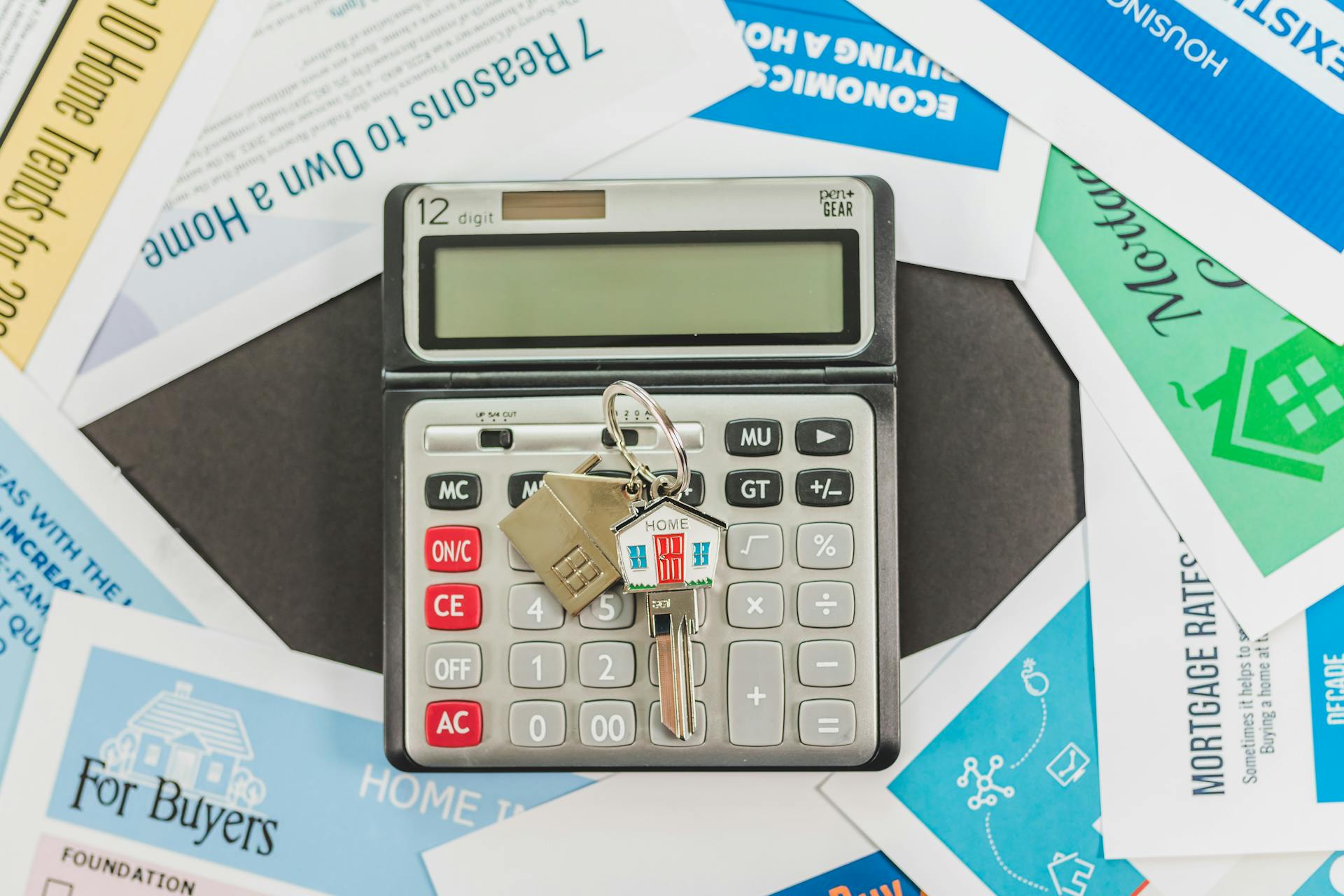
A home mortgage allows a much broader group of citizens to own real estate, as the entire purchase price of the house doesn’t have to be provided up front.
The lender holds the title for as long as the mortgage is in effect, giving them the right to foreclose on the home if the borrower can’t make payments.
In a fixed-rate mortgage, the interest rate and periodic payment are generally the same each period.
The interest rate on an adjustable-rate home mortgage is generally lower than a fixed-rate mortgage because the borrower bears the risk of an increase in interest rates.
As the homeowner pays down the principal over time, the interest is calculated on a smaller base so that future mortgage payments apply more toward principal reduction than just paying the interest charges.
The lender is known as the mortgagee and the borrower is known as the mortgagor in a mortgage transaction.
Take a look at this: Bob Housing Loan Interest Rate
Why Is It Called a Mortgage?

This name makes sense because a mortgage "dies" when it's either fully repaid or if the borrower defaults.
The word "mortgage" is a reminder that a home loan is a serious commitment that should be taken seriously.
Loan Basics
To get a mortgage, you need to consider several key features, including the size of the loan, interest rate, and closing costs. The Annual Percentage Rate (APR) is also a crucial factor to consider, as it takes into account the interest rate and fees associated with the loan.
When evaluating a mortgage, it's essential to look beyond what lenders tell you about how much you qualify to borrow. This is different from how much you can afford to pay on a monthly basis, taking into account your family's income, expenses, and priorities.
Here are the key features to consider when comparing different mortgages:
- The size of the loan
- The interest rate and any associated points
- The closing costs of the loan, including the lender’s fees
- The Annual Percentage Rate (APR)
- The type of interest rate and whether it can change (fixed or adjustable)
- The loan term, meaning how long you have to repay the loan
- Does the loan have risky features, such as a prepayment penalty, a balloon clause, an interest-only feature, or negative amortization
What's in a Payment?
When you make a mortgage payment, you're not just paying for the house itself, but also for several other costs that are rolled into your monthly payment. These costs can add up quickly, so it's essential to understand what you're paying for.

The principal is the amount you borrow and have to repay to your lender. This is the actual cost of the house, minus any down payment you made.
In addition to the principal, you'll also pay interest on your loan. This is the main cost of borrowing money to buy the house, and it can be a significant portion of your monthly payment.
Mortgage insurance is another cost that may be included in your monthly payment. This type of insurance protects the lender in case you default on the loan.
Property taxes and homeowners insurance are also typically rolled into your monthly payment. These costs can vary depending on the location and value of your property.
Here's a breakdown of the typical costs included in a mortgage payment:
- Principal: The amount borrowed and repaid to the lender
- Interest: The cost of borrowing money to buy the house
- Mortgage Insurance: Protects the lender in case of default
- Property Taxes and Homeowners Insurance: Rolled into the monthly payment
Keep in mind that these costs are separate from upfront fees, such as earnest money, down payment, appraisal and inspection fees, and closing costs.
Broaden your view: Mobile Home Closing Costs Paying Cash
Loan Basics
When applying for a mortgage, it's essential to understand the key features to compare different loans. The size of the loan is a crucial factor, as it determines how much you'll need to repay.
The interest rate and any associated points can significantly impact your monthly payments. A lower interest rate can save you thousands of dollars in interest over the life of the loan.
Closing costs, including lender fees, can add up quickly. It's essential to factor these costs into your overall mortgage expenses.
The Annual Percentage Rate (APR) is a more comprehensive measure of the cost of the loan than the interest rate alone. It takes into account the interest rate and any fees associated with the loan.
There are two main types of interest rates: fixed and adjustable. A fixed interest rate remains the same for the life of the loan, while an adjustable interest rate can change over time.
Expand your knowledge: Tracker Mortgage Rates
The loan term, or repayment period, can also impact your monthly payments. A longer loan term can result in lower monthly payments, but more interest paid over the life of the loan.
Some loans have risky features that can increase the cost of the loan or make it more difficult to pay off. These features include prepayment penalties, balloon clauses, interest-only features, and negative amortization.
Here are the key features to compare when shopping for a mortgage:
- The size of the loan
- The interest rate and any associated points
- The closing costs of the loan, including the lender’s fees
- The Annual Percentage Rate (APR)
- The type of interest rate and whether it can change (fixed or adjustable)
- The loan term, meaning how long you have to repay the loan
- Does the loan have risky features, such as a prepayment penalty, a balloon clause, an interest-only feature, or negative amortization
Loan-to-Value and Down Payments
Conventional mortgage loans can be conforming or nonconforming. Conforming loans adhere to mortgage rules set by Fannie Mae and Freddie Mac.
Lenders require a down payment, which is a portion of the property's cost. This down payment can be expressed as a percentage of the property's value.
A down payment of 20% is a common benchmark, but it's not the only option. With an FHA loan, you can get approved with a credit score as low as 580 and a down payment of 3.5%.
Worth a look: Upside down on Mortgage
The loan to value ratio, or LTV, is the size of the loan against the property's value. For example, a mortgage loan with a 20% down payment has an LTV of 80%.
Fannie Mae and Freddie Mac have changed their upfront fees, which now depend on your credit score and down payment. If you have a higher credit score, like 740 or higher, you'll pay more in fees.
The higher your down payment, the lower your fees will be, but it still depends on your credit score.
You might like: Home Credit & Finance Bank
Why People Need
People need loans because the price of a home is often far greater than the amount of money that most households save.
Most households can only afford to put down a relatively small down payment, such as 20% of the purchase price, and need a loan for the balance.
The loan is secured by the value of the property in case the borrower defaults, making it a safe investment for lenders.
Mortgage Options
Mortgages come in various forms, with the most common types being 30-year and 15-year fixed-rate mortgages.
The length of a mortgage can significantly impact your monthly payment and the total amount of interest you pay over the life of the loan. Stretching payments over more years may reduce the monthly payment, but it also increases the total amount of interest.
Some mortgage terms are as short as five years, while others can run 40 years or longer.
To compare different mortgages, consider the following key features:
- The size of the loan
- The interest rate and any associated points
- The closing costs of the loan, including the lender’s fees
- The Annual Percentage Rate (APR)
- The type of interest rate and whether it can change (fixed or adjustable)
- The loan term, meaning how long you have to repay the loan
- Does the loan have risky features, such as a prepayment penalty, a balloon clause, an interest-only feature, or negative amortization
Lenders may qualify you for a certain amount, but that's not the same as knowing how much you can afford to pay each month.
Mortgage Process
The mortgage process can seem daunting, but it's actually quite straightforward. Would-be borrowers begin by applying to one or more mortgage lenders.
To get approved, the lender will ask for evidence of your ability to repay the loan, including bank and investment statements, recent tax returns, and proof of current employment. A credit check is also usually run.
If your application is approved, the lender will offer you a loan of up to a certain amount and at a particular interest rate. Homebuyers can apply for a mortgage while still shopping for a property, thanks to pre-approval.
Being pre-approved gives buyers an edge in a tight housing market because sellers know they have the money to back up their offer. This can be a huge advantage in competitive situations.
Once you've found a property and agreed on terms with the seller, it's time for the closing. This is when you make your down payment to the lender, and the seller transfers ownership of the property to you.
Mortgage Risks and Consequences
Mortgaging can be a complex and intimidating process, but understanding the risks and consequences can help you make informed decisions.
Foreclosure is a serious consequence of failing to meet mortgage payments, and it can have a devastating impact on your credit score, with a potential drop of up to 200 points.
Missing mortgage payments can lead to a significant increase in debt, as interest rates and fees continue to accrue.
The average homeowner in the US pays over $1,000 per year in mortgage insurance premiums, which can be a significant burden.
The total cost of homeownership, including mortgage payments, property taxes, and insurance, can be as high as 50% of a homeowner's monthly income.
A mortgage with a high debt-to-income ratio can make it difficult to qualify for other loans or credit in the future.
The longer you take to pay off your mortgage, the more interest you'll pay over the life of the loan, with some mortgages costing up to 50% more in interest payments than the original loan amount.
Recommended read: Does a Reverse Mortgage Pay off Your Existing Mortgage
Mortgage Costs and Planning
Don't forget to factor in other costs when calculating your ideal mortgage payment, as they can add up quickly. These costs include homeowner's insurance, property taxes, and private mortgage insurance, which are typically added to your monthly mortgage payment.
You can get estimates for these costs from your local tax assessor, insurance agent, and lender. This will help you determine a reasonable price range for your new home.
Payment and debt ratios are also crucial to consider when applying for a mortgage. In many countries, lenders use measures such as payment to income and debt to income to assess creditworthiness.
Recommended read: Debt to Income Ratio for Second Home
Consider All Costs in Payment Planning
When calculating your ideal mortgage payment, don't forget to include other costs such as homeowner's insurance, property taxes, and private mortgage insurance. These costs are typically added to your monthly mortgage payment.
You can get estimates from your local tax assessor, insurance agent, and lender to help you plan. Knowing how much you can comfortably pay each month also helps you estimate a reasonable price range for your new home.
To determine how much you can afford, consider your payment and debt ratios. In most countries, lenders use measures such as payment to income and debt to income to assess creditworthiness.
You'll also need to provide documentation of your creditworthiness, such as income tax returns and pay stubs. Some lenders may require a potential borrower to have one or more months of reserve assets available.
This means showing the availability of enough assets to pay for housing costs, including mortgage, taxes, etc., for a period of time in the event of job loss or other loss of income.
Home Device Limit
When it comes to home devices, you might be wondering what the limit is. Technically, there's no limit to how many junior loans you can have on your home as long as you have the equity, debt-to-income ratio, and credit score to get approved for them.
You can have multiple home equity loans, but lenders generally issue a first or primary mortgage before they allow for a second mortgage.
Mortgage Regulations and Laws
Projects under construction can be mortgaged under the Guarantee Law, and the law does not restrict entities other than lending banks from becoming mortgagees.
The Supreme People’s Court clarified that projects under construction fall within the scope of property that can be mortgaged.
Article 395(1) of the Civil Code provides the legal basis for mortgaging projects under construction.
The Ministry of Housing and Urban-Rural Development’s Measures on the Administration of Mortgage of Urban Real Estate specify that such mortgage refers to the act of a mortgagor obtaining a loan for the continued construction of a project by mortgaging the legally acquired land use rights and the invested assets.
Real estate registration agencies often impose restrictions on the mortgagor, the usage of principal debt, and the mortgage, based on article 3 of the measures.
Financial asset management companies can apply for real estate mortgage registration as creditors, according to the Notice on Several Issues Concerning the Registration of Real Estate Mortgage Rights.
Worth a look: What Does Mortgaging a House Mean
Mortgage Comparison and Selection
When shopping for a mortgage, it's essential to compare estimated monthly payments based on the type of mortgage, interest rate, and down payment size using an online mortgage calculator.
To compare different mortgages, focus on key features such as the loan size, interest rate, closing costs, APR, and loan term.
Consider the type of interest rate and whether it can change, as well as any risky features like prepayment penalties or interest-only features.
Here's a breakdown of key mortgage features to compare:
Remember, lenders may require private mortgage insurance (PMI) if you make less than a 20% down payment, adding to your monthly costs.
How to Compare
To compare mortgages, you can start by using an online mortgage calculator to estimate your monthly payments based on the type of mortgage, interest rate, and down payment.
An online mortgage calculator can also help you determine how expensive a property you can reasonably afford.
You'll need to consider the principal and interest you'll be paying on the mortgage, as well as any additional costs set up by the lender or mortgage servicer, such as escrow accounts for property taxes and homeowners insurance premiums.
These extra costs will add to your monthly mortgage payment.
If you make less than a 20% down payment, you may be required to purchase private mortgage insurance (PMI), which becomes another added monthly cost.
If this caught your attention, see: Online Mortgage Refinance
Comparing Different Loans Key Features

Comparing different loans can be a daunting task, but understanding the key features can make it more manageable. The size of the loan is a crucial factor, as it determines how much you'll need to repay over time.
The interest rate and any associated points are also essential considerations. A lower interest rate can save you thousands of dollars in interest payments over the life of the loan. Points, on the other hand, are fees charged by the lender for originating the loan.
Closing costs, including the lender's fees, can add up quickly. It's essential to factor these costs into your overall mortgage payment. The Annual Percentage Rate (APR) gives you a clear picture of the total cost of the loan, including interest and fees.
The type of interest rate is another critical factor. A fixed interest rate remains the same for the life of the loan, while an adjustable-rate mortgage can change over time. This can affect your monthly payments and overall cost of the loan.
Worth a look: Rocket Mortgage Free Refinance

The loan term, or how long you have to repay the loan, can also impact your monthly payments. A longer loan term can mean lower monthly payments, but you'll pay more in interest over the life of the loan.
Here are the key features to consider when comparing different loans:
- The size of the loan
- The interest rate and any associated points
- The closing costs of the loan, including the lender’s fees
- The Annual Percentage Rate (APR)
- The type of interest rate and whether it can change (fixed or adjustable)
- The loan term, meaning how long you have to repay the loan
- Does the loan have risky features, such as a prepayment penalty, a balloon clause, an interest-only feature, or negative amortization
Frequently Asked Questions
What is another word for mortgaging?
In British English, an alternative to "mortgaging" is "pledging
What does it mean to be mortgaged?
A mortgaged property is one that has been used as security to borrow money, with the debt still outstanding. This means the property is tied to a loan that hasn't been fully repaid yet.
Featured Images: pexels.com