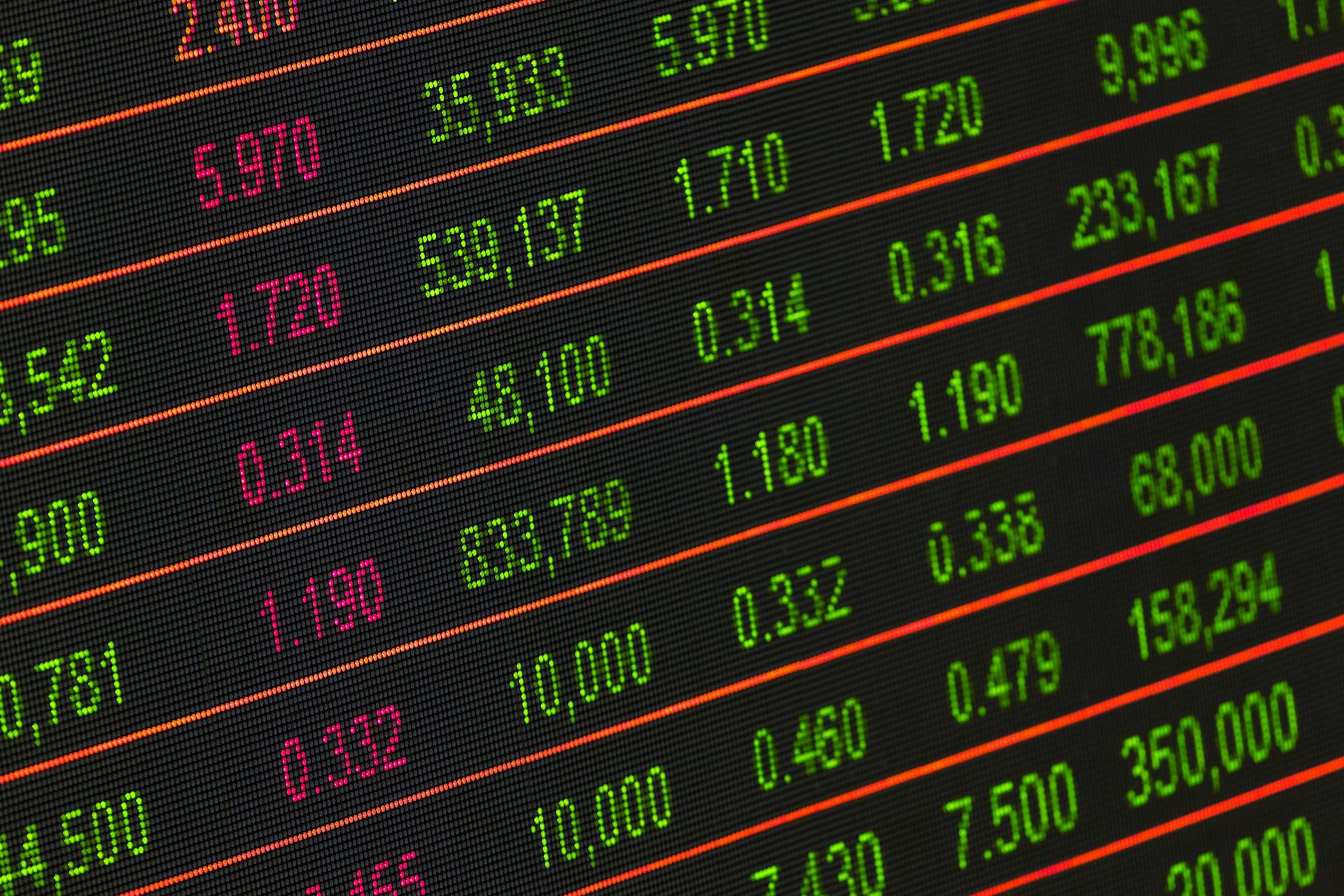
Market risk is a fundamental concept in finance that can significantly impact your investments. It's essential to understand what market risk is and how it can affect your portfolio.
Market risk is the possibility that the overall market will decline in value, causing your investments to lose value. This can happen due to various factors such as economic downturns, interest rate changes, or even global events.
One key aspect of market risk is that it can be unpredictable. Even the most experienced investors can't fully anticipate market fluctuations. For instance, the 2008 global financial crisis was a significant market risk event that caught many investors off guard.
Investors who are unaware of market risk may end up losing a significant portion of their investments. It's crucial to have a solid understanding of market risk to make informed investment decisions.
What Is Market Risk?
Market risk is a type of investment risk that cannot be eliminated through diversification. It's a major category of investment risk, along with specific risk, and it can be hedged in other ways.
Market risk exists because of price changes, and the standard deviation of changes in prices is referred to as price volatility. Volatility is often presented in annualized terms.
The most common types of market risks include interest rate risk, equity risk, currency risk, and commodity risk. These types of risks can have a significant impact on investments.
Interest rate risk, for example, covers the volatility that may accompany interest rate fluctuations due to fundamental factors, such as central bank announcements related to changes in monetary policy. This risk is most relevant to investments in fixed-income securities, such as bonds.
Equity risk is the risk involved in the changing prices of stock investments. It's a key consideration for investors looking to manage their risk.
Currency risk, or exchange-rate risk, arises from the change in the price of one currency in relation to another. Investors or firms holding assets in another country are subject to currency risk.
Here are the common types of market risks:
- Interest rate risk
- Equity risk
- Commodity risk
- Currency risk
These types of risks can be significant, but understanding them can help investors make informed decisions about their investments.
Causes and Types
Market risk can arise from various types of market fluctuations.
Interest rate risk is a common type of market risk that affects fixed-income investments. It's caused by volatility in interest rates, which can lead to changes in the value of these investments.
Market liquidity risk is another type of market risk that occurs when the level of market activity decreases, making an asset illiquid to trade.
The different types of market risk include:
- Market liquidity risk
- Interest rate risk
- FX risk (or currency risk)
- Issuer credit risk
- Equity market risk
- Commodity risk
- Model risk
These types of market risk can have a significant impact on investments, making it essential to understand and manage them effectively.
Inflation Risk
Inflation risk is a concern for investors and economists alike. It can erode the purchasing power of money over time.
Monetary policy can contribute to inflation risk, as central banks printing more money can lead to an increase in the money supply and drive up prices. This is exactly what happened during the 1970s, when the US experienced a period of high inflation due to the Federal Reserve's expansionary monetary policy.

The cost-push theory of inflation suggests that an increase in production costs, such as higher wages or raw materials, can drive up prices. This is evident in the example of the 1970s oil embargo, which led to a significant increase in oil prices and subsequently, inflation.
Demand-pull inflation occurs when aggregate demand exceeds the available supply of goods and services, leading to higher prices. This can happen when there is a surge in economic growth, as seen in the post-war economic boom of the 1950s and 1960s.
See what others are reading: Pennsylvania Higher Education Assistance Agency
Market risk
Market risk is a significant concern for investors, and it's essential to understand the different types of market risk. Interest rate risk covers the volatility that may accompany interest rate fluctuations, affecting fixed-income investments.
There are several types of market risk, including market liquidity risk, interest rate risk, FX risk, issuer credit risk, equity market risk, commodity risk, and model risk. Market liquidity risk is the risk that the level of market activity might decrease, making an asset illiquid to trade.
Interest rate risk is exposure to instruments whose values change due to changes in interest rates. For example, if you are heavily invested in bonds and interest rates are rising, you may want to tweak your investments to focus on shorter-term bonds.
FX risk, or currency risk, is the exposure to holdings and future cash flows that are not denominated in USD (or local currency of the investment bank). To mitigate this risk, it's essential to study currency profiles of the companies in which you invest.
Equity market risk changes in the value of an instrument linked to the ownership interest in a company. Commodity risk changes in value of futures, forwards, swaps, and options linked to the value of commodities such as oil, metals, etc.
Here are the different types of market risk:
- Market liquidity risk
- Interest rate risk
- FX risk
- Issuer credit risk
- Equity market risk
- Commodity risk
- Model risk
Understanding these types of market risk can help you make informed investment decisions and mitigate potential losses.
Measuring and Managing
Market risk can be measured using various techniques, including the value-at-risk (VaR) method. VaR estimates the potential loss that could occur to an asset over a specific time horizon, given a certain confidence level.
The VaR method requires certain assumptions that limit its precision, such as assuming the composition of the portfolio remains unchanged over the specified period. This assumption may not hold true over longer time horizons or during times of market stress.
Several methods are used to compute VaR, including historical simulation, parametric VaR, and Monte Carlo simulation. Historical simulation uses historical data to calculate VaR, while parametric VaR assumes a specific statistical distribution of returns. Monte Carlo simulation employs random sampling to generate possible future scenarios for asset returns.
To manage market risk, investors can use hedging strategies, such as buying put options to protect against a downside move. Index options can also be used to hedge a large portfolio of stocks. Dollar-cost averaging won't protect against market risk, but investing the same amount of money on a regular schedule can help ride out ups and downs in the market.
Readers also liked: Collateral Loan against Property
Diversification is another way to reduce market risk, by spreading investments across different asset classes, sectors, and geographies. Risk limits and policies should be established to manage market risk exposure effectively.
Here are some common measures of market risk:
- Value-at-risk (VaR)
- Beta, which measures the relative sensitivity of an asset to broader market movements
- Equity risk premium (ERP), which is the implied expected return that investors demand while holding market risk in the stock market
Stress testing involves simulating extreme market conditions to assess the potential impact on the bank's portfolio and identify vulnerabilities. This can help quantify the market risk within a portfolio.
Regulatory and Reporting
Regulatory bodies like the Basel Committee have a significant role in shaping market risk management practices. They set minimum capital requirements for market risk, as seen in the "Fundamental Review of the Trading Book" in January 2016.
One of the key areas of focus for the Basel Committee is the boundary between the "Trading book" and the "Banking book". This distinction is crucial in determining how market risk is calculated and managed.
The Basel Committee also discusses the use of value at risk vs. expected shortfall to measure market risk under stress. This is an important consideration for banks looking to manage their market risk effectively.

The risk of market illiquidity is another area of concern for the Basel Committee. This type of risk can have significant implications for a bank's financial stability.
In the United States, the SEC requires companies to include a section on market risk in their annual reports on Form 10-K. This section must detail how the company's results may depend directly on financial markets.
Here are some key regulatory requirements related to market risk management:
- The Basel Accords and capital adequacy requirements
- Ensuring banks maintain sufficient capital to absorb potential losses from market risk exposures
Mitigation and Prevention
Banks use hedging to counterbalance potential losses from market movements by taking offsetting positions.
Hedging techniques include using derivatives like futures, options, and swaps. These instruments can help mitigate market risk by reducing potential losses.
To control exposure to market risk, banks establish risk limits and policies, such as position limits, stop-loss orders, and value-at-risk (VaR).
A dedicated risk management team is responsible for identifying, measuring, monitoring, and controlling market risk, ensuring adherence to risk policies and providing regular risk reporting.
Discover more: Sexual Harrasment Policies

Here are some key strategies banks use to mitigate market risk:
Regulatory compliance is also crucial, as banks must adhere to requirements such as the Basel Accords and capital adequacy norms, which mandate maintaining sufficient capital buffers to absorb potential losses from market risk.
Mitigating Market Risk
Mitigating Market Risk is a crucial aspect of financial management. Banks employ several strategies to manage market risk effectively.
Hedging is a common technique used by banks to counterbalance potential losses from market movements. By taking offsetting positions, banks can reduce their exposure to market risk.
Diversification is another key strategy used by banks to reduce market risk. By spreading their portfolios across different asset classes, sectors, and geographies, banks can offset potential losses in one area with gains in another.
Risk limits and policies are established by banks to control exposure to market risk. These may include position limits, stop-loss orders, and value-at-risk (VaR).
Discover more: Exposure at Default
Stress testing is a crucial tool used by banks to assess the potential impact of extreme market scenarios on their portfolio. This helps identify vulnerabilities and allows banks to take mitigating actions.
A dedicated risk management team is responsible for identifying, measuring, monitoring, and controlling market risk. They ensure adherence to risk policies and provide regular risk reporting.
Banks must comply with regulatory requirements, such as the Basel Accords and capital adequacy norms, to maintain sufficient capital buffers to absorb potential losses from market risk.
For your interest: True Potential
Premium
The equity risk premium is a measure of market risk that reflects the excess return investors demand for investing in stocks over the risk-free rate of return.
It's calculated by subtracting the risk-free rate from the expected return on the stock market, with a difference of 8% in the example given, where the expected return is 10% and the risk-free rate is 2%.
The broader market risk premium is similar, but it's the additional return expected on a diversified portfolio of investments held among various asset classes above the risk-free rate.
A fresh viewpoint: Risk-free Rate
A beta of 1.0 indicates a stock has market risk identical to the broader S&P 500, while a beta greater than 1 means the asset is more volatile than the market.
Investors require an implied additional compensation to hold an investment in the broader stock market, which is inherently riskier than holding a risk-free asset like U.S. Treasuries.
Key Concepts and Terms
Market risk is the exposure that banks face due to adverse movements in stock prices, interest rates, exchange rates, and commodity prices. This type of risk can have a significant impact on a bank's value.
Volatility quantifies the uncertainty regarding the future returns of an equity, which is the essence of market risk. This uncertainty can be driven by different factors.
There are different types of market risk, such as:
- Financial institutions must manage these risks using internal systems and adhering to the regulatory requirements of the jurisdiction
- Each type of market risk can change the value of an asset
By approaching your investing systematically, and sticking with a long-term outlook and strategy, you are more likely to see your portfolio bounce back from the impact of market risks.
Frequently Asked Questions
What are the 4 components of market risk?
Market risk is comprised of four primary components: interest rate risk, equity price risk, foreign exchange risk, and commodity risk. Understanding these components is crucial for managing market risk and making informed investment decisions.
Featured Images: pexels.com