Logistics plays a crucial role in business operations, and it's essential to understand its importance. Effective logistics can make or break a company's success.
Logistics involves managing the flow of goods, services, and information from the point of origin to the point of consumption. This process includes transportation, storage, and handling of products.
A well-planned logistics system can save a company time and money by streamlining processes and reducing waste. For example, a company can use data analytics to optimize its supply chain and reduce transportation costs.
By understanding logistics, businesses can improve customer satisfaction, reduce costs, and gain a competitive edge.
Broaden your view: Marketing Strategy for Logistics Company
Logistics Basics
Logistics is the overall process of managing how resources are acquired, stored, and transported to their final destination. It's a vital part of any business that needs to get products or materials from one place to another.
Poor logistics in a business can impact its bottom line. If a company can't get its products delivered on time, it can lose customers and revenue.
The logistics process involves managing resources, which can include anything from raw materials to finished goods. It's a complex task that requires careful planning and execution.
Here are some key aspects of logistics:
- Acquiring resources
- Storing resources
- Transporting resources to their final destination
Logistics is now widely used in the business sector, particularly by companies in the manufacturing sector, to refer to how resources are handled and moved along the supply chain.
Logistics Concepts
Logistics is a broad term that encompasses a range of activities, including demand planning, sales and operations planning, and supply chain execution. These activities are all part of supply chain management, which involves a larger network of vendors, transportation companies, distributors, and warehouses.
Logistics is often confused with supply chain management, but they are distinct concepts. Logistics is the process of delivering goods to consumers, while supply chain management is the larger framework that connects these vendors, transportation companies, and distributors.
Business logistics is a specific approach to managing the flow of goods and services within an organization. It involves having the right item in the right quantity at the right time at the right place for the right price in the right condition to the right customer.
A different take: Supply Chain Management
There are two fundamentally different forms of logistics: one optimizes a steady flow of material through a network of transport links and storage nodes, while the other coordinates a sequence of resources to carry out some project.
The main functions of a qualified logistician include inventory management, purchasing, transportation, warehousing, consultation, and the organizing and planning of these activities. Logisticians combine professional knowledge of each of these functions to coordinate resources in an organization.
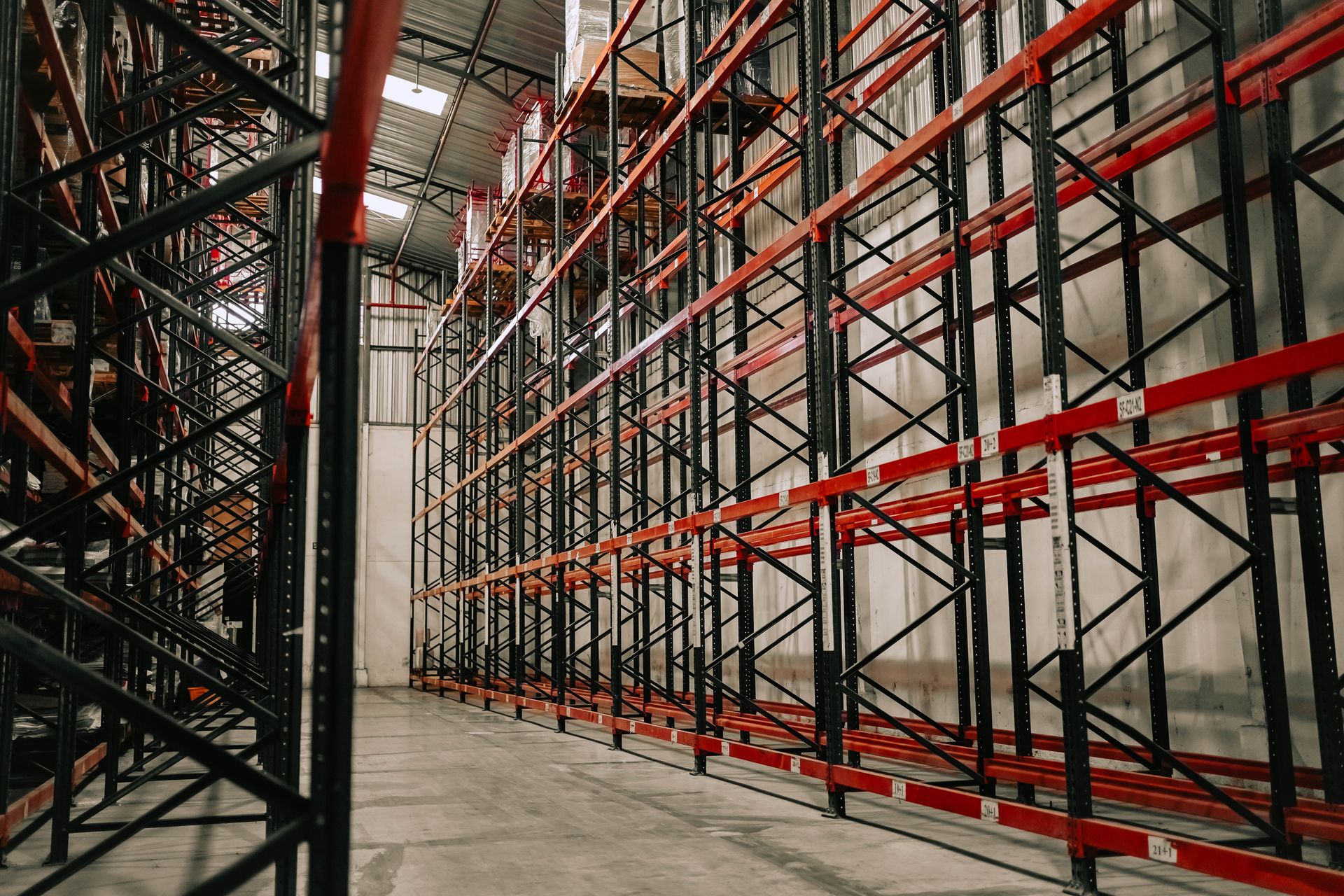
Some common storage systems used in logistics include pile stocking, cell racks (either static or movable), cantilever racks, and gravity racks.
- Pile stocking: a simple and cost-effective way to store goods
- Cell racks: a more organized and efficient way to store goods, with cells that can be accessed individually
- Cantilever racks: a type of rack that allows for easy access to goods from both sides
- Gravity racks: a type of rack that uses gravity to store goods, reducing the need for manual handling
Logistics Functions
Logistics is a complex process, but it can be broken down into several key functions.
Handling and order processing are critical components of logistics.
Unit loads, which are combinations of individual items moved by handling systems, are a crucial part of this process.
Handling systems include trans-pallet handlers, counterweight handlers, and retractable mast handlers, among others.
Order processing involves a sequential process of processing withdrawal lists, picking, sorting, package formation, and order consolidation.
Picking can be either manual or automated, with manual picking being done either with a cart or conveyor belt or with the help of a mini-load ASRS.
Sorting can also be done manually or automatically, with automatic sorting being done through sorters.
A logistical system is designed to operate at a minimum cost based on the expected customer service level.
As customer service levels improve, the number of sales also increases, but further improvements only increase sales marginally.
A unique perspective: Maersk Global Service Centres
Logistics Technologies
Logistics technologies have transformed the industry, making it more efficient and robust. The rise of innovative new technologies has reshaped the logistics sector.
Amazon relies heavily on the latest technology to accomplish its consumer delivery goals, using AI to power product recommendations and machine learning to build the handheld virtual assistant, Amazon Echo. This is a testament to the power of technology in logistics.
A fresh viewpoint: Logistics Tech Companies
Warehouse management systems (WMS) and warehouse control systems (WCS) are two distinct components that work together to maximize efficiency. A WMS plans a weekly activity forecast, while a WCS acts like a floor supervisor, working in real-time to get the job done.
Amazon's warehouses are filled with thousands of robots built to optimize the picking and packing process, thanks to the company's acquisition of Kiva Systems in 2012. This automation has significantly improved the company's delivery services.
As the demand for online delivery grows, software developers have created platforms to make the supply chain more manageable. Real-time visibility software providers like FourKites and project44 empower supply chain operators to identify issues and quickly resolve them, saving organizations a lot of time.
You might like: Is Amazon a Logistics Company
Logistic Tech Developments
Amazon relies heavily on the latest technology to accomplish its consumer delivery goals, using AI to power its product recommendations for years and adopting machine learning to build the handheld virtual assistant, Amazon Echo.
The company's use of AI and machine learning is a prime example of how logistics tech has successfully reshaped the industry, turning it into a robust sector fueled by the rise of innovative new technologies.
Logistics managers can keep track of the many different aspects of a supply chain with the help of logistics tech, which has made it easier to plan, procure, and coordinate manufacturing materials, as well as strategize the development of a product and reclaim materials and supplies involved in the manufacturing process.
Real-time visibility software providers such as FourKites, project44, and FreightVerify empower supply chain operators to identify issues and quickly resolve them, saving organizations huge amounts of time.
Fleet management company Motive has made it easier to track cargo and drivers while improving efficiency and safety along the supply chain.
Amazon's use of warehouse automation, including thousands of robots built to optimize the picking and packing process, is a testament to the potential of logistics tech to maximize efficiency for companies that rely on the effective operation of their warehouse or distribution center.
The growth of the warehouse automation space is attributed largely to the steady rise of e-commerce, which has ignited the need to send products out quickly while lowering operating costs.
Take a look at this: Is Supply Chain Management a Good Career
Cloud
Cloud technologies are revolutionizing the way logistics management is done. They enable real-time tracking and monitoring of shipments, making it easier to manage the movement of finished products.
Inbound logistics and outbound logistics are often streamlined with cloud-based systems, allowing for more efficient management of goods arriving at or leaving a facility.
Cloud-based reverse logistics systems can also be used to return products to a distribution center for servicing, refurbishing, decommissioning, and recycling, which is especially important in e-commerce. This process can be automated, reducing the need for manual intervention and increasing efficiency.
Logistics Career
Logistics careers are diverse and can be found in various industries. Many roles in logistics require a degree in logistics or business administration, which can be helpful for a career as a logistician.
Some potential jobs available in the logistics industry include truck drivers, customer service representatives, dispatchers, freight agents, supply chain managers, transportation analysts, procurement managers, logisticians, and operations managers. A degree in logistics or business administration can be beneficial for many of these roles.
Careers in logistics can be categorized into several areas, including logistics or distribution planning, traffic or transportation management, material handling operations, customer service, and management information system planning or control.
Take a look at this: Logistics Accounting for Trucking Companies and Transportation Services
Types of Companies
If you're considering a career in logistics, it's essential to understand the different types of companies that operate within the industry.
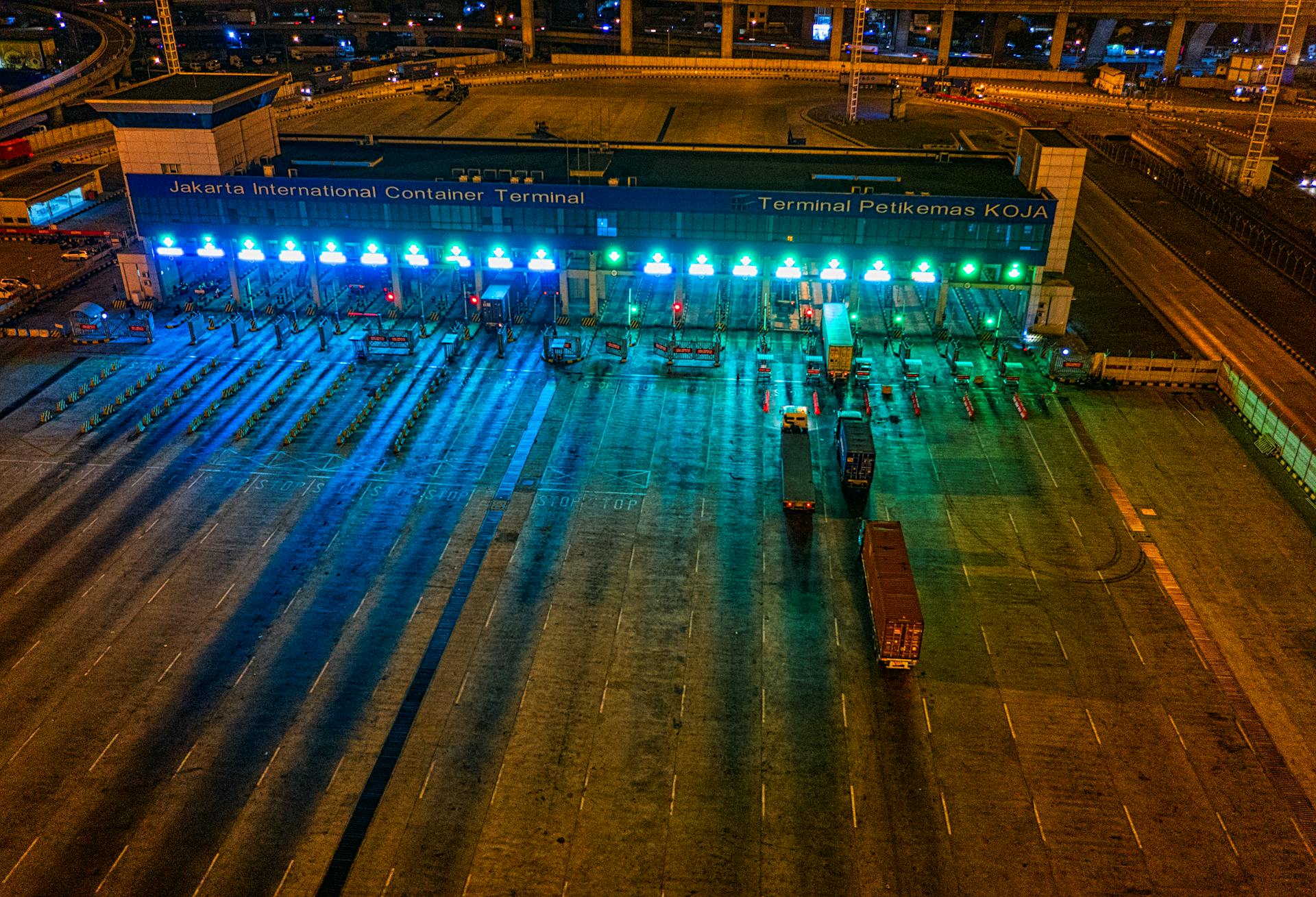
Logistics companies can be broadly categorized into several types, including e-Commerce logistics, freight logistics, third-party logistics, carrier logistics, and freight forwarders.
These types of companies specialize in different aspects of logistics, such as managing online orders, transporting goods, and providing storage and distribution services.
Here are some of the key types of logistics companies:
- e-Commerce logistics: These companies specialize in managing online orders and providing fast and reliable delivery services.
- Freight logistics: Freight logistics companies are responsible for transporting goods over long distances, often using trucks, trains, or ships.
- Third-party logistics: Third-party logistics companies provide a range of services, including warehousing, distribution, and transportation.
- Carrier logistics: Carrier logistics companies operate their own vehicles and equipment to transport goods, often providing door-to-door delivery services.
- Freight forwarders: Freight forwarders act as intermediaries between shippers and carriers, arranging transportation and handling customs clearance.
Career Paths
Logistics careers can be diverse and varied, offering many opportunities for growth and development. A career in logistics can take many forms, including logistics or distribution planning, traffic or transportation management, and material handling operations.
Logistics or distribution planning involves coordinating the movement of goods from one place to another. This can include managing inventory levels, tracking shipments, and optimizing routes.
Traffic or transportation management involves overseeing the movement of goods by road, rail, or sea. This can include managing transportation schedules, coordinating with carriers, and ensuring compliance with regulations.
A fresh viewpoint: Distribution (marketing)
Material handling operations involve the movement, storage, and control of goods within a facility. This can include managing warehouse operations, supervising inventory levels, and ensuring efficient use of resources.
Customer service is a critical component of logistics, involving responding to customer inquiries, resolving issues, and providing support.
Management information system planning or control involves designing and implementing systems to manage and analyze logistics data. This can include developing dashboards, creating reports, and identifying trends.
Purchasing and materials management involves procuring goods and services, managing inventory levels, and negotiating with suppliers.
Marketing and sales activities involve promoting logistics services, identifying new business opportunities, and developing strategies to win new customers.
Education, training, and/or teaching involve sharing knowledge and expertise with others, developing training programs, and mentoring students.
Finance/accounting involves managing logistics budgets, tracking expenses, and analyzing financial performance.
Logistics or distribution management involves overseeing the logistics function within an organization, including managing inventory levels, coordinating transportation, and ensuring compliance with regulations.
Warehouse operations or management involves managing the day-to-day activities within a warehouse, including receiving and shipping goods, managing inventory levels, and supervising staff.
A unique perspective: 30 Day Payment Terms Wording
Packaging involves designing and implementing packaging solutions to protect goods during transportation.
Inventory planning or control activities involve managing inventory levels, tracking stock levels, and optimizing inventory turnover.
Production and operations involve managing the production process, including scheduling, planning, and controlling production activities.
General management involves overseeing the overall direction and strategy of a logistics organization, including setting goals, developing plans, and managing resources.
Internal consulting and/or corporate research involves providing strategic advice and analysis to support business decision-making.
Here are some common career paths in logistics, grouped by category:
Logistics Importance
Effective logistics management is critical to a company's bottom line, enabling the movement of materials or goods, satisfaction of contracts, and fulfillment of services. It ensures smooth movement along the supply chain and can provide a competitive advantage.
The importance of logistics has become even more critical in recent years due to the rise of omnichannel commerce, which demands faster and more convenient delivery of a large number and variety of goods.
A fresh viewpoint: Critical to Quality
Logistics is intertwined with everything we buy, influencing global supply chains, in-stock items, and manufacturer facility locations. It's essential to the function of businesses across the globe, leading to positive business outcomes.
Properly implemented and managed logistics can simplify communication, reduce costs, and improve delivery and fulfillment of orders. This, in turn, reduces overhead costs and allows companies to purchase goods based on supply forecasts and improved inventory management.
The logistics industry has transformed significantly over the past century, with the development of computerized inventory management and forecasting systems in the 1960s. Today, logistics management software and specialized logistics-focused firms expedite the movement of resources along the supply chain.
Business logistics incorporates all industry sectors and aims to manage the fruition of project life cycles, supply chains, and resultant efficiencies. It involves managing the flow and storage of materials from point of origin to point of consumption, a key factor in supply-chain management.
The main functions of a qualified logistician include inventory management, purchasing, transportation, warehousing, consultation, and the organizing and planning of these activities. They combine professional knowledge of each of these functions to coordinate resources in an organization.
Here are some key components of logistics management:
- Forecasting and planning
- Transportation
- Order processing
- Customer satisfaction and service
- Warehousing
Effective logistics management is crucial in various business contexts, such as manufacturing, retail, and logistics itself. It's essential to manage multiple logistic processes to avoid breakdowns and ensure smooth operations.
Outsourcing
Outsourcing is a strategic approach to logistics that involves partnering with a logistics service provider (LSP) to manage various logistics activities.
Logistics outsourcing can be customized to meet a company's specific needs, encompassing a broad range of service activities, and is characterized by a long-term orientation.
Outsourcing doesn't have to be a complete externalization to an LSP, but can also be partial, such as a single contract for supplying a specific service on occasion or the creation of a joint venture.
Third-party logistics (3PL) involves using external organizations to execute logistics activities that have traditionally been performed within an organization itself.
A company with its own warehousing facilities, for example, might employ external transportation, which would be an example of third-party logistics.
External 3PL providers have evolved to become real orchestrators of supply chains, creating and sustaining a competitive advantage.
The concept of a fourth-party logistics (4PL) provider was first defined as an integrator that assembles resources, planning capabilities, and technology to design, build, and run comprehensive supply chain solutions.
Additional reading: Growth Capital Company
A 4PL targets management of the entire process, essentially taking responsibility of a complete process for the customer.
Here are some examples of partial outsourcing:
- A single contract for supplying a specific service on occasion
- Creation of a spin-off
- Creation of a joint venture
By outsourcing logistics, companies can obtain better rates, easily expand into new markets, and improve customer service, as seen with major third-party logistics (3PL) providers like UPS and FedEx.
Frequently Asked Questions
What are the three types of logistics?
There are three main types of logistics: inbound, outbound, and reverse, each handling different aspects of the supply chain. Understanding these categories is key to optimizing your logistics operations.
Featured Images: pexels.com