
In Italy, IVA, or Value-Added Tax, is a must-know for anyone doing business or investing in the country. The standard IVA rate is 22%, but there are also reduced rates of 10% and 4% for certain goods and services.
To register for IVA, you'll need to obtain a tax code, known as a codice fiscale, which is a unique 16-digit number assigned to you by the Italian Revenue Agency. This code is essential for opening a business bank account and conducting financial transactions in Italy.
As a business owner, you'll need to file IVA returns on a quarterly basis, which can be done online or through a tax consultant. Failure to file or pay IVA can result in penalties and fines.
Consider reading: Do I Need to Submit 2 Bank Statements
Tax Rates and Limits
Tax rates in Italy can be complex, but understanding the basics is essential for businesses and individuals alike. The standard VAT rate is 22%, which applies to all other taxable goods and services.
The reduced VAT rate is 10%, and it applies to a wide range of goods and services, including water supplies, passenger transport, and admission to cultural and sports events. Some foodstuffs are also taxed at this rate.
The super-reduced VAT rate is 4%, and it applies to TV licences, newspapers, periodicals, books, and certain medical equipment. This rate is also applied to certain food products, medical equipment for disabled persons, and some social services.
Here are the main VAT rates in Italy:
It's worth noting that certain goods and services are zero-rated, which means that VAT is technically applied but at 0%.
Compliance
Compliance is key when navigating Italy's IVA tax. To avoid penalties, you need to understand the rules and follow them carefully.
A small number of organisations are VAT exempt in Italy, including non-profits, religious institutions, and some governmental bodies. Temporary VAT exemptions are also available for special events, such as international exhibitions and cultural events.
See what others are reading: Tax Rebate Italy
Businesses conducting transactions with exempt entities or participating in exempt events should be aware of these exemptions to ensure correct VAT rates are applied.
To ensure compliance with VAT regulations, nonresident companies selling software or other digital products should take the following steps:
- Collect customer addresses and tax IDs: This can save you expenses in the future.
- Understand your VAT obligations: Determine where you have VAT obligations by cross-checking customer locations and the product taxability and registration thresholds in each country.
- Monitor VAT exposure and register in exposed jurisdictions: If your sales reach the registration threshold in Italy, you are required to register for tax purposes.
- Apply VAT where necessary: Identify transactions that require tax collection and apply the correct rates to those invoices.
- File VAT returns, make payments, and keep records: Periodically file tax returns with the jurisdictions in which you sell, reporting the tax collected and remitted.
Meeting VAT return deadlines is crucial in Italy, with penalties for late filing ranging from 120 to 240 percent of the VAT due.
Suggestion: Vat Id for Uk
Taxable Goods and Services
In Italy, the standard VAT rate is 22%, which applies to a wide range of goods and services, including electronics, clothing, and professional services. This rate is also applied to restaurant services and most other consumer services.
The reduced VAT rate of 10% is applied to certain goods and services, such as agricultural products, housing services, and hotel accommodation. Housing services include home renovations, repairs, and maintenance services, and hotel accommodation, excluding luxury hotels.
The special 5% VAT rate is applied to certain specific goods and services, including tickets for live theatrical performances and concerts, excluding those considered luxury or VIP. Certain social services, such as services provided by retirement homes, rehabilitation centres, and child care services, are also taxed at this special rate.
See what others are reading: Does Venmo Tax Nanny Services
Here are some examples of taxable goods and services in Italy, grouped by VAT rate:
Are Digital Products?
Are Digital Products Taxable?
Digital products are taxed in Italy, with a standard VAT rate of 22% applied to most goods and services, including ebooks, software, music, etc.
Nonresident businesses selling digital products to customers in Italy must register for VAT and charge Italian VAT on all business-to-consumer (B2C) sales.
The VAT collected on digital product sales must be reported and remitted periodically to the Italian tax authorities.
Nonresident businesses can use the reverse charge mechanism for business-to-business (B2B) sales, where the customer accounts for the VAT.
Additional reading: What Is a Digital Asset for Tax Purposes
Is My Product Taxable?
To determine if your product is taxable in Italy, you need to consider three main factors: the customer's location, the taxability of your product, and the customer's tax registration status.
The customer's location is crucial because tax regulations vary by country. You can use the billing address, customer account address, and credit card country as common pieces of evidence to determine the customer's location.
Your digital product or service needs to qualify as a digital good or service for VAT purposes. This typically means it's delivered electronically over the Internet or an electronic network, is automated, relies on technology, and is not a physical good.
If you sell to other businesses located in Italy, you should collect and validate their tax registration numbers (tax IDs). This is because sellers are not responsible for VAT on B2B transactions with proper documentation, and the responsibility of accounting for tax is transferred to the buyer through a reverse charge mechanism.
Here are the Italian VAT rates to keep in mind:
Remember that certain organizations, such as non-profit organizations, religious institutions, and governmental bodies, are exempt from VAT in Italy. This is crucial for e-commerce businesses to be aware of, particularly when entering into B2B transactions with these entities.
Tax Calculation and Invoicing
Calculating tax in real-time is crucial for businesses, especially those operating in Italy, where the most accurate rules for SaaS sales must be followed.
In Italy, invoices must include specific details such as the seller's and buyer's information, a unique invoice number, date of issue, description of goods or services, price, and the IVA amount.
To ensure compliance and reduce fraud, electronic invoicing (Fattura Elettronica) is mandatory for transactions between businesses and with public administrations.
Here's a breakdown of the required details for invoices in Italy:
- Seller's and buyer's details
- Unique invoice number
- Date of issue
- Description of goods or services
- Price
- IVA amount
Businesses in Italy must also follow the IVA system, which involves charging IVA on sales and claiming a credit for IVA paid on purchases. This process includes filing periodic IVA returns, which detail the IVA charged on sales and the IVA paid on purchases.
Here's an interesting read: Partita Iva
Real-time Calculation
In Italy, tax calculation is a crucial aspect of business operations. Always collect the right tax with the most accurate rules for SaaS sales.
To ensure accurate tax calculation, it's essential to understand how IVA works. Businesses add IVA to the price of goods and services sold, which is the output tax.
Consider reading: P Iva
Here's a breakdown of the IVA process:
With the standard IVA rate in Italy being 22%, businesses must factor this into their pricing. This rate applies to most goods and services.
To ensure compliance, invoices issued in Italy must include specific details, such as the seller's and buyer's details, a unique invoice number, date of issue, description of goods or services, price, and the IVA amount.
Other Sales Due?
If you're planning to sell products or services in Italy, there may be other taxes due beyond the sales tax, and these can vary depending on your legal status and the type of products or services you're selling.
International operations are exempt from VAT, but if you're selling within the EU, you'll need to file the INTRASTAT model.
Your legal status can also impact the taxes you owe, so it's essential to consider this when calculating your taxes.
Remember to stay up to date on any changes to tax laws and regulations in Italy to ensure you're in compliance.
Additional reading: Legal History of Income Tax in the United States
Business and Registration
Any business involved in the production, distribution, or provision of goods and services subject to IVA must register for IVA, including both domestic and foreign businesses operating in Italy.
To register, businesses must complete the appropriate forms and provide necessary documentation, which involves registering with the Agenzia delle Entrate (Italian Revenue Agency).
This process can seem daunting, but it's a crucial step in complying with IVA regulations.
Registration
Registration is a crucial step for businesses operating in Italy. Any business involved in the production, distribution, or provision of goods and services subject to IVA must register for IVA.
This includes both domestic and foreign businesses operating in Italy. If you're a foreign business owner, you'll need to register with the Agenzia delle Entrate (Italian Revenue Agency).
To register, businesses must complete the appropriate forms and provide necessary documentation. This can be a bit of a hassle, but it's essential for compliance.
Here are the key steps to register:
- Who Needs to Register?
- How to Register?
Businesses that need to register include those involved in the production, distribution, or provision of goods and services subject to IVA. This is a must for any business operating in Italy.
You can register with the Agenzia delle Entrate (Italian Revenue Agency) by completing the required forms and providing necessary documentation.
Paying as a Business Owner
As a business owner, it's essential to understand your tax obligations. Some categories are exempted from paying VAT, such as freelancers in Italy who are part of the "regime forfetario".
Freelancers in Italy can take advantage of this exemption, which can help reduce their tax burden.
Filing and Refunds
Filing VAT returns in Italy is a straightforward process. Italian VAT-registered businesses must submit periodic VAT returns, known as 'dichiarazioni IVA', annually by the last day of April following the end of the tax year.
Depending on the size and nature of the business, quarterly or monthly returns might also be required. This ensures that businesses stay on top of their VAT obligations and avoid any potential penalties.
To file VAT returns efficiently, consider automating and centralising the process with eClear's FileVAT. This tool saves time and costs, making it a valuable asset for businesses that need to manage their VAT filings.
If you're an international shopper, don't forget to save your receipts and follow the steps to claim a VAT refund in Italy. The minimum purchase amount to request a tax refund is 175€, but this can vary depending on the country you're bringing the items to.
Explore further: What Is Vat Tax in Italy
Filing Returns
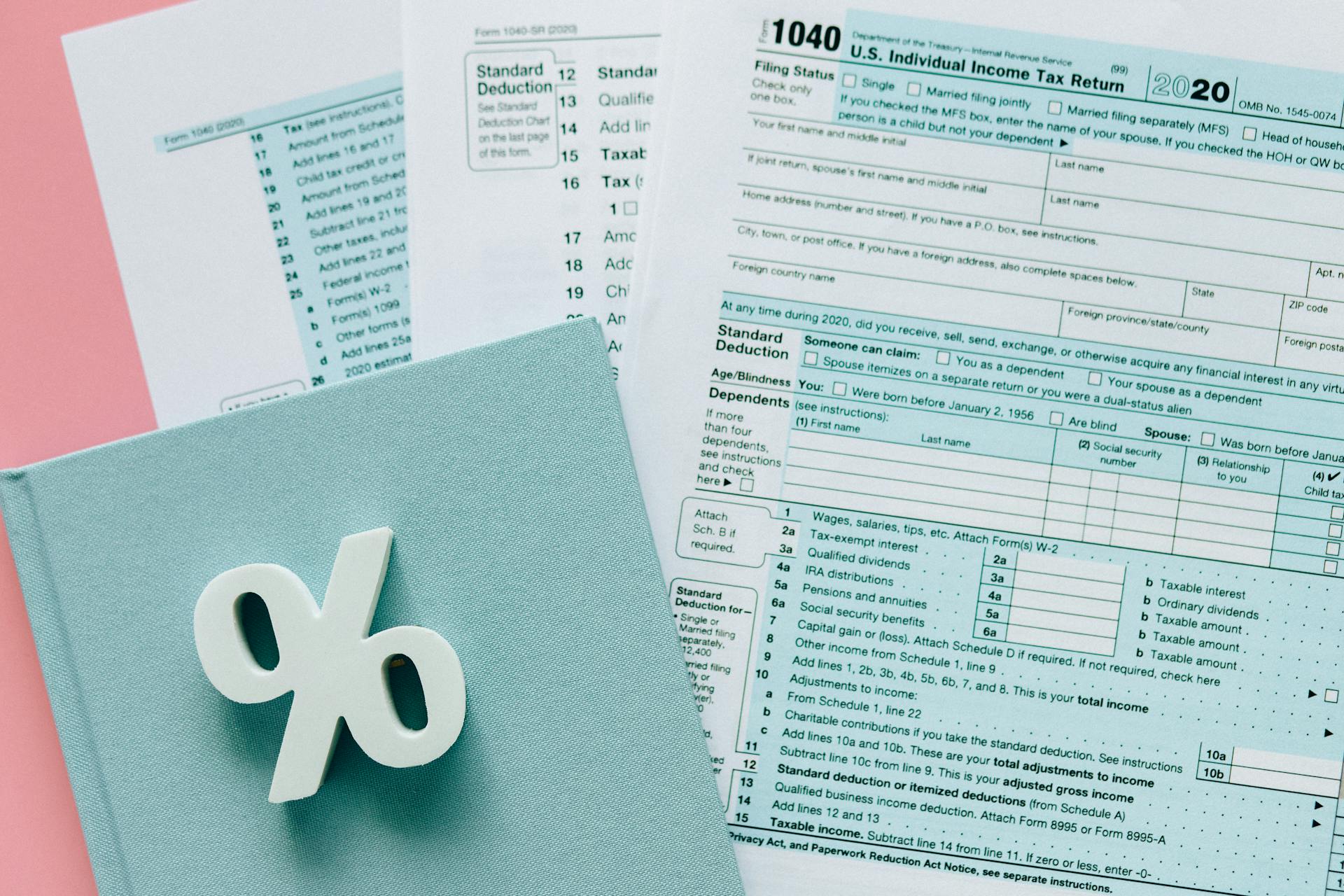
Filing returns can be a daunting task, especially for businesses operating in Italy. Italian VAT-registered businesses are required to submit periodic VAT returns, known as 'dichiarazioni IVA'.
The due date for these returns is the last day of April following the end of the tax year. This means that businesses need to ensure they have all the necessary documents and information ready to submit on time.
Depending on the size and nature of the business, quarterly or monthly returns might also be required. This adds an extra layer of complexity to the filing process.
Businesses can simplify their VAT filings by automating and centralising the process with tools like FileVAT. This can save time and costs, making the process more efficient and manageable.
For another approach, see: Us Corporate Tax Rate over Time
Refund Basics
To get a refund, you'll need to save your receipt for the goods you bought. It's also a good idea to have your airplane or travel back tickets ready to show.

The minimum purchase amount to request a tax refund is 175€, but this can vary depending on the country you're bringing the items to.
To receive a refund, you'll need to carry the items with you without giving them to a third person. This is a crucial step, as you won't be able to get a refund if you've given the items away.
Here's a quick rundown of the steps to get a refund:
- Save the receipt for the goods you bought
- Have your airplane or travel back tickets ready to show
- Carry the items with you without giving them to a third person
- Go to a refund station
- Fill an official form
You'll receive a custom stamp for the items you purchased, and you'll get your money back via cash or bank transfer if you do everything correctly.
Automation and Benefits
Automation and AI are revolutionizing the way businesses handle IVA tax in Italy, reducing the risk of errors and streamlining the process.
Automation can automate VAT filings and customs clearance, making it easier for businesses to stay compliant with regulations.
Real-time regulatory updates provided by automation and AI help businesses stay informed and up-to-date on the latest requirements.
Automation and AI can save businesses time and costs by centralising and optimising the VAT filing process.
FileVAT, for example, allows businesses to automate and centralise their VAT filings, making it a valuable tool for businesses looking to streamline their processes.
Special Cases
In Italy, there's a special 5% VAT rate for certain goods and services, including tickets for live theatrical performances and concerts, excluding luxury or VIP ones.
This special rate also applies to social services like those provided by retirement homes, rehabilitation centres, and child care services.
Temporary exemptions from VAT are allowed for special events like international exhibitions, cultural events, and trade fairs, which can benefit e-commerce businesses participating in or supplying these events.
Temporary Exemptions for Special Events
Temporary exemptions for special events can provide a significant financial advantage for e-commerce businesses participating in or supplying international exhibitions, cultural events, and trade fairs in Italy.
Italy allows for temporary VAT exemptions for these types of events, which can be a game-changer for businesses looking to optimize their operations and stay compliant with local regulations.
E-commerce businesses need to stay updated on these exemptions to navigate the complex Italian VAT landscape and ensure their operations remain compliant and financially optimized.
Temporary exemptions can be a huge advantage for businesses participating in or supplying special events, but it's essential to understand the intricacies of VAT exemptions in Italy to make the most of them.
Discover more: How to E Verify Income Tax Return through Net Banking
The Special Rate
Italy has a special 5% VAT rate for certain specific goods and services.
This rate applies to tickets for live theatrical performances and concerts, excluding those considered luxury or VIP.
Certain social services, such as services provided by retirement homes, rehabilitation centres, and child care services, are also taxed at this special rate.
Some foodstuffs are taxed at a reduced rate of 5%, including those provided by retirement homes and rehabilitation centres.
Tickets for admission to certain sports events are also taxed at this rate.
Here's a list of some goods and services taxed at the 5% rate:
- Tickets for live theatrical performances and concerts
- Certain social services
- Some foodstuffs
- Tickets for admission to certain sports events
- Certain passenger transport
Note that this rate is lower than the standard VAT rate of 22% and can help reduce the financial burden on individuals and businesses.
Shopping and Transactions
If you're planning to shop in Italy, you're in luck - tax-free shopping is available to non-EU residents.
To qualify, you'll need to spend at least €70.01, a threshold that was lowered from €154.95 in December 2023.
If you're a business or professional, you'll need a VAT number to operate in Italy, and VAT registration is obligatory for anyone involved in business or artistic activities on a regular basis.
For non-resident traders, the distance selling VAT registration threshold is €35,000 per annum, which means you won't need to register for VAT if your sales are below this amount.
Here are some key rules to keep in mind when shopping or conducting business in Italy:
- Make sure your invoices include the required information, as specified by the Italian VAT Directive.
- Use e-invoices and follow the necessary compliance and control procedures, including signature and authenticity verification.
- Keep accurate bookkeeping records, also known as VAT Registers, and prepare them according to Italian regulations.
- Invoice customers correctly, following the Italian time of supply VAT rules.
- Treat credit notes and other corrections in accordance with Italian regulations.
- Use approved foreign currency rates when necessary.
Shopping
Shopping in Italy can be a great way to save some money, especially if you're a non-EU resident. You can get a VAT refund on your purchases, which can help boost your savings.
The Italian government has made it easier to get a VAT refund by lowering the minimum spending threshold from €154.95 to €70.01 in December 2023. This change came into effect in February 2024, making it more accessible to tourists and shoppers alike.
For your interest: Can You Get a Refund on Business Taxes

To be eligible for a VAT refund, you'll need to have a valid receipt from an Italian store. Just make sure to ask for a VAT refund receipt when you make your purchase.
If you're planning to shop in Italy regularly, you might need to register for a VAT number. This is required for businesses, agricultural activities, and professional activities on a regular basis. The good news is that there's no VAT registration threshold for non-resident traders, except for distance selling, which requires a turnover of €35,000 per annum.
Here's a quick rundown of the key VAT registration requirements:
- Information that must be included in Italian VAT invoices
- Use of e-invoices, including compliance and control procedures with the signature and authenticity of an invoice
- How to keep and prepare VAT Registers, also known as bookkeeping records
- Correct invoicing of customers for goods or services in accordance with the Italian time of supply VAT rules
- Treatment for credit notes and other corrections
- Use of approved foreign currency rates
By following these rules and requirements, you can ensure a smooth and hassle-free shopping experience in Italy.
Transactions
Transactions can be a breeze with the right knowledge. Cash is still widely accepted in many stores, but credit and debit cards are becoming increasingly popular.
Mobile payments are on the rise, with many retailers now accepting contactless payments through services like Apple Pay and Google Pay. This is especially convenient for small purchases.

Online transactions are also common, with many websites offering a secure payment process through services like PayPal. This allows users to make purchases without sharing their financial information.
In-store transactions can be completed quickly and efficiently with the use of self-service kiosks and mobile checkout apps. This can help reduce wait times and make the shopping experience more convenient.
Some retailers are also introducing digital wallets, which allow customers to store their credit card information securely and make payments with just a tap. This is a convenient option for frequent shoppers.
General Information
In Italy, the tax point for goods is considered as the point of transfer of title, i.e., when the goods are placed at the disposal of the customer.
The tax point for supplies in Italy is the date of payment or partial payment, which is a deviation from the regular EU rules of the time of completion of the services.
Understanding VAT tax in Italy is crucial for both businesses and consumers, as it can impact compliance, identify potential tax savings, and integrate financial strategy with business operations.
Managing VAT tax in Italy requires attention to detail, from registration to filing returns, to ensure accuracy and compliance.
The VAT refund process for tourists in Italy is a useful tip that many travelers might not be aware of, and it's great that you can get a refund on certain purchases.
Here are some key points to keep in mind when dealing with VAT tax in Italy:
- The VAT tax threshold in Italy is an important consideration for small businesses.
- The VAT tax system in Italy has standard and reduced rates, which are applied differently to various products.
- The VAT tax exemptions in Italy can offer businesses a strategic advantage, but it's essential to know what products or services qualify.
It's fascinating to see how VAT tax in Italy impacts both local businesses and international trade, and it's great that you can learn from the experiences of others, like Adler, who found the article to be a comprehensive overview of the VAT tax in Italy.
Frequently Asked Questions
What is the difference between IVA and VAT?
IVA and VAT are essentially the same thing, with IVA being the Italian term for Value-Added Tax (VAT). In Italy, IVA is already included in prices, so you don't need to pay it separately.
Do tourists pay VAT in Italy?
No, tourists do not pay VAT in Italy, but some non-EU residents may be eligible for a refund on certain purchases. Check if you qualify for tax-free shopping on luxury goods and high-end fashion items.
Featured Images: pexels.com