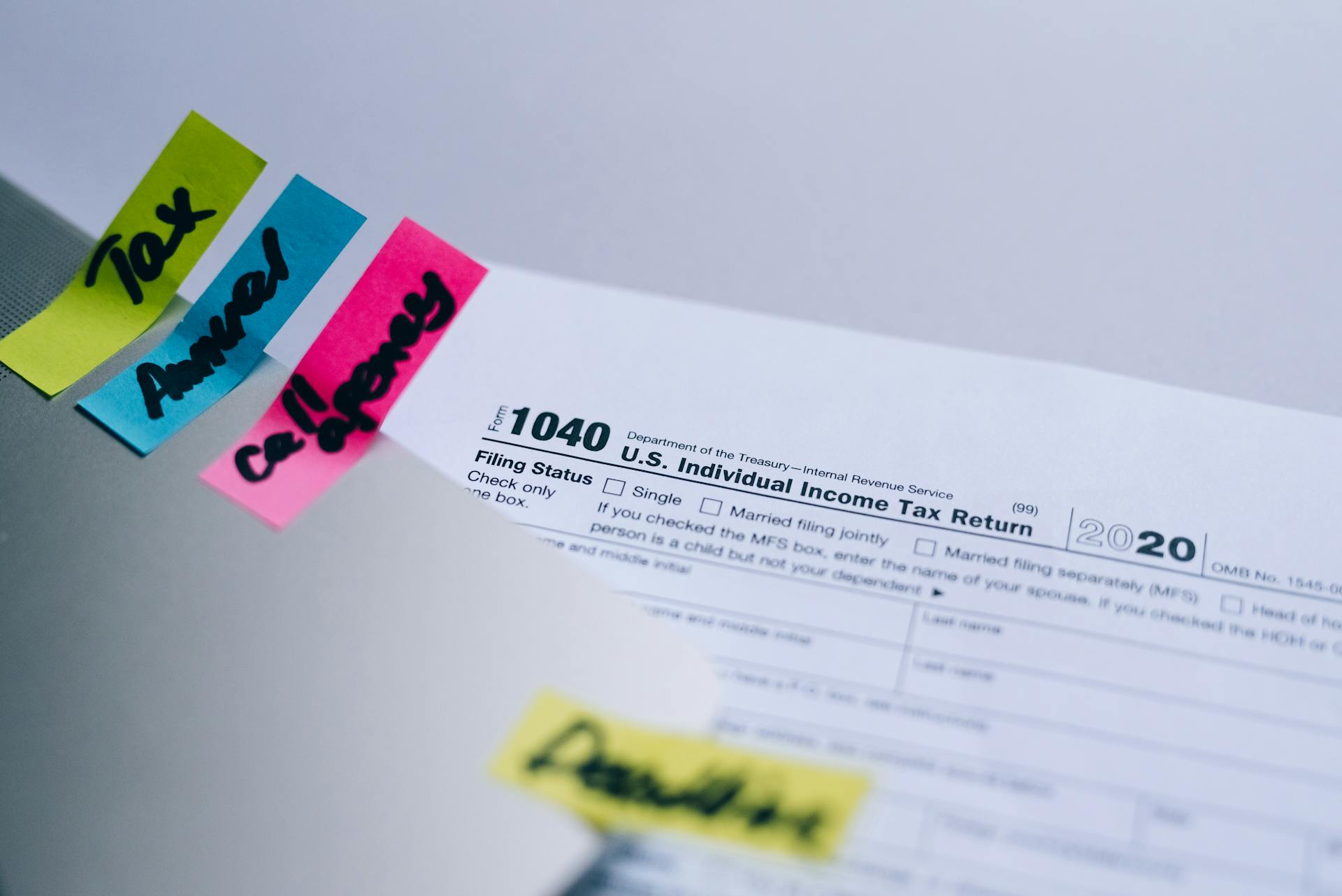
So, you're wondering if a tax ID number is the same as an EIN? Let's break it down. A tax ID number is actually a generic term that can refer to a variety of identification numbers used for tax purposes.
In the US, the most common tax ID number is the EIN, which stands for Employer Identification Number. An EIN is a unique nine-digit number assigned to businesses and organizations for tax purposes.
The IRS issues EINs, and they're required for businesses that have employees, file taxes, or are required to make tax payments. You can think of an EIN as a social security number for your business.
A tax ID number can also refer to a state tax ID number, which is used for state tax purposes. These numbers are usually assigned by state tax authorities.
Recommended read: What Is Required for Tax Return
What Is a
A Tax ID number is a nine-digit number used for tax purposes, and it's also known as a Taxpayer Identification Number (TIN) or Federal Taxpayer Identification Number.
It's assigned by either the Internal Revenue Service (IRS) or the Social Security Administration, unlike a Social Security Number (SSN), which is used for an individual's tax and social security benefits.
The IRS uses the EIN to identify businesses with certain tax obligations, such as limited liability companies (LLC), partnerships, and corporations.
A federal employer ID number (FEIN) is simply another way of describing the EIN used for filing federal income tax returns.
Businesses with employees must get an EIN through the IRS, while those without employees, such as sole-owner LLCs, can use the owner's Social Security Number to file a tax return.
Here are some reasons why a business might need an EIN:
- Open an account requiring an EIN for banking or a line of credit
- Purchase or inheritance of a business by a new owner who will be running it as sole proprietor
- Change in the ownership of a business, such as sole proprietorship, partnership, or corporation
- Form or create a trust, pension plan, corporation, partnership, or LLC
- Represent an estate that takes over a business following the death of a sole proprietor
Is a Tax ID Number the Same as an EIN?
A Tax ID number is not the same as an EIN, but it's close. An EIN is a type of Tax ID number that's specifically assigned to businesses by the IRS.
Curious to learn more? Check out: Can I Lease My Car to My S Corp
An EIN is a 9-digit number that helps the IRS identify your company and keeps tabs on taxes you must pay and any rebates you may be eligible for. In fact, an EIN is just one of several types of tax ID numbers.
The key difference between a Tax ID and an EIN is that an EIN can only be obtained through the IRS, while a Tax ID can also be obtained through social security services. This is because a Tax ID is an umbrella term that comprises several different types of taxpayer identification numbers, including EINs.
Here are some key differences between a Tax ID and an EIN:
- An EIN is one of several types of tax ID numbers.
- An EIN is assigned to businesses only, not individuals.
These differences are important to understand, especially when it comes to tax purposes. So, while a Tax ID number and an EIN are related, they're not exactly the same thing.
Types of Numbers and IDs
There are several types of numbers and IDs used for tax purposes in the US. A Social Security Number (SSN) is a type of Taxpayer Identification Number (TIN) that gives you the right to citizenship in the US and classifies you as an individual taxpayer.
An Individual Taxpayer Identification Number (ITIN) is a number issued to individuals who are non-residents or residents, as well as their spouses and dependents, and is also issued to anyone ineligible to be assigned an SSN.
An Employer Identification Number (EIN), also known as a Federal Tax Identification Number (FTID), is a type of TIN issued by the IRS to businesses with specific criteria, such as those with employees.
Here are the different types of TINs you can acquire and what they mean for you:
- Social Security Number (SSN)
- Individual Taxpayer Identification Number (ITIN)
- Employer Identification Number (EIN)
- Adoption Taxpayer Identification Number (ATIN)
- Preparer Tax Identification Number (PTIN)
- State-Issued Tax ID Numbers
Each of these TINs serves a specific purpose and is used for different types of tax obligations.
What Is a Number?
A Tax ID number is a nine-digit number, and it's also known as the Taxpayer Identification Number (TIN) or Federal Taxpayer Identification Number.
It's used primarily for tax purposes, unlike a Social Security Number (SSN), which is used for an individual's tax and social security benefits.
Discover more: How Does Social Media Help a Business
Types of Numbers

There are several types of numbers used for identification and tax purposes in the US. A Social Security Number (SSN) is a nine-digit number that gives you the right to citizenship in the US and classifies you as an individual taxpayer. You can apply for an SSN by filling out and submitting an SS-5 form.
Individuals who are non-residents or residents, as well as their spouses and dependents, may be issued an Individual Taxpayer Identification Number (ITIN). This type of TIN is also issued to anyone ineligible to be assigned an SSN. To get an ITIN, you must complete and submit a W-7 form.
Businesses that are responsible for the employment of others need an Employer Identification Number (EIN). This type of TIN is also often referred to as a Federal Tax Identification Number (FTID) and is issued by the IRS to businesses with specific criteria. Anyone applying for an EIN must fill out an SS-4 form.
Readers also liked: Tax Classification Categorization Tags Entity Type Tags Sole Proprietorship

Other types of TINs include the Adoption Taxpayer Identification Number (ATIN), which is a temporary nine-digit number issued by the IRS to individuals who are in the process of legally adopting a U.S. citizen or resident child. The Preparer Tax Identification Number (PTIN) is also used by tax professionals who submit tax returns to the IRS on behalf of other taxpayers. You can obtain a PTIN by completing a W-12 form.
State-Issued Tax ID Numbers are also issued to businesses that operate in states that require them to pay state taxes. These numbers are issued by the state after you register your business there.
Here's a summary of the different types of TINs:
Applying for a Tax ID Number
You can apply for a Tax ID number through the IRS, and it's a relatively straightforward process. To start, you'll need to specify the type of TIN you intend to apply for, which is usually an EIN for businesses.
Businesses applying for an EIN can only do so through the IRS, and there are different forms you'll need to fill out depending on the type of TIN you're applying for.
You can apply for an EIN using the EIN Assistant on the IRS website, which is the fastest way to get your EIN. If your principal business is located in the US or its territories, you can get your EIN immediately after completing the application.
Alternatively, you can mail or fax a completed Form SS-4 to apply, but this can take up to four weeks by mail or four business days by fax. International applicants can apply by calling the IRS at its international line.
Before you apply, it's essential to form your entity first, especially if you're creating a legal entity like an LLC, partnership, or corporation. Registering your entity with your state is a crucial step before applying for an EIN.
Here's a quick guide to applying for an EIN or a TIN based on your needs:
- Use the EIN Assistant on the IRS website for a fast and immediate EIN
- Mail or fax a completed Form SS-4 for a longer processing time
- Call the IRS international line for international applicants
Remember, having an EIN is crucial for businesses that employ people, and it's also required for corporations, LLCs, and limited partnerships.
TIN and EIN Requirements
An Employer Identification Number (EIN) is a 9-digit number issued to businesses by the IRS to identify their company and track taxes.
You can use your EIN for paperwork related to your company's tax returns or reports, but not for individual tax purposes.
To determine which tax ID number you need, consider your status and purpose: individuals use Social Security Numbers (SSNs) or Individual Taxpayer Identification Numbers (ITINs) for personal income tax filing, while businesses with employees must obtain an EIN.
Here's a breakdown of the different types of tax ID numbers:
If you're unsure which applies to your situation, consulting a tax professional or legal advisor is recommended.
For another approach, see: What Does Accredited by Better Business B Mean
Understanding TIN and EIN Differences
An Employer Identification Number (EIN) is a type of Tax Identification Number (TIN), but they're not the same thing. An EIN is specifically assigned to businesses by the IRS to keep track of their tax status, while TINs can be used to identify individual taxpayers and other entities as well.
Recommended read: Ein Employer Identification Number
TINs include a range of identifiers, such as Social Security Numbers (SSNs) for individual taxpayers, Individual Taxpayer Identification Numbers (ITINs) for certain nonresidents, and Employer Identification Numbers (EINs) for business entities.
An EIN is one of several types of tax ID numbers, and it's assigned to businesses only, not individuals. This means that if you're a sole proprietor without employees, you can often use your SSN instead of obtaining an EIN.
Here's a breakdown of the different types of TINs:
Understanding the differences between TINs and EINs can help you navigate the complex world of tax identification numbers and ensure you're using the right number for your business or personal needs.
Common Issues and Solutions
A Tax ID number is not the same as an EIN, but they're often used interchangeably. The IRS uses EINs to identify businesses and tax-exempt organizations.
The main difference between a Tax ID number and an EIN is that a Tax ID number is typically used for individual taxpayers, while an EIN is used for businesses and organizations.
Here's an interesting read: Compliance Management Process in 2025: a Practical Roadmap for High-Trust Organizations
Need Help?

If you're unsure about obtaining an EIN or TIN, don't worry, you're not alone. Many business owners struggle with the different types of tax identification numbers. If you're planning to operate a single-member LLC with no employees or a sole proprietorship, your Social Security Number (SSN) will be the tax ID.
However, if you hire employees in your LLC or file excise tax returns as a sole proprietor, you'll need to obtain a proper Tax ID for business, which is an EIN. You can also consider applying for an Individual Taxpayer Identification Number (ITIN) if you're living overseas but want to operate a business in the US.
Here's a quick rundown of the different types of TINs:
If you're unsure about which type of TIN you need, consider consulting with a professional or seeking guidance from the IRS. Remember, it's always better to be safe than sorry when it comes to tax identification numbers.
Correcting Application Errors

Mistakes happen, and correcting them as soon as possible is crucial to avoid bigger problems later.
If you've realized there's an error in your EIN or TIN application, it's essential to correct it promptly. Mistakes in EIN or TIN applications can have serious consequences, so don't delay.
To fix errors in your EIN application, you'll need to reapply, and if you've already been assigned an EIN, you'll need to contact the IRS to have it corrected. The sooner you correct the error, the better.
Correcting errors in TIN applications requires a different approach, and you should know how to fix errors for each type of TIN.
Intriguing read: Bmg Loan Application
International and Business Operations
In international and business operations, having the right numbers can be a challenge. EINs and TINs play a crucial role in overall business operations, acting as identifiers for legal and tax affairs.
You'll need to have these numbers on hand when running a business, as they'll assist you in keeping up to date with your finances and the requirements of the IRS.
For another approach, see: Angel Numbers for Business Growth
International Applicants

If your business is based outside the U.S., you can apply for an Employer Identification Number (EIN) by phone or mail.
You can call the IRS at 267-941-1099, Monday through Friday, from 6 a.m. to 11 p.m. Eastern time.
To apply by mail, you can submit Form SS-4 to the Internal Revenue Service at Cincinnati, OH 45999, Attention: EIN International Operation.
You can also fax the form, but you'll need to use a specific fax number depending on your location - 855-215-1627 within the U.S. or 304-707-9471 outside the U.S.
Keep in mind that you can only apply for one EIN per day, whether you're applying online, by phone, mail, or fax.
Consider reading: How Does Finra Find Out about outside Business Activity
Business Operations
Businesses that employ people are legally required to have an Employer Identification Number (EIN). This is a crucial step to ensure compliance with tax laws.
Having an EIN also helps businesses keep up to date with their finances and IRS requirements. It's a vital identifier for legal and tax affairs.

Businesses that operate under a corporation, LLC, or limited partnership are also required to have an EIN. This is a standard practice for these types of business structures.
To run a business smoothly, having an EIN and Tax ID number on hand is essential. These numbers will assist you in managing your finances and staying compliant with tax laws.
The type of tax ID required for a business depends on the form of business being operated. This will determine the type of taxes you'll be required to pay and the type of tax ID you'll need.
See what others are reading: What Type of Business Is Doordash for Taxes
Key Concepts and Takeaways
A Tax ID Number (TIN) is a broad term that includes several types of identification numbers used for tax purposes, including EINs, SSNs, and ITINs. These numbers serve different purposes depending on the entity type.
An Employer Identification Number (EIN) is one specific type of TIN used exclusively by businesses and entities. This means that businesses and entities need an EIN for tax purposes.
Intriguing read: Transcribe Numbers
EINs are used for hiring employees, opening business accounts, and filing business tax returns. Other TINs, like SSNs, serve individual or specialized roles.
Entities may need separate EINs for state-level and federal-level identification. This can get confusing, but it's essential to understand the difference.
Here's a quick rundown of the types of TINs:
- EIN: used by businesses and entities for tax purposes
- SSN: used by individuals for tax purposes
- ITIN: used by non-resident aliens for tax purposes
Sole proprietors without employees can often use their SSN instead of obtaining an EIN. This can save them the hassle of getting an EIN, but it's essential to check if it's allowed in their state.
Frequently Asked Questions
How do I find my tax ID number?
Your tax ID number is your Social Security number if you're an individual, or your Employer Identification Number (EIN) if you're a business or organization. To find your EIN, check your tax documents or contact the IRS for assistance.
Featured Images: pexels.com