
Interest rates can be a complex topic, but understanding the basics can help you make informed financial decisions. There are several types of interest rates, including fixed and variable rates.
A fixed interest rate remains the same for the entire term of the loan, while a variable interest rate can change over time. For example, a 5-year mortgage with a fixed interest rate of 4% will have the same interest rate for the entire 5 years.
Variable interest rates can be tied to a specific benchmark, such as the prime lending rate, which is the interest rate that banks charge their most creditworthy customers. This means that if the prime lending rate changes, your variable interest rate may also change.
Understanding the differences between fixed and variable interest rates can help you choose the right option for your financial situation.
Here's an interesting read: Priority Sector Lending Certificates
What is an Option?
An option is a financial contract that gives the buyer the right, but not the obligation, to buy or sell an underlying asset at a predetermined price on or before a certain date.

Options come in two main types: call options and put options. A call option gives the buyer the right to buy an asset, while a put option gives the buyer the right to sell an asset.
The strike price is the predetermined price at which the buyer can buy or sell the underlying asset. For example, if the strike price is $50, the buyer can buy the asset for $50 or sell it for $50.
Options have an expiration date, after which the option becomes worthless if it is not exercised. This means the buyer has a limited time frame to decide whether to exercise the option or let it expire.
The premium is the price paid for the option, which is usually a fraction of the underlying asset's price. For instance, a $100 option might cost $5, which is 5% of the underlying asset's price.
Worth a look: 5 Year Interest Only Mortgage Rates
Types of Options
Interest rate options come in various forms, each designed to manage risk associated with interest rate fluctuations differently. One common type is the interest rate cap, which sets an upper limit on the interest rate a borrower will pay.

If interest rates rise above this cap, the issuer compensates the holder, helping to manage the cost of variable-rate debt. This is particularly beneficial for businesses and investors who want to protect themselves from rising interest rates.
An interest rate floor acts as the counterpart to caps by setting a minimum interest rate level. If rates fall below this minimum, the holder receives payment.
This is beneficial for investors seeking to ensure a baseline return. For instance, if you're looking to invest in a variable-rate bond, an interest rate floor can guarantee you a minimum return, even if interest rates drop.
Interest rate collars involve simultaneously purchasing a cap and selling a floor (or vice versa), limiting exposure to interest rate movements within a specified range. This strategy offers a balance of protection and cost, allowing for more predictability in financial planning.
A swaption gives the holder the right, but not the obligation, to enter into an interest rate swap under predetermined terms. This can be used to manage existing swap agreements or to speculate on future interest rate movements.
Here are some common types of interest rate options:
How Options Work

An interest rate option is a financial derivative contract that gives the holder the right, but not the obligation, to buy or sell a debt instrument at a predetermined interest rate within a specified period.
Interest rate options can be exercised only on the expiration date, which is a key difference from equity options that can be exercised at any time before and on the expiration date.
The payoff from an interest rate option is not made until the end of the number of days attached to the rate, and it's calculated based on the spread between the yield of the underlying security on the expiration date and the original strike rate of the option.
The buyer of an interest rate option pays a premium, also known as the price of the options contract, to acquire the right to receive a cash settlement if interest rates move in their favor.
Check this out: Options Arbitrage
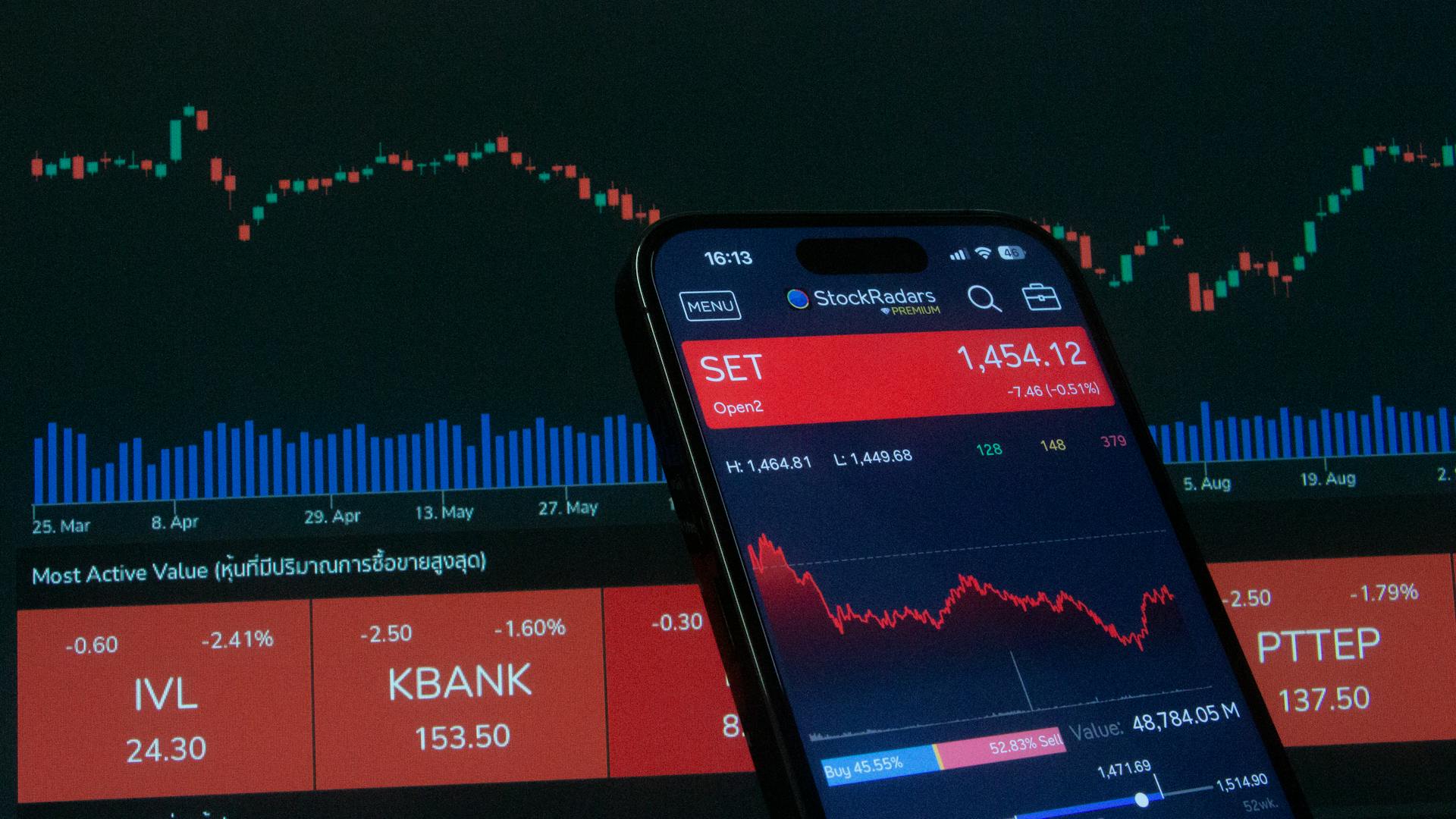
If interest rates don't move in the option holder's favor enough to overcome the strike rate, the option will expire worthless, and the option holder incurs the total loss of their premium.
Interest rate options can be used to benefit from changes in interest rates, and they can help banks, businesses, and some investors manage risk associated with abrupt rate jolts caused by central bank moves or geopolitical shifts.
The payoff from an interest rate call option is calculated as (Reference Rate at Expiry – Strike Rate) x 100 – Premium Paid, which shows that the maximum loss the owner of an interest rate call option can expect is limited to the premium paid.
Interest rate put options give the put holder the right to receive payment based on the difference between the strike rate and the yield on the underlying security at expiration, and the maximum loss the buyer of an interest rate put option will incur is limited to the premium paid.
The strike rate on interest rate options reflects a rate that's multiplied by 10 and expressed in dollar terms to standardize pricing, so a 5.0% rate converts to a strike price of $50.
A fresh viewpoint: Lynton and Barnstaple Railway Company Limited
Benefits and Risks

Interest rate options offer several benefits, including risk management, customization, lower upfront cost, and speculative trading opportunities.
One of the main advantages of interest rate options is risk management, which allows investors to hedge against changes in interest rates. This can help protect investors from interest rate risk associated with assets such as government bonds and money market securities.
Here are some potential risks associated with interest rate options:
- Potential loss of value: Can lose value if interest rates move unfavorably.
- Lack of understanding: Trading interest rate options can be very risky and requires an understanding of how options are valued along with the effects of interest rates.
- Margin structure risks: Poorly hedged positions in interest rate call options can lead to significant losses.
Investors should also be aware of counterparty risk, which is greater in derivatives sold over the counter, including interest rate options. This means that the option buyer is dependent on the seller for the fulfillment of contractual obligations, and if the seller defaults, the option holder loses their investment.
Curious to learn more? Check out: Seller Financing Rates
Advantages
Interest rate options offer several benefits that can be a game-changer for investors. Here are some of the advantages of using interest rate options:
Risk management is a key benefit of interest rate options. They allow investors to hedge against changes in interest rates, protecting themselves from potential losses.

Investors can use interest rate options to tailor their investments to their specific needs. By choosing strike prices and expiration dates, they can align their options with their investment goals.
Interest rate options are generally more accessible than directly trading interest rate products. This is because they often require less capital upfront, making them a more affordable option for a wider range of investors.
Interest rate options provide opportunities for speculative trading. Call options can be used to potentially profit from increasing interest rates, while put options can be used to potentially benefit from decreasing rates.
Here are some of the key benefits of interest rate options:
- Risk management: Allows investors to hedge against changes in interest rates.
- Customization: Tailors interest options to help meet their specific needs.
- Lower upfront cost: Generally requires less capital upfront.
- Speculative trading opportunities: Provides opportunities for speculation.
Risks
Risks of interest rate options can be significant, and it's essential to understand them before investing. Interest rate options can lose value if interest rates move unfavorably, and if the option expires out-of-the-money, the investor may lose their initial investment.
The complexity of trading interest rate options can also lead to losses, particularly if the trader lacks understanding of options valuation and interest rates. Margin structure risks can also result in significant losses if not managed properly.

Investors should be aware of the potential loss of value, lack of understanding, and margin structure risks associated with interest rate options. Poorly hedged positions in interest rate call options can lead to significant losses, especially if margin requirements are not managed properly.
Here are some specific risks to consider:
- Potential loss of value: Can lose value if interest rates move unfavorably.
- Lack of understanding: Trading interest rate options can be very risky and complex.
- Margin structure risks: Poorly hedged positions in interest rate call options can lead to significant losses.
Counterparty risk is also a concern, particularly in derivatives sold over the counter, such as interest rate options. If the seller defaults on an obligation, the option holder loses their investment.
Factors Affecting Prices
Several key factors influence the prices of interest rate options.
Interest rates have a fundamental impact on options pricing, primarily through their effect on the cost of carrying an investment. This relationship is largely due to the concept of the time value of money: money available today is worth more than the same amount in the future because of its potential earning capacity.
Higher interest rates generally increase the cost of holding a position, which in turn affects call and put option prices differently. For call options, higher interest rates typically lead to higher premiums because the increased cost of carry makes purchasing the option more attractive than buying the underlying asset outright.
With put options, they usually decrease in value as interest rates rise as the cost of carrying a short position becomes more expensive.
Suggestion: Synthetic Position
Understanding Options
An interest rate call option gives the buyer the right, but not the obligation, to pay a fixed rate and receive a variable rate.
The underlying asset of an interest rate option can be an interest rate, such as the yield of a three-month Treasury bill or 3-month London Interbank Offered Rate (LIBOR).
An interest rate call option is exercised when the underlying interest rate at expiration is higher than the strike rate, allowing the buyer to benefit from the increase in value.
The payoff from an interest rate call option is calculated by finding the present value of the difference between the market rate and the strike rate, multiplied by the notional principal amount.
Here are some key factors to consider when understanding interest rate options:
- Market expectations: Interest rate options can indicate whether the market expects interest rates to rise, fall, or remain stable.
- Volatility: Options pricing can provide insights into the volatility of interest rates expected by the market.
- Economic sentiment: Interest rate options can serve as a barometer for economic sentiment and financial market stability.
Interest rate call options can be used by lending institutions to lock interest rates offered to borrowers, and by investors to hedge a position on a loan in which floating interest rates are paid.
Options Mechanics
The strike price is the predetermined interest rate at which the underlying asset will be bought or sold if the option is exercised, and it's crucial in determining the profitability of the option.
A call option grants the holder the right to buy the underlying asset at the predetermined interest rate, known as the strike price, before the option’s expiration date. This is typically exercised when the underlying interest rates are expected to rise.
The payoff from an interest rate option is not made until the end of the number of days attached to the rate, and it should be discounted to the present time by finding the present value of the payoff.
You might like: Asset Swap
Mechanics
The strike price is a crucial factor in determining the profitability of an option, representing the predetermined interest rate at which the underlying asset will be bought or sold if the option is exercised.
This predetermined interest rate is essential in understanding how interest rate options work, and it's what sets the terms for the option's exercise.
The strike price is a key component in interest rate option mechanics, and it's what gives the holder the right to buy or sell a debt instrument at a predetermined interest rate.
Interest rate options allow the holder to potentially benefit from changes in interest rates, and they're typically based on underlying instruments such as Treasury bills, government bonds, or interest rate swaps.
These underlying instruments can help banks, businesses, and some investors manage risk associated with abrupt rate jolts caused by central bank moves, or geopolitical shifts.
Premium
The option premium is a cost that buyers pay when acquiring an interest rate option. This premium is typically paid upfront.
The option premium compensates the seller for taking on the obligation to buy or sell the asset at the predetermined interest rate, as seen in interest rate options.
For more insights, see: Volatility Risk Premium
Hedging
Hedging with interest rate options can be a smart move for investors and corporations alike. It helps protect against fluctuations in interest rates that can affect the value of investments.
By purchasing call options, a corporation can secure the right to buy the underlying asset at a predetermined rate, thus protecting themselves from potential losses caused by increasing interest rates. This is a practical application of interest rate options, as illustrated in the scenario of hedging against rising interest rates.
Hedging risk with interest rate options involves using financial instruments to help protect against interest rate changes. Interest rate cap and interest rate floors, for example, are options that limit the interest rate movement.
Employing these strategies allows investors and borrowers to stabilize their financial outlook, providing a measure of predictability and security in the face of volatile interest rate movements. This is a key advantage of hedging with interest rate options.
Some common examples of hedging with interest rate options include:
- Interest rate cap (limits the interest rate movement)
- Interest rate floor (limits the interest rate movement)
- Interest rate options (derivatives that allow investors to hedge against interest rate changes)
It's essential to understand the advantages and risks of hedging with interest rate options. On the one hand, it offers the ability to manage interest rate risk and potential for significant returns. On the other hand, it comes with inherent risks, including the possibility of losing the entire option premium and the complexities associated with predicting interest rate movements accurately.
Help
If you're struggling to understand how call options work, don't worry, it's easier than you think.
A call option gives the holder the right to potentially benefit from rising interest rates, but it's essential to know when it's in-the-money. If the current market interest rate is higher than the strike price, you likely earn a profit.
You can determine if your call option is in-the-money by comparing the current market interest rate to the strike rate. For example, if the current market interest rate for a 10-year U.S. Treasury bond is 2.5% and the strike rate is 2%, your call option is considered in-the-money.
On the other hand, if the current market interest rate is lower than the strike rate, your call option is out-of-the-money and has no intrinsic value. However, it may still have time value if there's time left until its expiration and a chance that the interest rate could rise above the strike rate.
A fresh viewpoint: Money Factor to Interest Rate Converter
Frequently Asked Questions
Will stocks go up if interest rates get cut?
Yes, a rate cut can make stocks more appealing to investors, potentially leading to an increase in stock prices. This is because lower interest rates can make higher-yielding assets like stocks more attractive compared to bonds.
Featured Images: pexels.com