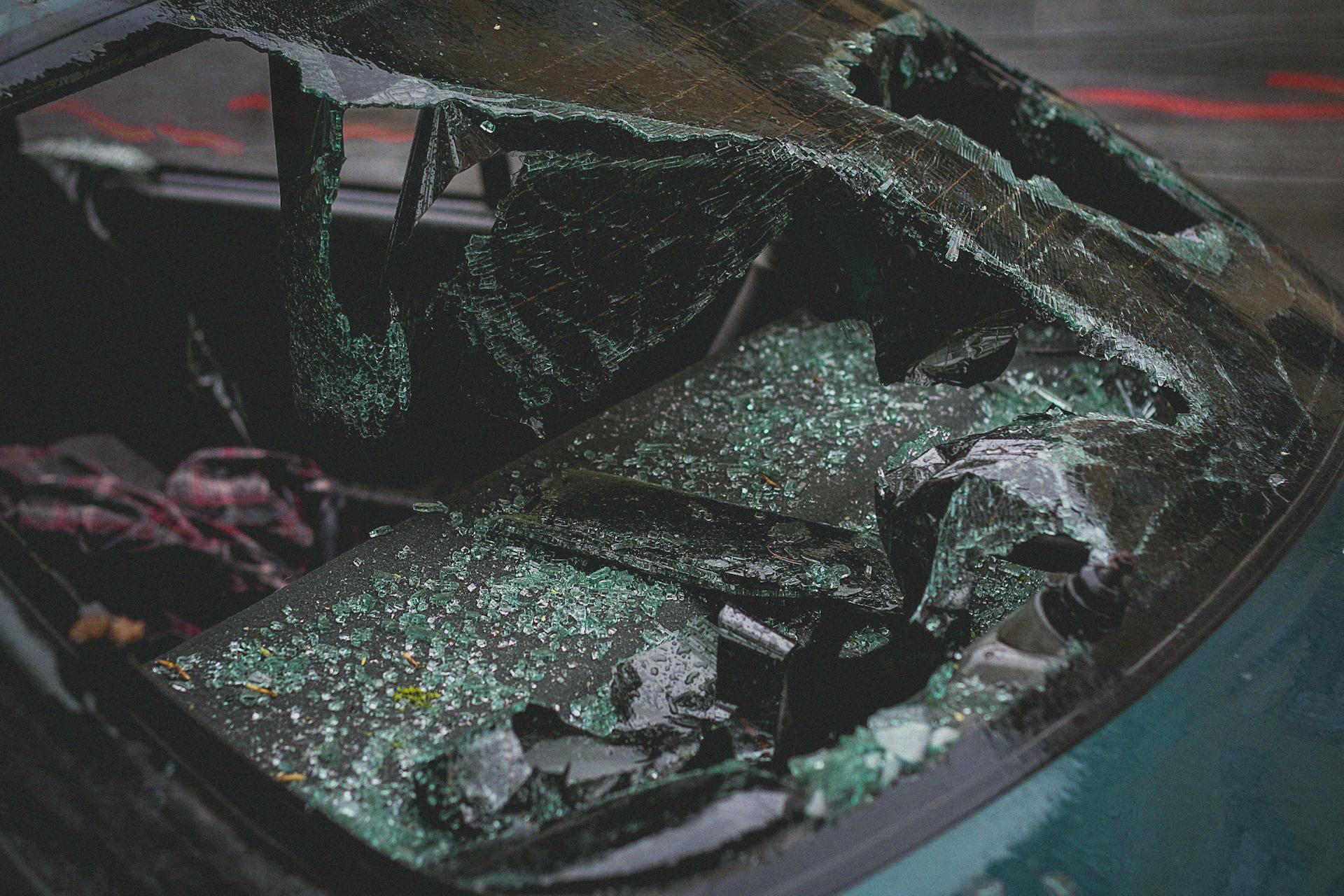
Filing a hail damage car insurance claim can be a stressful experience, but it doesn't have to be. To start, you'll need to contact your insurance company within a specific timeframe, typically 24 to 48 hours after the damage occurs.
Your insurance company will send an adjuster to assess the damage and determine the extent of the coverage. This is usually done within a few days, but it can vary depending on the severity of the damage and the adjuster's schedule.
The adjuster will inspect your vehicle and take photos and notes to document the damage. They may also use specialized equipment to measure the damage and determine the cost of repairs.
After the inspection, the adjuster will provide a report outlining the damage and the estimated cost of repairs.
Check this out: Will My Insurance Cover Car Wash Damage
Understanding Hail Damage
Hail damage can be unpredictable and devastating.
A single hail storm can produce hailstones up to 4 inches in diameter, causing extensive damage to vehicles.
The size and speed of hailstones determine the severity of damage, with larger and faster stones causing more destruction.
Most car insurance policies cover hail damage, but it's essential to review your policy to understand what's covered and what's not.
Hail damage can be more than just cosmetic, as it can compromise the structural integrity of a vehicle.
According to the article, hail damage to a vehicle's roof can be particularly problematic, as it can lead to costly repairs.
In some cases, hail damage may not be immediately apparent, so it's crucial to inspect your vehicle thoroughly after a hail storm.
The average cost of repairing hail damage can range from $1,000 to $3,000 or more, depending on the extent of the damage.
It's not uncommon for hail damage to affect multiple vehicles in a single storm, making it essential to document the damage and file a claim promptly.
You might like: Hurricane Helene Wind Storm Damage Homeowners Insurance Claim
Filing a Claim
You'll need to provide your insurance policy number, vehicle year, make, model, and body style, and the date of the incident to start the claims process. This information is usually requested on the phone or online.
If your vehicle isn't drivable or is at another location, a claims associate may examine it there. They'll review your insurance policy and the facts of the loss to determine what damages are covered under your policy.
To make the process smoother, have all the necessary information ready and be prepared to answer questions about the damage you experienced. You can also keep a record of everyone you speak with in case you need to refer back to something later.
Here are some key things to keep in mind when filing a claim:
- File digitally if that option exists
- File your claim as soon as possible to prevent additional damage
- Take photos of the damage for your records and avoid making permanent repairs until the damage has been assessed
Is Filing Worth It?
Filing a claim for hail damage can be a bit of a tricky decision. If your repair estimate amount is less than your deductible, you're better off paying for the repairs out of pocket.
Comparing your comprehensive deductible to the repair estimate is key. If the repair estimate is significantly more than your deductible, filing a claim may make sense.
It's a good idea to weigh the costs and benefits before making a decision.
A unique perspective: How to Appeal a Car Insurance Claim Decision
How to File
To file a claim, start by gathering some essential information, including your insurance policy number, vehicle year, make, model, and body style, and the date of the incident.
You'll need to contact your insurance company to report the damage and initiate the claims process. Don't be afraid to ask questions and take notes of the conversation.
Take photos of the damage to your home or vehicle for your records. Avoid making any permanent repairs until the damage has been assessed.
You can usually file a claim digitally if that option exists, which can help speed up the process. However, be aware that there may be longer-than-normal wait times for repairs due to the high volume of anticipated claims.
Save all receipts from emergency repairs, including basic items such as tarps and duct tape. Keep a record of everyone you speak with in case you need to refer back to something.
Consider reading: Car Accident Insurance Claim Process
Here's a checklist of what you'll need to file a claim:
- Insurance policy number
- Vehicle year, make, model, and body style
- Date of the incident
Be wary of scammers posing as contractors or dent-repair experts. Avoid agreeing to any repairs until you've worked with your insurance agent to determine your needs and coverage.
Assessing Damage
Assessing damage is a crucial step in the hail damage car insurance claim process. It's essential to document the extent of the damage to your vehicle.
Start by taking clear photos of the hail damage from multiple angles, including the front, back, and sides. This will help establish a visual record of the damage.
Keep in mind that hail damage can be more extensive than it appears, so be thorough in your assessment.
How Cars Work
If your vehicle is damaged, it's essential to understand the process of assessing the damage. This involves identifying the extent of the damage and determining the best course of action to repair it.
Most car insurance policies cover comprehensive damage, including hail damage, which can be filed online, through a mobile app, or over the phone.
Taking clear photos or video of the damage is crucial when filing a claim. This helps your insurance adjuster get a better understanding of the extent of the damage.
Your insurance adjuster can provide a repair estimate and recommend shops that can repair your vehicle. If you have a preferred body shop, you can connect them with your adjuster to see if they can reach an agreement.
You'll be responsible for paying your comprehensive deductible, and your insurer will pay for the rest of the repair costs up to your limit. Some insurers may pay the repair shop directly, while others may have you pay the repair shop and reimburse you.
Here's a step-by-step guide to filing a hail damage claim:
- Start your claim online, through a mobile app, or over the phone.
- Include photos or video of the damage in your claim or send them to your adjuster.
- Find out your repair options from your adjuster.
- Arrange payment for the deductible and any remaining repair costs.
Total Your Car
A bad hailstorm can total your car more easily than you'd think. Since hail typically hits an entire vehicle, your whole car is likely to be damaged, and such significant damage can be challenging to repair.
If your insurance company deems your vehicle a total loss and you have comprehensive coverage, they will likely write you a check for your car's actual cash value, minus your deductible.
You can then use that money however you'd like, which might be a relief if you're not sure if your car can be salvaged or if it's time to upgrade.
Repairing Your Car
Repairing hail damage on your car is a relatively straightforward process. Mechanics can sometimes fix dented areas using paintless dent removal, a technique that gently pushes the dents back to their original positions.
If the damage is extensive, conventional vehicle repair may be necessary. This method involves pulling out the dents and filling in the irregularities with a body filler.
The repair facility you select can recommend the best method for your vehicle's specific damage. They'll assess the situation and advise on whether paintless dent removal or conventional repair is the way to go.
For your interest: Vehicle Insurance Claim
In some cases, repairs may take only a few days, while in others, it may take longer due to the extent of the damage. The repair time will depend on the method used and the severity of the damage.
Here are some common repair methods:
- Paintless Dent Removal (PDR): Special molded tools are used to push out and smooth dents, without disturbing the painted surface.
- Conventional vehicle repair: Dents are pulled out and irregularities are filled in with a body filler.
Your repair facility can recommend which method is best suited to repair the damage to your vehicle.
Settling Your Claim
Settling Your Claim is a process that's unique to each individual situation. Each claim is handled based on its own facts and circumstances.
Policy language, including applicable exclusions, conditions, and limitations, plays a significant role in determining the outcome of your claim. Controlling law also comes into play.
In other words, your insurance company will examine your policy to see what's covered and what's not. This is why it's essential to review your policy carefully before filing a claim.
The information provided on insurance products, coverages, and terms is intended for informational purposes only. It doesn't replace the details in your individual insurance contracts, policies, and/or declaration pages.
Insurance products, coverages, terms, and discounts may vary by state, so it's crucial to check your policy for specific details. Exclusions may also apply, so be sure to review your policy carefully.
Here's an interesting read: How Do I Get My Money Back from Lapsed Policy
Featured Images: pexels.com