
Money markets are a vital component of the financial system, providing a platform for short-term borrowing and lending. They are essentially a marketplace where banks and other financial institutions lend and borrow money from each other.
Money markets are important because they help to facilitate the smooth functioning of the economy by providing a source of funds for businesses and governments to meet their short-term financial needs. This can include financing working capital, paying bills, and managing cash flow.
The money market is a highly liquid market, with a large number of participants and a wide range of financial instruments available. This allows for easy access to funds and enables banks to manage their liquidity effectively.
Money markets are also a key source of funding for banks, allowing them to manage their risk and meet their regulatory requirements.
What Is the Money Market
The money market is a place where lenders and borrowers can satisfy their short-term financial needs. It's a platform that allows banks, money managers, and retail investors to have safe, liquid, short-term investments.
Money market accounts are similar to savings accounts, earning interest on deposited funds, but they're not meant for everyday spending like checking accounts.
The chief purpose of the money market is liquidity, providing instant access to funds. Some people use it to pay for expenses, while others might use it to move in and out of investments like stocks or bonds.
The money market deals in highly liquid, very safe, short-term debt securities that can be exchanged for cash at short notice.
Related reading: Money Market Accounts Earnings
Types of Instruments
The money market is made up of various types of securities, including short-term Treasuries (T-bills) that are issued by the U.S. Treasury.
These instruments are designed for short-term lending and borrowing, with types including bank accounts, commercial paper, and money market mutual funds.
Some examples of money market instruments are Treasury bills, which are issued by the U.S. Treasury and come with a maturity of one, three, six, or twelve months.
Money market mutual funds typically have shares priced at $1 and invest in these instruments.
The following are some examples of money market instruments:
- Bank accounts, including term certificates of deposit
- Interbank loans (loans between banks)
- Money market mutual funds
- Commercial paper
- Treasury bills
- Securities lending and repurchase agreements
Certificate of Deposit
A certificate of deposit (CD) is a type of savings account offered by banks with a fixed interest rate and maturity date. It's a popular option for those who want to earn a higher interest rate than a traditional savings account.
CDs can be issued in any denomination and come with a maturity date ranging from three months to five years. They're insured by the Federal Deposit Insurance Corporation (FDIC), just like a bank's checking account.
The interest rate on a CD is typically fixed, and you'll attract a penalty for withdrawing your money before the maturity date. This means you'll need to plan ahead and make sure you won't need access to your money before the CD matures.
Here are some key features of CDs:
- Fixed interest rate
- Fixed maturity date
- Penalty for early withdrawal
- FDIC insurance
- Denominations available in any amount
Some CDs offer a higher interest rate than others, depending on the bank and the term length. For example, a longer-term CD might offer a higher interest rate than a shorter-term one. It's essential to shop around and compare rates before choosing a CD.
Overall, CDs can be a great option for those who want to earn a higher interest rate on their savings and are willing to keep their money locked in the account for a set period.
Discover more: What Are Current Interest Rates on Money Market Accounts
Eurodollars
Eurodollars are dollar-denominated deposits held in foreign banks, which makes them exempt from Federal Reserve regulations. They're often held in banks in the Cayman Islands and the Bahamas.
Large corporations, money market funds, and foreign banks invest in eurodollars because they offer a slightly higher interest rate than U.S. government debt. This makes them an attractive option for those looking to earn a higher return on their investments.
Eurodollars are essentially time deposit accounts held in foreign banks with a dollar value, and they're called "eurodollars" because they were initially only available in Europe.
Accounts and Accounts Management
Money market accounts are a type of savings account that pay slightly higher interest rates than regular savings accounts. They often come with restrictions on withdrawing money or writing checks.
Banks typically calculate interest on a money market account daily and make a monthly credit to the account. The best-paying money market account advertised online as of July 2024 was offered by Brilliant Bank at 5.35% with a $1,000 minimum deposit.
You might like: Ally Bank Money Market vs Savings
Funds in money market accounts are insured by the Federal Deposit Insurance Corporation (FDIC) when they're held at banks and the National Credit Union Administration (NCUA) when they're held in credit unions. This provides an added layer of security for your savings.
Here are some key features of money market accounts:
- May have high minimum investments or withdrawal restrictions
- May not all money market securities are insured
- Extremely low risk
- May be insured by FDIC
- Highly liquid
- Higher returns than most bank accounts
Accounts
Money market accounts are a type of savings account that pay slightly higher interest rates than regular savings accounts, but often come with restrictions on withdrawing money or writing checks.
They're insured by the Federal Deposit Insurance Corporation (FDIC) when held at banks and the National Credit Union Administration (NCUA) when held in credit unions, providing a high level of security for your funds.
Banks typically calculate interest on a money market account daily and make a monthly credit to the account, which can be a great way to earn some extra interest on your savings.
The best-paying money market account advertised online as of July 2024 was offered by Brilliant Bank at 5.35% with a $1,000 minimum deposit, making it a great option for those looking to earn a higher interest rate.
Readers also liked: 5th 3rd Bank Money Market Rates
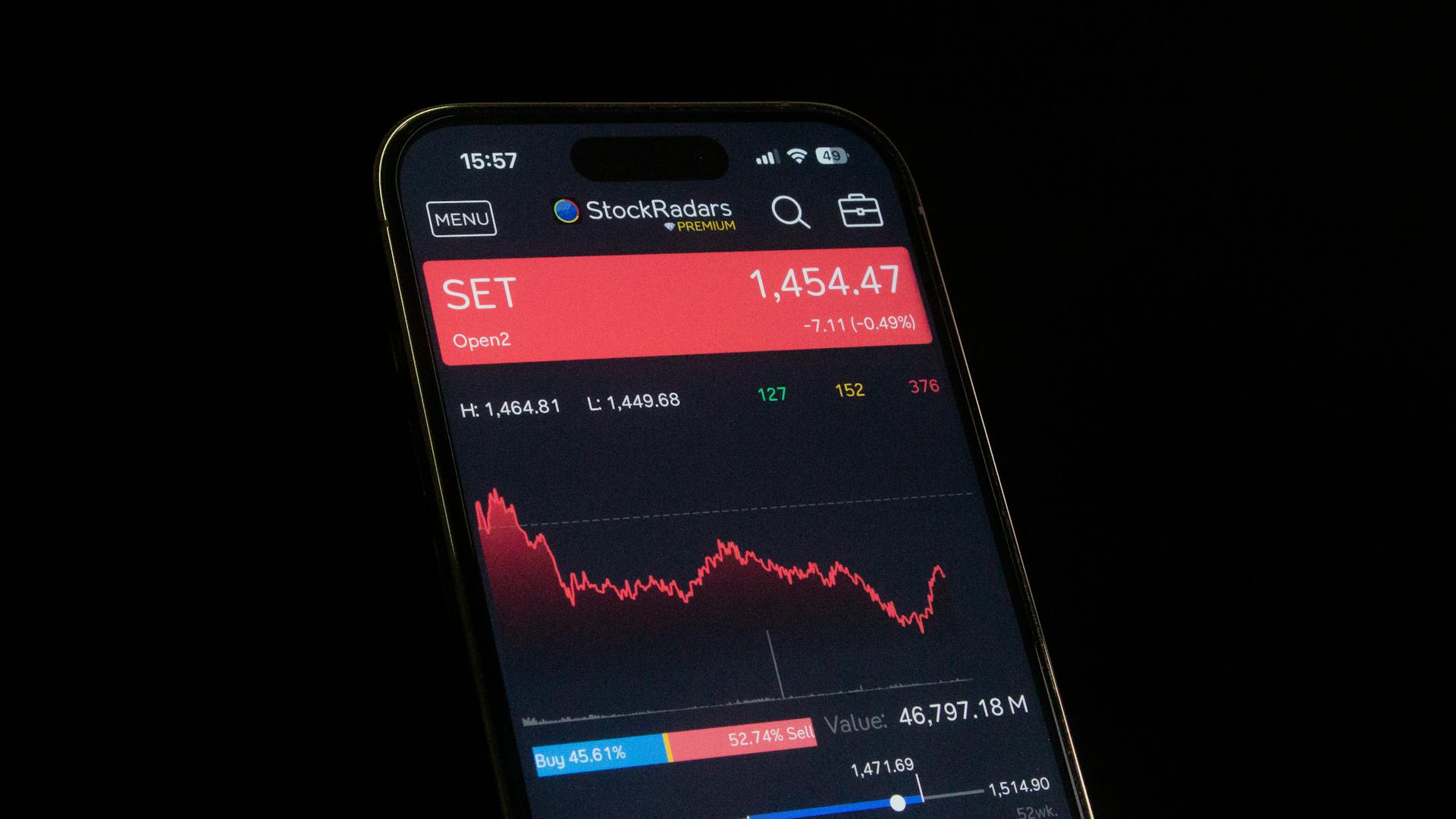
Money market accounts have become more popular due to their perceived safety compared to more volatile investments, making them a great choice for those looking for a low-risk savings option.
Most money market accounts have a daily interest calculation and a monthly credit, which can help you earn interest on your savings.
If you're looking to invest your savings in a money market account, it's essential to understand the restrictions and limitations that come with it, such as limited withdrawals and potential minimum deposit requirements.
Here are some key characteristics of money market accounts:
Taxable vs Non Taxable Funds
Taxable money market funds have returns that are subject to tax, meaning you'll have to pay taxes on the interest earned.
Interest from non-taxable funds, on the other hand, may be exempt from certain taxes, making it a more tax-friendly option.
A key drawback of money market funds is that interest paid may not be cut past inflation, which can result in your cash losing value over time.
However, money market funds are among the lowest-risk investments, making them a relatively safe choice for your money.
Here's an interesting read: Money Markets Tax Irs
Key Concepts and Risks
Money market investments are characterized by safety and liquidity, with money market fund shares often targeted at $1. This means that you can expect a very low risk of losing your money.
Money market accounts offer higher interest rates than normal savings accounts, but they often have higher account minimums and limits on withdrawals. For example, some money market accounts may require a minimum balance of $1,000 or more to avoid fees.
The money market allows its participants access to short-term debt, which can be used to fund short-term cash flow requirements. This is typically done through investments in short-term debt such as treasury bond bills, commercial paper, and repurchase agreements.
Here are some common money market instruments and their characteristics:
Most money market accounts are insured by the FDIC up to $250,000 per institution, which provides an added layer of protection for your money.
Why Is It Important
The money market is essential for keeping the financial economy running smoothly. It allows savers to lend money to those in need of short-term loans.
These loans are often made overnight or for a matter of days or weeks, and they're needed by governments, corporations, and banks to meet their near-term obligations or regulatory requirements.
Savers can earn a small amount of interest by lending their excess cash. This is a great way for individuals to earn some extra money, especially in a low-interest-rate environment.
The money market allocates capital toward its most productive use, which is crucial for economic growth and development.
The Risks
Money market accounts can provide access to short-term debt, which can be used to fund short-term cash flow requirements.
Most money market accounts are insured by the FDIC, giving you protection up to $250,000 per institution, just like bank deposits.
There's virtually no chance you'll lose your money by owning a CD or T-bill because money market instruments are very low risk.
However, some money market funds can briefly incur losses during periods of extreme financial stress, like at the height of the 2008 financial crisis.
Advantages and Disadvantages

The money market offers a range of benefits, including low risk and liquidity. Most money market securities are extremely low-risk due to the protection of FDIC insurance, backing by a government or bank, or the high creditworthiness of the borrowers.
One of the most significant advantages of the money market is its safety. Money market investments are characterized by safety and liquidity, with money market fund shares targeted at $1. This means that even in times of financial stress, such as the 2008 financial crisis, there's virtually no chance you'll lose your money by owning a CD or T-bill.
Money market accounts also offer easy access to your funds. The withdrawal process is similar to a bank withdrawal process, and in some cases, money markets have monthly withdrawal limitations. This makes it an attractive option as an emergency fund.
However, money market investments have some trade-offs. They generally underperform other asset classes and often don't even keep pace with inflation. Any fees associated with an account can easily eat into these slim returns.
Suggestion: Retail Money Market Mutual Funds

Some money market accounts have minimum balance requirements or restrictions on withdrawals, which can be a drawback for those who need quick access to their funds. It's essential to carefully review the terms and conditions of a money market account before investing.
Here are some key characteristics of money market investments:
How Does It Differ from the Stock Market?
The main difference between the money market and the stock market lies in the type of exchange that takes place. In the money market, financial securities like CDs and treasury bills are exchanged.
Money markets are generally less risky than stock markets. This is because they're designed to meet short-term liquidity needs, whereas stock markets offer both long-term and short-term investment opportunities.
The main aim of the money market is to provide short-term funding for companies or governments. This is a key distinction from the stock market, which can be used for both short-term and long-term investments.
Broaden your view: Equity Market Trading
Functions and Participants
The money market plays a vital role in the economy by providing short-term liquidity to governments, commercial banks, and other large organizations. This liquidity helps maintain economic stability and development.
The money market offers a platform for investors with excess funds to earn interest by lending their money to others. This is a great way for individuals to invest their money and earn returns.
The participants of the money market include central governments, commercial banks, and other large organizations. Central governments issue securities and treasury bills to maintain their cash flow and finance governmental activities.
Some of the larger entities participating in the money market include:
- Central Government: Issues securities and treasury bills to maintain their cash flow and finance governmental activities.
- Commercial Banks: Lend and borrow assets in the money market.
- Other Large Organizations: Participate in the money market by borrowing or lending assets.
The money market helps in financing trade by providing short-term funds for commercial purposes, such as financing capital requirements and funding business growth. This ultimately promotes trade and business, and aids in the growth of Indian trade, industry, and commerce both domestically and abroad.
Investing and Financing
You can invest in the money market by investing in money market mutual funds and buying treasury notes, which provide higher returns compared to fixed deposits. However, money market investing involves a large number of restrictions over money withdrawal.
The money market is a safe way to get short-term returns, and it provides less risk compared to the stock market. Money market accounts are mostly insured, so even if anything goes wrong, the investment remains safe.
The money market helps in financing trade by providing short-term funds for commercial purposes like financing capital requirements and funding businesses growth. This ultimately helps in promoting trade and business by increasing cash flow in the economy.
Some of the financial instruments traded in the money market include short-term Treasuries (T-bills), certificates of deposit (CDs), commercial paper, repurchase agreements (repos), and money market mutual funds.
A fresh viewpoint: Are Money Markets Safe
How To Invest
Investing in the money market can be a great way to earn some extra returns on your money, especially if you're looking for a low-risk option. To get started, you'll want to consider investing in a money market mutual fund.
Additional reading: People Who Make Money Investing in the Stock Market Quizlet
These funds typically have shares priced at $1 and offer a stable price, making them a good choice for those who want to avoid fluctuations in the market. You can also invest in short-term Treasuries, such as T-bills, or certificates of deposit (CDs) for a fixed return.
One of the main advantages of money market investing is that it's relatively easy to get started. You can buy treasury notes or invest in a money market mutual fund, and the process is similar to buying a stock or bond.
To invest in the money market, you'll want to consider the following options:
- Money market mutual funds that invest in short-term debt instruments, such as US Treasury bills and commercial paper
- Short-term Treasuries, such as T-bills
- Certificates of deposit (CDs) for a fixed return
- Repurchase agreements (repos) or commercial paper for a short-term loan
Remember to always do your research and consider the fees associated with each investment before making a decision.
Financing Industry
The money market plays a crucial role in promoting financial mobility in the economy by allowing cash to flow between various sectors of industries.
This kind of financial mobility is necessary for the overall development of the industries of the country. The Reserve Bank of India introduced Certificates of Deposit (CD) in 1989, which are similar to fixed deposits but issued for large capital investments.
CDs are a type of financial instrument that helps in promoting financial mobility, and they were first introduced by the Reserve Bank of India in 1989. They are similar to fixed deposits in terms of their functionality, but with a key difference - CDs are only issued for large capital investments.
The money market helps in promoting financial mobility, which is essential for the growth and development of industries. By providing a platform for cash to flow between sectors, the money market aids in the overall development of industries in the country.
Take a look at this: How Do Cds Work
Regulations and Rules
Global cooperation among exchange regulators minimizes differences and protects Forex traders from fraud and abuse.
The U.S. Commodity Futures Trading Commission (CFTC) sets rules and investigates problems involving U.S. currency trades.
The CFTC reaches agreements, or memoranda of understanding (MOUs), with most major nations that have active currency exchanges.
These MOUs help regulatory and enforcement authorities across international borders combat fraud and other illegal practices.
If you plan to trade Forex, be sure to visit the CFTC’s website for information on international laws and recently exposed scams.
You can also find information about market integrity and how to protect yourself from fraudulent deals.
Suggestion: Forex Exchange Market
Frequently Asked Questions
How much will $500,000 make in a money market?
A money market account with a 1.8% APY, compounding monthly, can earn approximately $9,074.62 in the first year on a $500,000 deposit. This earning potential may vary depending on the specific account terms.
Featured Images: pexels.com