
Achieving government budget balance through policy requires a multi-faceted approach. A key strategy is to implement fiscal discipline, which involves reducing government spending and increasing revenue through tax reforms.
One effective way to reduce spending is to eliminate wasteful and inefficient programs. For instance, the article highlights that a government can save billions of dollars by streamlining its bureaucracy and eliminating redundant agencies.
A tax reform can also play a crucial role in increasing revenue. For example, implementing a more progressive tax system, where the wealthy are taxed at a higher rate, can generate significant revenue.
Fiscal Deficits and Debt
A government's fiscal deficit is the difference between its spending and revenue, and it can be measured with or without including interest payments on its debt. The primary deficit is the difference between current government spending and total current revenue from all types of taxes net of transfer payments.
The total deficit is the primary deficit plus interest payments on the debt. If a government's expenditures exceed its revenue, it will run a deficit, which can be financed by borrowing via the issuance of new bonds.

The total deficit for a year can be calculated using the formula: total deficit = primary deficit + (interest rate * last year's debt). This formula shows how interest payments on the debt can add up quickly.
Inflation can reduce the real value of accumulated debt, but if investors anticipate future inflation, they will demand higher interest rates on government debt, making public borrowing more expensive. This can create a vicious cycle where governments struggle to finance their debt.
A government's fiscal deficit can be thought of as consisting of two elements: structural and cyclical. The structural deficit is the deficit that remains across the business cycle, while the cyclical deficit is the additional borrowing required at the low point of the cycle.
The fiscal gap measures the difference between government spending and revenues over the very long term, typically as a percentage of gross domestic product. A fiscal gap of 5% could be eliminated by an immediate and permanent 5% increase in taxes or cut in spending.
Fiscal balance, or government budget balance, is calculated as the difference between a government's revenues and its expenditures, often expressed as a ratio of Gross Domestic Product (GDP). If the balance is positive, the government has a surplus, but if it's negative, the government has a deficit.
If this caught your attention, see: Florida Structural Integrity Reserve Study Requirements

The fiscal balance as a percentage of GDP is used as an instrument to measure a government's ability to meet its financing needs and ensure good management of public finances. This is crucial for a country's economic stability and growth.
To reduce a structural deficit, either revenue must increase, spending must decrease, or both. Taxes may be increased for everyone or lawmakers may decide to assign that tax burden to specific groups of people, such as higher-income individuals or businesses.
Policy Solutions
Policy solutions can be complex, but let's break it down. Electoral accountability can incentivize politicians to balance government spending, as seen in the Greek government-debt crisis.
In the United States, the government has implemented various tax policies to address budget deficits, including increasing taxes on high-income earners and corporations. However, tax policies can have significant political and economic implications, and their effectiveness in reducing deficits is often debated.
To address budget deficits, policymakers can consider the following options: Taxation Policy: Increase taxes on high-income earners and corporationsFiscal Policy: Increase or decrease government spending to influence the economyMonetary Policy: Adjust interest rates and control the money supply to influence the economyGovernment Efficiency: Improve government efficiency and reduce waste by streamlining programs and servicesBudget Reconciliation: Use the budget reconciliation process to pass legislation related to the budget with a simple majority vote
Reducing government spending can also be a viable option, with lawmakers deciding to cut the budgets of every government agency/entity by the same percentage or giving a greater budget cut to specific agencies.
For more insights, see: Financial Efficiency Ratios
Raise Taxes or Cut Spending

Raising taxes or cutting government spending are two common policy solutions to address budget deficits. Increasing taxes can help reduce deficits, but it can also have significant political and economic implications, as seen in the debate over tax policies in the U.S.
The government can increase taxes on high-income earners and corporations, but this can lead to unintended consequences and may not always be effective in reducing deficits. According to Professor William Vickrey, deficits can actually add to the net disposable income of individuals and provide markets for private production, inducing producers to invest in additional plant capacity.
Lawmakers can also decide to cut government spending, which can be done across the board or targeted at specific agencies. However, these decisions are often based on political ideology, popularity with the electorate, or popularity with donors. For example, during the Greek government-debt crisis, the cancellation of part of the debt, known as a "haircut", alleviated the situation but put many banks in difficulty.
Tax increases can be implemented in various ways, such as closing tax loopholes or allowing fewer deductions, which essentially have the same effect as increasing taxes. These changes can be made to the tax code to increase tax revenue.
Curious to learn more? Check out: Countrywide Financial Political Loan Scandal
Political Variables
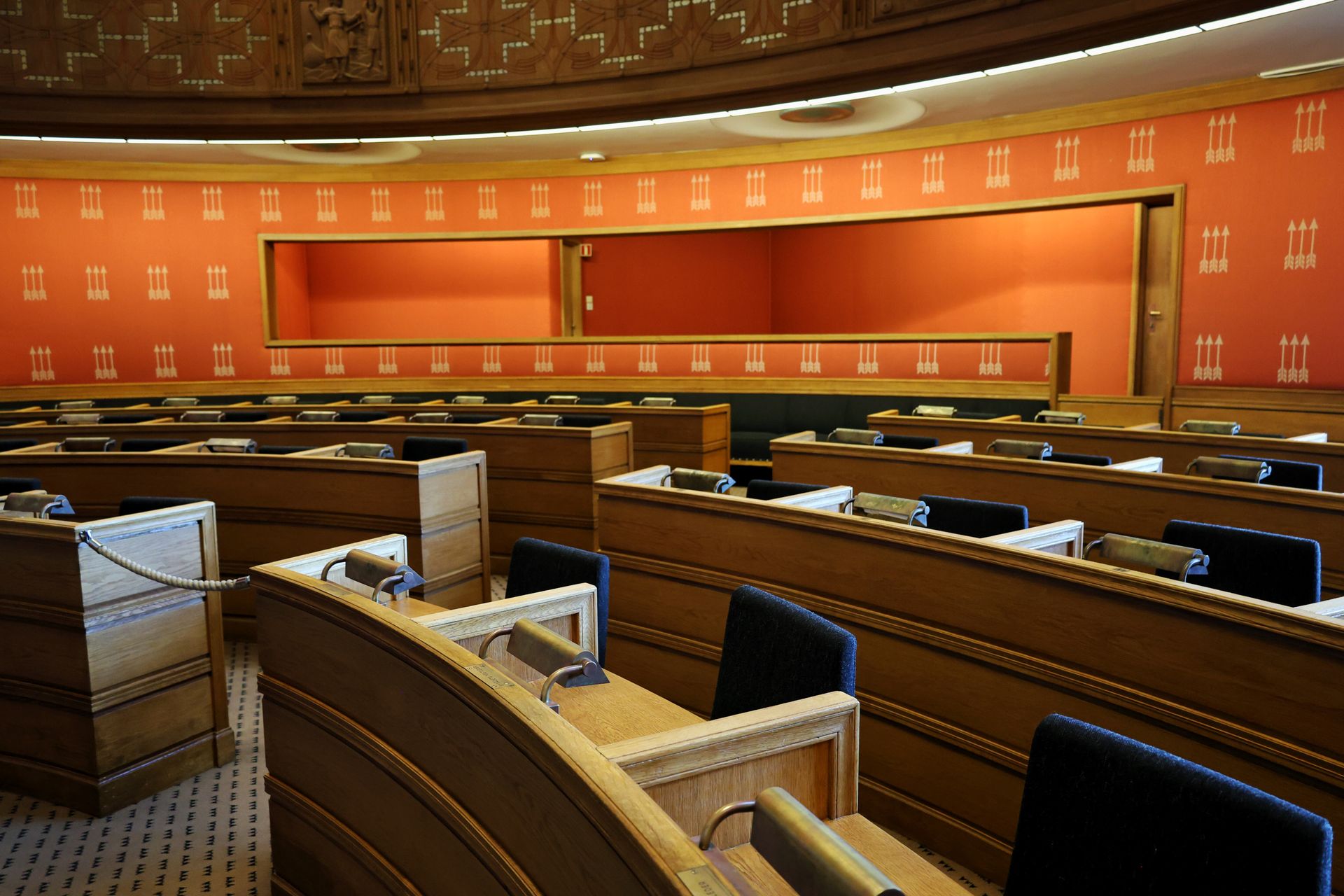
Political Variables play a significant role in shaping the economic institutions of a country.
Election year has a significant effect on budget balance, as politicians tend to spend more money before and after elections to please voters, leading to a negative correlation between political stability and budget balance.
The type of government matters, with single-party governments often having more balanced budgets due to fewer ideology disagreements.
A high number of political parties in parliament can lead to large coalitions, increasing the probability of higher budget deficits.
Fiscal governance is also a key factor, with delegation of major budgetary powers to the Minister of Finance leading to more balanced budgets.
The overall political index measures the quality of political institutions, which are key determinants of economic institutions, and a higher quality index is associated with lower expected deficits.
The number of political parties can influence the budget balance, with a limited number potentially leading to autocracy and loss of welfare, while a high number can increase the probability of higher budget deficits.
If this caught your attention, see: Higher Education Loan Authority of the State of Missouri
Policy Brief #130
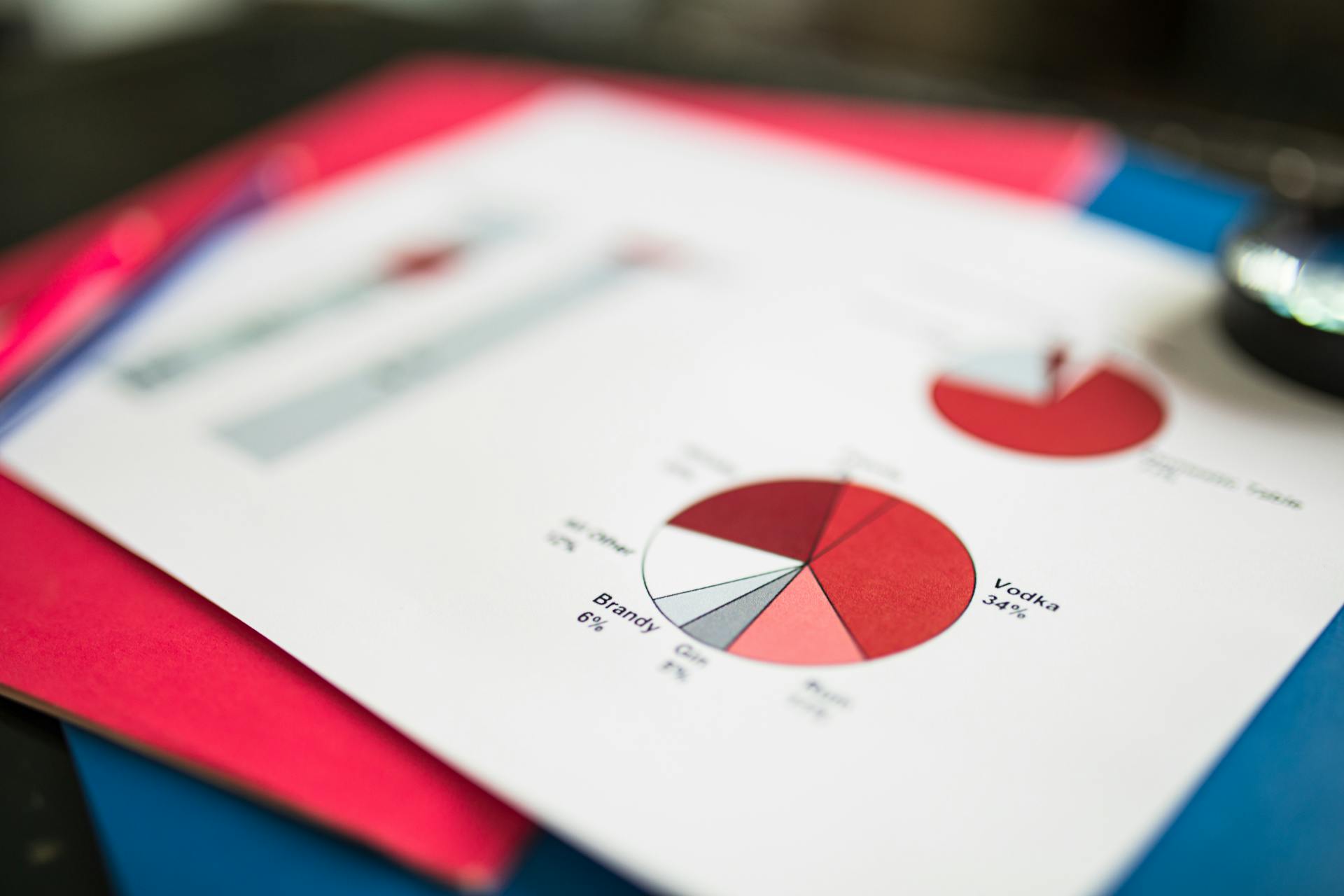
As policymakers grapple with reducing structural deficits, they must consider increasing taxes, reducing government spending, or a combination of both.
Either way, taxes may be increased for everyone or assigned to specific groups, such as higher-income individuals or businesses. Lawmakers can also cut government spending, either across the board or targeting specific agencies.
Similar to increasing taxes, changes to the tax code can boost revenue. Closing tax loopholes and limiting deductions can have the same effect as increasing taxes.
Dependent variables, like deficits and debts, are crucial in evaluating a government's fiscal policy. The debt ratio is a broader measure of government actions, but governments often set yearly budget targets in flow terms (deficits) rather than stock terms (debts).
Nominal or cyclically adjusted data can provide a more accurate picture of policy-related budget changes. However, estimating cyclically adjusted balances can be challenging, especially defining trend/potential output.
A high debt-to-GDP ratio can make a country more financially vulnerable during recessions, leading to higher interest rates on new loans or variable interest rates on long-term loans. This can worsen the country's budget balance and increase the risk of insolvency or bankruptcy.
Additional reading: Cyclically Adjusted Price-to-earnings Ratio

Past fiscal policy decisions can influence public finances in the following years, as seen in the huge government spending during the COVID-19 pandemic. This is an example of lagged budget balance.
Political instability, such as frequent elections, can influence the form of the state budget. Political orientation and the way of doing budgetary process can also impact the budget balance.
Election years often see a political business cycle, where politicians tend to spend more money to please voters. This can lead to a negative correlation between political stability and budget balance.
A government's composition index, reflecting their political ideology, can also impact the budget. Left-wing parties tend to be more-expenditure and deficit-prone, but also set more progressive tax rates that increase tax revenues.
The type of government, whether single-party or coalition, can also affect the budget balance. Single-party governments tend to have more balanced budgets and are more active in enforcing new laws or measures.
Fiscal governance, measuring the allocation of budgetary powers, can also impact the budget balance. A combination of delegation and commitment can lead to more balanced budgets.
Check this out: Australiansuper Balanced
Balanced

A balanced government budget is essential for the country's financial health. It means that the government's income from taxes and other sources matches its expenses for the year.
The goal of a balanced budget is to avoid running a deficit, which can lead to debt and higher interest payments. In the US, for example, a balanced budget requires that the government's total expenditures do not exceed its total revenues.
A balanced budget also helps to maintain low inflation, as it prevents the government from printing more money to finance its spending. This is because a balanced budget means that the government is not increasing the money supply, which can lead to inflation.
The Balanced Budget Act of 1997 in the US aimed to achieve a balanced budget by reducing spending and increasing taxes. However, achieving a balanced budget can be challenging, especially during economic downturns.
The Congressional Budget Office (CBO) plays a crucial role in helping the US government achieve a balanced budget. The CBO provides independent budget analysis and forecasts to inform budget decisions.
A balanced budget is not just about numbers; it has real-world implications for the economy and citizens. It can lead to lower taxes, reduced debt, and increased economic growth.
Readers also liked: Epfo under Process Means
Data and Projections

The Congressional Budget Office (CBO) provides a wealth of data and projections to help us understand government budget balance. The CBO's Github page offers files combining 10-year budget projections made from the 1980s through the most recent year.
These projections include data on spending and revenues by category, as well as deficits and debt held by the public. You can find this data on the CBO's Github page.
Historical data on revenues, outlays, and deficits or surpluses from 1962 through the most recent year completed is also available. This data can be found in the CBO's Historical Budget Data section.
Recommended read: Handley Page
Historical Data
Historical data is a treasure trove of information that can help us understand the past and make informed decisions about the future.
The Congressional Budget Office (CBO) has a wealth of historical data available, dating back to 1962, which includes revenues, outlays, and the deficit or surplus for each year.
Check this out: Historical Simulation (finance)

You can access this data to see how government spending and revenue have changed over time, and how it has impacted the national deficit or surplus.
The CBO also publishes historical data on economic measures, such as output, prices, and labor market measures, which go back to 1949.
This data is available in CSV files, making it easy to import and analyze in your favorite spreadsheet program.
In May 2020, the CBO published selected historical economic data, providing a snapshot of the economy at a particular point in time.
You might enjoy: Non-gaap Financial Measures
10 Year Projections
The Congressional Budget Office (CBO) provides 10-year budget projections that include spending and revenues by category, as well as deficits and debt held by the public.
These projections can be found on the CBO's Github page, where files combining such projections from the 1980s through the most recent year are available.
The CBO also projects trust fund balances in its baseline, giving us a sense of the financial health of these funds over the next decade.

You can access these trust fund projections by looking at the CBO's 10-Year Trust Fund Projections section.
Historical data on economic trends is also available, including output, prices, labor market measures, interest rates, income, potential GDP, and its underlying inputs from 1949 through the most recent year completed.
This data is presented in CSV files, making it easy to analyze and work with.
If you're looking for more detailed projections, the CBO provides spending projections by budget account, organized by Treasury Identification Number.
These projections include budget authority and outlays at the budget account level, giving you a granular view of government spending.
Curious to learn more? Check out: Private Investor Looking for Projects to Fund
Analysis and Tools
To analyze the government budget balance, it's essential to understand its relationship with government spending and its impact on the economy. Government spending is made by the public sector to fulfill public policy objectives.
The budget balance is directly related to government spending, as excessive spending can lead to a deficit, while reduced spending can result in a surplus. This, in turn, affects the overall economy by influencing the level of economic activity and employment.

Automatic stabilizers play a crucial role in influencing the budget balance and overall economy. They are built-in mechanisms that help stabilize the economy during periods of recession or expansion by adjusting government spending and taxation.
Here are some key automatic stabilizers:
- Unemployment benefits, which increase during recessions and decrease during expansions
- Progressive taxation, which reduces government revenue during recessions and increases it during expansions
- Government transfers, such as social security payments, which increase during recessions and decrease during expansions
The budget balance and fiscal policy can be used to achieve economic objectives, such as promoting growth, stability, and full employment. By adjusting government spending and taxation, policymakers can stimulate the economy during recessions or slow it down during expansions.
Additional reading: Ge Aerospace Has Risen during the Recent Market Slide.
Frequently Asked Questions
How to calculate the government budget balance?
To calculate the government budget balance, subtract total government expenditures from total government revenues, including taxes and asset sales. This calculation can also be expressed as a ratio of Gross Domestic Product (GDP) for a clearer picture.
Is the government currently in a budget deficit?
Yes, the government is currently in a budget deficit, with a fiscal year-to-date deficit of $1.63 trillion as of October 2024. This deficit is based on the federal government's spending exceeding its revenue collection.
Featured Images: pexels.com