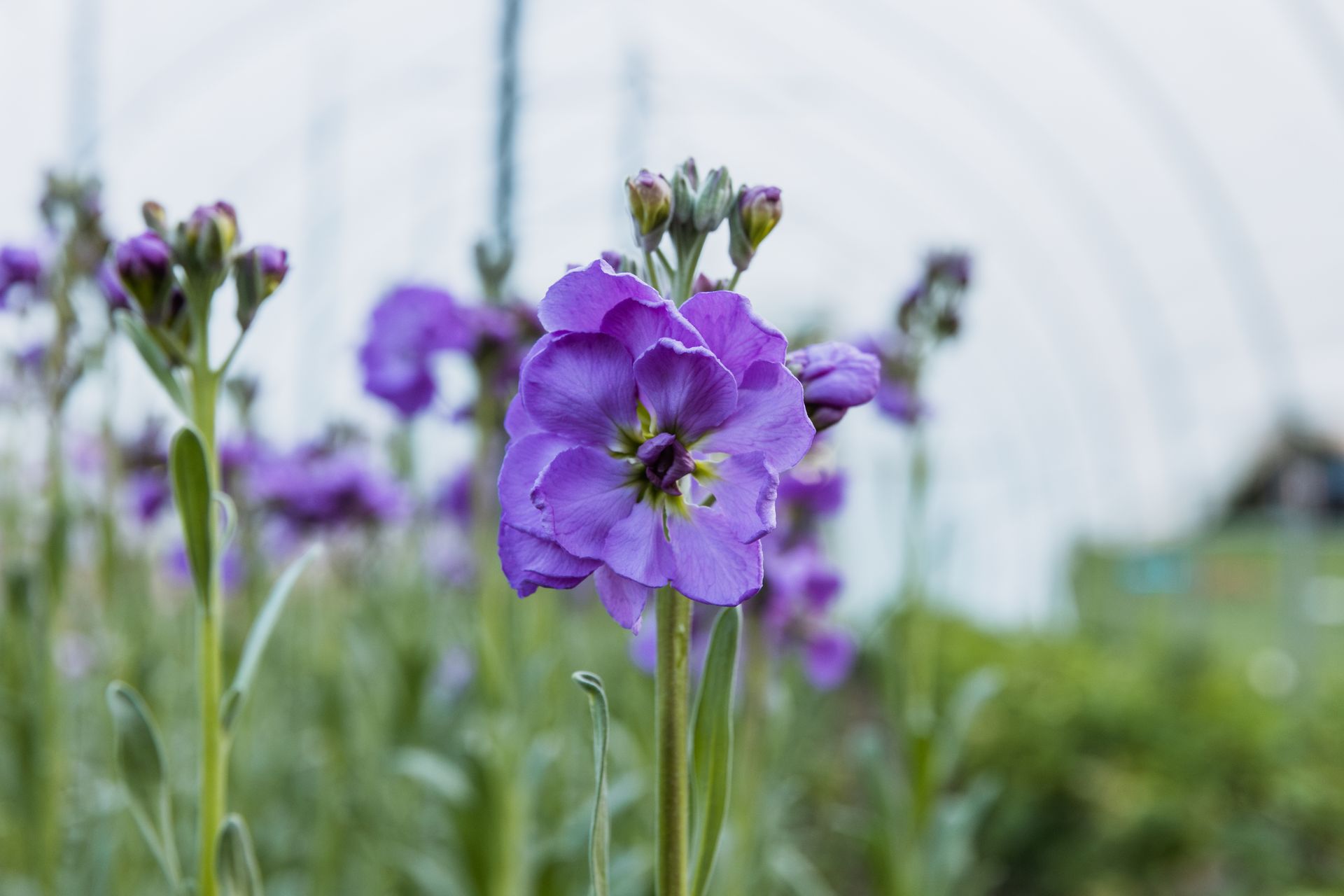
Gotham Greens is a pioneer in indoor agriculture, using LED-lit grow facilities to produce a wide range of leafy greens and other crops year-round.
Their innovative approach has led to significant advancements in the field, including the development of new growing techniques and technologies.
In their cutting-edge facilities, Gotham Greens uses advanced hydroponic systems to optimize crop growth and minimize water usage.
This approach has allowed them to produce high-quality crops while reducing their environmental impact.
Recommended read: Morrison Facilities Services
About Gotham Greens
Gotham Greens is an indoor farming company with a mission to transform the way we approach our food system, prioritizing people and the planet.
They produce a wide range of fresh produce, including leafy greens, herbs, salad kits, dressings, dips, and cooking sauces, all year round.
A Certified B Corporation, Gotham Greens uses sustainable methods to grow high-quality produce, using up to 90% less water and 97% less land than conventional farming.
Gotham Greens has a national network of 13 climate-controlled, high-tech greenhouses across nine U.S. states, including New York, Illinois, Rhode Island, Maryland, Virginia, Colorado, California, Georgia, and Texas.
Since its launch in 2011, the company has grown significantly, starting from a single urban rooftop greenhouse in Brooklyn, N.Y.
Today, Gotham Greens is one of the largest producers of hydroponic leafy greens in North America, with over 40 acres (1.8 million square feet) of greenhouse production.
You might like: Current Ratio Less than 1
Greenhouse Operations
Gotham Greens has a long history of innovation in their greenhouse operations. They started with rooftop greenhouses that relied primarily on natural sunlight supplemented with some LEDs and hydroponic recirculating irrigation systems.
The fundamentals of their approach haven't changed, but the greenhouses have gotten much larger and more automated. This is due in part to advancements in growing systems and technologies, which have increased productivity and efficiency, reduced labor, and improved crop yields.
Advances in climate control technologies have also allowed Gotham Greens to create a more uniform and dynamic climate environment that responds to the plants' needs. This has become a crucial aspect of their operations, enabling them to better control the conditions for optimal growth.
Greenhouse Locations
Greenhouse operations are spread out across the country, with facilities located in various states. Here are some of the notable locations:
The Greenpoint facility in Brooklyn, New York City, is one of the three facilities in the area. New York City has a total of three facilities, with the other two located in Gowanus and Jamaica, Queens.
You might like: Storage Facilities in Usa
Chicago, Illinois, is home to two greenhouse facilities, both located in Pullman. This is a notable example of a city with multiple facilities.
Here are some of the specific greenhouse locations:
- New York City – three facilities (Greenpoint, Brooklyn; Gowanus, Brooklyn; Jamaica, Queens)
- Chicago, Illinois – two facilities (Pullman)
- Edgemere, Maryland
- Providence, Rhode Island
- Aurora, Colorado
- Davis, California
- Stevensburg, Virginia
- Windsor, Colorado
- Monroe, Georgia
- Seagoville, Texas
Greenhouse Evolution After That
Their first greenhouse was a small, 15,000sq ft space on a Brooklyn warehouse rooftop, funded through small business loans, grants, and friends and family capital.
This small-scale operation was surprisingly profitable, with local supermarkets and restaurants clamoring for their fresh produce.
The success of their first farm led to the construction of a second, larger greenhouse on top of a Whole Foods Market in Brooklyn, spanning around 20,000sq ft.
This second greenhouse served as a catalyst for the urban and hydroponic farming movement, generating significant media attention and exposure.
After that, they decided to raise institutional capital and expand their operations to build a more substantial company, while still relying on natural sunlight and hydroponic recirculating irrigation systems to grow lettuce in a controlled environment.
Discover more: Brooklyn Trust Company
Their greenhouses have since become much larger and more automated, thanks to advancements in growing systems and climate control technologies.
The technology has evolved to the point where they can choose from a wider range of options, increasing productivity and efficiency, reducing labor, and improving crop yields.
With 13 years of experience under their belt, they've gained a clearer understanding of what their farms will cost, what the return on investment is, and what the internal rate of return profile looks like.
Indoor Farming
Indoor farming is a rapidly growing industry that's changing the way we produce food. Gotham Greens is a leader in this space, with 13 locations across the United States.
The company's 100,000-square-foot greenhouse in Davis, California, is a prime example of indoor farming in action. Here, they grow leafy greens and herbs using hydroponic growing methods that use 90% less water than traditional farms.
The greenhouse allows Gotham Greens to control temperature and light, making it possible to consistently produce high-quality crops. This level of control is crucial in indoor farming, where plants can be more susceptible to disease and pests.
For more insights, see: Chicago International Produce Market
UC Partnership Advances Indoor Agriculture Research
The University of California is partnering with indoor agriculture companies to advance research in this field. They're working together to develop more efficient and sustainable growing methods.
One challenge of indoor farming is the high energy costs associated with lighting and temperature control. This can make it difficult to scale up operations.
VJ, a farmer, notes that indoor farming is not as easy as it seems. It requires a combination of advanced horticultural and engineering techniques to grow plants successfully.
Gotham Greens, a company with 13 locations in the US, is using hydroponic growing methods to reduce water usage by 90%. This is a significant improvement over traditional farming methods.
The greenhouse at Gotham Greens allows staff to control temperature and light to consistently produce high-quality crops. This level of control is not possible in traditional farming.
Indoor farming can be a more resilient option for farmers, especially in areas with drought or climate change.
Additional reading: Quasi-Monte Carlo Methods in Finance
Indoor Farming Model Choice
We considered greenhouses as the model for indoor farming, and it was a deliberate choice. Greenhouses were already proven, making them a reliable option.
Our underlying thesis was to deploy this widely deployed technology in the United States but with leafy greens, and closer to cities. This approach aimed to increase efficiency and reduce transportation costs.
The challenges facing open field farming, such as climate risk, extreme weather, drought, and labor issues, are only going to grow. By choosing greenhouses, we could mitigate some of these risks.
I'm a huge proponent of indoor farming, and I believe there is an enormous market opportunity.
Food Safety Indoors in Water
Contamination can still happen in indoor farms, even in a controlled environment, as simple as someone not washing their hands.
An indoor farm that uses potable drinking water for irrigation is less susceptible to certain types of food safety risks compared to an open field farm.
The risk of cross-contamination from livestock manure is significantly reduced in indoor farming, making it a safer option for food production.
Performance and Future
Gotham Greens is performing quite successfully, with a focus on unit economics and making each greenhouse as profitable and efficient as possible.
The company has been good stewards of their investors' capital, which is evident in their ability to scale and expand their operations.
With 13 locations around the United States, Gotham Greens has proven that their model can be replicated and moved to different parts of the country and world.
Their 100,000-square-foot greenhouse in Davis uses 90% less water than traditional farms, making it a more resilient option for farming, especially during droughts or climate change.
The company's innovative approach to farming has a bright future, with the potential to provide consistent and efficient production of leafy greens and herbs.
Consider reading: Resampled Efficient Frontier
How Is Performing?
Gotham Greens is performing quite successfully, thanks to its focus on unit economics.
The company has been good stewards of its investors' capital, ensuring each greenhouse is as profitable and efficient as it can be.
Sustainable Farming Has a Bright Future
Sustainable farming has a bright future. The kind of farming that's being done at Gotham Greens in Davis, California, is a great example of this.
They've opened a 100,000-square-foot greenhouse that grows leafy greens and herbs using hydroponic growing methods. This means plants can pull all the nutrients they need from the water itself.
Gotham Greens uses a pipeline of irrigation gutters to grow nearly 300,000 plants, with their roots growing right in the water. This process uses 90% less water than traditional farms.
The greenhouse allows staff to control temperature and light to consistently make carbon copies of each plant. This level of control is only possible in a controlled environment like a greenhouse.
Gotham Greens has 13 locations around the United States, and their vegetables can be found in stores all over Northern California.
A unique perspective: Which Country Uses Gbp Currency
Products and Updates
Gotham Greens offers a variety of products, including pesto sauce and salad dressings, available in grocery stores and sold to restaurants and food service companies.
Their products are also sold in grocery stores under the Gotham Greens brand name.
In addition to their existing products, Gotham Greens released a line of plant-based, dairy-free, gluten-free, non-GMO dips in September 2022.
You might like: Grocery Warehouse Services
Products
Gotham Greens offers a variety of products, including pesto sauce and salad dressings, available in grocery stores under its brand name.
Their products can also be found in restaurants and food service companies.
In 2022, the company released a line of plant-based dips that are dairy-free, gluten-free, and non-GMO.
These dips provide a great option for those with dietary restrictions or preferences.
In 2023, Gotham Greens launched a line of salad kits, offering customers a convenient and easy way to prepare a healthy meal.
Updates
We've got some exciting updates to share with you. The latest version of our software now supports up to 50 users, a significant increase from the previous limit of 20.
One of the most notable improvements is the new cloud storage feature, which allows users to store and access their files from anywhere. This feature has been a game-changer for teams working remotely.
The update also includes a number of bug fixes, including a issue that caused the software to crash when opening large files. This should make the software more stable and reliable for users.
We've also added a new feature that allows users to customize the software's interface to suit their preferences. This includes the ability to change the color scheme and font size.
Overall, these updates should make the software even more useful and enjoyable to use.
Check this out: Paytm Users
Frequently Asked Questions
Is Gotham Greens healthy?
Our greens are grown in controlled greenhouses using Integrated Pest Management, ensuring a healthy and pesticide-free product
Who owns Gotham Greens?
Gotham Greens was founded by Viraj Puri and Eric Haley, with greenhouse expert Jenn Frymark as a key partner. The company is co-founded by Puri and Haley.
Does Gotham Greens use pesticides?
No, Gotham Greens does not use pesticides in their farming practices. Instead, they grow pesticide-free produce in their state-of-the-art rooftop greenhouses.
Featured Images: pexels.com