Fraud credit cards are a type of credit card that has been compromised by scammers, allowing them to make unauthorized purchases.
These cards can be obtained through various means, including data breaches, phishing scams, or even being stolen from an individual's wallet or purse.
The use of fraud credit cards is often linked to identity theft, which can have serious consequences for the victim.
To avoid falling victim to fraud credit cards, it's essential to monitor your credit card statements regularly and report any suspicious activity to your bank immediately.
Warning Signs and Prevention
If you notice unfamiliar credit or debit card transactions on your bank or credit card statements, it's a red flag that something's amiss. Small dollar authorizations or transactions can be used to test an account prior to larger transaction activity.
Keep an eye out for bank notifications about unauthorized account activity, or receive calls from your bank about transactions you didn't make. These are all warning signs that your account may have been compromised.
To prevent payment card fraud, card issuers use software to estimate the probability of fraud. This can include checking for large transactions occurring far from your home address.
Some cards, especially in Europe and Canada, have an EMV chip that requires a PIN to authorize payment. However, a PIN is not required for online transactions, making it easier for scammers to use stolen cards for online purchases.
To stay safe, be aware of the types of transactions that could be suspicious, such as a string of small transactions prior to a larger, unauthorized transaction.
Discover more: Chase Bank Credit Card Credit Score
Warning Signs
Unfamiliar transactions can appear on your bank or credit card statements, often as small dollar authorizations used to test an account.
These unauthorized transactions can be a sign of credit card fraud, and it's essential to monitor your statements regularly. If you notice any suspicious activity, contact your bank immediately.
Small dollar transactions may be used to test an account prior to much larger transaction activity, so it's crucial to be vigilant and keep an eye on your accounts.
Consider reading: Can Debit Cards Be Used as Credit Cards
Your bank may also notify you of unauthorized account activity, so be sure to respond quickly to these notifications.
Here are some warning signs to watch out for:
- Unfamiliar credit or debit card transactions appear on your bank or credit card statements.
- Small dollar authorizations or transactions are used to “test” an account prior to much larger transaction activity.
- Your bank notifies you of unauthorized account activity.
- You receive calls from your bank about transactions you didn’t make.
Prevention
To prevent payment card fraud, card issuers use software that can estimate the probability of fraud. This software can flag suspicious transactions, such as a large transaction occurring a great distance from the cardholder's home.
In Europe and Canada, most cards are equipped with an EMV chip that requires a 4 to 6 digit PIN to be entered into the merchant's terminal before payment will be authorized. This adds an extra layer of security to prevent unauthorized transactions.
A stolen credit or debit card could be used for a number of smaller transactions prior to the fraudulent activity being flagged, especially if the cost falls under a pre-determined limit. This is because contactless payments often don't require a PIN or signature.
Card issuers also maintain other countermeasures, such as asking for photo ID at the point of sale in some European countries. This can help prevent fraudsters from using a card without a chip.
Consider reading: Do Credit Card Skimmers Work on Chip Cards
Unexpected Repeat Billing

Unexpected Repeat Billing can be a real headache, especially if you're not aware of it. Online bill paying or internet purchases can lead to recurring bank charges, also known as standing orders or banker's orders.
These are automatic payments that can be set up to pay a certain amount every month to a payee. Many payments or purchases are valid, but some are known as Rogue Automatic Payments.
Be cautious of vendors or payees who use the ACH Network for direct debit payments, as this can lead to unexpected repeat billing.
Here's an interesting read: Does Locking Your Card Stop Automatic Payments
Types of Credit Card Fraud
Credit card fraud is a serious issue, and it's essential to understand the types of fraud that exist. New account fraud accounts for 89% of credit card fraud complaints, where criminals establish a bogus credit card account in the victim's name and make purchases or take cash advances that will never be repaid.
Existing account fraud, on the other hand, involves theft or abuse of victims' physical credit cards or account numbers and account takeover. This type of fraud increased from 9% in 2022 to 11% in 2023. The percentage of complaints related to existing accounts has been steadily rising.
Here are the two main types of credit card fraud:
- New account fraud: when criminals establish a bogus credit card account in the victim's name, then make purchases or take cash advances that will never be repaid.
- Existing account fraud: theft or abuse of victims' physical credit cards or account numbers and account takeover.
How It Works
Credit card fraud occurs when a person uses someone else's card or card information to make unauthorized purchases or withdrawals. This can happen through physical theft of the card or by stealing card information online or through card skimming devices.
Skimming is a common method of credit card fraud, where a thief uses a small electronic device to swipe and store hundreds of victims' card numbers. This can occur at merchants, call centers, or even automated teller machines.
New account fraud is a type of credit card fraud where criminals establish a bogus credit card account in the victim's name, then make purchases or take cash advances that will never be repaid. In 2023, new account scams accounted for 89% of credit card fraud complaints.
Existing account fraud, on the other hand, involves theft or abuse of victims' physical credit cards or account numbers and account takeover. This type of fraud increased from 9% in 2022 to 11% in 2023.
Curious to learn more? Check out: Skimming of Credit Cards
Here are some common methods by which a fraudster will commit an account takeover:
- Proxy-based "checker" one-click apps
- Brute-force botnet attacks
- Phishing
- Malware
- Dumpster diving to find personal information in discarded mail
- Buying lists of 'Fullz', a slang term for full packages of identifying information sold on the black market
Regularly checking your credit card statements and online accounts is crucial to detecting suspicious transactions. If you notice anything unusual, contact your card issuer right away to dispute the transaction.
Types of Payment
Credit card transactions can be made in various ways, including online, in-person, or over the phone.
One of the most common types of payment is credit card online transactions, which are made through secure websites that encrypt sensitive information.
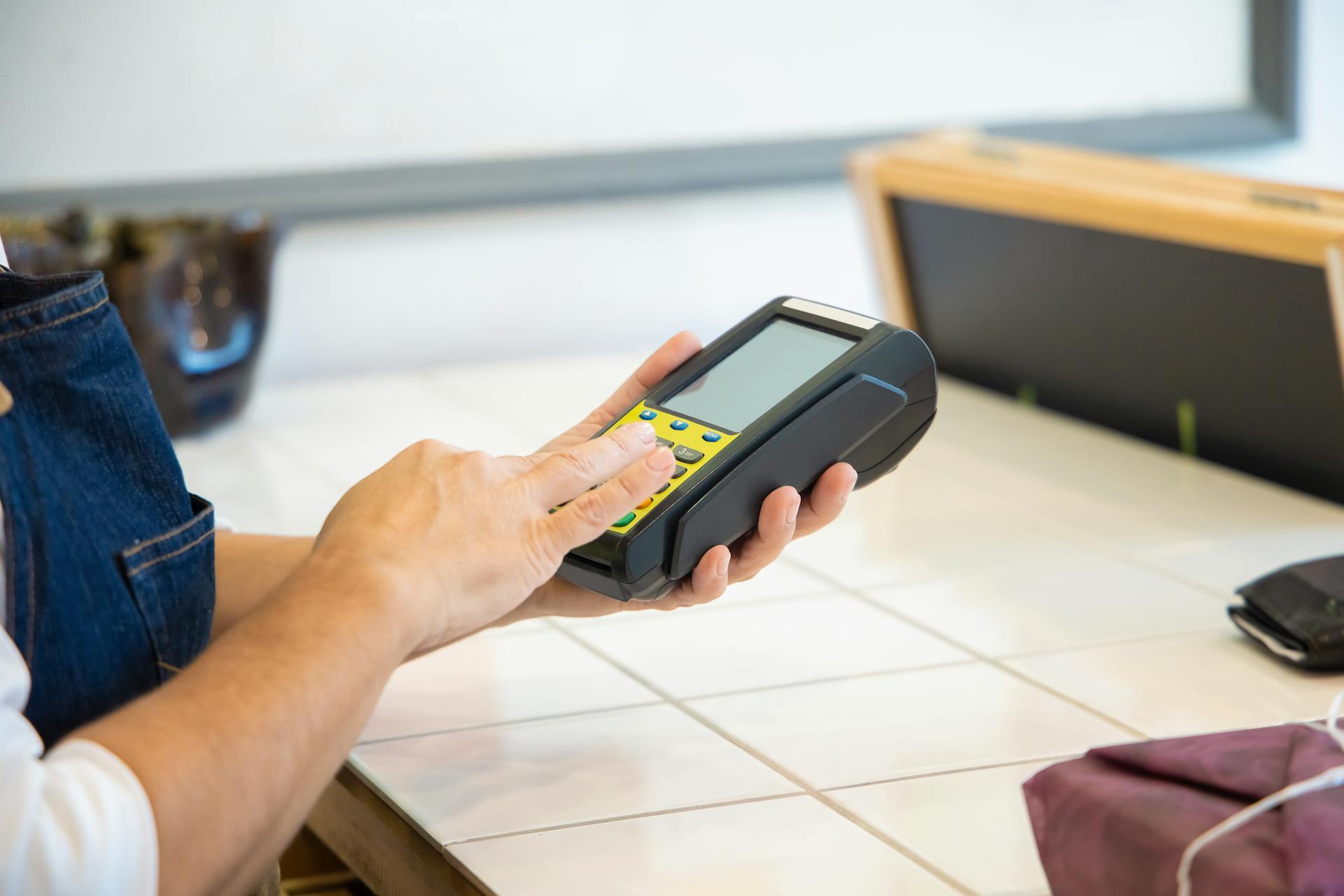
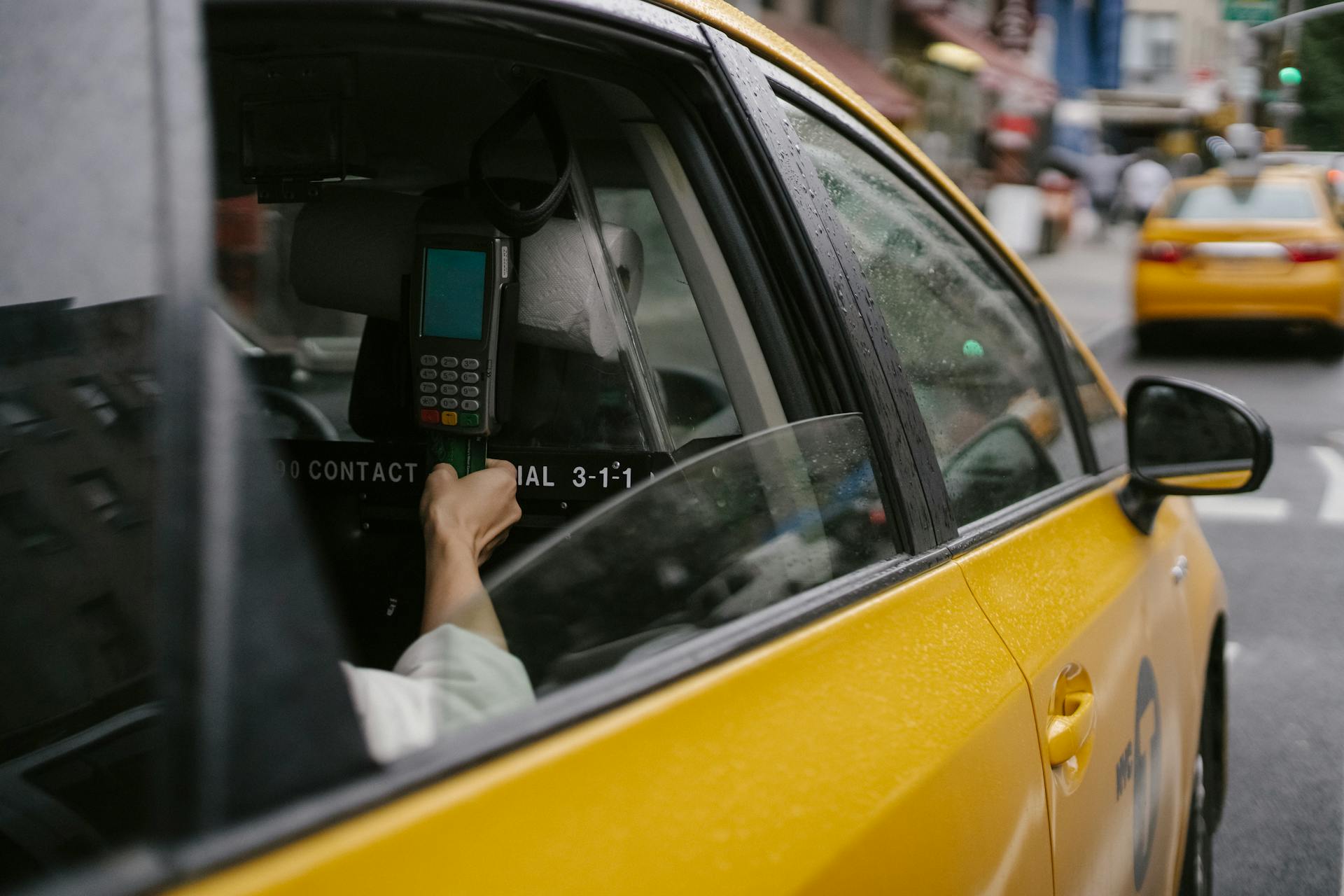
In-person transactions can be made at physical stores or restaurants, where the cardholder swipes or inserts their card into a payment terminal.
Over the phone transactions are made by providing card details to a customer service representative, who then processes the payment.
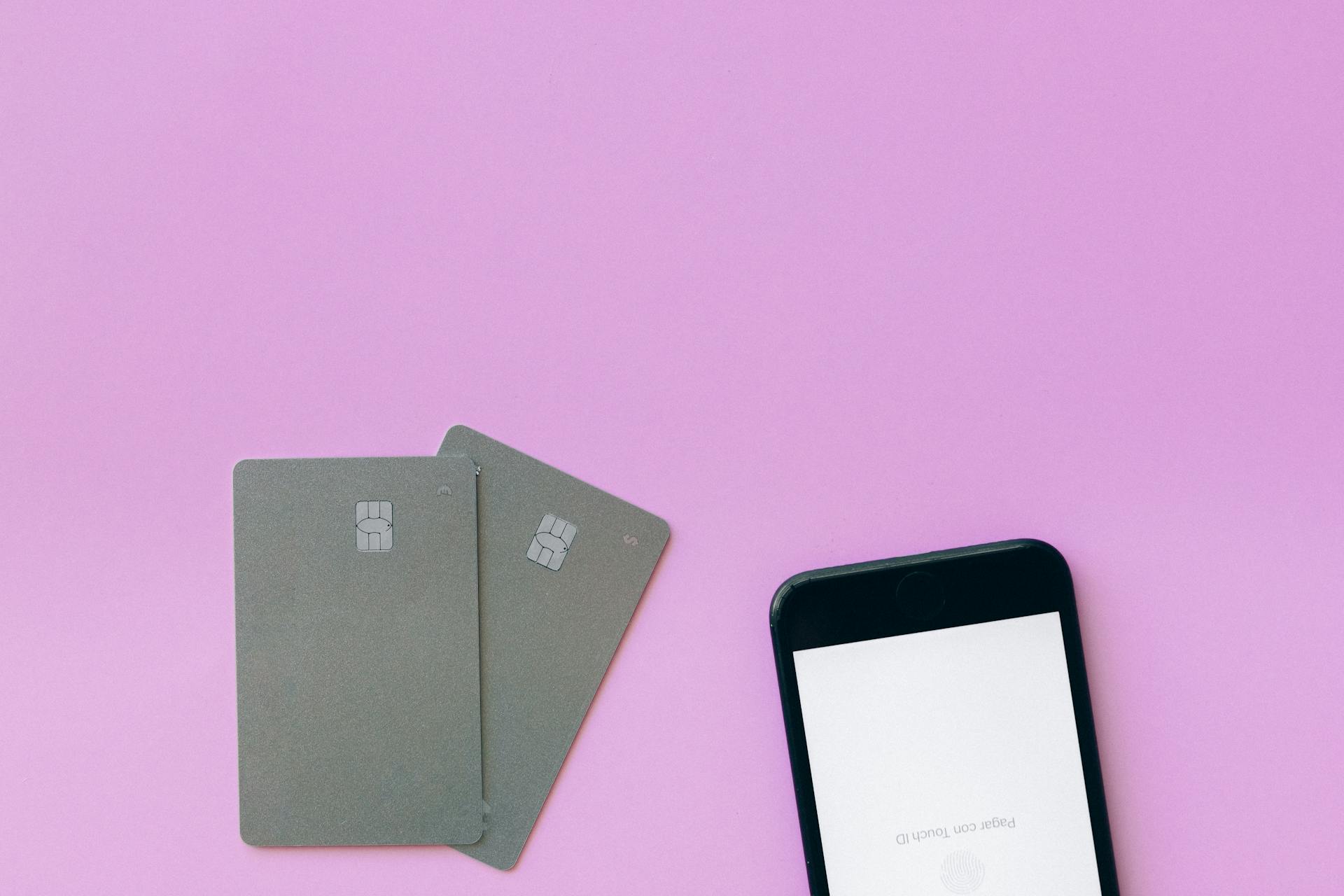
Some credit cards also offer contactless payments, which use near-field communication (NFC) technology to facilitate transactions.
Credit card transactions can also be made through mobile devices, using apps that allow users to make payments on the go.
It's worth noting that some credit cards have specific requirements for transactions made in certain countries or regions.
If this caught your attention, see: Credit Union Credit Cards Online
By Merchants
To prevent credit card fraud, merchants can take several steps. Merchants can implement PAN truncation, which means not displaying the full primary account number on receipts.
Merchants can also use tokenization, a data security method that uses a reference (token) to the card number rather than the real card number. This can greatly reduce the risk of sensitive information being stolen.
Requesting additional information, such as a PIN, ZIP code, or Card Security Code, can also help prevent fraud. This is especially important for Mail Order/Telephone Order (MOTO) merchants who are more susceptible to chargebacks.
Performing geolocation validation, such as checking the IP address, can also help identify and prevent fraudulent transactions. This was demonstrated in a coordinated attack where a group of individuals used data from 1600 South African credit cards to steal millions from convenience stores in Tokyo.
Merchants can also use Reliance Authentication, indirectly via PayPal, or directly via iSignthis or miiCard.
On a similar theme: Where Is the Cvv on a Discover Card
Reporting and Liability
If you're a victim of credit card fraud, it's essential to report it promptly to minimize any potential damage. You should contact your card issuer immediately to inform them of the situation.
Card issuers often have their own procedures for handling fraudulent charges, but federal law limits your liability to $50 if you report the theft within 60 days. This means you won't be held responsible for any charges made after the card is reported stolen.
You can also place a fraud alert on your credit report, which can help prevent further unauthorized activity. Additionally, you should report the fraud to the Internet Crime Complaint Center (IC3) and the Federal Trade Commission (FTC).
Here are the steps you can take to report credit card fraud:
- Contact your card issuer immediately
- Place a fraud alert on your credit report
- Report to the Internet Crime Complaint Center (IC3)
- Report the fraud to the Federal Trade Commission (FTC)
- File a report with law enforcement
Some credit cards offer zero liability protection, which can provide extra peace of mind. This means you won't be held liable for any unauthorized charges, as long as you take reasonable care to protect your cards and report any theft or unauthorized charges promptly.
Reporting Options
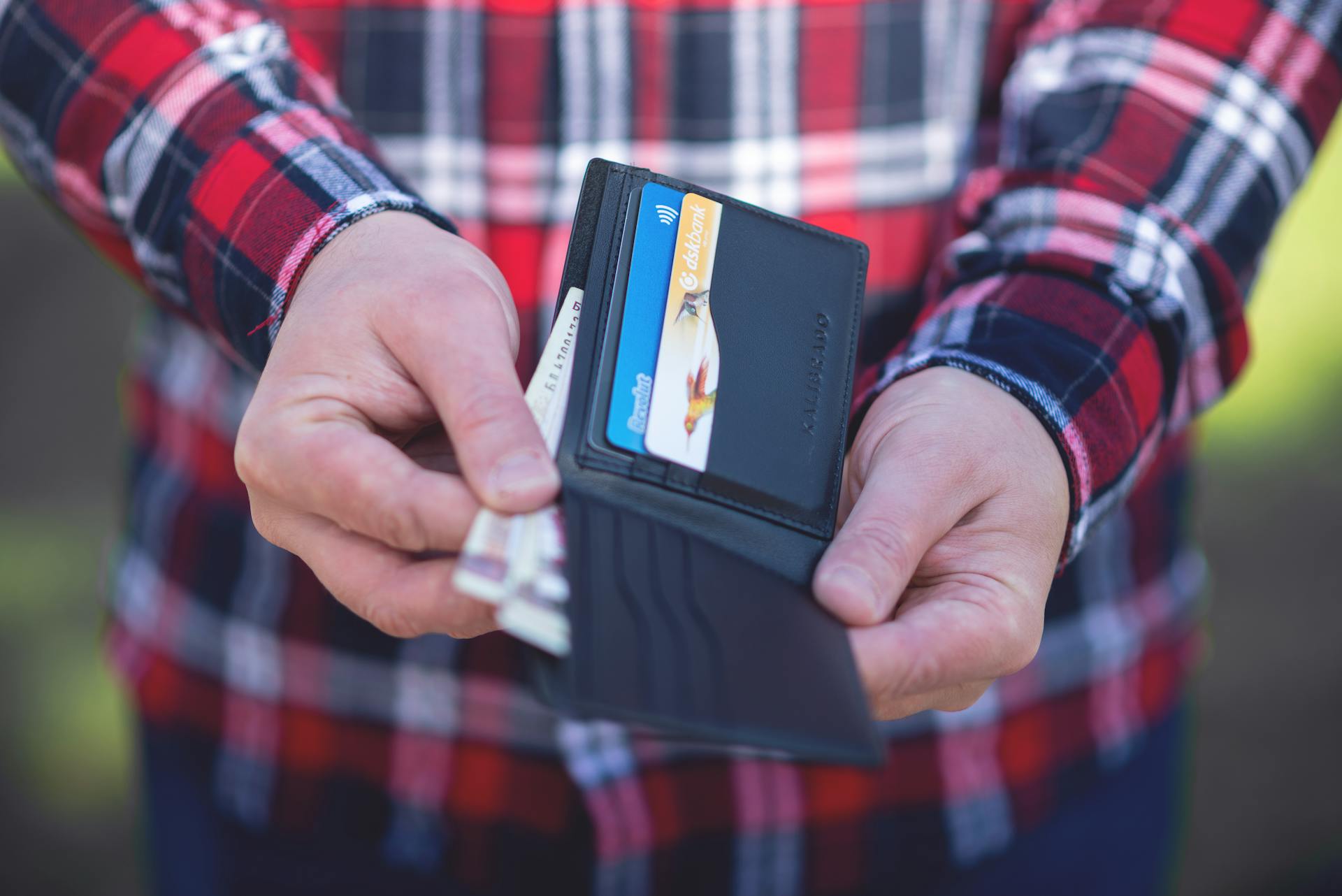
If you're a victim of credit card or debit card fraud, it's essential to report it promptly to minimize damage.
Contact your card issuer immediately to report the fraudulent activity.
You can also place a fraud alert on your credit report to protect yourself from further identity theft.
Reporting the fraud to the Internet Crime Complaint Center (IC3) and the Federal Trade Commission (FTC) can help law enforcement agencies track down the perpetrators.
For mail-related scams, you should report it to the U.S. Postal Inspection Service (USPIS).
Lastly, file a report with law enforcement to ensure that the incident is documented and can be used as evidence in case of further investigation.
Here are the reporting options in a concise list:
- Contact your card issuer
- Place a fraud alert on your credit report
- Report to the Internet Crime Complaint Center (IC3)
- Report the fraud to the Federal Trade Commission (FTC)
- U.S. Postal Inspection Service (USPIS) for mail-related scams
- File a report with law enforcement
Liability
Liability is a crucial aspect of credit card transactions, and understanding it can help you protect yourself from financial losses. In the US, federal law limits cardholder liability to $50 in the event of theft of the actual credit card, if reported within 60 days.
If you're a victim of credit card fraud in Australia, and you're still in possession of the card, you're not responsible for anything bought on it without your permission. This is subject to the terms and conditions of the account.
Some credit card issuers go beyond federal law by offering $0 liability on unauthorized charges, which means you won't be held liable for any amount of fraudulent purchases. For example, the Citi Double Cash Card, Blue Cash Preferred Card from American Express, Chase Freedom, and Bank of America Travel Rewards Credit Card all offer this feature.
You can also look for credit cards with zero liability protection, which shields you from financial responsibility for fraudulent charges made on a stolen card, provided you take reasonable care to protect your cards and report any theft or unauthorized charges promptly.
Here are some ways to report credit card or debit card fraud:
- Contact your card issuer immediately
- Place a fraud alert on your credit report
- Report to the Internet Crime Complaint Center (IC3)
- Report the fraud to the Federal Trade Commission (FTC)
- U.S. Postal Inspection Service (USPIS): For mail-related scams
- File a report with law enforcement
Protecting Yourself
Protecting yourself from credit card fraud is crucial in today's digital age. Zero liability protection is a feature of many credit cards that shields you from financial responsibility for fraudulent charges made on a stolen card, provided you take reasonable care to protect your cards and report any theft or unauthorized charges promptly.
To minimize your risk, monitor your credit accounts regularly, checking that transactions listed on your credit card statements and online accounts were made by you or any authorized users. You can also sign up for a credit monitoring service, such as IdentityForce or CreditWise, which can provide you with an early notice of potential fraud.
Here are some essential steps to take if you suspect you've become a victim of credit card fraud: Notify your lender immediately by phone or through the card's phone app or web dashboard.Lock your accounts to block new transactions without interfering with recurring payments.Lock your credit reports to prevent unauthorized credit checks.Set up credit monitoring to alert you to new information on your credit reports.Notify the credit bureaus as needed to dispute inaccurate credit report information.Report the incident to the FTC's IdentityTheft.gov website and notify law enforcement.
Intriguing read: Wells Fargo Credit Card Fraud Phone Number
Detecting Using Technology
You can use technology to your advantage to detect potential threats to your credit accounts. Regularly check your credit card statements and online accounts to ensure the transactions listed were made by you or any authorized users.

Be on the lookout for suspicious activity, such as unfamiliar transactions or charges. If you notice anything unusual, contact your card issuer right away to dispute the transaction.
Some credit cards have advanced security features, including 3-D Secure, EMV, Point to Point Encryption, Strong authentication, and True Link. These features can help prevent unauthorized transactions and protect your personal information.
You may also want to consider signing up for a credit monitoring service, such as IdentityForce or CreditWise from Capital One, which can provide you with an early notice of potential fraud.
Here are some common types of credit card-related threats to be aware of:
- Credit cards
- Identity theft
- Organized crime activity
- Carding (fraud)
Self-Protection
To protect yourself from credit card fraud, it's essential to be proactive and take control of your financial information. Regularly check your credit card statements and online accounts to ensure that all transactions are legitimate and made by you.
Monitoring your credit reports is also crucial, as it can help you detect attempts to obtain credit in your name. You can get your credit reports free once a week at AnnualCreditReport.com, and review them carefully for any new accounts or hard inquiries you don't recognize.
Signing up for credit monitoring services can provide you with daily notifications when changes are detected on your credit reports. This can help you catch potential identity theft and prevent surprises when you apply for credit.
If you're a victim of credit card fraud, notify your lender immediately and lock your accounts to prevent further unauthorized transactions. You can also place a fraud alert, security freeze, or credit lock on your credit reports to block most credit checks.
To report credit card or debit card fraud, contact your card issuer immediately, place a fraud alert on your credit report, and report to the Internet Crime Complaint Center (IC3) and the Federal Trade Commission (FTC).
Here are some essential steps to take to protect your credit card information:
- Check your credit card statements regularly and report any unauthorized transactions immediately
- Monitor your credit reports and sign up for credit monitoring services
- Lock your accounts and place a fraud alert or security freeze on your credit reports
- Report credit card or debit card fraud to your card issuer and relevant authorities
- Keep your credit card information secure by using a strong password, two-factor authentication, and being cautious when using public Wi-Fi or public computers.
Some credit cards offer zero liability on unauthorized charges, which means you won't be held liable for any amount of fraudulent purchases. Look for cards that offer this feature, such as the Citi Double Cash Card, Blue Cash Preferred Card from American Express, Chase Freedom, and Bank of America Travel Rewards Credit Card.
Discover more: How Can Credit Cards Be Safer than Cash
Vendors vs Merchants
Merchants can lose a lot of money due to chargebacks, including fees for processing payments, currency conversion commissions, and chargeback penalties.
The merchant may lose legitimate sales by incorrectly blocking legitimate transactions, which is known as collateral damage.
In an effort to avoid chargebacks, merchants may not accept suspicious transactions, which can lead to missed sales opportunities.
Mail Order/Telephone Order (MOTO) merchants are implementing agent-assisted automation to reduce the probability of chargebacks.
This automation allows call center agents to collect credit card numbers and other personally identifiable information without seeing or hearing it.
A coordinated attack in 2016 involved around 100 individuals using the data of 1600 South African credit cards to steal $12.7 million from 1400 convenience stores in Tokyo within three hours.
Address Debt Collectors
If you receive a letter or phone call from a debt collector, don't ignore it, as it could indicate that a criminal opened an account in your name.
Ignoring the collector could lead to further problems, so it's essential to take action. Contact the debt collector and provide them with your name and address, and let them know that the debt doesn't belong to you.
You may also want to follow up with the relevant card issuer to report the issue and get their help in resolving the problem.
Zero Liability Protection
Zero Liability Protection is a feature that shields you from financial responsibility for fraudulent charges made on a stolen card, provided you take reasonable care to protect your cards and report any theft or unauthorized charges promptly.
Federal law limits your maximum liability for unauthorized charges to $50, provided you report the theft within 60 days. However, many issuers will waive this small payment and simply remove the fraudulent charges from your account if you sign an affidavit confirming that the charges are indeed fraudulent.
To take advantage of zero liability protection, you must pay attention to your account and report suspicious charges or the theft or loss of a card as soon as you're aware of it. This way, you can minimize your financial risk and protect your credit score.
A fresh viewpoint: Discover Card Fraud Investigation
Some credit cards offer zero liability protection on unauthorized charges, which means you won't be held liable for any amount of fraudulent purchases. Here are some cards that provide $0 liability on unauthorized charges:
- Citi Double Cash Card (requires fair to excellent credit)
- Blue Cash Preferred Card from American Express (requires good to excellent credit)
- Chase Freedom (requires good to excellent credit)
- Bank of America Travel Rewards Credit Card (requires good to excellent credit)
Regulations and Penalties
The US Department of Justice is pushing for a tougher law to combat overseas credit card trafficking. This law would make it illegal for international criminals to possess, buy or sell stolen credit cards issued by US banks, regardless of their location.
In an effort to prevent vendors from being charged back for fraud transactions, merchants can sign up for services like Verified by Visa and MasterCard SecureCode, also known as 3-D Secure.
Toughening of Federal Law
The US Department of Justice wants to make it harder for international criminals to buy and sell stolen credit cards issued by US banks. They're proposing a new law that would make it illegal for these criminals to possess or sell these cards, no matter where they are in the world.
The current law is too weak, allowing international criminals to avoid prosecution if they stay outside the US and don't pass their illicit business through US banks. This makes it difficult for authorities to catch and prosecute these criminals.
To prevent vendors from being charged back for fraud transactions, merchants can sign up for services like Verified by Visa and MasterCard SecureCode, also known as 3-D Secure. These services require consumers to add extra information to confirm a transaction.
Conspiracy; Penalties
In conspiracy cases, the penalties can be severe. A single conspiracy charge can result in a prison sentence of up to 5 years.
Conspiracy charges often carry a mandatory minimum sentence of 2 years in prison. This means that even if you're not found guilty of the underlying offense, you can still face a significant prison sentence.
The court may also impose fines and restitution in conspiracy cases. The amount of the fine can be up to $250,000 for individuals and $500,000 for organizations.
In some cases, conspiracy charges can be stacked on top of other charges, leading to even longer prison sentences. For example, if you're charged with conspiracy to commit a crime and you're also found guilty of the underlying offense, you could face a total prison sentence of up to 10 years.
Famous Attacks and Countermeasures
The TJX Companies breach in 2005 exposed data from over 45.6 million credit cards, making it one of the largest credit card data breaches in history.
The hackers used a malware system to infiltrate the systems of several major retailers, including Heartland Payment Systems, 7-Eleven, and Hannaford Brothers, stealing information from over 130 million credit and debit cards.
In 2012, Adobe Systems suffered a hack that compromised 40 million sets of payment card information, including customer names, encrypted payment card numbers, and expiration dates.
To protect yourself from such attacks, it's essential to regularly monitor your credit card statements for any suspicious activity and report it to your bank immediately.
The largest hacking and data breach scheme ever prosecuted in the United States involved at least 160 million credit card losses and excess of $300 million in losses, affecting both American and European companies.
Explore further: People's Credit Cards Information
Famous Attacks
The infamous TJX Companies breach exposed data from over 45.6 million credit cards between July 2005 and mid-January 2007.
Albert Gonzalez was accused of being the ringleader of the group responsible for the thefts.
The Heartland Payment Systems breach in 2009 was even bigger, with over 130 million credit and debit cards compromised.
In 2012, Adobe Systems suffered a hack that compromised about 40 million sets of payment card information.
The information stolen included customer names, encrypted payment card numbers, expiration dates, and order details.
The largest hacking and data breach scheme ever prosecuted in the US was indicted in 2013, with at least 160 million credit card losses and excess of $300 million in losses.
This massive attack affected American and European companies, including Citigroup, Nasdaq OMX Group, and Carrefour.
A breach of Target Corporation's systems in 2013 exposed data from about 40 million credit cards.
The information stolen included names, account numbers, expiry dates, and card security codes.
The Home Depot breach in 2014 compromised 56 million credit card numbers.
The hackers obtained this information by infiltrating Target's systems with a malware system designed to hook into cash registers and monitor the credit card authorisation process.
Here's an interesting read: Credit Cards Stolen
Payment Countermeasures
Card payment fraud is a serious issue, and there are several countermeasures in place to combat it. One of the most effective countermeasures is implementing chip technology in credit cards, which reduces the risk of card skimming.
Card issuers and merchants can also use encryption to protect sensitive information. This includes using secure sockets layer (SSL) or transport layer security (TLS) to encrypt data during online transactions.
Regularly monitoring account activity and reporting suspicious transactions can help prevent fraud. Credit card companies often have systems in place to flag unusual activity.
Implementing two-factor authentication can add an extra layer of security. This can include requiring a code sent to a phone or a fingerprint scan in addition to a password.
Card payment networks and banks can also work together to share information and identify potential threats. This helps prevent fraudsters from using stolen cards across multiple networks.
Worth a look: Security Code Discover Card Use Country
Disparities and Ethical Dilemmas
Millennials are the biggest victims of all fraud, including credit and debit card fraud. They spend the most time trying to recover money lost due to fraudulent charges.
GenZers experience fraud most often through digital payment apps such as PayPal, Venmo, and Square. Baby Boomers, on the other hand, have the lowest instances of fraudulent charges and spend the least amount of time trying to recover money due to fraudulent charges.
The FTC and CFPB have found that unfair and deceptive practices disproportionately impact communities of color. This is due in part to hackers specifically targeting these communities for reasons such as their need for additional income or credit.
Here's a breakdown of the generational groups affected by credit card fraud:
Featured Images: pexels.com