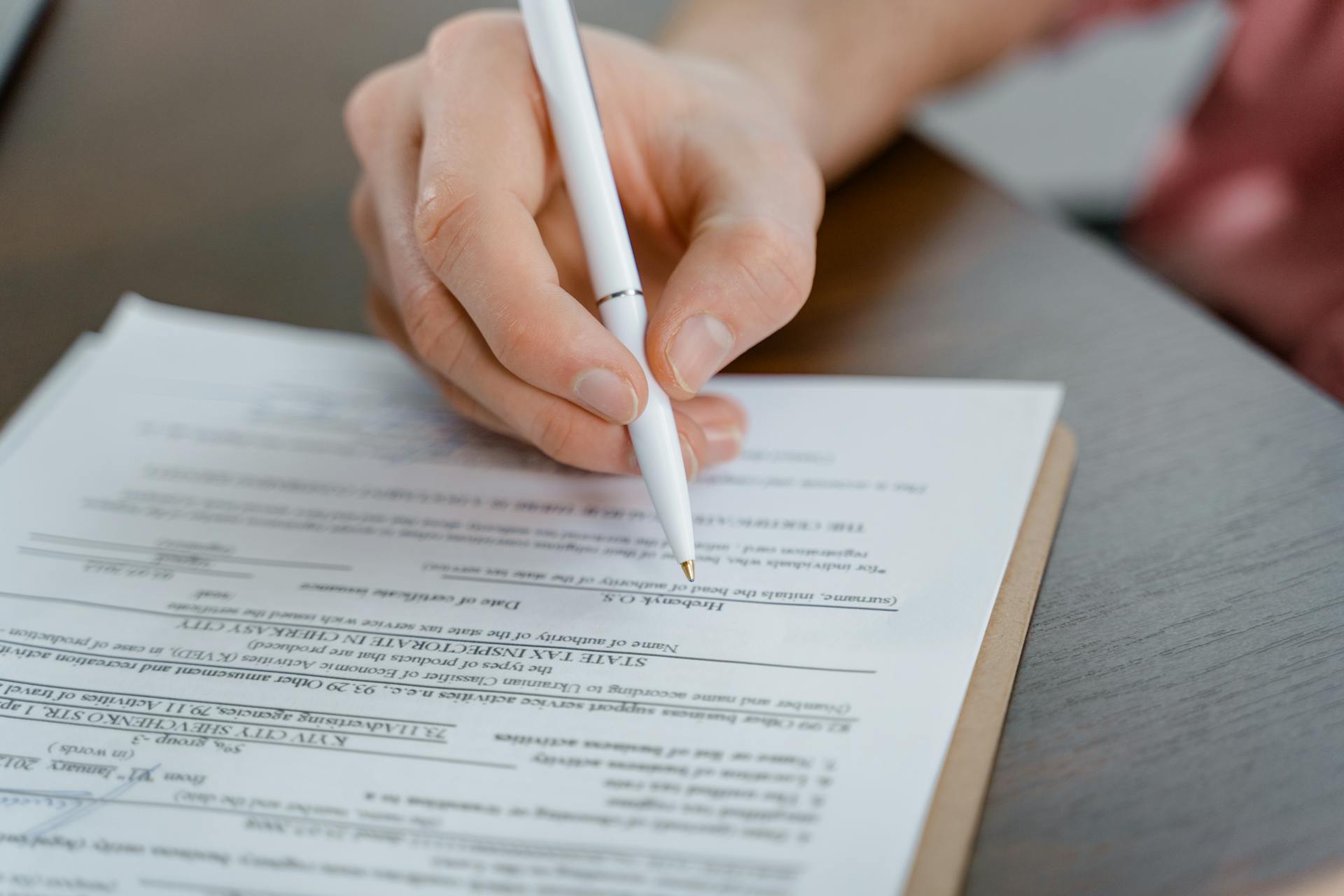
If you've been denied FMLA leave or experienced retaliation after taking FMLA leave, you may have grounds for a complaint.
The FMLA complaint process typically begins with filing a complaint with the U.S. Department of Labor's Wage and Hour Division within 180 days of the alleged violation.
You have the right to file a complaint even if you've already filed a lawsuit or a complaint with a state agency.
Filing a complaint with the Department of Labor is free and can be done online, by mail, or by phone.
If your complaint is investigated and found to be valid, the Department of Labor may order your employer to provide you with the FMLA benefits you were denied.
Your employer is required to maintain accurate records of your FMLA leave, which can be used as evidence in support of your complaint.
Recommended read: Can You Be Fired If Fmla Is Denied
Understanding FMLA
Eligible employees in Connecticut can get job-protected leave through the CT Family and Medical Leave Act.
This means they'll get unpaid leave time, but they'll still have job security.
Employers give workers forms to fill out and return, which includes eligibility information.
These forms are essential for determining whether you're eligible for FMLA benefits.
The CT Family and Medical Leave Act also provides information on laws and regulations.
If your rights are violated, you can file a complaint.
To do this, you'll need to follow the procedures outlined in the law.
Complaint Process
To file an FMLA complaint, you'll need to gather certain documents as evidence, including timesheets, employment contracts, witness statements, emails, text messages, and any other relevant materials.
The first step is to provide as much information as possible to support your claim. This includes your name, address, and phone number, as well as the name and location of your employer, and any relevant contact information.
You can file a complaint with the Department of Labor's Wage and Hour Division online, by mail, or by phone. You'll need to submit the proper paperwork, which includes your name, address, and phone number, as well as the name and location of your employer, and any relevant contact information.
If you're unsure about the process, consider talking to an employment attorney who can advise you on your rights and help you understand the legal process. They can also represent you if you decide to take legal action.
Here's a summary of the steps to file a complaint:
- Gather evidence, including timesheets, employment contracts, witness statements, emails, text messages, and any other relevant materials.
- Provide as much information as possible to support your claim, including your name, address, and phone number, as well as the name and location of your employer.
- File a complaint with the Department of Labor's Wage and Hour Division online, by mail, or by phone.
- Submit the proper paperwork, including your name, address, and phone number, as well as the name and location of your employer, and any relevant contact information.
- Consider talking to an employment attorney for advice and representation.
Employer Responsibilities
Employers with at least 50 employees must comply with the FMLA, but not every employee is eligible for leave. An employee must have worked for at least a year, and at least 1,250 hours during the previous year, at a facility that has at least 50 employees within a 75-mile radius, to be covered.
Employers must continue an employee's health insurance while they're on leave, and can only communicate with the employee to the extent necessary to ensure a smooth return to work. They can't cut off insurance prematurely, even if the employee is late with a premium payment.
Some common employer mistakes include failing to recognize serious health conditions, disciplining employees for excessive absences, and hounding or pressuring employees who are on leave. Employers must also reinstate employees to their prior positions when their leave is over, with a few limited exceptions.
Curious to learn more? Check out: Contacting Employees on Fmla Leave
Here are some specific employer responsibilities to keep in mind:
- Continue an employee's health insurance while they're on leave
- Reinstate employees to their prior positions when their leave is over
- Only communicate with employees on leave to the extent necessary to ensure a smooth return to work
- Not cut off insurance prematurely, even if the employee is late with a premium payment
Employers must also be careful not to classify employees as "key" employees in an attempt to avoid reinstating them. This can be a common mistake, but it's not a valid reason to deny an employee their FMLA rights.
You might like: Fmla Michigan under 50 Employees
Filing a Complaint
Filing a complaint under the Family and Medical Leave Act (FMLA) can be a daunting task, but it's essential to know your rights and the steps involved. The statute of limitations for filing a claim with the Secretary of Labor is not specific, but you should file a complaint within a reasonable time after discovering your FMLA rights have been violated.
To file a complaint, you'll need to gather supporting documents, such as timesheets, employment contracts, and statements from witnesses. These documents can help prove your case and demonstrate the employer's violation of your FMLA rights. It's also essential to keep a record of all correspondence with your employer, including emails, text messages, and general correspondence.
Worth a look: How to File a Complaint against an Insurance Adjuster
You have two years from the date of the last action in which you believe your employer violated the FMLA to file a private lawsuit. If you can prove that your employer willfully violated the FMLA, you have three years to file a lawsuit. It's crucial to consult with an employment lawyer to determine the best course of action for your specific situation.
If you decide to file a private lawsuit, you'll need to determine which federal or state court oversees FMLA matters in your jurisdiction. You'll then need to file the FMLA claim with the appropriate court, serve copies of the Summons and Complaint on your employer, and file the proof of service certificate with the court. The employer will then respond to the complaint, and the process will proceed with the regular stages of a trial.
Here's a list of the essential documents you'll need to file a complaint:
- Timesheets
- Employment contracts
- Statements from witnesses
- Emails
- Text messages
- General correspondence
- Any other relevant documents that support your claim
Remember, the key to a successful complaint is to provide as much evidence as possible to support your claim. By gathering the necessary documents and following the proper procedures, you can ensure that your FMLA rights are protected and that you receive the compensation you deserve.
FMLA and COVID-19
COVID-19 has had an impact on employee rights under the FMLA, making it clear that employees can't take leave to avoid contracting the virus.
Individuals can take time off for COVID-19 related issues that make it impossible to work. The Family First Coronavirus Act (FFCRA) was created to address issues arising during the pandemic, requiring employers to provide paid sick leave for employees absent due to a COVID-19 related issue.
However, the FFCRA has its own set of restrictions, and it's best to discuss them with an attorney. Employers who voluntarily provided FFCRA benefits through March 21, 2021 may receive a federal tax credit.
COVID-19 leave was considered FMLA leave during a portion of 2020, but those mandatory leave entitlements expired at the end of 2020.
Frequently Asked Questions
What is an example of a FMLA violation?
An example of a FMLA violation is taking leave for non-medical reasons, such as personal or vacation purposes. This can also include taking more leave than is justified or authorized under the FMLA.
Featured Images: pexels.com