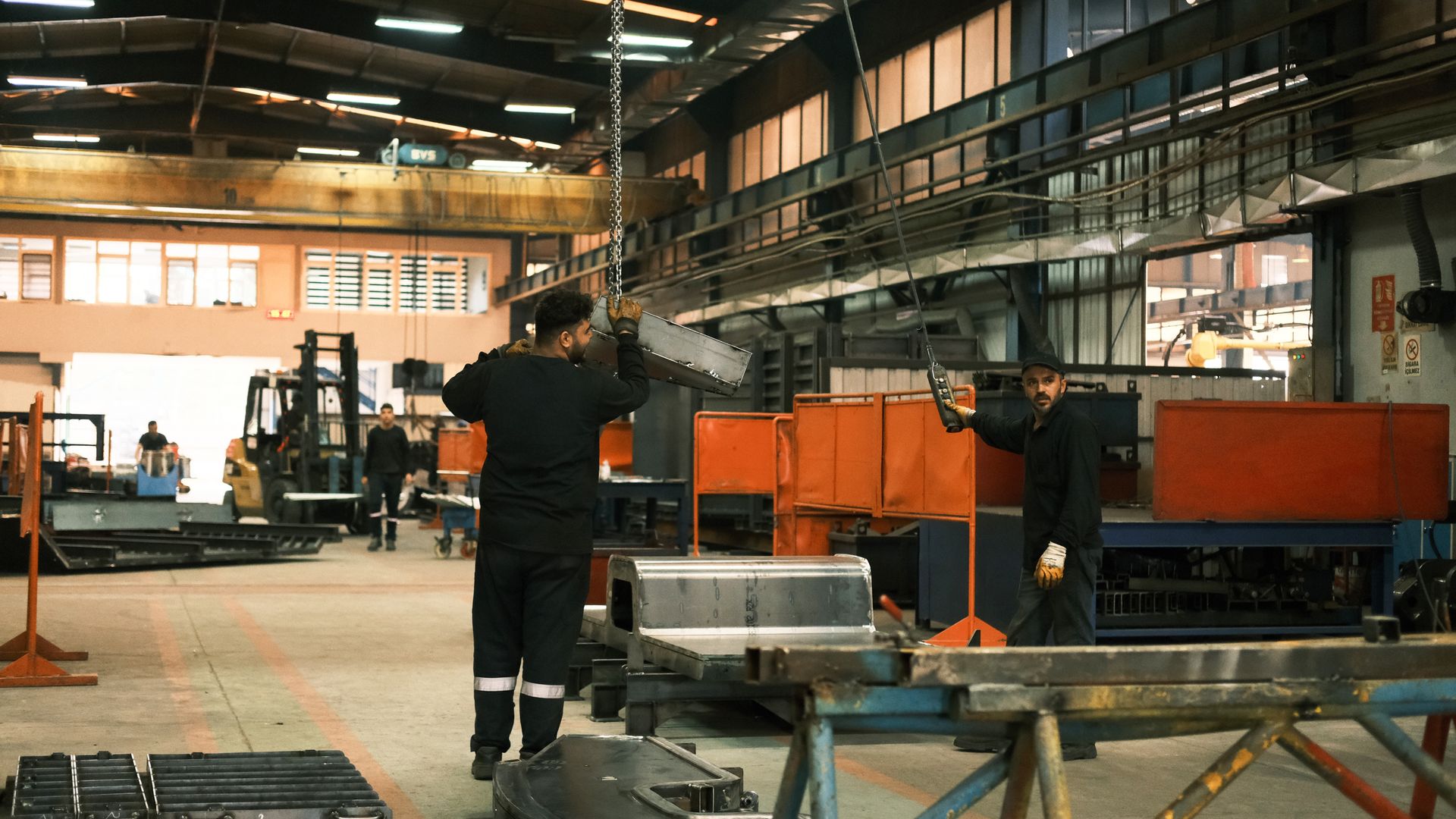
The Factories Act, 1948, in India, is a comprehensive legislation that ensures the welfare and safety of workers in factories. It was enacted to provide a safe and healthy working environment.
Under this Act, factories with 10 or more workers must register with the authorities, and a license is required to operate. This ensures that factories comply with the Act's provisions.
The Act mandates a maximum of 48 hours of work per week, with at least one day of rest in seven. This provision aims to prevent worker fatigue and promote a better work-life balance.
The Act also requires factories to maintain a register of workers, which includes their personal details, employment history, and medical records. This helps in monitoring worker welfare and addressing any issues promptly.
Curious to learn more? Check out: Consumer Welfare Standard
Objectives and Key Provisions
The Factories Act, 1948, was implemented to protect the health and safety of workers and ensure that factories adhere to global best practices. It aims to provide a fair and decent livelihood for all working-class people and reduce any social or industrial tensions.
The Act limits work hours to 48 hours a week, with overtime work not exceeding nine hours a day. Factory Schedule Rules specify that a limited working day shall not exceed ten consecutive hours.
Key provisions of the Act include ensuring the safety, health, and welfare of workers, regulating working hours, leave, and employment of women and young persons, and enforcing the provision of basic facilities like clean drinking water, toilets, ventilation, etc.
Here are some of the key welfare provisions:
- Availability of drinking water, restrooms, and adequate lighting.
- Well-equipped first aid boxes.
- Facilities for children of working mothers (creches).
The Act also regulates work hours, rest periods, weekly holidays, overtime wages, and provisions for women and young workers, including safeguarding machinery, fire safety, and providing welfare amenities like canteens, restrooms, and seating.
Objectives
The Factories Act of 1948 has several key objectives that aim to create a safe and healthy work environment for workers.
The Act seeks to protect the health and safety of workers, ensuring that factories adhere to global best practices. This includes providing facilities like drinking water, restrooms, and adequate lighting.
Factory inspectors are appointed to oversee adherence to the Act, which also regulates the working hours, leave, and employment of women and young persons.
Here are some of the key objectives of the Act:
- Ensuring hygiene, waste disposal, ventilation, and sanitary facilities.
- Safeguarding machinery, fire safety, proper infrastructure and protective measures.
- Providing welfare amenities like drinking water, toilets, first aid, canteens, creches, restrooms, and seating.
- Regulating work hours, rest periods, weekly holidays, overtime wages, and provisions for women and young workers.
The Act also aims to reduce any social or industrial tensions and provide a fair and decent livelihood for all working-class people. By doing so, it creates a structured environment where inspections, audits, and compliance mechanisms are legally mandated.
Major Provisions
The Factories Act, 1948, has several key provisions that aim to protect workers and ensure their well-being.
The Act limits work hours to 48 hours a week, with overtime not exceeding nine hours a day.
Factories are required to maintain proper standards of hygiene and sanitation, including regular cleaning of premises and disposal of waste.
Adequate ventilation is also a must to maintain a comfortable work environment.
Factories must provide facilities such as drinking water, restrooms, and adequate lighting for workers.
Well-equipped first aid boxes are also a requirement.
Factory inspectors are appointed to oversee adherence to the Act, ensuring that factories comply with its provisions.
Here's a summary of the major provisions:
Applicability and Compliance
The Factories Act, 1948 applies to factories with specific workforce limits and power usage. Factories with ten or more workers where power is used, or factories with twenty or more workers where power is not used, fall under the Act.
The Act considers any premises where a manufacturing process is carried out and exceeds the workforce limits as a factory. This includes premises with 10 or more workers employed and a manufacturing process carried out with the aid of power, or premises with 20 or more workers employed without the aid of power.
To maintain compliance, factories must keep records of various documents, including a Factory License, Register of Compensatory Holidays, and Annual Return. The occupier is responsible for implementing and maintaining compliance with all provisions of the Act, including maintaining safety equipment and ensuring hygienic conditions.
Discover more: Rite Aid
Here are some of the key compliance requirements to be maintained:
- Factory License along with Approved Plans
- Register of Compensatory Holidays
- Abstract of the Act and Rules
- Report of examination or test of pressure vessel or plant
- Report of Examination of Water-sealed gasholder
- Overtime register
- Notice of period of work
- Register of adult workers
- Register of Leave with wages
- Leave with wages card
- Health Register
- Report of accident including, dangerous occurrence
- Notice of Poisoning or Disease
- Annual Return
- Muster Roll
- Inspection book
- Identity Card
Key Definitions
Understanding the definitions provided in the Factories Act, 1948, is crucial for determining its applicability.
A worker is defined as any person employed in a manufacturing process, directly or indirectly, for wages. This means that anyone involved in the production process, even if they're not directly making goods, is considered a worker.
The Act defines a manufacturing process as activities such as making, altering, repairing, or packaging goods. This broad definition encompasses various tasks that contribute to the creation of products.
The occupier of a factory is typically the owner or manager responsible for its operation. This person has a crucial role in ensuring compliance with the Act's provisions.
Here are the key definitions outlined in the Act:
- Worker: Any person employed in a manufacturing process, directly or indirectly, for wages.
- Manufacturing Process: Activities such as making, altering, repairing, or packaging goods.
- Occupier: The person responsible for the factory’s operation, typically the owner or manager.
Applicability
The Factories Act, 1948 applies to certain types of premises. Any premises where a manufacturing process is carried out with the aid of power and 10 or more workers are employed is considered a factory under this Act.

The Act also applies to premises where 20 or more workers are employed without the aid of power. Even if the number of workers falls below the threshold later, the Act continues to apply unless formally de-registered.
To determine if a premises is a factory, look for the following: a manufacturing process is carried out, and the workforce exceeds the specified limits. A manufacturing process includes activities such as making, altering, repairing, or packaging goods.
Here are the key workforce limits for the Act to apply:
- 10 or more workers if power is used.
- 20 or more workers if no power is used.
The person responsible for the factory's operation, typically the owner or manager, is known as the occupier. Understanding the definitions in the Act is critical for interpreting its scope.
Occupier's Roles and Responsibilities
As the person responsible for the factory's operation, the occupier plays a crucial role in ensuring compliance with the Factories Act, 1948. This includes implementing and maintaining safety equipment.
The occupier is also responsible for providing welfare facilities and ensuring hygienic conditions. This is a critical aspect of maintaining a safe and healthy work environment for employees.
The occupier must maintain records and allow inspectors to examine them. This includes providing access to safety records and any other relevant documentation.
The occupier is accountable for ensuring compliance with all provisions of the Act. This includes maintaining safety equipment, ensuring hygienic conditions, and providing welfare facilities.
Here's a summary of the occupier's key responsibilities:
- Maintaining safety equipment
- Ensuring hygienic conditions
- Providing welfare facilities
- Maintaining records and allowing inspectors to examine them
Working Hours and Employment Conditions
The Factories Act, 1948, has specific rules governing working hours and employment conditions. Adults are limited to 48 hours of work per week and 9 hours per day.
Employers are required to provide adequate rest intervals, with at least 30 minutes after 5 hours of continuous work. This is crucial to prevent worker fatigue and ensure their overall well-being.
Women and young workers are restricted from working night shifts and hazardous tasks, which is a vital measure to protect their health and safety. This restriction is in place to prevent exploitation and ensure a safe working environment.
For more insights, see: Avoid Prevent Burnout Work
The Act also mandates that employers provide a weekly holiday to their workers, giving them a much-needed break from their duties. This is essential for maintaining work-life balance and preventing burnout.
The maximum working hours are strictly regulated, with a limit of 9 hours per day and 48 hours per week. Overtime is allowed, but it must be paid at double the regular rate.
Here's a summary of the working hours and employment conditions:
It's essential for employers to adhere to these regulations to ensure a safe and healthy working environment for their employees.
Health and Safety Provisions
The Factories Act, 1948, takes factory health and safety very seriously. Factories must maintain proper standards of hygiene and sanitation, including cleanliness, ventilation, and safe disposal of waste.
Regular cleaning of premises is a must. This ensures a comfortable work environment for workers. Factories must also ensure adequate airflow to maintain a comfortable work environment.
Expand your knowledge: Knowledge Engineering Environment
Factories employing 500 or more workers or involved in hazardous processes must have an Occupational Health Centre (OHC). Annual health check-ups are mandatory for workers exposed to health risks.
Factories must ensure that all machinery is properly maintained and guarded. This includes fencing of machinery and precautions in case of fire. Factories must also provide compulsory personal protective equipment like helmets and gloves.
Here's a summary of the key health and safety provisions:
- Cleanliness: Regular cleaning of premises and disposal of waste.
- Ventilation: Ensuring adequate airflow to maintain a comfortable work environment.
- Disposal of Waste: Safe disposal of industrial waste and effluents.
- Machinery Safety: Ensuring machines are properly maintained and guarded.
- Fire Safety: Provisions for fire extinguishers and emergency exits.
- PPE: Compulsory personal protective equipment like helmets and gloves.
- Annual Health Check-ups: Mandatory for workers exposed to health risks.
- OHC: Factories employing 500 or more workers or involved in hazardous processes must have an Occupational Health Centre.
Welfare Provisions
The Factories Act, 1948, takes worker welfare very seriously. It requires employers to provide essential facilities to ensure a safe and healthy work environment.
Availability of drinking water, restrooms, and adequate lighting are must-haves. Factory inspectors are appointed to oversee adherence to the Act.
First aid is also a priority, with well-equipped first aid boxes required in every factory. This is crucial in case of emergencies.
Creches are also provided for the children of working mothers. Factory inspectors are there to ensure that these facilities are up to standard.
You might like: Are Assisted Living Facilities a Good Investment
Employers must provide a range of welfare facilities, including washing facilities, storage for clothing, and sitting arrangements. These are essential for maintaining a clean and comfortable work environment.
Here are some of the welfare facilities that employers must provide:
- Washing facilities
- Storage for clothing
- Sitting arrangements
- First-aid appliances
- Canteens (if 250 or more workers)
- Restrooms and lunchrooms
- Crèches (if 30 or more women workers)
- Welfare officers (if 500 or more workers)
VMEDO Support offers guidance and assessments to help employers comply with these requirements.
Employment and Young Persons
Children below 14 years are prohibited from working, according to the Act. This is a crucial aspect of protecting young minds and ensuring they receive a proper education.
Adolescents between 15 to 18 years need a medical fitness certificate before they can be employed. This is a requirement to ensure their safety and well-being in the workplace.
Restrictions on working hours and types of work are also in place for young persons. This includes no night shifts and certain hazardous tasks.
Here's a summary of the key restrictions on young workers:
VMEDO, a company that provides medical fitness assessments, issues the required fitness certificates for adolescents. This is a practical example of how these regulations are implemented in real-life situations.
Penalties and Consequences
If you fail to comply with the Factories Act, 1948, you'll face serious consequences. Fines for minor violations are a given.
Non-compliance can lead to imprisonment or heavy fines for serious offenses. The severity of the penalty depends on the nature of the violation.
Fines can range from minor penalties to a whopping INR 2 lakhs for more serious offenses. Imprisonment for up to 2 years is also a possibility for serious violations.
In addition to fines and imprisonment, your factory license can be suspended. This can severely impact your business operations and reputation.
Here's a summary of the possible penalties:
Amendments and Reforms
The Factories Act, 1948 (India) has undergone several amendments to address new industrial challenges and align with international labor standards. The first amending act was The Repealing and Amending Act, 1949 (40 of 1949).
Some notable amendments include The Factories (Amendment) Act, 1954 (25 of 1954), which aimed to improve working conditions and safety measures in factories. The Central Labour Laws (Extension to Jammu and Kashmir) Act, 1970 (51 of 1970) extended the Factories Act to Jammu and Kashmir.
Broaden your view: Banking Regulation Act, 1949

The Factories (Amendment) Act, 1976 (94 of 1976) and The Factories (Amendment) Act, 1987 (20 of 1987) further refined the Act to better protect workers' rights and safety.
Here's a list of the key amending acts and adaptation orders:
- The Repealing and Amending Act, 1949 (40 of 1949)
- The Adaptation of Laws Order, 1950
- The Repealing and Amending Act, 1950 (35 of 1950)
- The Part B States (Laws) Act, 1951 (3 of 1951)
- The Factories (Amendment) Act, 1954 (25 of 1954)
- The Central Labour Laws (Extension to Jammu and Kashmir) Act, 1970 (51 of 1970)
- The Factories (Amendment) Act, 1976 (94 of 1976)
- The Factories (Amendment) Act, 1987 (20 of 1987)
Importance and Compliance
The Factories Act, 1948 is a vital piece of legislation that ensures worker rights and safety are protected in the workplace. This Act governs health, safety, welfare, working hours, and employment conditions of workers in factories.
Compliance with the Factories Act is not optional, and factories must maintain a range of records, including a Factory License along with Approved Plans, a Register of Compensatory Holidays, and a Health Register. These records are essential for ensuring that factories operate in a safe and regulated environment.
For businesses, adhering to the Factories Act helps avoid legal issues, penalties, and operational disruptions, while also promoting worker well-being and increasing productivity.
A different take: Worker Representation on Corporate Boards of Directors
The Importance of Why in Business

The Factories Act, 1948 is a crucial piece of legislation that ensures worker rights and safety are not overshadowed by profit motives.
Adhering to the Act helps businesses avoid legal issues, penalties, and operational disruptions, making it a vital aspect of compliance.
A healthy, safe, and satisfied workforce leads to increased productivity and reduced absenteeism, which is a direct result of prioritizing worker well-being.
Many large clients insist on supplier compliance with statutory safety standards, making it essential for businesses to be client and audit ready.
By prioritizing compliance with the Factories Act, businesses can reap long-term benefits and avoid costly mistakes.
See what others are reading: Home Worker
How Vmedo Helps You Stay Compliant
VMEDO is a trusted partner in workplace health and safety, helping organizations stay fully compliant with the Factories Act and other relevant regulations.
VMEDO's services include EHS Audits, which ensure that your workplace meets the necessary standards.
Occupational Health Centres as per Factories Act 1948 are also available, providing a safe and regulated environment for workers.
Intriguing read: Flexible Workplace

First Aid Training for Employees in India as per Factories Act 1948 is a crucial aspect of compliance, and VMEDO can help with that.
Health Check-ups and Medical Fitness Certificates as per Factories Act 1948 are also essential for maintaining a healthy workforce.
Vaccination and Preventive Care Programs as per Factories Act 1948 are another way VMEDO can help organizations stay compliant.
Some of the key compliance requirements under the Factories Act include:
Even if workforce numbers drop, the Factories Act continues to apply unless formally de-registered.
Validity and Scope
The Factories Act, 1948 (India) remains in force across the country, but with a catch. It continues to apply unless and until the new OSHWC Code, 2020 is formally implemented in a state.
This means that the Act's provisions are still relevant and binding, but with the potential for changes in the future. The new code's implementation will likely bring about updates to the Act's requirements and regulations.
For now, the Factories Act remains a crucial piece of legislation in India's industrial landscape.
Publication Date

The publication date is a crucial aspect of any research or study. It's listed as June 2020 in the article.
The exact date is not specified, but it's clear that the research was conducted and published within a specific timeframe.
Validity Check
The Factories Act is still in force across India unless and until the new OSHWC Code, 2020 is formally implemented in a state. This means that the Factories Act remains a governing law in the country.
The Factories Act continues to apply to all factories in India, ensuring that workers are protected from hazardous working conditions.
Featured Images: pexels.com