ExxonMobil is one of the world's largest publicly traded oil and gas companies, with a presence in over 50 countries.
ExxonMobil's global operations are vast, with a diverse portfolio of oil, gas, and petrochemical projects.
The company has a significant presence in the United States, with major operations in Texas and other states.
ExxonMobil has been involved in several high-profile controversies over the years, including allegations of climate change denial and human rights abuses in countries where it operates.
Suggestion: Exxonmobil Trading Name
ExxonMobil Operations
ExxonMobil operates in several countries, with a significant presence in Papua New Guinea, where it holds 1.1 million acres of land, including the PNG Gas project.
In Australia, ExxonMobil has a substantial operation, with 1.7 million acres of land, including 1.6 million acres offshore, and it operates the Longford Gas Conditioning Plant.
The company's upstream division makes up the majority of its revenue, accounting for approximately 70% of it.
ExxonMobil's petroleum exploration and production activities in the United States are concentrated in the Permian Basin, Bakken Formation, Woodford Shale, Caney Shale, and the Gulf of Mexico.

As of December 31, 2014, ExxonMobil owned 14.6 million acres in the United States, with 1.7 million acres offshore and 1.5 million acres in the Gulf of Mexico.
In Canada, the company holds 5.4 million acres, including 1 million acres offshore and 0.7 million acres of the Kearl Oil Sands Project.
ExxonMobil has a significant presence in Africa, with upstream operations concentrated in Angola, where it owns 0.4 million acres offshore, Chad, Equatorial Guinea, and Nigeria.
In Asia, ExxonMobil holds 9,000 acres in Azerbaijan, 1.7 million acres in Indonesia, and 0.7 million acres in Iraq.
ExxonMobil exited the West Qurna 1 oilfield in January 2024, officially ending all energy sector operations in Iraq.
In March 2024, ExxonMobil discovered oil at the Stabroek block off the coast of Guyana using a drillship, and by the end of 2027, it plans to have 6 FPSOs at the block.
Controversies and Risks
ExxonMobil has faced numerous controversies and risks over the years. The company has been criticized for its stance on climate change, with some accusing it of denying the existence of global warming until 2014. ExxonMobil has also been ranked among the top polluters in the US, emitting significant amounts of greenhouse gases and airborne pollutants.
ExxonMobil has been responsible for over 3,000 oil spills and leakages, resulting in the loss of more than one barrel of oil, with the most in a single year being 484 spills in 2011. The company's operations have also led to increased cancer infections, lower air quality, and potential environmental racism in areas like Louisiana's Cancer Alley.
ExxonMobil has been accused of greenwashing its Paris Agreement carbon neutrality pledges while continuing to invest in fossil fuel production and sales. The company has also been sued by dozens of states and localities in the US for its climate change denial.
Climate Change Denial
ExxonMobil's environmental record has faced much criticism for its stance and impact on global warming. In 2018, the company was ranked tenth among American corporations emitting airborne pollutants and thirteenth by emitting greenhouse gases.
ExxonMobil has been responsible for more than 3,000 oil spills and leakages since 2020, with the most in a single year being 484 spills in 2011. This is a staggering number that highlights the company's environmental track record.
Expand your knowledge: Gold Climbs toward Record High Ahead of Us Inflation Data.
The company committed less than 1% of its profits towards researching alternative energy as of 2005, which is less than other leading oil companies. This lack of investment in renewable energy is a concerning trend that has contributed to the company's poor environmental record.
ExxonMobil's own scientists accurately projected and skillfully modeled global warming due to fossil fuel burning between 1977 and 2003. However, the company worked to deny these findings, rather than using them to inform its business practices.
A 2021 report ranked ExxonMobil as the sixth most environmentally responsible company among 120 oil, gas, and mining companies involved in resource extraction north of the Arctic Circle. This ranking is a testament to the company's efforts to improve its environmental record, but it still falls short of what is necessary to mitigate the impact of climate change.
Here are some key facts about ExxonMobil's climate change denial:
- ExxonMobil was a notable denier of climate change between the 1980s and 2014.
- The company officially changed its position in 2014 to acknowledge the existence of climate change.
- ExxonMobil has been accused of greenwashing its Paris Agreement carbon neutrality pledges while continuing to invest in fossil fuel production and sales.
- Dozens of states and localities have sued ExxonMobil on the basis of its climate change denial as of 2024.
Oil Spills and Pollution
ExxonMobil's operations have been marred by numerous oil spills, with the most notable being the 1989 Valdez oil spill, which released 11 million U.S. gallons of oil into Prince William Sound, oiling 1,300 miles of the Alaskan coastline.
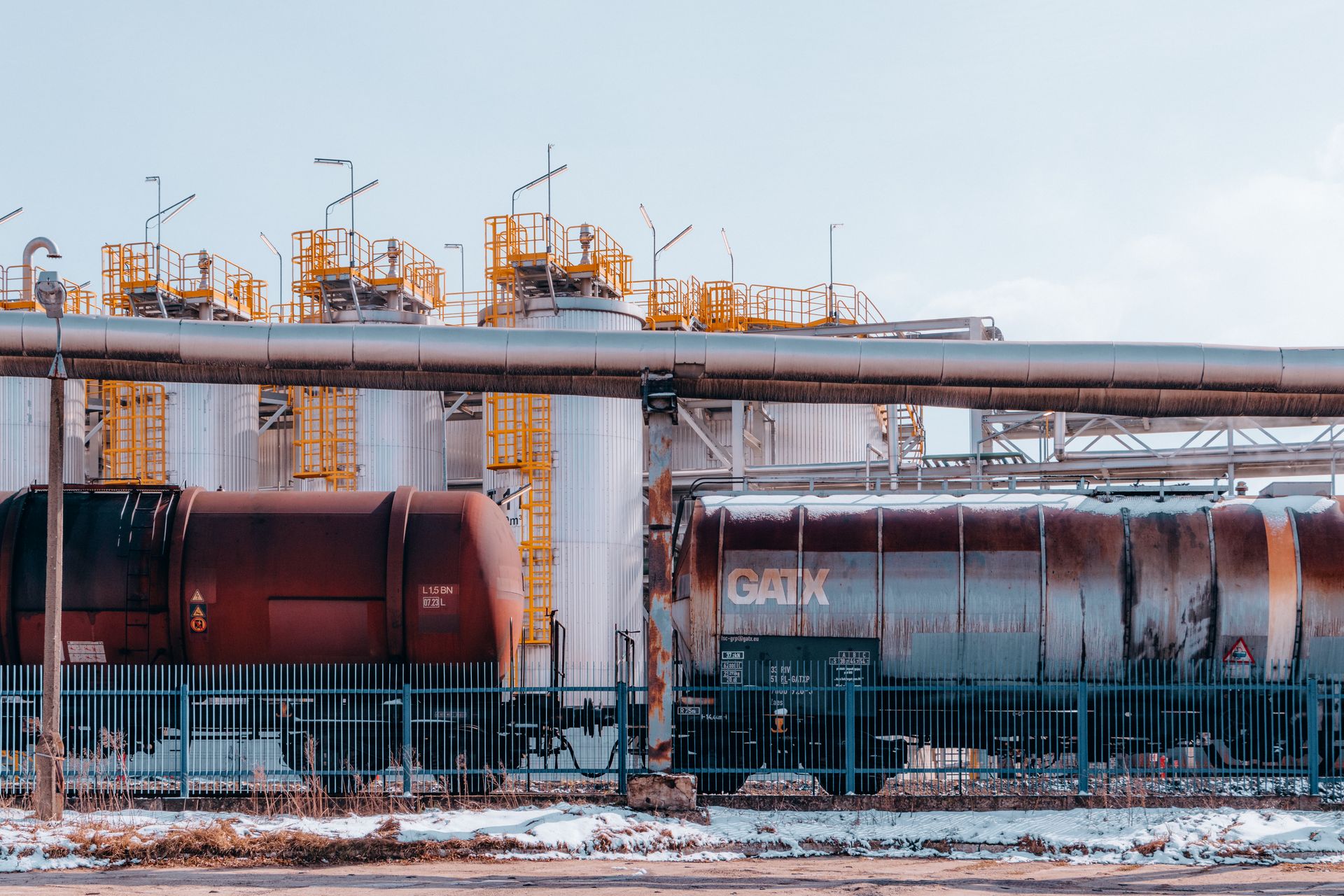
The Valdez spill remains the second largest in American history, trailing only BP's Deepwater Horizon spill in the Gulf of Mexico. ExxonMobil has also been responsible for a 30 million gallon spill into New York City's Newtown Creek over the course of a century.
A 2011 oil spill leaked 1,500 barrels of oil into the Yellowstone River, resulting in around $135 million in damages. ExxonMobil's activities in Louisiana, particularly at its Baton Rouge Refinery, have earned the area the nickname of Cancer Alley.
The company's operations in Louisiana have led to increased cancer infections, lower air quality, and potential environmental racism. In May 2021, ExxonMobil topped the Plastic Waste Makers Index report, manufactured 55 percent of the single-use plastic waste in the world in 2019.
ExxonMobil's role in overstating the effectiveness of plastic recycling has been called into question, with California Attorney General Rob Bonta issuing a subpoena in April 2022. On September 23, 2024, Bonta filed a lawsuit against ExxonMobil, alleging a "decades-long campaign of deception" on the merits of plastic recycling.
Worth a look: Waste Management, Inc.
Geopolitical Influence and Human Rights
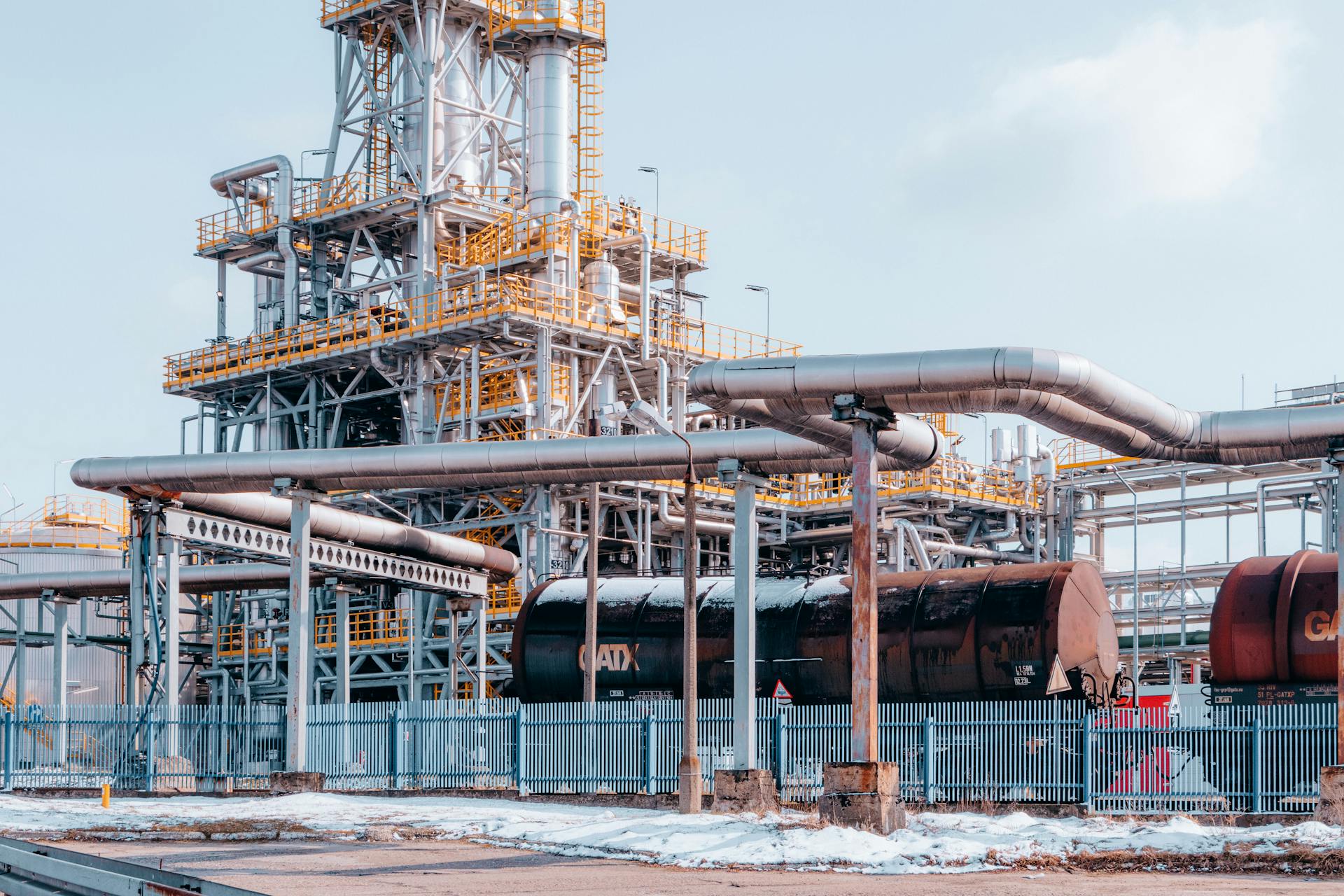
ExxonMobil has been accused of human rights violations and abusing its geopolitical influence. The company's corporate state within the American state has been described in the book Private Empire by Steve Coll.
ExxonMobil's corporate ancestors are blamed for the outbreak of the 1954 Jebel Akhdar War, which was sparked by the Iraq Petroleum Company's activities.
War Profiteering Allegations
War profiteering allegations have been made against ExxonMobil, with U.S. President Joe Biden criticizing the company in June 2022 for making more money than God that year.
ExxonMobil's profits surged in 2022, partly due to the war in Ukraine, and the company reported making a staggering $2,245.62 per second in profit across the 92-day long second quarter.
The company's massive profits have raised eyebrows, with many questioning the ethics of profiteering from a war that has caused so much suffering and destruction.
Additional reading: 2022 Russian Debt Default
Exposure to Benzene
Exposure to benzene is a serious concern, as it's classified by the US Environmental Protection Agency as a known carcinogen.
The health risks of benzene are well-documented, and a Pennsylvania jury found ExxonMobil liable for negligently failing to warn about these risks.
In May 2024, a jury ordered ExxonMobil to pay $725.5 million in compensatory damages to a former mechanic, Paul Gill, who claimed that his cancer was caused by exposure to benzene in ExxonMobil's petroleum products.
Paul Gill worked at a Mobil gas station between 1975 and 1980, and his case highlights the potential dangers of benzene exposure.
A different take: Exposure (Bilott Book)
Risk-Reward Analysis: Policy Uncertainty vs. Strategic Resilience
ExxonMobil's risk-reward profile is shaped by its dual exposure to policy and market forces. Its deep-rooted infrastructure and partnerships provide a competitive edge.
The company's $30 billion investment in low-emission initiatives reflects confidence in its ability to execute large-scale projects. This includes the Baytown Complex, where a $200 million investment was announced in 2024 to build a second Advanced Recycling Unit.
Policy shifts can disrupt timelines and profitability, as seen with the potential impact of stricter European regulations or U.S. budget cuts. Japan's fiscal 2030 ammonia co-firing targets drive Marubeni's offtake agreements, but regulatory slippage in Tokyo could delay revenue realization.
ExxonMobil's Gulf Coast ambitions are tied to Abu Dhabi's net-zero roadmap, introducing geopolitical risks through its partnership with ADNOC. This 35% equity stake reflects the company's strategic resilience in the face of policy uncertainty.
Business and Finance
ExxonMobil's revenue has been on a rollercoaster ride over the years. In 2008, the company's revenue was a staggering $477 billion, but by 2015, it had declined to $249 billion.
The company's financial performance has also been impacted by net income, with a loss of $22.4 billion reported in 2020. However, ExxonMobil bounced back in 2021 with a net income of $23 billion.
Here's a breakdown of ExxonMobil's revenue and net income over the years:
ExxonMobil's total assets have also fluctuated over the years, with a high of $362 billion in 2019 and a low of $332 billion in 2020.
Sector
The oil and gas industry is a behemoth, with ExxonMobil being one of the largest players. ExxonMobil has a refining capacity of 4.3 million barrels of oil per day, making it one of the world's largest refiners.
ExxonMobil's primary retail brands worldwide are Exxon, Esso, and Mobil, with Exxon being used exclusively in the United States and Esso and Mobil being used in most other countries. The company operates a loyalty program, ExxonMobil Rewards+, where customers can earn rewards points when filling up at its stations in the United States and the United Kingdom.
For another approach, see: Wells Fargo Rewards Credit Cards
ExxonMobil's revenue in 2021 was a staggering $286 billion, making it one of the largest companies in the world. This is a significant increase from other major oil and gas companies, such as Shell plc, which had a revenue of $273 billion in 2021.
Here is a list of the top 5 oil and gas companies in the world by revenue, based on data from 2021:
ExxonMobil's dominance in the oil and gas industry is evident, but it's worth noting that other companies, such as TotalEnergies and BP, are also major players in the market.
Chemicals
ExxonMobil Chemical is a petrochemical company created by merging Exxon's and Mobil's chemical industries in 1999.
It produces a wide range of products, including basic olefins and aromatics, ethylene glycol, polyethylene, and polypropylene, as well as specialty lines like elastomers, plasticizers, and solvents.
The company also produces synthetic lubricant base stocks and lubricant additives, propylene packaging films, and catalysts.
ExxonMobil is the largest producer of butyl rubber.
Infineum, a joint venture with Shell plc, manufactures and markets various lubricant additives and fluids, including crankcase lubricant additives and automatic transmission fluids.
The Baytown reconfiguration signals ExxonMobil's commitment to maintaining its industry-leading returns, with a focus on high-value products and integration.
This focus should bolster margins, even as refining margins compress.
ExxonMobil's capital discipline, executing projects efficiently and prioritizing advantaged assets, reinforces its ability to generate robust cash flows.
The company is investing $200 million in advanced recycling at Baytown and Beaumont, aiming to process 1 billion pounds of plastic annually by 2027.
Check this out: Small Business Profit Margins by Industry
Financial Highlights
ExxonMobil's revenue has declined by 31.5% from the previous fiscal cycle, with a loss of $22.4 billion in 2020, despite an annual revenue of $181.5 billion.
In 2022, the company's revenue rebounded to $413 billion, with a net income of $55.7 billion.
ExxonMobil has been ranked #7 company in the World by Fortune 500 Global list.
Expand your knowledge: Credit Counseling Certificate Chapter 7 Free Pdf
Here's a snapshot of ExxonMobil's financial performance over the years:
ExxonMobil's capital expenditures, guided at $27–29 billion, reflect a disciplined approach to long-term value creation.
The company's capital discipline is evident in its ability to execute projects ahead of schedule and under budget.
Locations and Offices
ExxonMobil's headquarters are located in the Spring, Texas area, a suburb just outside of Houston. The campus spans 3,000,000 square feet and houses nearly 10,000 employees.
The company previously had its headquarters in Irving, but decided to consolidate its Houston operations into a new campus in 2022. This move allowed ExxonMobil to vacate its offices on 800 Bell St., which it had occupied since 1963.
In Australia, ExxonMobil operates on a massive scale, holding 1.7 million acres of land, including 1.6 million acres offshore.
Refineries
ExxonMobil operates 21 refineries worldwide, with 80% of its refining capacity integrated with chemical or lube basestocks.
The company's largest refinery overall is its Beaumont Refinery, while its second-largest in the United States is the Baytown Refinery, located in Baytown, Texas.
A federal judge ordered Exxon to pay $19.95 million (later reduced to $14.25 million) for thousands of Clean Air Act violations at its Baytown facilities between 2005 and 2013.
The Fifth Circuit Court of Appeals later affirmed this decision in 2024.
ExxonMobil's global average refining capacity is 4.6 million barrels per day, with the United States producing a plurality of the company's refining capacity at about 1.77 million barrels per day.
The company's corporate website claims it refines almost 5 million barrels per day.
ExxonMobil completed a 250,000 barrels per day expansion at its Beaumont, Texas, refinery in early 2023, making it one of the few U.S. refiners to expand capacity by a significant margin following the COVID-19 pandemic.
Additional reading: American Sugar Refining
Headquarters and Offices
ExxonMobil's headquarters are located in the Spring, Texas area, a suburb of Houston. The campus has a Spring post office address and is adjacent to, but not in, the Spring census-designated place.
For another approach, see: Spring Statement
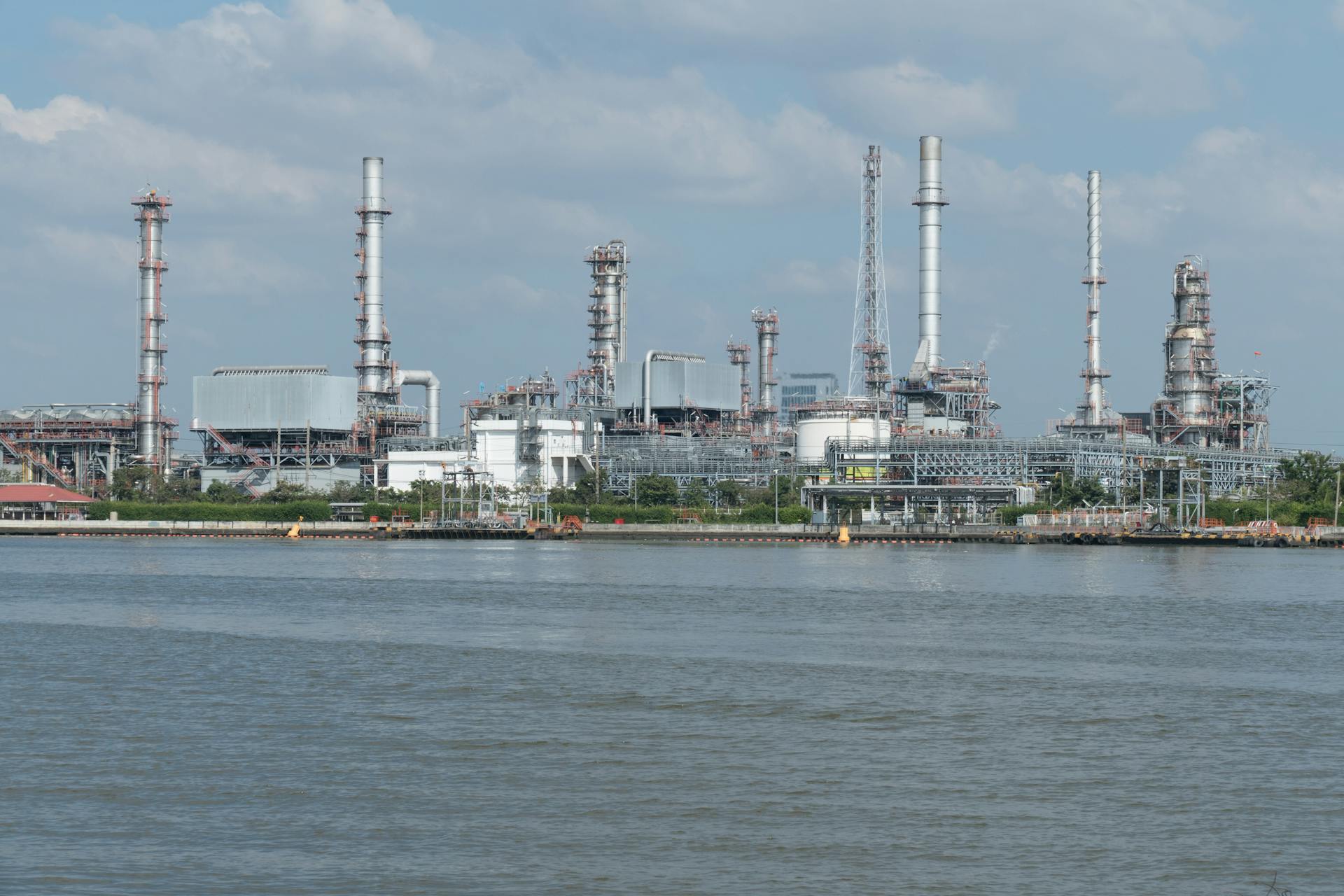
The company previously had its headquarters in Irving, but decided to consolidate its Houston operations in 2022. This led to the creation of a new campus in northern Harris County.
The new campus includes twenty office buildings, totaling 3,000,000 square feet, which is a massive space. It also features a wellness center, laboratory, and three parking garages.
ExxonMobil's new campus is designed to house nearly 10,000 employees, making it a significant hub for the company.
Curious to learn more? Check out: Campus Consortium
Russia Operations
ExxonMobil held 85,000 acres in the Sakhalin-I project through its subsidiary Exxon Neftegas.
The company has a significant presence in Russia, having developed 63.6 million acres in the country, including the East-Prinovozemelsky field, in partnership with Rosneft.
ExxonMobil fully pulled out of both Russia and Sakhalin-I after Russia's 2022 invasion began, and launched a lawsuit against Russia's federal government on August 30.
Readers also liked: Sakhalin Shipping Company
Australia Operations
In Australia, ExxonMobil has a significant presence, holding 1.7 million acres of land, including 1.6 million acres offshore.
The company operates the Longford Gas Conditioning Plant, a vital facility for processing natural gas.
ExxonMobil also participates in the development of the Gorgon LNG project, a major undertaking in the country's energy sector.
Its substantial landholdings in Australia demonstrate the company's commitment to the region's energy resources.
Indonesia
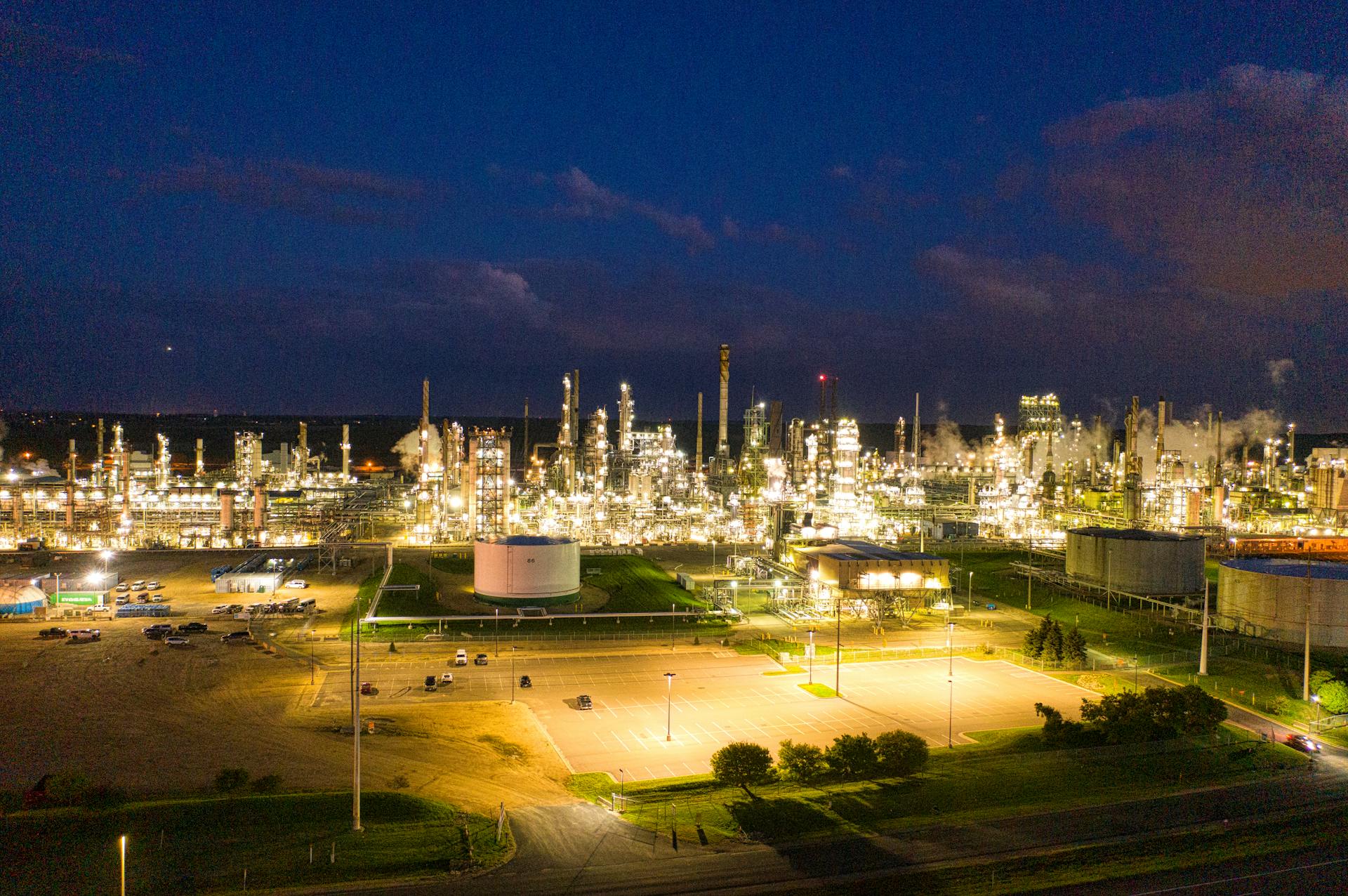
Indonesia has a complex history with ExxonMobil. ExxonMobil hired military units of the Indonesian National Army to provide security for their gas extraction and liquefaction project in Aceh, Indonesia, starting in the late 1980s.
These military units were accused of committing human rights violations, including sexual assault, battery, and unlawful detention. ExxonMobil eventually pulled out from Indonesia completely in 2001.
The company denied any wrongdoing, but the lawsuit dragged on for over 20 years, with ExxonMobil attempting to have the case dismissed nine times. In July 2022, a US District Court denied ExxonMobil's motions to dismiss the case, clearing the way for the lawsuit to go to trial.
Broaden your view: Restricted Share Units vs Stock Options
Financial Information
ExxonMobil's financial health is a crucial aspect of its overall performance. The company's cash reserves are substantial, with a total of $14.35 billion in cash available.
Looking at the company's debt-to-equity ratio, we see a relatively high percentage of 14.44%. This indicates that ExxonMobil relies heavily on debt to finance its operations.
For more insights, see: 14 Wall Street
The company's ability to generate cash is impressive, with a levered free cash flow of $20.75 billion over the trailing 12 months. This is a significant amount of money that can be used to invest in new projects, pay off debt, or return value to shareholders.
Here's a breakdown of ExxonMobil's profitability and income statement:
Overall, ExxonMobil's financial health is a key factor in its success, and the company's ability to generate cash and maintain a strong profitability is a testament to its financial strength.
Research and News
ExxonMobil is a large-cap company that explores for, produces, and refines oil worldwide. It produced 3.0 million barrels of liquids and 8.1 billion cubic feet of natural gas per day in 2024.
The company is one of the world's largest refiners, with a total global refining capacity of 4.3 million barrels of oil per day. ExxonMobil is also a major manufacturer of commodity and specialty chemicals.
ExxonMobil spends a fraction of its $1 billion annual research budget on low-carbon energy projects, focusing on basic research in five to ten key areas. These projects include algae biofuels, biodiesel from agricultural waste, and molten carbonate fuel cells.
Stocks of large-cap companies like ExxonMobil are defined as those in the top 70% of the capitalization of the U.S. equity market. As of 2024, ExxonMobil's reserves were 19.9 billion barrels of oil equivalent, 69% of which were liquids.
ExxonMobil is highlighted for its robust dividend potential and strategic market expansions, particularly through recent crude oil exports to India. Analysts remain optimistic about its financial health and growth prospects.
Low Carbon Solutions
Low Carbon Solutions are a key area of focus for ExxonMobil, with its own dedicated division led by former General Motors president Dan Ammann. This division aims to lower emissions in hard-to-decarbonize sectors like heavy industry, commercial transportation, and power generation using lower-emission fuels, hydrogen, and carbon capture and storage.
A unique perspective: Lower Medical Bills
ExxonMobil is investing heavily in this area, with plans to design its inaugural large-scale plant dedicated to producing low-carbon hydrogen, situated within its refining and petrochemical complex in Baytown, Texas. This project is set to become the world's largest low-carbon hydrogen project.
The company is also conducting research on clean energy technologies, including algae biofuels, biodiesel made from agricultural waste, carbonate fuel cells, and refining crude oil into plastic by using a membrane and osmosis instead of heat. This work is a fraction of the $1 billion a year Exxon spends on research worldwide.
ExxonMobil's Low Carbon Solutions division is also exploring new ways to manufacture plastic that produce less carbon dioxide, as well as molten carbonate fuel cells and algae biofuels. The company has already made significant strides in this area, with a focus on basic research in five to ten key areas.
Low Carbon Solutions has the potential to eclipse the value of ExxonMobil's oil and gas operations, pending good economic conditions. This is a significant shift for the company, which has traditionally been associated with fossil fuels.
Readers also liked: Western Refining
Lithium Mining
Lithium mining is a significant development in the energy sector, with ExxonMobil starting drilling for lithium in the US State of Arkansas in November 2023.
ExxonMobil's lithium drilling project in Arkansas marks a new chapter in the country's lithium mining history.
In June 2024, a preliminary agreement was signed to supply lithium to SK for the manufacture of lithium-ion batteries that will power electric vehicles.
This agreement highlights the growing demand for lithium in the electric vehicle industry and the efforts to meet this demand through domestic lithium mining.
Additional reading: Maersk Drilling
Research Reports: Xom
ExxonMobil is an integrated oil and gas company that explores for, produces, and refines oil worldwide. It produced 3.0 million barrels of liquids and 8.1 billion cubic feet of natural gas per day in 2024.
The company has a significant presence in the refining industry, with a total global refining capacity of 4.3 million barrels of oil per day. This makes it one of the world's largest refiners.
ExxonMobil's reserves were 19.9 billion barrels of oil equivalent at the end of 2024, with 69% of those reserves being liquids. This is a significant portion of the company's overall reserves.
Here are some key statistics about ExxonMobil's refining operations:
- Total global refining capacity: 4.3 million barrels of oil per day
- Reserves at the end of 2024: 19.9 billion barrels of oil equivalent
- Liquids reserves as a percentage of total reserves: 69%
The company is undergoing a transformation at its Baytown Complex to align with declining gasoline demand and surging demand for diesel, lubricants, and petrochemicals.
Explore further: Crowds on Demand
Frequently Asked Questions
Do the Rockefellers still own ExxonMobil?
No, the Rockefellers no longer own ExxonMobil, as they have sold their shares.
Featured Images: pexels.com