
Euronext is a pan-European stock exchange that offers a comprehensive platform for buying and selling securities. It was founded in 2000 through the merger of the Amsterdam, Brussels, and Paris stock exchanges.
Euronext has a presence in several European countries, including Belgium, France, Ireland, the Netherlands, Norway, Portugal, and the UK. Its main markets include the Euronext Paris, Euronext Amsterdam, and Euronext Brussels.
The exchange offers a wide range of products and services, including cash markets, derivatives markets, and post-trade services. Its cash markets provide a platform for trading stocks, bonds, and other securities.
Euronext is a leading exchange in Europe, with a strong reputation for efficiency and reliability.
History of Euronext
Euronext was formed in 2000 following a merger of the Amsterdam Stock Exchange, Brussels Stock Exchange, and Paris Bourse. This marked the beginning of Euronext's journey as a pan-European stock exchange.
In 2001, Euronext became a listed company itself after completing its initial public offering. This significant milestone paved the way for the company's future growth and expansion.
Additional reading: Oslo Stock Exchange
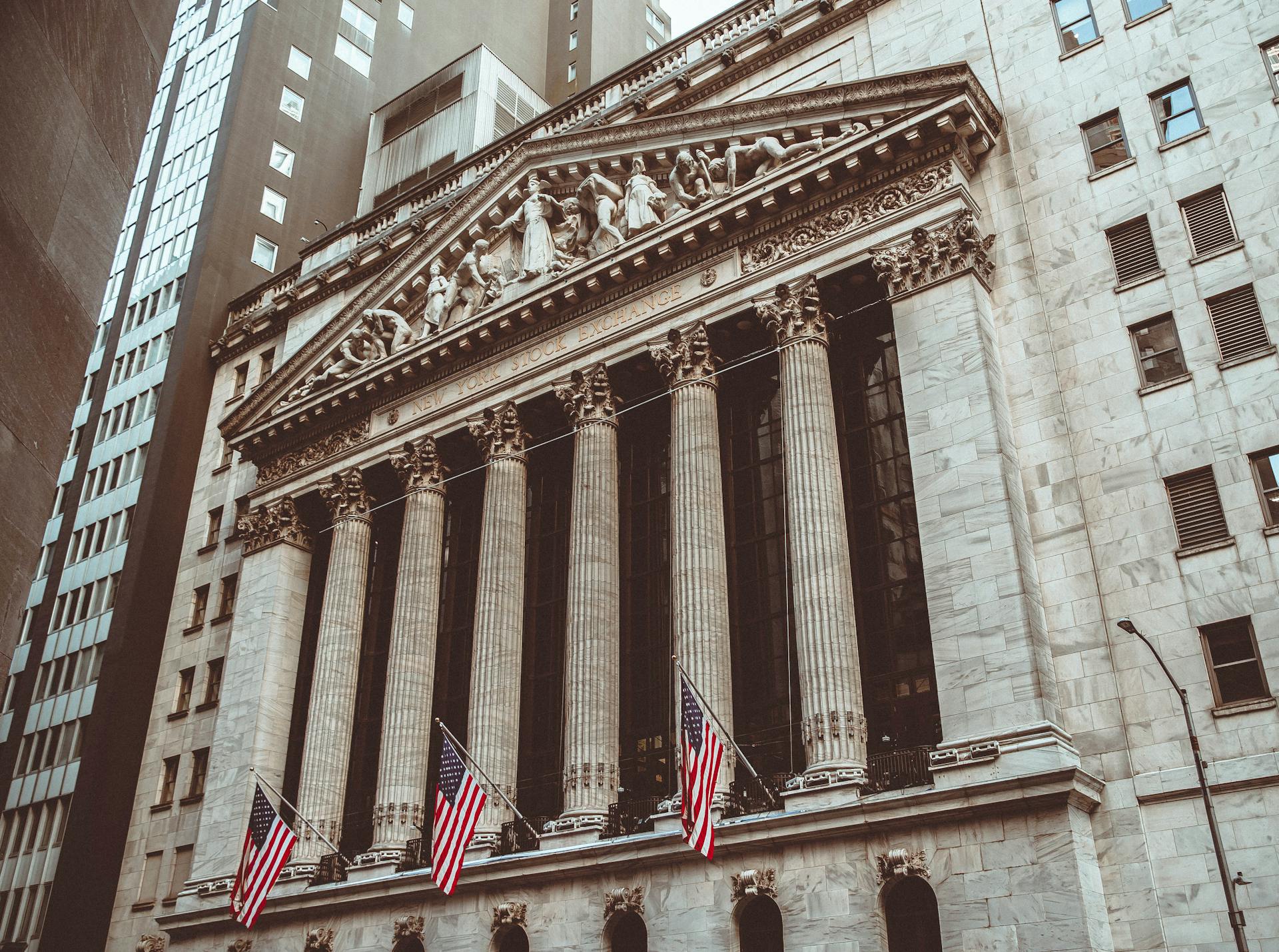
Euronext has undergone several notable acquisitions and mergers over the years. Some of the most significant ones include the acquisition of the London International Financial Futures and Options Exchange (LIFFE) in 2001, the merger with the Portuguese stock exchange Bolsa de Valores de Lisboa e Porto (BVLP) in 2002, and the acquisition of the Irish Stock Exchange in 2018.
Here's a brief timeline of Euronext's major milestones:
- 2000: Euronext formed following a merger of the Amsterdam Stock Exchange, Brussels Stock Exchange, and Paris Bourse.
- 2001: Euronext became a listed company after completing its initial public offering.
- 2002: Euronext acquired the shares of the London International Financial Futures and Options Exchange (LIFFE).
- 2007: Euronext merged with the New York Stock Exchange to create NYSE Euronext.
- 2014: Euronext re-emerged as a standalone company after a spin-off from ICE.
- 2018: Euronext acquired the Irish Stock Exchange.
- 2020: Euronext acquired 66% of the European power exchange Nord Pool.
- 2021: Euronext acquired the Borsa Italiana Group for €4.4 billion.
Spin-Off from Ice and Subsequent Development
In 2014, Euronext was spun off from Intercontinental Exchange (ICE) through an initial public offering (IPO). This marked a significant development in the company's history.
The IPO allowed Euronext to regain its independence and become a standalone company. As part of the deal, ICE retained ownership of the New York Stock Exchange and LIFFE.
A consortium of eleven investors, known as "reference shareholders", invested in Euronext to stabilize the company. These investors owned 33.36% of Euronext's capital and had a 3-year lockup period.
The reference shareholders included Euroclear, BNP Paribas, BNP Paribas Fortis, Société Générale, Caisse des Dépôts, BPI France, ABN Amro, ASR, Banco Espirito Santo, Banco BPI, and SFPI/FPIM.
Euronext's subsequent development was marked by several initiatives, including the launch of EnterNext, which aimed to boost SME equity research and support the technology sector. EnterNext partnered with Morningstar to increase equity research focusing on mid-size companies.
Euronext also announced a partnership with DEGIRO regarding the distribution of retail services. This partnership was seen as a plan to compete more effectively on the Dutch retail segment.
The company's strategic plan focused on three key areas: growth in non-volume-related activities, expansion in fixed income, currencies, and commodities (FICC) markets, and leadership in equity trading.
Take a look at this: BNP Paribas
Timeline of Milestones
Euronext was formed in 2000 through a merger of the Amsterdam Stock Exchange, Brussels Stock Exchange, and Paris Bourse.
The company went public in 2001 after completing its initial public offering, marking a significant milestone in its history.
In 2002, Euronext acquired the shares of the London International Financial Futures and Options Exchange (LIFFE), forming Euronext.LIFFE.
Euronext's derivatives products were integrated onto LIFFE CONNECT in 2004, further expanding its services.
Alternext was introduced as a market segment in 2005 to help finance small and mid-class companies in the Eurozone.
Here's a brief timeline of Euronext's major milestones:
- 2000: Euronext formed through a merger of Amsterdam, Brussels, and Paris stock exchanges
- 2001: Euronext goes public after initial public offering
- 2002: Euronext acquires LIFFE
- 2004: Derivatives products integrated onto LIFFE CONNECT
- 2005: Alternext introduced as a market segment for small and mid-class companies
- 2010: Euronext London created
- 2013: ICE buys NYSE Euronext
- 2014: Euronext re-emerges from ICE via IPO
- 2018: Irish Stock Exchange joins Euronext as Euronext Dublin
- 2020: Euronext Securities Copenhagen becomes part of Euronext CSDs
- 2021: Borsa Italiana stock exchange in Milan becomes Euronext Milan
Euronext has continued to expand its services and reach, with notable acquisitions including the Irish Stock Exchange in 2018 and the Oslo Stock Exchange in 2019.
Structure and Operations
Euronext was formed on 22 September 2000 through a merger of the Amsterdam Stock Exchange, Brussels Stock Exchange, and Paris Bourse.
The company's structure has undergone significant changes over the years, with notable acquisitions including the London International Financial Futures and Options Exchange (LIFFE) in December 2001.
Euronext became a listed company itself after completing its Initial Public Offering in 2001, giving it a unique status in the financial market.
Composition
Euronext was formed on September 22, 2000, as a result of a merger between the Amsterdam Stock Exchange, Brussels Stock Exchange, and Paris Bourse.
This merger aimed to take advantage of the harmonization of the European Union's financial markets.
Euronext acquired the shares of the London International Financial Futures and Options Exchange (LIFFE) in December 2001, forming Euronext.LIFFE.
In 2002, the group merged with the Portuguese stock exchange Bolsa de Valores de Lisboa e Porto (BVLP), which was later renamed Euronext Lisbon.
Euronext became a listed company itself in 2001 after completing its Initial Public Offering.
Here's an interesting read: De Beers
Structure and Indices
Euronext has a complex structure that includes various markets and segments. It's made up of cash and derivatives markets, which cover different operational markets and segments.
One of the main markets is Euronext Amsterdam, which is a cash market located in Amsterdam, Netherlands. It's a significant player in the region and has a MIC Code of XAMS.
A unique perspective: XTX Markets
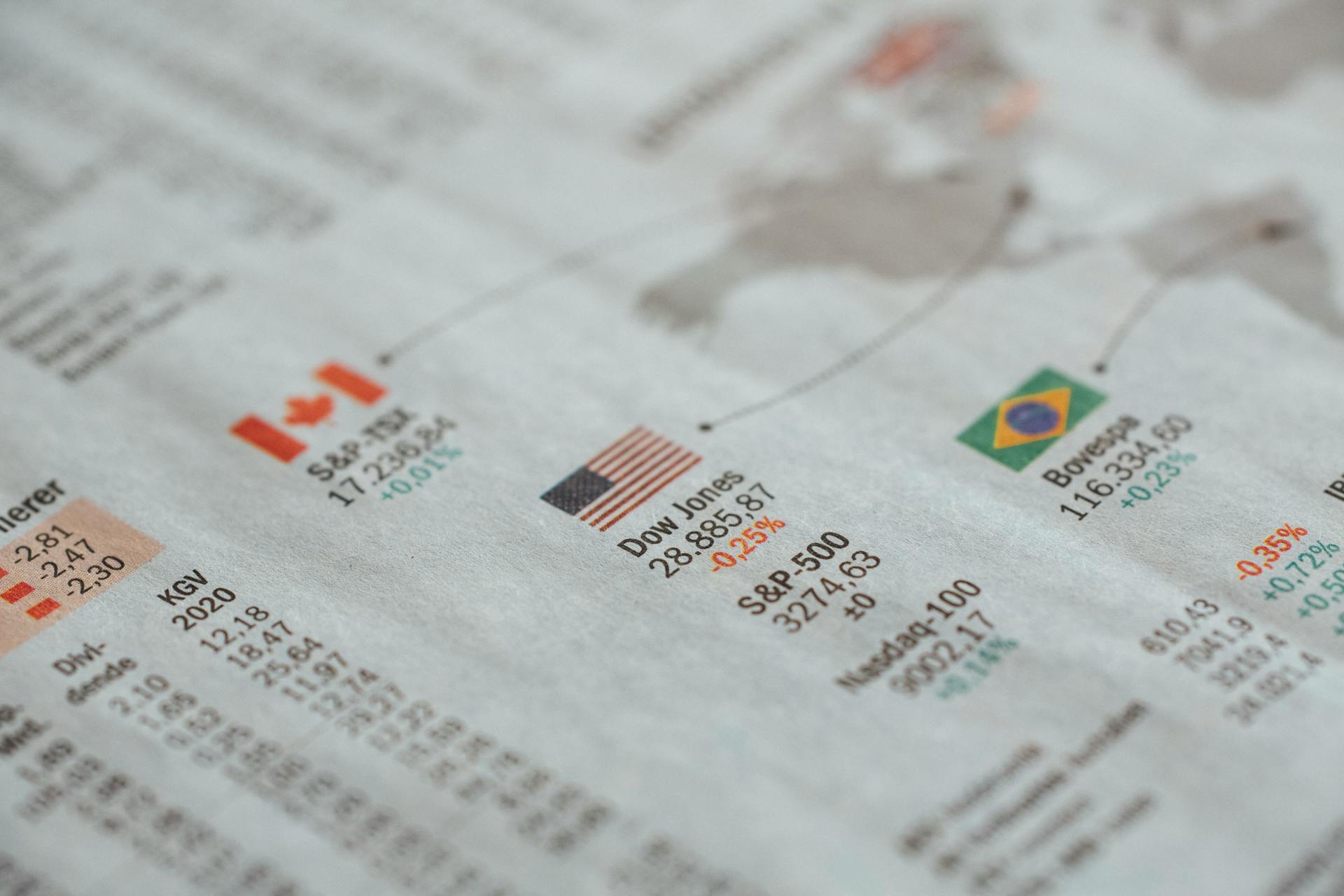
Euronext also has a presence in other European countries, including Belgium, Portugal, and the United Kingdom. In Belgium, for example, it operates a cash market in Brussels, known as Euronext Brussels.
In addition to these markets, Euronext also manages various indices, which are used to track the performance of different stocks and sectors. One of the main indices is the AEX All-share, which is denoted by the symbol AAX and is traded in euros.
Some of the other notable indices managed by Euronext include the CAC 40, which is a widely followed index in France, and the BEL 20, which tracks the performance of the top 20 stocks listed on the Euronext Brussels market.
Alternext is a market segment formed by Euronext in 2005 to help small and mid-class companies in the Eurozone seek financing. It's a dedicated platform for these companies to raise capital and access new markets.
Here's a list of some of the main markets and indices operated by Euronext:
These are just a few examples of the many markets and indices operated by Euronext. Its structure is designed to provide a platform for companies to raise capital and access new markets, while also providing investors with a range of options for tracking the performance of different stocks and sectors.
Central Securities Depository

Euronext provides custody and settlement services through its central securities depository, Euronext Securities, based on Euronext's ownership of previous national CSDs in Denmark, Italy, Norway, and Portugal.
This means that Euronext Securities acts as a hub for securities transactions, ensuring that trades are settled efficiently and securely.
Euronext Securities is built on the foundation of Euronext's previous national CSDs, which were acquired over time, allowing the company to expand its services and reach a broader customer base.
By leveraging its existing infrastructure, Euronext Securities can offer reliable and efficient custody and settlement services to its clients.
Products and Services
Euronext offers a range of products and services that cater to the needs of its listed companies, investors, and traders. These services include corporate services, market data, and trading platforms.
Euronext's corporate services provide advisory on environment, social, and corporate governance (ESG) practices, helping companies attract new investors and improve their profile in the market. They also offer solutions for the board and provide shareholder analysis, post-listing advisory, investor relations management, and webcast solutions.
Here's an interesting read: Corporate Spin-off
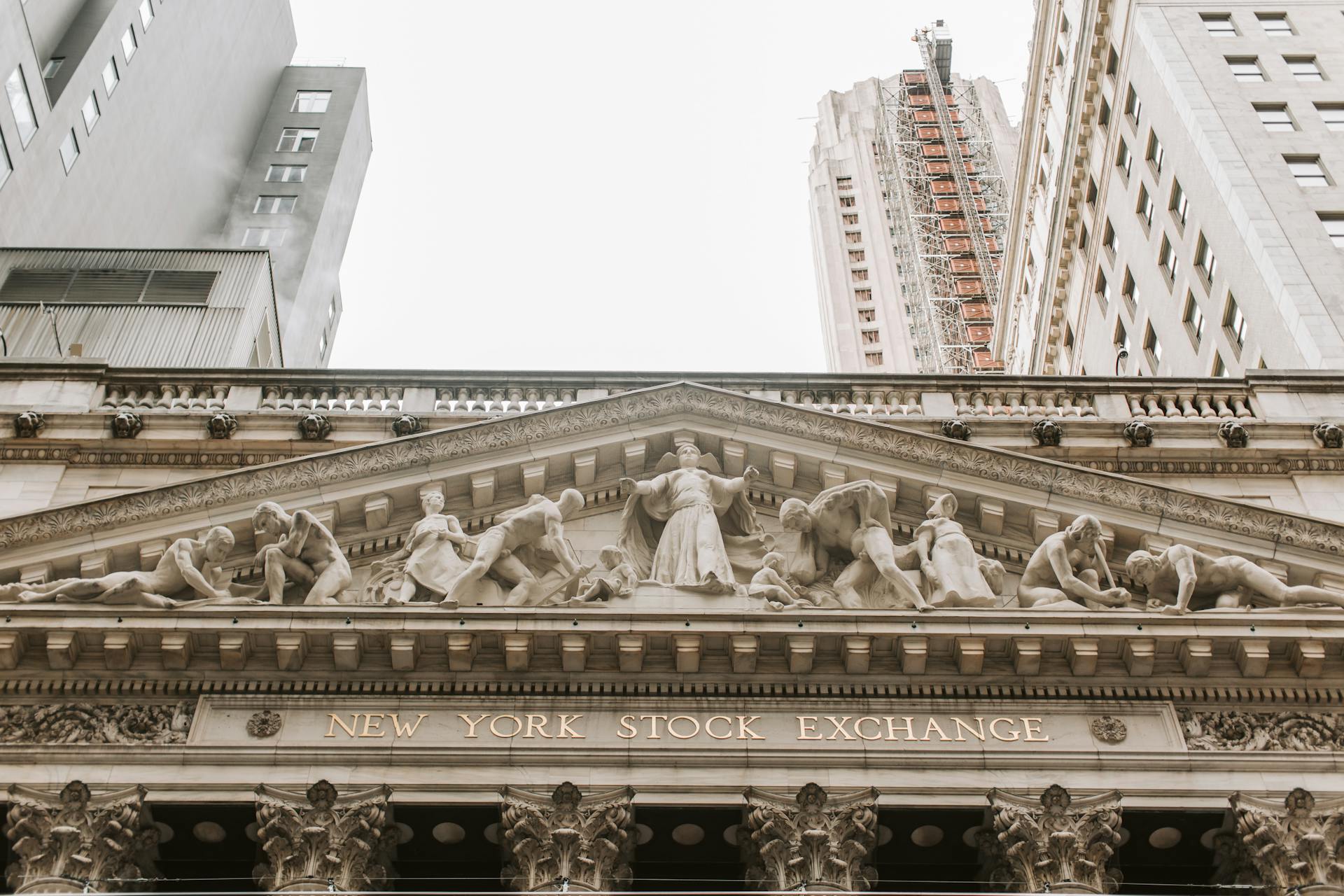
The company's market data offerings cover markets in Paris, Amsterdam, Lisbon, London, and Brussels, providing real-time and historical data to investors, traders, and professionals. Euronext's market data includes Cash Markets Real-Time Data, Derivatives Real-Time Data, Index and End of Day Data, Reference Data, and Historical Data.
Euronext's trading platforms offer a variety of products, including shares/equities, fixed income, funds, ETFs, warrants, and certificates. They also offer derivatives, such as equity derivatives, FX derivatives, and commodities. Some of the major instrument types traded on Euronext include futures, options, indices, stocks, ETFs, currencies, and dividends.
Here is a summary of the major instrument types traded on Euronext:
Derivatives
Derivatives are a crucial part of Euronext's product offerings, allowing investors and traders to hedge against risks or speculate on price movements. Euronext offers a wide range of derivatives products, including equity derivatives, FX derivatives, and commodities.
Equity derivatives are a key component of Euronext's derivatives offerings, with products such as stock options, stock futures, ETF options, index derivatives, and dividend derivatives available. This allows investors to trade on the value of specific stocks or indices.
Euronext's commodities derivatives include futures and options on milling wheat, a leading benchmark for wheat prices in Europe. This product is a result of Euronext's partnership with the Dalian Commodity Exchange.
Here's a breakdown of the major instrument types traded on Euronext Derivative Markets:
Foreign Exchange
Foreign Exchange is a critical aspect of modern finance. Euronext FX is a global foreign exchange trading platform, known as FastMatch until 2019. It's a platform that helps facilitate international trade and investment.
Euronext FX is known for its efficiency and reliability. This is a testament to the importance of having a robust and trustworthy system in place for foreign exchange transactions.
Post-Trade Services
As a key component of the financial industry, post-trade services play a crucial role in ensuring the smooth execution and settlement of trades.
These services include trade confirmation, where counterparties verify the terms of a trade, and trade reporting, which involves submitting trade data to regulatory bodies.
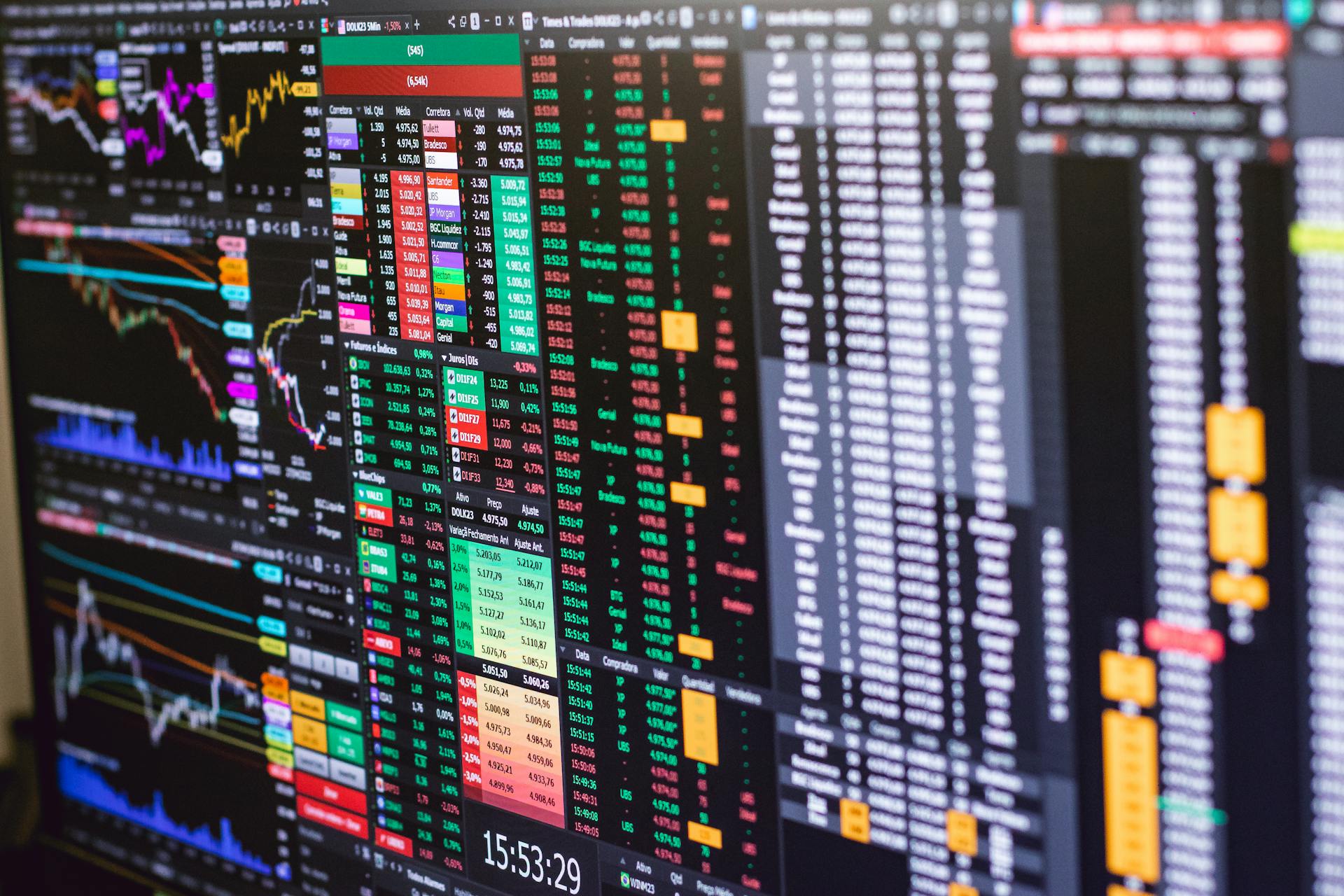
Trade settlement is a critical post-trade service, ensuring that securities are transferred and payments are made between parties.
After a trade is settled, post-trade services also facilitate the delivery of securities and the exchange of cash between counterparties.
This process is typically handled by a central depository or a custodian bank.
In addition to these core services, post-trade services also include risk management, which helps mitigate potential losses due to counterparty default.
Regulation
Euronext falls under the "Regulated Markets" jurisdiction under the Markets in Financial Instruments Directive II (MiFID II).
This means Euronext has to adhere to all of the rules and regulations under MiFID II.
Euronext Amsterdam, Brussels, Dublin, Lisbon, London, Oslo, and Paris, all have to abide by these regulations.
Euronext operates many other markets that are considered Multilateral Trading Facilities (MTFs) under MiFID II.
These MTFs have their own rule books to follow.
Financial Information
Euronext's financial information shows a significant growth trend over the years. The company's revenue has increased from €458.5 million in 2014 to €1,474.7 million in 2023.
In 2014, Euronext's EBITDA was €225.4 million, which rose to €864.7 million in 2023. The net result also saw a substantial increase, from €118.2 million in 2014 to €555.3 million in 2023.
Here's a breakdown of Euronext's financial information for each year:
Euronext's financial performance has been consistently strong over the years, with significant growth in revenue, EBITDA, and net result.
Mergers and Acquisitions
Euronext has been involved in several high-profile mergers and acquisitions throughout its history. In 2000, the Amsterdam Stock Exchange, Brussels Stock Exchange, and Paris Bourse merged to form Euronext.
One of the most notable mergers was with the NYSE Group, owner of the New York Stock Exchange, in 2006. The NYSE Group offered €8 billion in cash and shares for Euronext, outbidding a rival offer from Deutsche Börse. The deal was completed on April 4, 2007, forming NYSE Euronext.
However, the NYSE Euronext merger didn't last long. In 2011, Deutsche Börse and NYSE Euronext confirmed they were in advanced merger talks, which would have created the largest exchange in history. The deal was eventually blocked by the European Commission in 2012 due to antitrust concerns.
Worth a look: Ameriprise Financial Stock Price History
In a surprising turn of events, Intercontinental Exchange (ICE) announced plans to acquire NYSE Euronext in 2012, which was completed in 2013. The acquisition was approved by the European Commission and the US regulator, SEC, and marked a significant shift in the global financial landscape.
Since then, Euronext has continued to expand its reach through strategic acquisitions. In 2017, it acquired FastMatch, a currency trading platform, and in 2018, it acquired the Irish Stock Exchange, rebranded as Euronext Dublin. In 2019, it acquired the Oslo Stock Exchange, and in 2020, it acquired the Danish Central Securities Depository, VP Securities.
In 2021, Euronext made a significant move by acquiring the Borsa Italiana Group for €4.4 billion, integrating the Milan Stock Exchange and its subsidiary MTS into its operations. This acquisition further solidified Euronext's position as a leading player in the European financial markets.
Expand your knowledge: Acquisition of 21st Century Fox by Disney
Introduction and Overview
Euronext is the largest stock exchange group in Europe, and one of the largest in the world, originally created via the mergers of the Amsterdam, Paris, and Brussels stock exchanges in 2000. It has since grown to operate exchanges in Paris, Amsterdam, Brussels, Lisbon, Dublin, Oslo, and Milan.
Euronext's presence is truly global, with a wide array of assets, including equities, exchange traded funds (ETFs), warrants and certificates, bonds, derivatives, commodities, and indices. As of 2021, Euronext listed 1,900 issuers representing more than €6 trillion (euros) in market capitalization.
Euronext maintains headquarters in Amsterdam with major offices in various locations across Europe, including Brussels, London, Lisbon, Dublin, Oslo, Milan, and Paris. Its benchmark equity indexes include the AEX in Amsterdam, BEL 20 in Brussels, CAC 40 in Paris, PSI 20 in Lisbon, and Euronext 100—a pan-European blue-chip index.
Some notable examples of companies listed on Euronext include Integrated Wind Solutions, Rebirth, Younited, Haiki+, UBALDI COSTRUZIONI, EdgeLab, Moreld, Envipco, Trøndelag Sparebank, and Havas.
Check this out: Euronext Lisbon
Buying and Trading
To buy shares on Euronext, you need to open a brokerage account and fund it. You can then purchase the shares of the company you're interested in.
Euronext offers a wide range of products, including shares, bonds, ETFs, funds, and derivatives. The main product categories are cash/spot and derivatives.
To trade on Euronext, you'll need to join as a trading member, which includes investment banks, retail banks, brokers, independent trading firms, liquidity providers, market makers, and local brokerage firms.
Euronext's trading markets include Amsterdam, Brussels, Lisbon, London, and Paris, offering a range of products such as futures, options, and indices.
Euronext's market data offerings cover markets in Paris, Amsterdam, Lisbon, London, and Brussels, including real-time data, end-of-day data, and historical data.
You can acquire market data from Euronext or through data providers like Quandl, which offer Equity and Index Volatility Data Services covering indices worldwide.
Corporate Services and Support
Euronext offers a range of corporate services to support its listed companies.
Euronext provides advisory on environment, social, and corporate governance (ESG) practices to help attract new investors and improve a company's profile in the market.
For investor relations and communications, Euronext offers shareholder analysis, post-listing advisory, investor relations management, and webcast solutions.
Recommended read: Corteva Investor Relations
Euronext also helps listed companies with government and compliance matters, including liability logs, trade logs, and integrity logs to ensure all company transactions are above board.
Euronext provides solutions for the board and helps companies comply with EU market abuse regulations.
Euronext Corporate Services (ECS) is a wholly owned subsidiary of Euronext, founded in 2016, and provides solutions and services to more than 4,000 organisations.
ECS has acquired several companies, including Company Webcast (webcasting), iBabs (board portal), and InsiderLog (compliance software).
Here are some of the services offered by ECS:
- Webcasting solutions
- Board portal solutions
- Compliance software
Access and Cooperation
Euronext offers fast and easy access to European markets, allowing businesses to reach their goals by listing on their markets.
Their integrated markets can help companies like Integrated Wind Solutions, which listed on Euronext Oslo Børs with a market capitalisation of NOK 1.7 billion and raised NOK 30 million.
In addition to listing on their markets, Euronext also provides technology and managed services to third parties, such as the Beirut Stock Exchange, the Amman Stock Exchange, Bourse de Tunis, and the Muscat Securities Market.

Euronext has partnerships with other companies, like DEGIRO, to distribute retail services and compete more effectively in the Dutch retail segment.
Some of the listed products on Euronext include equities, bonds, ETFs, and funds, with 1,937 equities and 52,261 bonds as of November 2021.
Here are some examples of companies that have listed on Euronext markets:
Frequently Asked Questions
Can Americans trade on Euronext?
Yes, Americans can trade on Euronext markets, which are recognized by the CFTC as a Foreign Board of Trade (FBoT). Our North American sales team can help you get started.
How many companies are in Euronext?
As of 2022, Euronext is home to 795 listed companies. This diverse group of companies represents a significant portion of the global financial market.
Featured Images: pexels.com