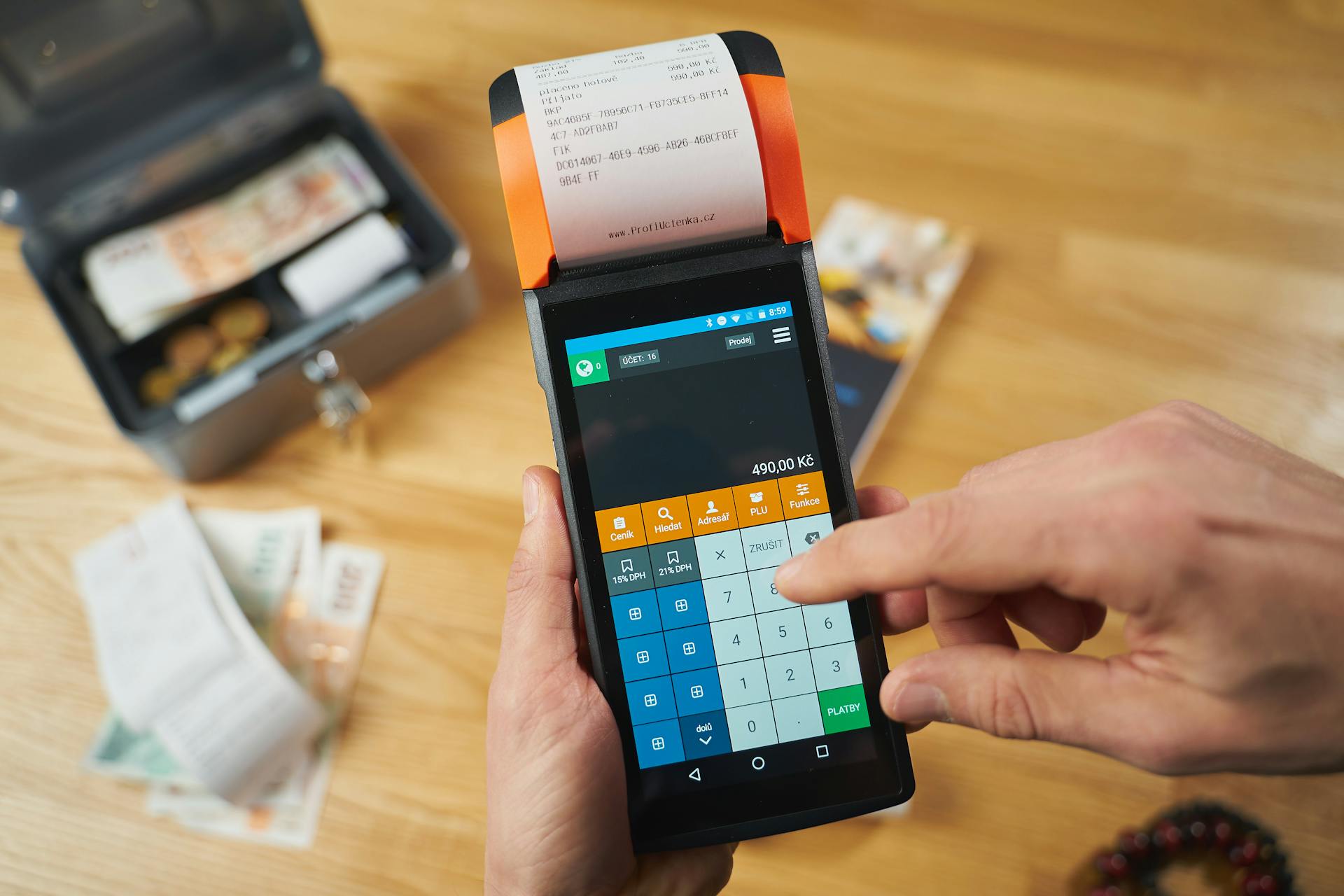
EBICS is a secure protocol for banking communication, used by banks and financial institutions to exchange sensitive information with their customers. It's a widely accepted standard in Europe.
EBICS stands for "Electronic Banking Internet Communication Standard". It provides a secure way for banks to communicate with their customers online. This is crucial for protecting sensitive information like account numbers and transaction details.
The EBICS protocol uses encryption and digital signatures to ensure the confidentiality and integrity of data exchanged between banks and their customers. This means that even if data is intercepted, it will be unreadable and useless to unauthorized parties.
By using EBICS, banks can reduce the risk of cyber attacks and data breaches, which is essential for maintaining customer trust and confidence in online banking.
Expand your knowledge: What Is Internet Banking
What is EBICS
EBICS is a standardized protocol for electronic banking that enables secure communication between a company and its banks. It uses standardized XML formats with common message types as well as MT (SWIFT) messages.
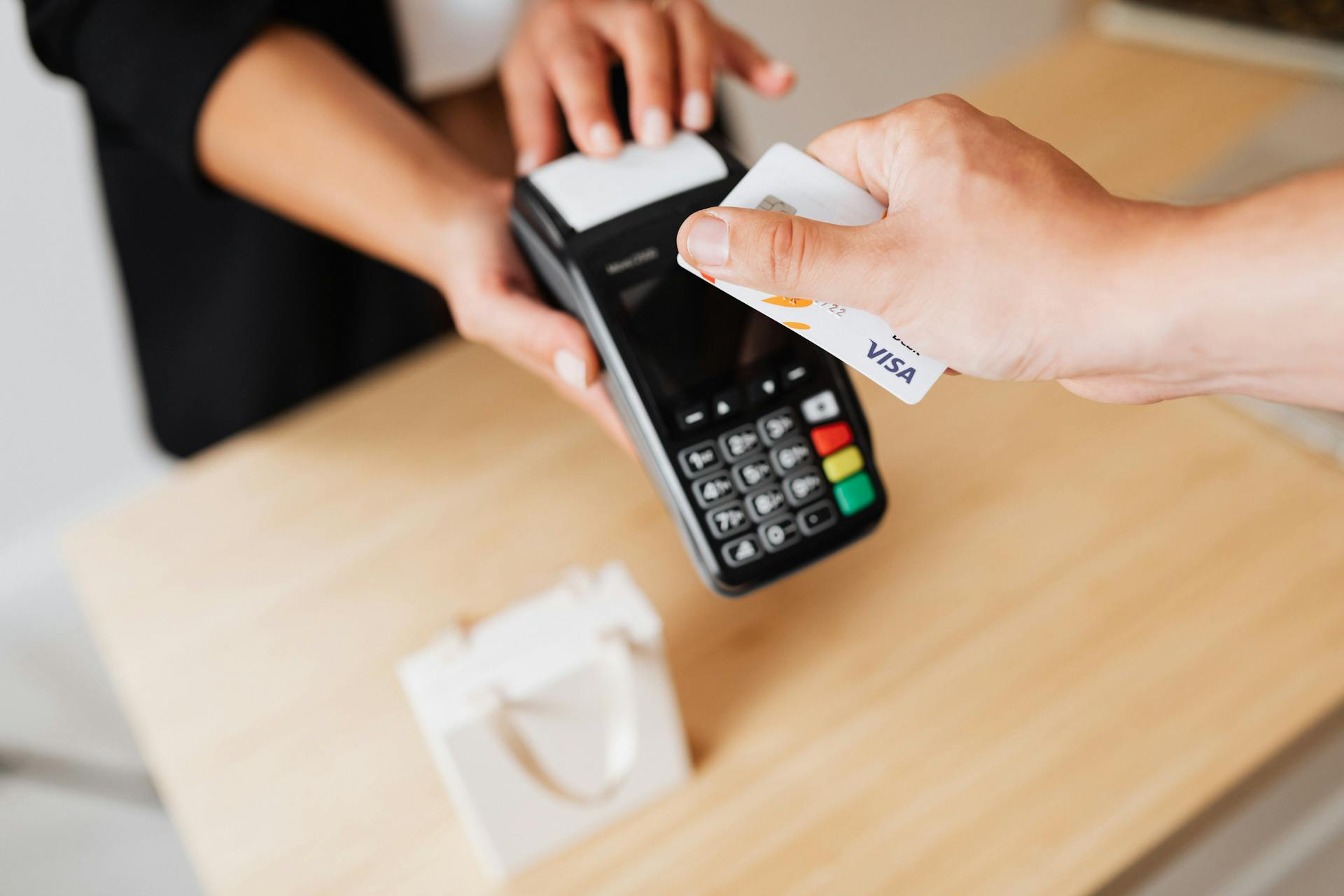
EBICS is highly standardized, ensuring compatibility between different banks and companies, and digital signatures and encryption are used to secure the data. This makes it a reliable and efficient connectivity option.
EBICS supports a wide range of banking transactions including payments, collections, and reporting. It requires technical expertise to set up initially, but once in place it can help simplify connections to other banking partners that also support EBICS.
EBICS is not yet widely supported outside Germany, France, Austria, and Switzerland. This may be a drawback for companies looking to use EBICS outside of these regions.
Here are some key features of EBICS:
- Secure communication between companies and banks
- Standardized XML formats and MT (SWIFT) messages
- Wide range of banking transactions supported
- Requires technical expertise to set up
- Not widely supported outside Germany, France, Austria, and Switzerland
How EBICS Works
To set up an EBICS connection, you need to register with your bank(s), which involves exchanging public keys and setting up user accounts. This process is a crucial step in getting started with EBICS.
The next step is authentication, where users are verified using secure methods such as a password, PIN, or cryptographic token, and provided with unique credentials. This ensures that only authorized individuals can access the EBICS system.
Take a look at this: Ebics Ts

Data shared between your company and the bank is encrypted, and each message is signed digitally to verify that it comes from a trusted source. This ensures the security and integrity of the data being exchanged.
Once the data is processed, transactions are initiated from your company's ERP or TMS, formatted according to EBICS standards, and sent to the bank via the EBICS client. The bank then validates the transactions and executes payments or updates account balances.
EBICS supports automated processes for initiating transactions and retrieving data, reducing manual work and increasing efficiency. This automation feature is a significant advantage of using EBICS.
Here's a step-by-step overview of the EBICS process:
- Registration: Exchanging public keys and setting up user accounts with the bank(s).
- Authentication: Verifying users using secure methods and providing unique credentials.
- Secure communication: Encrypting data and digitally signing messages for verification.
- Data processing: Initiating transactions from the ERP or TMS and sending them to the bank via the EBICS client.
- Automation: Initiating transactions and retrieving data automatically to reduce manual work.
EBICS Features
EBICS offers a standardized interface for secure communication with banks, allowing users to access a wide range of banking services.
EBICS supports multiple authentication methods, including passwords, smart cards, and one-time passwords.
EBICS enables users to send and receive files, including documents and payment orders, securely and efficiently.
Pros and Cons
EBICS is a reliable and secure connectivity method that can potentially allow companies to connect to multiple banks using a single protocol.
The ambition is for EBICS to become standard across the SEPA zone eventually, but for now, its coverage is mostly limited to banks in Germany, France, Austria, and Switzerland.
EBICS has standardized formats and message types, making it a robust and efficient connectivity method that can help simplify the implementation process.
However, setting up EBICS requires some work initially, and companies need to consider the engineering resources and coordination with the bank during setup.
Here are the key pros and cons of EBICS:
- Reliable, secure connectivity method
- Potentially allows companies to connect to multiple banks using a single protocol
- Robust and efficient connectivity method
- Requires engineering resources and coordination with the bank during setup
- EBICS is predominantly supported in Germany, France, Austria, and Switzerland
Certificates
Certificates are a crucial aspect of EBICS, allowing users to securely authenticate and authorize transactions. They can be issued by banks or other financial institutions.
EBICS uses X.509 certificates, which are widely accepted and trusted by financial institutions. These certificates contain the user's public key and other identifying information.
Certificates are used for authentication and encryption, ensuring that all data exchanged between the user and the bank is secure.
Worth a look: Is Lpl Financial a Fiduciary
EBICS Implementation

The EBICS program is designed to provide a personalized approach to education for students with multiple disabilities, including intellectual disabilities and significant behavioral challenges.
Each student's unique needs are at the forefront of their educational program, and instruction is tailored to meet their intensive learning and behavioral requirements.
Our classrooms are staffed by caring professionals who are trained in basic Applied Behavior Analysis (ABA) principles and other effective methodologies.
These professionals create structured and supportive environments, using thoughtful organizational strategies to promote both academic and behavioral progress.
Students are encouraged to participate actively and make choices, with opportunities to communicate their needs.
Board-Certified Behavior Analysts (BCBAs) work closely with classroom teams to provide ongoing support and guidance.
The EBICS program is available throughout the region, with many classrooms located within local public schools.
This allows students to connect with their peers and participate in their school communities, as determined by their Individualized Education Program (IEP) teams.
Our classrooms typically have a lower student-to-staff ratio, ensuring each student receives personalized attention.
EBICS connectivity is also supported by Atlar, which manages the entire implementation end-to-end with no work needed from customers.
Explore further: Contract Work Hours and Safety Standards Act
EBICS Standards

EBICS Standards offer consistency across different versions, with most banks supporting multiple versions simultaneously. This means that you can still use older versions even if your bank has upgraded to a newer one.
Some notable versions include Ebics 2.4, Ebics 2.5, and Ebics 3.0, released in 2008, 2012, and 2018 respectively.
The EBICS protocol is used for various operations, including online banking, real-time gross settlement, and communications protocols. It's also used for payment interchange standards, financial routing standards, and financial industry XML-based standards.
Here are some key features of the EBICS protocol:
- EBICS T for Transport: you send your payment file to the bank and validate it separately on their website.
- EBICS TS for Transport and Signature: you send your payment file to the bank with a digital signature certificate.
These features are available for use in countries like France, Germany, Switzerland, and Austria. Sending files through EBICS is free of charge and has no volume limitation, but it only allows for exchanges with a limited number of European banks.
Frequently Asked Questions
What is the difference between Sepa and EBICS?
SEPA is a standard for clearing protocols in inter-bank networks, while EBICS is a secure communication channel used to initiate SEPA transactions over the internet. EBICS is a key technology that enables the use of SEPA standards in online transactions.
What countries are using EBICS?
EBICS is used by banks in France, Germany, Austria, Switzerland, and other European countries, making it a widely accepted interbank protocol
What is the difference between EBICS and Swift?
EBICS and SWIFT are two payment protocols with distinct uses: EBICS is mainly used for real-time online payments within Europe, while SWIFT is used worldwide for international contracts and financial messages
Featured Images: pexels.com