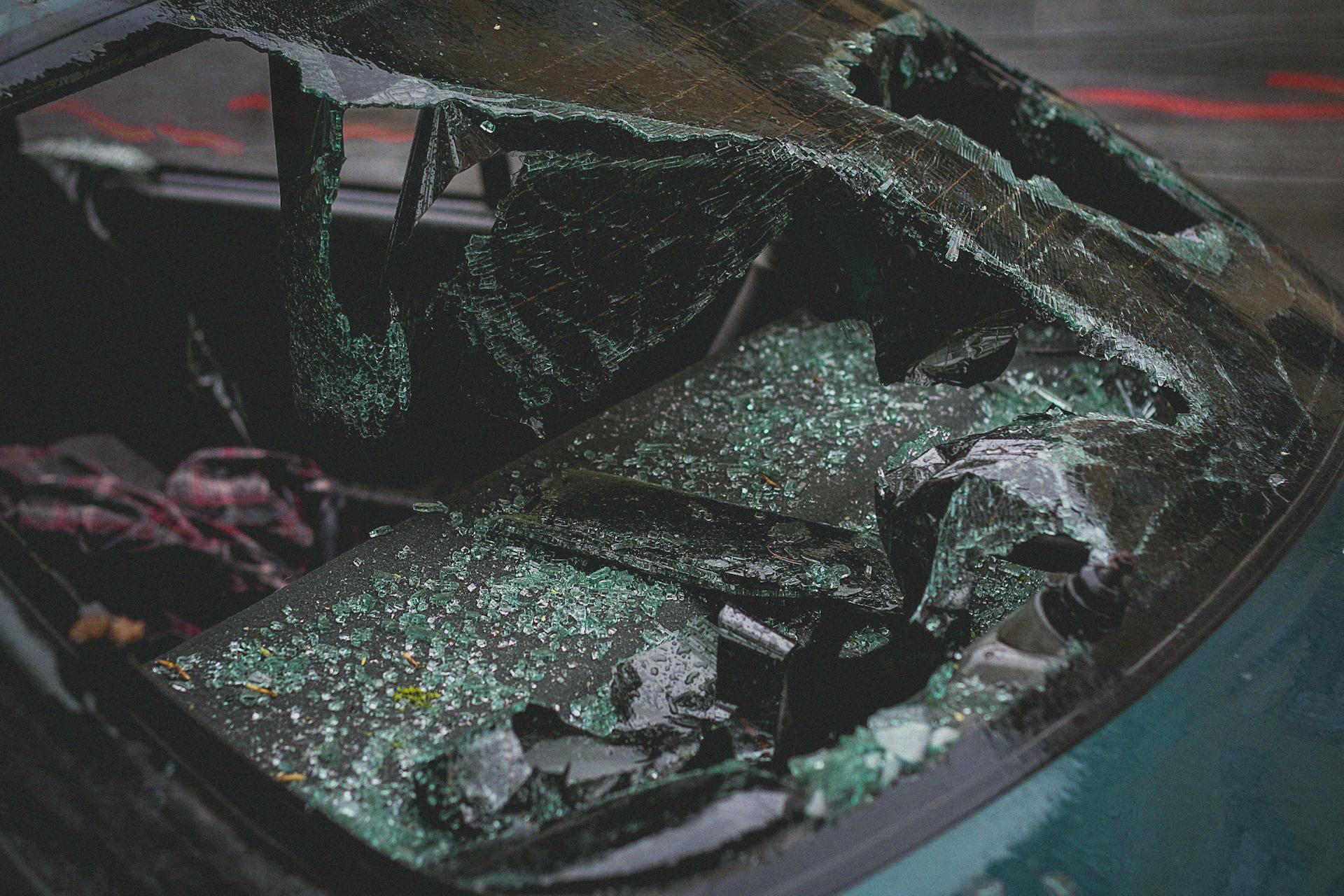
Liability insurance is designed to protect you from financial losses if you're involved in an accident and need to pay damages to others.
If you hit someone with your car, your liability insurance will typically cover the damages you need to pay to the other party, up to the policy's limits.
This includes medical expenses, lost wages, and property damage, as well as pain and suffering.
In most states, liability insurance is required by law, so it's essential to have adequate coverage to avoid financial ruin in the event of an accident.
Broaden your view: Insurance That Will Pay for Injury to Another Driver
Liability Insurance
Liability insurance is a type of car insurance that covers damages you cause to others in an accident. It's a must-have if you want to protect your assets from being seized to pay for someone else's medical bills or property damage.
Liability insurance falls into two categories: bodily injury liability and property damage liability. Bodily injury liability helps pay for medical expenses, lost wages, and pain and suffering for anyone injured in an accident where you're found liable.
For your interest: How Medical Bills Are Paid after Car Accident in Texas
If you have a 30,000/60,000 limit insurance policy, it means your insurance company will pay up to $30,000 per person and $60,000 per accident. However, if the damages exceed these limits, you'll be responsible for the remaining amount.
Liability insurance covers a wide range of situations, including injuries you cause to someone else while driving, damage to other vehicles, and damage to someone else's property. It also covers legal expenses for accident-related lawsuits.
Here are some examples of what liability insurance covers:
- Injuries you cause to someone else while driving
- Damage you cause to other vehicles while driving
- Damage you cause to someone else's property, such as a mailbox or street sign
- Legal expenses for accident-related lawsuits
It's essential to note that liability insurance doesn't cover your own injuries or damaged property. It only applies in situations where you're legally responsible for someone else's damages.
Bodily injury liability coverage specifically helps pay for medical expenses, lost wages, and pain and suffering for anyone injured in an accident. This includes defense and court costs if you're sued.
Property damage liability coverage helps pay for damage done during a covered event to another person's or company's property. This includes vehicle repair, removal of a damaged tree, and repairs to a building wall you crashed through.
Readers also liked: Can My Business Pay for My Car Insurance
Policy Limits and Coverage
Liability insurance policies have specific limits on what they'll cover in the event of an accident. These limits are usually expressed as two numbers, such as 30,000/60,000.
The first number represents the maximum amount the insurance company will pay per person injured in an accident. The second number is the maximum amount they'll pay for all injuries and damages in a single accident. For example, if you have a policy with a 30,000/60,000 limit and you're involved in an accident with three people, each with $35,000 in damages, your insurance will only pay up to $60,000 total, with no more than $30,000 going to any single person.
Liability insurance policies can have varying limits, ranging from 30,000/60,000 to 250,000/500,000. It's essential to understand the limits of your policy to know what you're responsible for in the event of an accident.
Here's a breakdown of how policy limits work:
Keep in mind that liability insurance only covers damages to others, not your own injuries or property damage. It's a good idea to carry higher limits than the minimum required to ensure you're adequately protected in the event of an accident.
Insurance Coverage and You
Liability insurance covers the costs for others who are injured in a car accident where you're found liable.
Bodily injury liability coverage helps pay medical expenses, compensation for lost wages and income, and legal fees for the injured parties. This may include drivers or passengers in another car, pedestrians, or unrelated passengers in your own car.
If you're found liable for an accident, your liability coverage will obligate the insurance company to defend you in court, if necessary, and pay claims to the other driver for vehicle damage and bodily injuries.
Liability insurance doesn't cover your own injuries or damaged property, only the damages you cause to others.
A 30,000/60,000 limit insurance policy means the first number is a per-person cap on payout, and the second number is a per-accident cap. This means if you have a minimum limits policy of 30,000.00/60,000.00 and you hit a car with three people in it who each have $35,000 in damages, your insurance policy is only liable to pay a total of $60,000.00 with no more than $30,000.00 going to any single person.
See what others are reading: Progressive Commercial Auto Insurance Phone Number
Here are some examples of what liability insurance may cover:
- Injuries you cause to someone else while driving
- Damage you cause to other vehicles while driving
- Damage you cause to someone else's property, such as a mailbox or street sign
- Legal expenses for accident-related lawsuits
Keep in mind that liability insurance coverage is only applicable in situations where you're legally responsible for someone else's damages.
Frequently Asked Questions
What isn't covered by liability insurance?
Liability insurance does not cover damages to your own property or injuries you suffer. It only covers damages to others when you're legally responsible
Featured Images: pexels.com