If you're a homeowner living in a wildfire-prone area, you're likely wondering if your insurance will cover the damage. The good news is that most standard homeowners insurance policies do cover damage caused by wildfires, but there are some important details to know.
Typically, these policies cover damages to the physical structure of your home, as well as personal belongings and other property. However, the extent of coverage can vary depending on the type of policy and the insurance provider.
Some policies may have specific exclusions or limitations for wildfires, so it's essential to review your policy carefully. This includes understanding what's covered, what's not, and any deductibles or out-of-pocket expenses you may be responsible for.
If you're unsure about your coverage or have questions, it's always best to contact your insurance provider directly. They can provide you with more information and help you prepare for the unexpected.
You might like: Will Insurance Cover Covid Tests after May 11
Insurance Coverage for Wildfires
If you're a California homeowner, you might be wondering if your insurance policy covers wildfires. The good news is that yes, wildfire damage is typically covered by a basic homeowners insurance policy, also known as a HO3 policy.
A basic HO3 policy includes coverage for smoke damage and fire damage, as well as other types of coverage that might come in handy in the event of a wildfire.
If your insurance company cancels or declines to renew your policy, don't panic - you have the right to wildfire insurance coverage in California, no matter where you live.
In fact, seven of the 12 largest home insurance companies in California have either paused or limited the number of new policies they're taking on, so you might need to shop around for a new policy.
Here are some insurance companies that have placed limitations on new policies:
- State Farm paused writing new home policies in May 2023
- Farmers is only writing 7,000 new home insurance policies per month
- Allstate paused writing new home insurance policies in November 2022
- USAA is only writing home insurance policies in lower-risk wildfire areas
- Travelers is writing fewer new home insurance policies, the extent to which is yet to be seen
- Nationwide has scaled back the volume of new policies
- Chubb has restricted high-value coverage in high-risk wildfire areas
However, there are other companies in the state that are worth looking into, such as AAA, Mercury, Kin, and Encompass, which might offer more flexibility with their policies.
Homeowners and Wildfires
If you live in an area at risk for wildfires, your options for coverage can be limited. Many insurers don't offer homeowners insurance in fire-prone areas or exclude coverage for wildfire damage.
Some states have FAIR plans, which were created to give homeowners with high exposure to events they can't control, such as wildfires and windstorms, access to insurance when they can't get protection under a standard homeowners policy.
These plans typically cost more than standard homeowners insurance and can have lower policy limits, so it's usually best to exhaust all other options before opting for coverage through a FAIR plan.
Here are some companies that are still writing insurance in high-fire-risk areas in California:
- AAA
- Mercury
- Kin
- Encompass
Keep in mind that even with these companies, coverage isn't guaranteed, and you may still need to consider a FAIR plan or other last-resort options.
Homeowners in Prone Areas
If you live in an area at risk for wildfires, your options for coverage can be limited. Many insurers don't offer homeowners insurance in fire-prone areas or exclude coverage for wildfire damage. You may be able to get insurance from your state's FAIR plan, which was created to give homeowners with high exposure to events they can't control access to insurance when they can't get protection under a standard homeowners policy.
Consider reading: What Does Tmobile Insurance Cover
Each state is responsible for determining what its FAIR plan covers and what its policy limits are. Insurance Business America lists administrator phone numbers for the states offering plans. FAIR plans typically cost more than standard homeowners insurance and can have lower policy limits, so it's usually best to exhaust all other options before opting for coverage through this type of plan.
High fire risk areas are developments at the edge of urban areas where natural vegetation is abundant, those in higher elevations, and homes in forests. Some of California's most at-risk areas are where the Santa Ana winds are strong.
If you're struggling to secure fire insurance in California, other viable options may be the FAIR Plan or choosing an excess or surplus lines insurer, depending on your circumstances.
Here are some home insurance companies that are still writing insurance throughout California, and some are still serving high-fire-risk areas:
- AAA
- Mercury
- Kin
- Encompass
Fire-Proof Your Roof
Fire-proof your roof by using fire-resistant materials like asphalt, metal, slate, or tile, which are safer than wood shingles. Your roof is your first line of defense against wildfires.
Regularly clearing away dead leaves, brush, and debris from your roof and gutters can prevent dry material from becoming kindling for falling embers. This simple maintenance task can help slow the spread of fire.
If you have wood shingles, coating them with a flame retardant finish can provide some protection, but it's not a foolproof solution against wildfires. This is because wood shingles are still a risk, even with a flame retardant finish.
Replace missing and broken shingles to keep embers out of your home, which is crucial for preventing fire from spreading. Proper roof maintenance year-round can make all the difference when wildfires strike.
You might enjoy: Does Fire Insurance Cover Negligence
What if homeowner insurance is canceled?
You're worried about your homeowner insurance being canceled? Insurance companies in California are canceling policies or declining to renew them at higher rates than in the past.
This can be a frightening and frustrating experience. You have the right to wildfire insurance coverage in California, no matter where you live.
If your policy is canceled, you'll need to know what to do next. In the case of a canceled or non-renewed policy, you'll need to find a new insurance provider that meets your needs.
You can shop around and compare rates from different insurance companies. This will help you find the best coverage for your home and budget.
Remember, having the right insurance coverage is crucial for protecting your home and financial well-being.
Suggestion: How Much Does Liability Car Insurance Cover
Insurance and Wildfires
If you're shopping for a California home insurance policy, you might want to know that seven of the 12 largest home insurance companies in the state have either completely paused or drastically limited the number of new policies they're able to take on. State Farm paused writing new home policies in May 2023, and Allstate paused writing new home insurance policies in November 2022.
Farmers is only writing 7,000 new home insurance policies per month, and USAA is only writing home insurance policies in lower-risk wildfire areas. Travelers is writing fewer new home insurance policies, the extent to which is yet to be seen, and Nationwide has scaled back the volume of new policies.
If you're having trouble getting quotes, consider looking into other companies in the state, such as AAA, Mercury, Kin, or Encompass.
What Causes Fires?
Fires can be devastating, and understanding what causes them is crucial for prevention. Almost 90 percent of wildfires in California from 2018 to 2022 were caused by humans.
Some of the most common human causes of fires include burning debris, carelessly discarded cigarettes, equipment malfunctions, unattended campfires, and vehicles. These causes are often unintentional, but they can still have severe consequences.
Lightning bolts can also ignite fires, particularly in areas with a hot, dry climate. During the 2020 California wildfires, dry lightning strikes were a leading cause of the record-breaking burns, with over 14,000 dry lightning strikes sparking flames.
Here are some common causes of fires:
- Burning debris
- Carelessly discarded cigarettes
- Equipment malfunctions
- Unattended campfires
- Vehicles
Lightning-caused fires tend to burn about 53 percent more acreage than human-caused fires, making them a significant concern for wildfire prevention and mitigation efforts.
Other Structures
Other structures on your property can be just as vulnerable to wildfires as your main dwelling. This includes things like your driveway, fences, sheds, unattached garages, and other structures.
Make sure to purchase enough coverage to rebuild these structures in the event of a wildfire. Usually, the amount of other structures covered is 10 percent of your total dwelling limit.
If you have multiple detached structures on your property, consider the cost of rebuilding them. This might include a garage, a gazebo, or other outbuildings.
For your interest: What Does Other Structures Insurance Cover
Can Policies Be Dropped Due To?
Insurance companies can refuse to renew policies of homeowners in high risk areas, but a moratorium is in place to protect you.
The moratorium started on September 14, 2023, and goes through September 13, 2024, meaning insurance companies cannot drop your coverage in specified high fire risk areas during this time.
Insurance companies can and do cancel policies of homeowners in high risk areas, but the moratorium is meant to prevent this from happening.
For another approach, see: Does Builders Risk Insurance Cover Theft
If your home is in a protected ZIP code, insurance companies cannot cancel your policy until the end of the moratorium.
The moratorium will end in September 2024 if it isn’t extended, so it’s a good idea to start researching alternative insurance providers.
Losing homeowners insurance coverage is becoming increasingly common for Californians in high fire risk areas, but the moratorium is in place to help prevent this from happening.
Living Expenses and Losses
Having your home destroyed by a wildfire is devastating enough, but the added stress of finding temporary housing and covering living expenses can be overwhelming. Loss-of-use coverage can be a lifesaver in situations like this.
If you live in California, having loss of use coverage is especially crucial, as it can cover the cost of hotel stays, meals, and other expenses incurred due to your home being uninhabitable after a loss.
This coverage is usually limited to 20 to 30 percent of the dwelling limit, so it's essential to understand what's covered and what's not.
Related reading: Commercial Legal Expenses Insurance
Cost

Loss-of-use coverage can be a lifesaver if you live in California, especially after a wildfire destroys your home. It covers the cost of hotel stays, meals, and other expenses incurred due to your home being uninhabitable.
The cost of fire insurance coverage in California is determined by several factors, including location, home replacement cost, home value, coverage limits, claims history, home safety features, age and construction of home, and estimated wildfire exposure risk.
If a wildfire destroys your home, you'll need to live somewhere else while your house is being rebuilt, and loss of use policy limits are usually between 20 and 30 percent of the dwelling limit.
The annual cost of homeowners insurance for residents in fire-prone areas is much higher and has gone up significantly in recent years, with prices in certain areas of California reaching tens of thousands of dollars per year.
Here are some factors that contribute to the high cost of fire insurance in California:
- Location
- Home replacement cost
- Home value
- Coverage limits
- Claims history
- Home safety features
- Age and construction of home
- Estimated wildfire exposure risk
Living Expenses After House Fire
You can use your insurance to help pay for temporary accommodations, meals, and other living expenses while your home is being rebuilt.
Loss of use coverage is typically equal to 20% of your dwelling coverage limit. If you live in a fire-prone area, though, you may consider purchasing more loss-of-use coverage.
Having loss of use coverage can be critical if you live in California, as prices for shelter tend to be higher than normal after a wildfire.
Loss of use policy limits are usually between 20 and 30 percent of the dwelling limit.
Your insurance provider may help pay for additional expenses related to temporarily needing to leave your home, including an Airbnb or hotel room.
This can include helping pay for additional basic living expenses such as food, laundry, pet boarding expenses, and parking until your home is safe to return to.
Some states, like California, Arizona, Colorado, and many others, may require you to evacuate due to wildfires, making loss of use coverage even more essential.
If your place becomes uninhabitable due to fire or smoke, or if there’s a mandatory evacuation in your area, then you might be covered under something called “loss of use.”
A different take: Wharehouse Live
Accessing Common Areas
Accessing common areas can be tricky, especially when it comes to getting insurance. It's arguably never been harder to get homeowners insurance for a home in a California wildfire area.
Some insurance companies are limiting or completely halting the writing of new policies in high-fire-risk areas. California is looking down the barrel of a statewide home insurance crisis.
There are still many home insurance companies writing insurance throughout the state, and some are serving high-fire-risk areas. You can try shopping around for a company that still offers insurance in your area.
The FAIR Plan is another viable option for securing fire insurance in California. Choosing an excess or surplus lines insurer may also be an option, depending on your circumstances.
For more insights, see: What Insurance Companies Cover Ivf in California
High Fire Risk Areas
High fire risk areas can be a challenge when it comes to getting homeowners insurance. Many insurers don't offer coverage in these areas or exclude coverage for wildfire damage.
Some of the most at-risk areas in California include Los Angeles, Riverside, San Bernardino, and San Diego counties, which are considered "very high risk" for wildfires. In fact, 10 of the 15 metropolitan areas in the U.S. with the highest wildfire risk concentration are in California.
If you live in a high-risk area, you may be able to get insurance from your state's FAIR (Fair Access to Insurance Requirements) plan or choose an excess or surplus lines insurer. However, these options typically cost more and have lower policy limits, so it's best to exhaust all other options first.
Here are some of the California counties with the highest wildfire risk, along with the estimated number of homes at risk and estimated reconstruction costs after a fire:
How Common Are Fires?
Fires in California have become a major concern. From 1979 to 1988, the average annual number of acres burned by wildfire was 337 thousand.
Wildfires in California are getting worse every year. The annual number of acres burned by wildfire increased to an average of 708 thousand from 2009 to 2018, a 110 percent jump.
Wildfires are no longer contained to just four months a year. According to the U.S. Department of Agriculture, the wildfire season can now last for six to eight months.
The past decade has seen some of the most destructive wildfires in California's history. Of the top 20 most destructive wildfires, 15 occurred in the past decade alone.
Human-influenced climate change has contributed significantly to the increase in wildfires. A study found that it was a major contributor to a 172 percent increase in California land burned by wildfire.
Related reading: Does Renters Insurance Cover Wildfires
Entering High Fire Risk Areas
If you're considering moving to an area prone to wildfires, you should be aware that your options for coverage can be limited. Many insurers don't offer homeowners insurance in fire-prone areas or exclude coverage for wildfire damage.
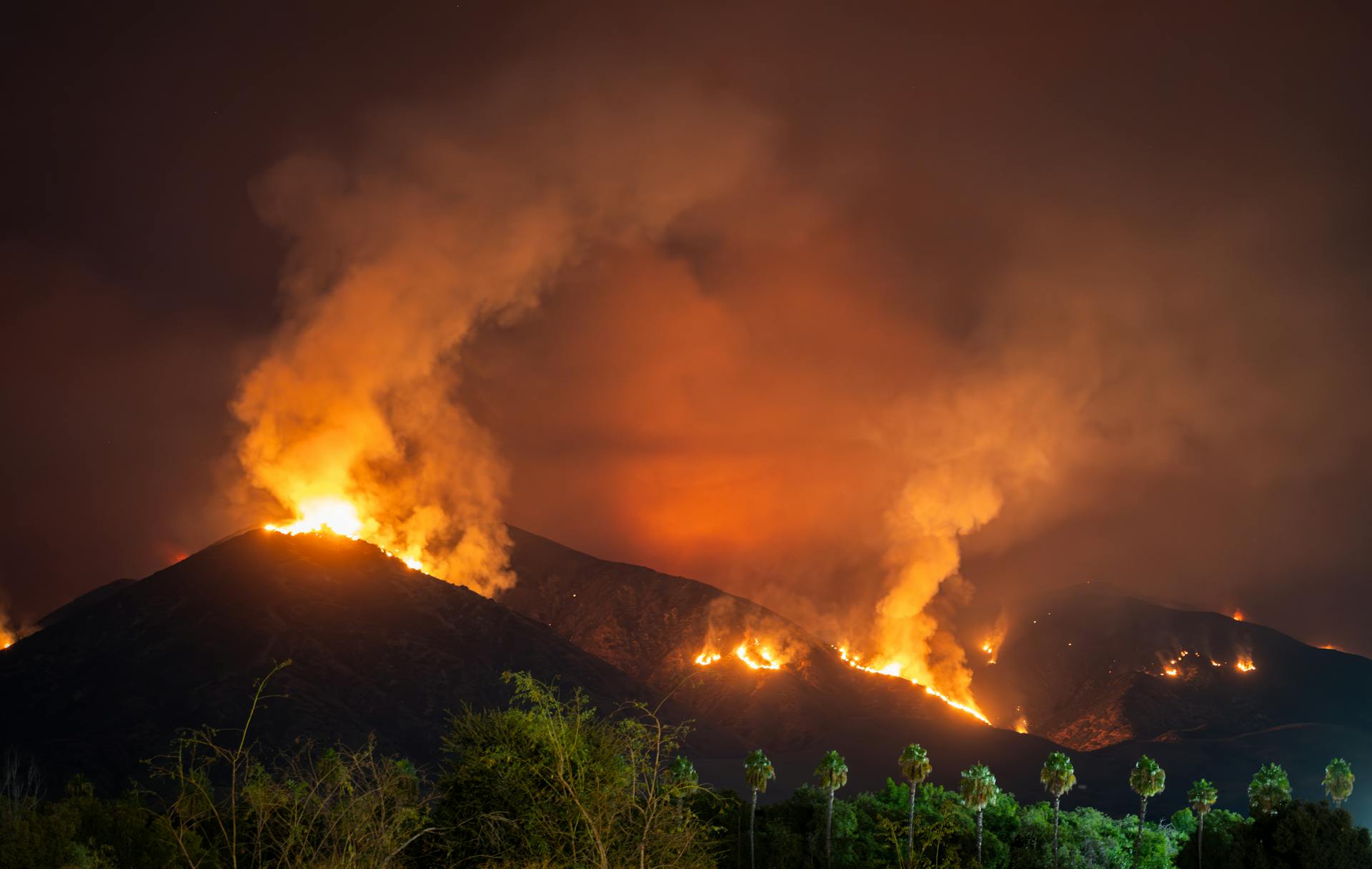
High fire risk areas are typically developments at the edge of urban areas where natural vegetation is abundant, those in higher elevations, and homes in forests. The Santa Ana winds, which are strong in some parts of California, also make areas more at-risk.
If you're unable to obtain coverage from a private company, you may be able to get insurance from your state's FAIR plan. These plans were created to give homeowners with high exposure to events they can't control, such as wildfires and windstorms, access to insurance when they can't get protection under a standard homeowners policy.
California is particularly affected by wildfires, with 10 out of 15 metropolitan areas in the U.S. with the highest wildfire risk concentration located in the state. The counties with the most wildfire risk are clustered toward the southern end of the state.
Here are some of the California counties with very high fire risk:
- Los Angeles
- Riverside
- San Bernardino
- San Diego
It's worth noting that these areas are not the only ones at risk, and other counties in California have relatively high fire risk. It's essential to research the specific area you're considering to understand the fire risk and potential insurance challenges.
Insurance Companies and Wildfires
Insurance companies in California are pulling out of the market due to increasing wildfire risks, more homes being built in areas prone to wildfires, rising inflation, and high construction costs. This has resulted in State Farm canceling 72,000 existing residential and commercial policies in California.
In 2023, Allstate and State Farm stopped writing new policies, citing the need to manage risks and maintain financial strength. Those who are able to get wildfire coverage in California are paying a hefty price, with property insurance premiums rising from $86 million in 2014 to almost $134 million in 2022.
Insurance companies can and do cancel or refuse to renew policies of homeowners in high-risk areas. This moratorium is meant to protect homeowners from having their policies ended due to wildfires.
If your home is in a protected ZIP code, insurance companies cannot cancel your policy until the end of the moratorium, which is September 2024 unless extended. You should start researching alternative insurance providers in case your policy ends when the moratorium expires.
For your interest: Does House Insurance Cover Forest Fires
Seven of the 12 largest home insurance companies in California have placed limitations on new policies:
- State Farm: Paused writing new home policies in May 2023
- Farmers: Only writing 7,000 new home insurance policies per month
- Allstate: Paused writing new home insurance policies in November 2022
- USAA: Only writing home insurance policies in lower-risk wildfire areas
- Travelers: Writing fewer new home insurance policies, the extent to which is yet to be seen
- Nationwide: Scaled back the volume of new policies
- Chubb: Restricted high-value coverage in high-risk wildfire areas
However, there are other companies in the state that are worth looking into, such as AAA, Mercury, Kin, and Encompass, which may offer coverage if you're having trouble getting quotes.
Insurance Claims and Process
Making a wildfire insurance claim can be a daunting task, but knowing the right steps can help you navigate the process. Keep your policy documents in a safe place, such as a safe deposit box or with a trusted friend or family member, to ensure you can access them quickly.
If you suffer a loss due to a wildfire, contact your insurer as soon as possible to start the claims process. The sooner you file your claim, the sooner you can begin rebuilding. Don't be afraid to appeal denied claims, as you may be able to get some reimbursement.
Here are the key steps to follow:
- Document your belongings and property before a loss occurs by taking photos, videos, and making a list of their original purchase price.
- Keep receipts for temporary housing and living expenses, as you may be reimbursed for these costs.
- Don't throw away damaged items, as your insurance adjuster may need them to document your losses.
- Know your policy's deadlines for filing claims, typically 60 days, and make this a priority.
Renters Damage
Renters damage can be a nightmare, but understanding what your insurance covers can make all the difference. Typical renters insurance includes wildfire protection, covering your personal belongings from damage caused by smoke, flames, and water or chemicals used to fight the fire.
Some policies also cover temporary living expenses while the damaged property is repaired. You may have an all-risk policy that covers wildfires, or it may specifically list fire damage as a named peril, no matter the cause. Watch out for coverage limits, exclusions, high deductibles, and overarching policy limits. You'll want to know your worst-case scenario in advance, so you can find the best policy and be better prepared.
Additional reading: What Does Renters Insurance Cover Usaa
Making a Claim
Keep your policy documents in a safe place, such as a secure location at your home, work, or a safe deposit box at your bank, to avoid losing them in a fire.
You should contact your insurer as soon as possible after a wildfire to start the claims process and begin rebuilding.
Take photos and videos of your belongings and interiors before a wildfire, and describe them along with their original purchase price, to document them in advance.
If you have to temporarily relocate, track your living expenses and keep all receipts to ensure you're fully reimbursed.
Don't throw away damaged items, as your insurance adjuster may need them as proof of damage.
Most insurance companies have a 60-day time limit for filing claims, so make sure to prioritize this and get repair estimates and file claims documents on time.
If a claim is denied, don't give up – you can appeal and provide more documentation to try to get a positive outcome.
Suggestion: How Does T Mobile Insurance Work
Frequently Asked Questions
What does fire insurance not cover?
Fire insurance typically excludes losses caused by intentionally set fires and damage from other causes, such as water or smoke damage. Review your policy for specific exclusions and limitations.
Featured Images: pexels.com