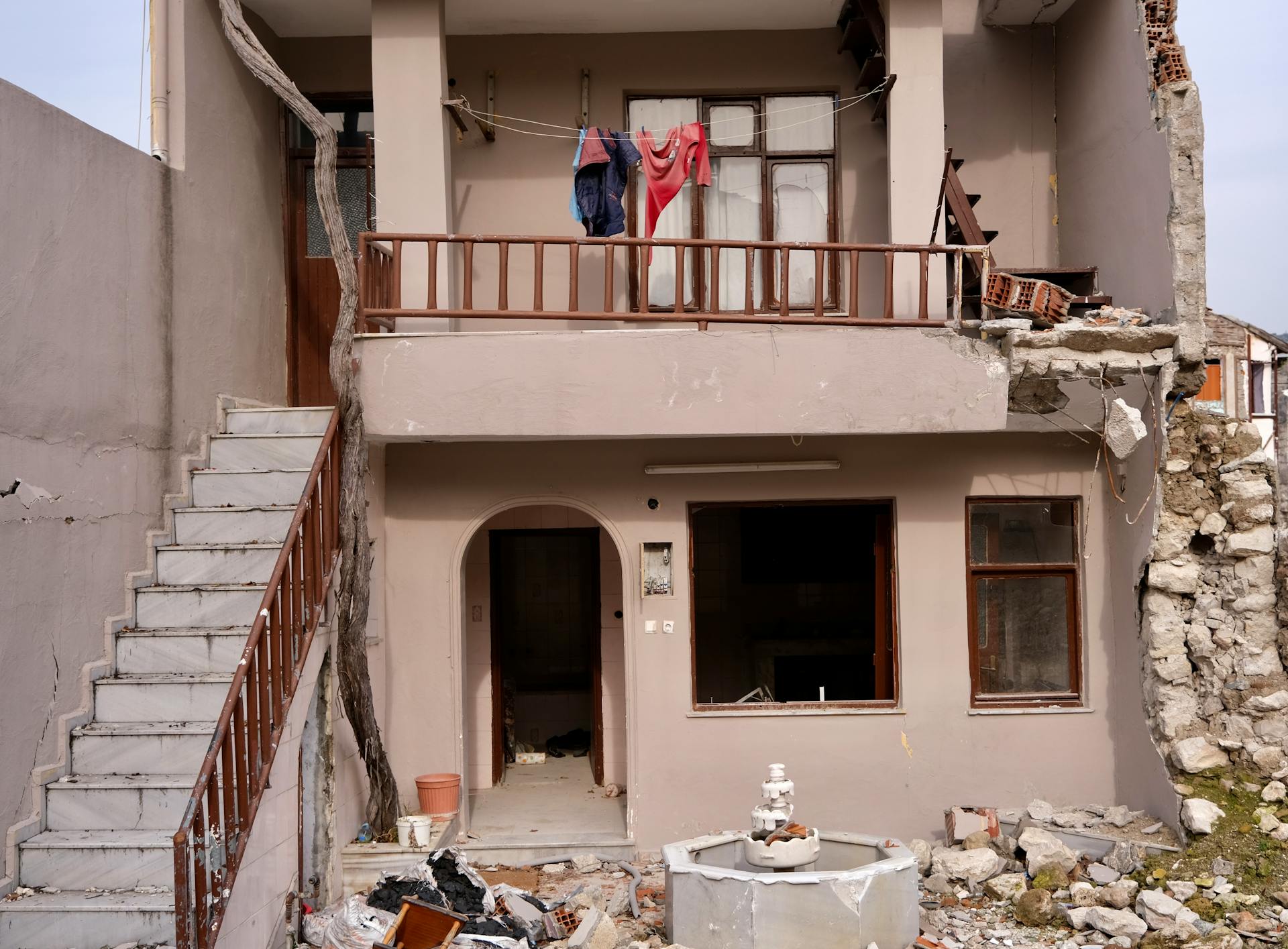
Living in Florida comes with its own set of challenges, especially when it comes to hurricanes. Homeowners insurance is a crucial aspect to consider in order to protect your home and finances from the devastating effects of these storms.
Florida law requires homeowners insurance policies to include coverage for windstorm damage, which includes hurricane damage. This is a key factor to consider when shopping for a policy or reviewing your current coverage.
The standard homeowners insurance policy in Florida typically includes windstorm coverage, but it's essential to review your policy to understand what's covered and what's not.
Does Homeowners Insurance Cover Hurricane Damage?
Most homeowners insurance policies cover wind-related damage to your home's exterior, such as shingles blown off your roof.
Wind damage is typically covered under standard homeowners insurance policies, including damage to your roof, windows, and other parts of your home's structure.
However, flood damage is not covered under standard homeowners insurance and requires separate flood insurance.

You'll need to purchase a separate flood insurance policy through the National Flood Insurance Program (NFIP) or a private insurer to be fully protected.
In hurricane-prone areas, policies often include a hurricane deductible, which is a percentage of your home's insured value.
Here's a quick overview of what's typically included in homeowners insurance for hurricane damage:
- Wind damage to your home's exterior
- Interior damage if wind-driven rain enters your home through broken windows or doors
- Loss of use if your home becomes uninhabitable
- Special deductibles for hurricane damage
Remember, it's essential to review your policy documents and understand what's covered to avoid financial surprises when hurricanes hit.
Types of Damage Covered
Standard homeowners insurance policies usually cover wind damage, which includes damage to your home's exterior, like shingles blown off the roof or siding ripped away by strong winds.
Wind-borne debris can cause significant harm, and hurricane insurance helps cover the costs of repairs or replacements. According to the Florida Office of Insurance Regulation (FLOIR), standard homeowner policies often include windstorm coverage, but it's essential to confirm with your provider.
Water damage from rain entering through damaged roofs or windows is also covered, but flood damage is not. Flood damage requires separate flood insurance, usually provided by the National Flood Insurance Program (NFIP).
Here's a breakdown of the types of damage typically covered by Florida hurricane insurance:
- Wind Damage: Damage to the roof, windows, and other structural components of the home.
- Water Damage (Not Flooding): Water damage caused by wind-driven rain entering through damaged areas of your home.
- Personal Belongings: Damage to your personal belongings, such as furniture, electronics, and clothing.
Additional Living Expenses (ALE) may also be covered, providing funds for necessities like lodging and food if you need to relocate temporarily due to uninhabitable conditions.
Dwelling and Structural
Your dwelling and structural components are crucial to protecting against hurricane damage. Standard policies typically cover damage to your dwelling, including the main house, and other structures like garages and fences.
Damage to your home's structure, such as the roof, walls, and built-in appliances, is usually covered under dwelling coverage. This coverage is usually based on the total rebuild cost of your home.
If a hurricane damages the physical structure of your home, your policy should cover repairs or rebuilding efforts up to your policy's limits. Make sure your dwelling limit is up-to-date to avoid being underinsured.
Here's a breakdown of the types of structural damage covered:
Dwelling coverage is the backbone of your homeowners insurance, and it's essential to understand what it covers to ensure you're adequately protected against hurricane damage.
Flood
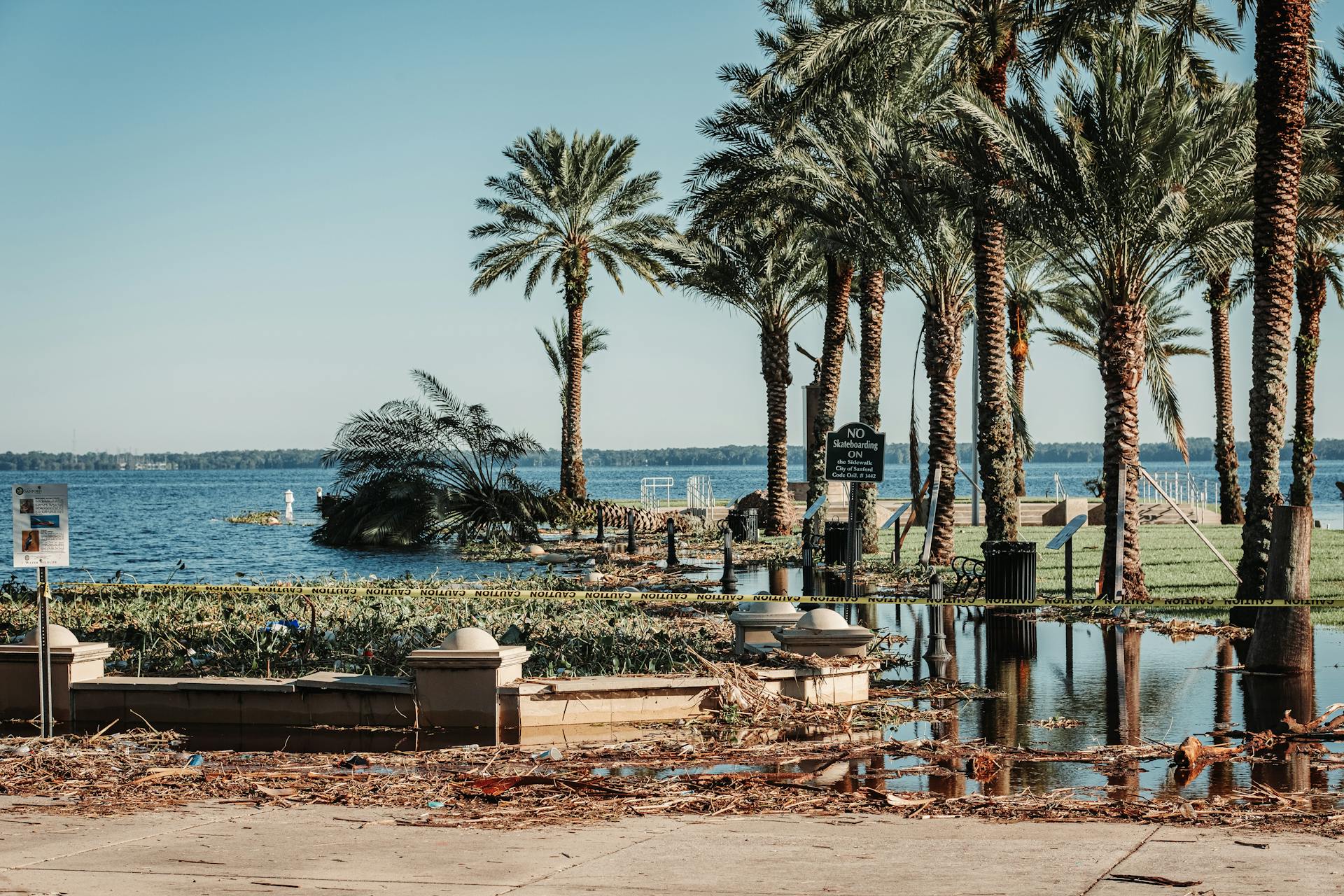
Flood damage is typically not covered under a standard homeowners' insurance policy, which can leave you with a significant financial loss.
Flood damage is defined as water entering your home from an external source, such as a storm surge or overflowing river. This type of damage is distinct from water damage caused by a burst pipe, which is usually covered by homeowners insurance.
To protect against flood damage, you need a separate flood insurance policy, which can be purchased through the National Flood Insurance Program (NFIP) or a private insurer. NFIP policies provide up to $250,000 in dwelling coverage and $100,000 in personal property coverage.
Having a flood insurance policy is especially important if you live in Florida, as the state is highly susceptible to storm surges and flash flooding during hurricanes. In fact, many homeowners in Florida mistakenly believe their standard policy will protect them from flood-related damage, but this is not true.
Flood insurance typically has a 30-day waiting period before the coverage takes effect, so it's essential to plan ahead and purchase coverage well in advance of hurricane season.
Suggestion: Does Home Insurance Cover Storm Damage
Sewer Backup
Sewer Backup is a serious issue that can happen to anyone, especially during heavy rains or flooding. Sewer backup is not covered by standard homeowners insurance.
Heavy rains or flooding can cause sewage to back up into your home, leading to costly damage. This type of damage can be devastating, especially if you're not prepared.
Adding water backup coverage to your policy can help protect against this type of damage. This coverage helps pay for damage caused by sewage or sump pump failures.
Hurricanes can be particularly problematic, as power outages can cause sump pumps to fail and flood your basement. If you live in a high-risk area for hurricanes, it's essential to consider adding endorsements for water backup or increased debris removal.
Check this out: Does Homeowners Insurance Cover Sewer Line
What's Not Covered
If you're planning for hurricane season, it's essential to know what's not covered by your standard homeowners insurance policy. Flood damage is not included in standard policies, and you'll need to purchase a separate flood insurance policy through the National Flood Insurance Program (NFIP) or a private insurer.
Additional reading: What Does Homeowners Insurance Cover and Not Cover
Typically, standard homeowners insurance policies will cover wind damage caused by hurricanes, but not flooding from storm surges or heavy rains. This means you'll need to consider the cost of a separate flood insurance policy to protect your home and belongings.
Some insurers in hurricane-prone areas might have separate windstorm or hurricane deductibles, which can be a percentage of your home's value, ranging from 1% to 5%. This is something to factor into your insurance costs.
Maintenance issues, such as damage caused by poor maintenance or wear and tear, are not covered by hurricane insurance policies. So, if your roof was in bad shape before the storm, any resulting damage may be excluded from coverage.
Damage caused by gradual leaks or mold is often excluded from hurricane insurance coverage. This means you'll need to address any water damage issues promptly to prevent further damage.
Here are some key exclusions to be aware of:
- Flood damage
- Additional living expenses (check your policy to see if this is included)
- Maintenance issues
- Mold and water damage (caused by gradual leaks)
Additional Living Expenses
Florida hurricane insurance policies often cover additional living expenses (ALE) if a hurricane renders your home uninhabitable.
This coverage can be a lifesaver, helping you pay for temporary housing and food expenses while your home is being repaired.
Typically, ALE coverage is 10% of your dwelling limit, but you may have the option to increase it for more protection.
For example, if your dwelling coverage is $400,000, you could have up to $40,000 in ALE coverage.
This can help cover hotel stays, restaurant meals, and other expenses incurred while you’re displaced.
See what others are reading: What Does Dwelling Insurance Cover
Policy and Coverage
Standard homeowners insurance policies in Florida typically cover wind damage caused by hurricanes, including damage to your roof, windows, and other structural components of your home.
However, flood damage is not covered under standard policies, so you'll need to purchase a separate flood insurance policy through the National Flood Insurance Program (NFIP) or a private insurer.
Hurricane insurance in Florida covers wind damage, water damage (not flooding), and personal belongings, but it's essential to review your policy documents to understand what's included.
The policy deductible for hurricane damage is usually a percentage of your dwelling coverage, ranging from 2% to 10% of your home's insured value, which can lead to significant out-of-pocket costs.
Is Required?
Florida does not mandate homeowners to have hurricane insurance. Mortgage lenders often require it as part of the loan agreement, however.
Having hurricane insurance is highly advisable to protect your investment and ensure financial security in the event of a disaster. Hurricanes can strike with little warning, wreaking extensive structural damage and leading to costly repairs.
Without adequate insurance, homeowners risk shouldering these expenses out of pocket, which can be financially devastating. Purchasing hurricane insurance is therefore a prudent step to help protect your property and maintain peace of mind.
Provider Coverage
To understand what your provider covers, you need to review your policy documents. Look for sections that specifically mention coverage for "hurricane damage" or "wind damage." This will help you understand if these coverages are included in the standard policy.
Your insurance agent can help you understand if such damage is covered, and you can also check if your insurance company applies special deductibles for hurricane damage, which would indicate that hurricanes are a covered peril.

Standard homeowners insurance policies typically cover wind damage caused by hurricanes, including damage to your roof, windows, and other parts of your home's structure. However, flood damage is not covered under standard homeowners insurance and requires separate flood insurance.
Some insurers in hurricane-prone areas might have separate windstorm or hurricane deductibles, which are usually a percentage of your home's value, ranging from 1% to 5%.
Here are some key things to check in your policy:
- Wind damage coverage
- Special deductibles for hurricane damage
- Flood insurance requirements
- Windstorm or hurricane deductibles (if applicable)
By reviewing your policy and understanding what's covered, you can better prepare for hurricane season and ensure you have the right protection in place.
Filing and Managing Claims
Filing and managing claims after a hurricane in Florida can be a daunting task, but understanding the process can make a huge difference. It's essential to file your insurance claim as soon as possible after hurricane damage.
Documenting the damage is crucial, take photos and videos of the damage to your home and belongings, and keep receipts for any temporary repairs you make to prevent further damage. This will serve as important evidence when filing your claim.
If you're unsure about the claims process, consider hiring a hurricane damage lawyer in Florida, they can assist you in navigating the process and ensure you receive the compensation you deserve.
Recommended read: Hurricane Helene Wind Storm Damage Homeowners Insurance Claim
Filing and Managing Claims
Documenting damage is key. Take photos and videos of damage to your home and belongings as soon as possible to serve as important evidence when filing your claim.
Make temporary repairs if necessary to prevent further damage. For example, you may need to place a tarp over a hole in the roof to stop rain from entering your home. Keep receipts for any expenses incurred for these temporary fixes, as they may be reimbursable.
Notifying your insurer as soon as possible is crucial to initiate the claims process. This will help ensure a smoother process and potentially expedite your claim.
The process may vary between insurance companies, but typically includes an assessment by an adjuster, followed by claim approval and eventual payout, provided all terms are met.
Here's a step-by-step guide to filing and managing claims:
- Document the damage with photos and videos.
- Notify your insurance company promptly.
- Make temporary repairs if necessary, keeping receipts for expenses.
- Be prepared for an assessment by an adjuster and potential claim approval and payout.
Why You Might Need a Lawyer for Claims
You might need a lawyer for claims if your insurance company delays or denies your claim, or if you feel you're not getting the full compensation you're entitled to.
A lawyer can help with policy review, making sure you understand your coverage and identify any exclusions or limitations.
If your claim is delayed, denied, or underpaid, a lawyer can assist with negotiation to secure a fair settlement.
A lawyer can also help you appeal a denied claim by presenting additional evidence.
Here are some ways a lawyer can help with claims:
- Policy Review: Understanding your coverage and identifying any exclusions or limitations.
- Negotiation: Working with the insurance company to secure a fair settlement.
- Appealing Denied Claims: If your claim is denied, a lawyer can help you appeal the decision and present additional evidence.
Understanding Homeowners Insurance
Most homeowners insurance policies cover wind-related damage to your home's exterior, such as shingles blown off your roof. This damage is typically covered under the policy's exterior damage section.
However, flood damage is not covered by standard homeowners insurance. You will need separate flood insurance to protect your home from this type of damage.
Here are the key points to know about what your homeowners insurance covers:
- Wind damage to your home's exterior
- Interior damage caused by wind-driven rain
- Loss of use, which provides temporary living expenses if your home becomes uninhabitable
- Flood damage (requires separate flood insurance)
In hurricane-prone areas, policies often include a hurricane deductible, which is a percentage of your home's insured value. For example, if your home is insured for $300,000 and your hurricane deductible is two percent, you would be responsible for $6,000 before your insurance kicks in to cover additional damages.
Importance of Reviewing
Reviewing your homeowners insurance is crucial, especially in hurricane-prone areas. You should do it at least once a year, or whenever significant changes occur in your household.
In Florida, it's common for hurricane deductibles to hover between two and five percent of your home's insured value. For example, if your home is insured for $300,000 and your hurricane deductible is two percent, you'd be responsible for $6,000 before your insurance kicks in.
Don't forget to review any additional endorsements or riders that might be part of your policy. If you've made renovations to strengthen your home, like installing new roofing or upgrading your windows, ensure your insurer is aware.
You can also take advantage of discounts and lower premiums if you've made these improvements. It's wise to compare quotes from multiple insurance providers to stay up to date on market rates and available discounts.
Here are some key areas to examine when reviewing your policy:
By reviewing your policy regularly, you can ensure you have the correct levels of protection in place and avoid financial surprises when a hurricane strikes.
Understanding Homeowners
Homeowners insurance can be a lifesaver in the event of a hurricane, but it's essential to understand what's covered and what's not. Most homeowners insurance policies cover wind-related damage to your home's exterior, such as shingles blown off your roof.
Wind-driven rain entering your home through broken windows or doors is typically covered, but flood damage is not. If your home becomes uninhabitable, your policy usually provides for temporary living expenses.
Hurricane deductibles are a percentage of your home's insured value, and they can be a significant out-of-pocket expense. In hurricane-prone areas, policies often include a hurricane deductible, which can range from 1% to 5% of your home's insured value.
Here's a breakdown of what's typically covered in the event of hurricane damage:
- Wind damage to the exterior of your home
- Interior damage caused by wind-driven rain
- Temporary living expenses if your home becomes uninhabitable
- Not covered: flood damage
Keep in mind that flood insurance is a separate policy that you'll need to purchase if you live in a flood-prone area.
Preparation and Prevention
Hurricane season is a reality for Floridians, and being prepared is key to protecting your home and financial future. Ensure you understand the various components of hurricane insurance, including windstorm coverage, flood insurance, and the hurricane deductible.
Flood insurance is a crucial component of hurricane insurance, and it's essential to purchase it before hurricane season if you don't already have it. Remember that flood insurance policies often have a 30-day waiting period, so don't wait until a storm is on the horizon.
Reviewing your policy annually is a must, focusing on coverage limits and deductibles. Consult with your insurance company to assess your home's specific risk profile and any recommended protection measures.
Having sufficient coverage that matches the value of your property is vital, and it's also essential to understand how to file a claim efficiently and effectively should the need arise. To ensure you're fully covered, consider increasing your coverage limits if you've upgraded your home or accumulated more valuable personal property.
Before hurricane season begins, it's essential to review your policy to understand your coverage and deductible. Be sure to have enough savings to cover the higher hurricane deductible, which is typically higher than standard deductibles.
Here are some essential steps to take before hurricane season:
- Review your policy to understand your coverage and deductible.
- Consider increasing your coverage limits if you've upgraded your home or accumulated more valuable personal property.
- Purchase flood insurance if you don't already have it, keeping in mind the 30-day waiting period.
- Prepare for the deductible by saving enough money to cover the cost in the event of a hurricane claim.
Cost and Coverage Limits
In Florida, the cost of hurricane insurance is significantly higher than the national average, with Floridians paying over $4,000 per year on average, including hurricane deductibles.
The average cost of a standard home insurance policy in Florida is around $2,511 per year, but rates may increase in high-risk areas. This cost can be a substantial burden for many homeowners, but it's essential to consider the potential financial risks of not having adequate coverage.
Hurricane insurance in Florida typically covers wind damage, water damage (not flooding), and personal belongings, but flood damage is not included in standard policies. It's crucial to review your policy documents to understand what's covered and what's not.
Understanding Premiums
In Florida, your average home insurance policy might cost around $4,218 annually.
Typical coverage parameters include a $300,000 dwelling coverage and $300,000 in liability coverage.
Flood insurance averages an additional $544 per year through the National Flood Insurance Program (NFIP).
Be aware that your insurance premium can vary depending on your home's location and other factors.
In Florida, hurricane deductibles are usually percentage-based, ranging from 1% to 5% of your home’s insured value.
Average Cost

The average cost of hurricane insurance in Florida is a significant factor to consider. A standard home insurance policy costs around $2,511 per year on average.
However, this cost can vary depending on your location within Florida, with rates increasing in high-risk areas. On average, Floridians now pay over $4,000 per year for their home insurance, including hurricane deductibles.
This is three times the national average cost, highlighting the higher risk of hurricanes in Florida. Keep in mind that investing in hurricane insurance can mean the difference between minor inconveniences and severe financial hardship after a storm.
A comprehensive policy typically offers coverage for wind-driven rain, roof damage, and broken windows, among other types of storm-related destruction. Flood insurance, however, averages an additional $544 per year through the National Flood Insurance Program (NFIP).
Explore further: Does Flood Insurance Cover Flooding from Rain
Frequently Asked Questions
In Florida, homeowners insurance policies typically cover hurricane damage, but it depends on the type of policy and coverage you have.

Hurricane damage is usually covered under the dwelling coverage part of your policy, which pays for repairs to your home's structure.
You can expect your insurance company to cover the cost of repairs, but you'll need to pay your deductible first.
For example, if your deductible is $1,000 and the repairs cost $10,000, you'll pay the first $1,000 and your insurance company will pay the remaining $9,000.
Some policies may have a separate hurricane deductible, which can be higher than your standard deductible.
In Florida, many insurance companies offer a separate hurricane deductible, which can range from 1% to 5% of your home's insured value.
If you live in a flood-prone area, you may need to purchase a separate flood insurance policy, which is usually not included in standard homeowners insurance policies.
In Florida, about 40% of homeowners have flood insurance, which is a good idea if you live in a high-risk area.
Your insurance company will typically send an adjuster to assess the damage and determine the cost of repairs.
For your interest: Does Home Insurance Cover Repairs
You may need to provide documentation, such as receipts and photos, to support your claim.
Keep in mind that insurance companies may have specific requirements for filing a hurricane damage claim, so be sure to check your policy carefully.
It's a good idea to review your policy and understand what's covered and what's not before a hurricane hits.
You might enjoy: Mold Damage Insurance Claim Florida
Frequently Asked Questions
What two disasters are not cover under normal homeowners policies?
Earthquakes and floods are typically not covered under standard homeowners policies, unless they cause fires. Consider purchasing special insurance if your home is at risk for these disasters.
Featured Images: pexels.com