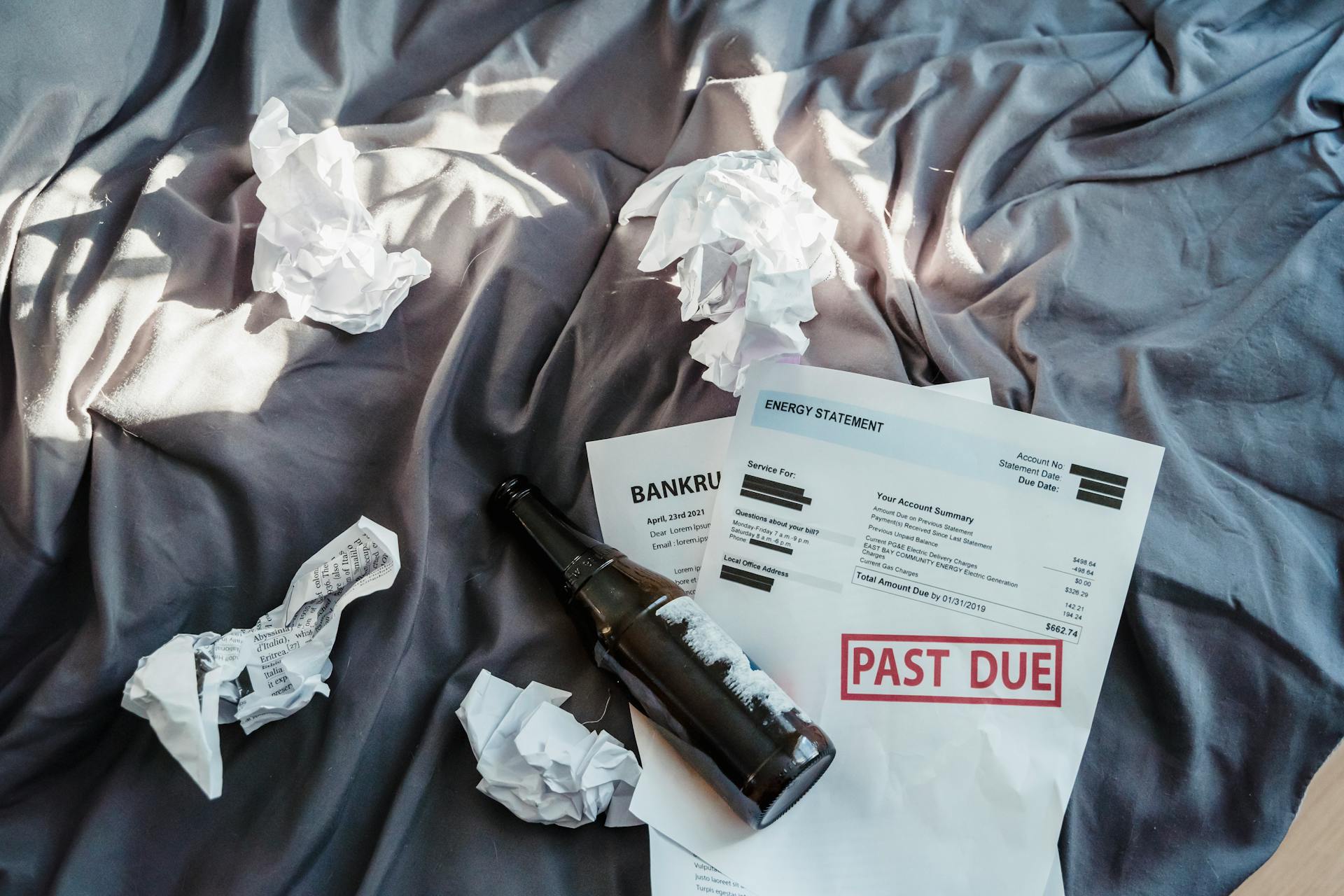
Debt collection agencies can take you to court if you've ignored their attempts to collect a debt. This is a serious step, and it's essential to understand what happens next.
A debt collection agency can sue you in small claims court if the debt is under a certain amount, usually $5,000. This is often the case for debts like credit card balances or medical bills.
If a debt collection agency sues you, you'll receive a court summons and be required to appear in court. You'll have the opportunity to defend yourself and explain why you're unable to pay the debt.
Debt collection agencies can obtain a court judgment against you, which can lead to wage garnishment, bank account levies, or even a lien on your property.
Take a look at this: Drug Court
Can Debt Collection Agencies Take You to Court?
Debt collection agencies can take you to court if you've ignored their calls and letters or refused to pay the debt. They might also sue if you dispute the debt but don't provide any proof or evidence to back it up.
Ignoring debt collection agency calls and letters can lead to a lawsuit. Collection agencies often see suing someone as a last resort due to the expense and time it requires.
A debt collection agency can sue you if you've breached a contract, which is often the case when you haven't paid a debt you agreed to pay. This contract can be found in loan agreements, credit card agreements, or other similar documents.
Debt collectors often try to work out a payment plan with you before taking you to court. However, if they do decide to sue, they'll typically try to collect the debt through wage garnishment, bank account levies, or property liens.
Here are some possible consequences of a debt collection agency taking you to court:
- Wage garnishment: A portion of your pay cheque is taken to pay off the debt
- Bank account levies: The agency could take money directly from your bank account
- Property liens: A legal claim on your property, which could make it hard to sell
It's worth noting that debt collectors can't use the threat of a lawsuit to collect a debt if they don't intend to file one. They also can't sue or threaten to sue when the statute of limitations has expired.
Understanding the Lawsuit Process
The lawsuit process can be intimidating, but it's essential to understand what happens when a debt collection agency takes you to court. The agency will file a Statement of Claim with the court, and you'll receive a summons that explains what they're asking for.
You have a limited time frame, usually just a few weeks or up to one month, to respond to the lawsuit. If you don't, the court can rule without hearing your side, and the debt collector could win by default.
If the court rules against you, the debt collector can garnish your wages, place a lien on your property, or freeze funds in your bank account. A judgment can also affect your credit score and make it harder to get credit in the future.
Here are the potential consequences of not responding to a lawsuit:
- Garnishment of wages
- Placement of a lien against property
- Freezing of bank account funds
Acknowledge the Lawsuit
If you're served with a lawsuit from a debt collector, it's essential to acknowledge the lawsuit and take action. You have a limited time frame to respond, usually just a few weeks or up to one month, depending on your state's laws.
Ignoring the lawsuit can lead to a default judgment, which can result in more aggressive collection measures, including wage garnishment, property seizure, and/or a bank account levy. This is a serious consequence, and it's crucial to respond to the lawsuit.
You can respond to the lawsuit yourself or hire a debt collection attorney for guidance. It's also a good idea to review your protections under the Fair Debt Collection Practices Act (FDCPA) to see if the debt collector has violated any laws.
Here are some things to verify in the complaint:
- That the debt is actually yours
- That the amount of money you owe is correct
- That the statute of limitations hasn’t run out
- That the debt collector or collection agency actually owns the debt
If you haven't already done so, send a debt validation letter to the debt collector. If they can't prove they own the debt, you can use this as a defense to have the case thrown out of court.
By acknowledging the lawsuit and taking action, you can protect your rights and potentially work out a settlement or other resolution with the collector.
Gather Your Documents
Gathering the necessary documents is a crucial step in preparing for a lawsuit.
Get all the paperwork related to the debt, like payment receipts, letters from the creditor, and any communication with the collection agency. This will help you build a defense if you need to.
Having all the relevant documents in one place will save you time and stress in the long run.
Keep everything organized and easily accessible, whether that's in a physical file or a digital folder.
A fresh viewpoint: Will Paying off Delinquent Debt Improve My Credit
Statute of Limitations in Canada
In Canada, there's a time limit for how long a collection agency can sue you over unpaid debt, known as the statute of limitations. This varies depending on where you live.
In most places, it's around two to six years from the last time you made a payment or acknowledged the debt. If you're living in Ontario, British Columbia, or Alberta, you can expect it to be a two-year statute of limitations.
You might like: Can Two Different Collection Agencies Report the Same Debt
In Quebec, the statute of limitations is three years. It's worth noting that once the statute of limitations has passed, a collection agency can't take you to court.
Here's a quick overview of the statute of limitations in some Canadian provinces:
- Ontario: 2 years
- British Columbia: 2 years
- Alberta: 2 years
- Quebec: 3 years
Even though they can't take you to court, a collection agency may still contact you to try and collect the debt.
Managing Debt Collection
Managing debt collection can be a stressful experience, but it's essential to understand the process.
Debt collection agencies can take you to court if you ignore their demands or fail to pay your debts. They can sue you for the amount owed, plus interest and fees.
In the US, debt collection agencies must follow the Fair Debt Collection Practices Act (FDCPA), which regulates how they can contact you. They're not allowed to harass or intimidate you.
If a debt collection agency sues you, you'll receive a court summons, which is a formal notice of the lawsuit. You'll need to respond in writing to the court within the specified timeframe.
Ignoring the summons or failing to respond can result in a default judgment against you, which means you'll owe the debt plus additional costs.
On a similar theme: Can Payday Lenders Take You to Court
Dealing with Debt Collection Agencies
Collection agencies will usually try to work something out with you before taking you to court. They see suing someone as a last resort due to the expense and time it requires.
Ignoring their calls and letters can lead to a collection agency taking you to court. Refusing to pay the debt or disputing it without proof can also result in a lawsuit.
If you're being pursued by a collection agency, it's essential to respond to their attempts to contact you. This can help you avoid court and work out a payment plan.
A collection agency can take a portion of your pay cheque through wage garnishment, take money directly from your bank account, or place a legal claim on your property through a property lien.
Here are some potential consequences of a collection agency taking you to court:
- Wage garnishment: A portion of your pay cheque is taken to pay off the debt
- Bank account levies: The agency could take money directly from your bank account
- Property liens: A legal claim on your property, which could make it hard to sell
Going to Court
Going to court is a serious step in the debt collection process. If you respond to the summons, the case will go to court. Both sides will present their evidence, and the judge will decide based on what is presented.
You'll receive a complaint and summons that explain why you're being sued and how long you have to respond. Review these court papers carefully and make sure that everything in the complaint is accurate. You should verify that the debt is actually yours, the amount of money you owe is correct, the statute of limitations hasn’t run out, and the debt collector or collection agency actually owns the debt.
If you haven’t already done so, send a debt validation letter. If the debt collector can’t prove they own the debt, you can use this as a defense to have the case thrown out of court. You may also be able to countersue with a claim that the debt collector owes you money due to FDCPA violations.
Ignoring the lawsuit doesn't make it go away. Unfortunately, it usually means the creditor or debt collector will win the case by default. If this happens, the court will issue a default judgment against you. This court order allows for more aggressive collection measures including wage garnishment, property seizure, and/or a bank account levy.
Here are some possible defenses you might have in court:
- The statute of limitations has passed
- The debt is not yours
- You were not properly notified about the lawsuit
If you win the case, the collection agency will not be able to collect the debt, and they might not be able to sue you again for that debt.
A different take: Were Not Here to Take Part?
Avoiding Debt Collection Issues
To avoid debt collection issues, it's essential to understand the laws that govern debt collection in your state. Debt collection agencies are subject to the Fair Debt Collection Practices Act (FDCPA), which prohibits harassment, false statements, and unfair practices.
Debt collectors can't call you before 8am or after 9pm, and they must give you a written notice of the debt within 5 days of contacting you. They also can't threaten to sue you if they don't intend to do so.
You might like: Fair Debt Collection Practices Act Attorneys Fees
Bankruptcy
Bankruptcy can immediately stop all debt collection efforts, including a debt collection lawsuit for unpaid debts. This protection comes from the automatic stay.
If your bankruptcy is successfully discharged, you won’t be liable for paying your discharged debts, and all collection and judgment actions tied to those debts will cease. Bankruptcy isn’t right for everyone, so it's a good idea to get a free consultation with a bankruptcy lawyer to see if it's the right option for you.
A bankruptcy lawyer can help you navigate the complex federal rules for discharging debt. Ms. Kingston, a bankruptcy attorney, has experience helping debtors obtain a fresh start.
You can use a free online tool to prepare your Chapter 7 case if you're concerned about the cost of attorney's fees.
You might like: Why Credit Card Debts Are Called Unsecured Debt
How to Avoid Being Sued
Reaching out to creditors early is key to avoiding lawsuits. If you're struggling to make payments, don't wait until it's a bigger problem - let your creditor know as soon as possible.
Exploring debt management options can also help you stay in control. Debt consolidation, consumer proposals, or credit counselling can make managing your payments much easier.
A consumer proposal can be a lifesaver, allowing you to reduce your debt by up to 80% and keep your assets. Our Licensed Insolvency Trustees handle all the negotiations with your creditors, taking the pressure off you.
To get started, focus on communication and finding a solution that works for you. Don't be afraid to ask for help - it's often the best way to avoid debt collection issues.
You might enjoy: Consumer Finance Protection Bureau Debt Verification Letter
Debt Collection Laws and Regulations
You have rights as a debtor, and collection agencies must follow the rules. They must provide proof that the debt is yours and that they have the right to collect it.
Many states have their own debt collection laws that differ from federal law. Your attorney general's office can help you understand your rights under your state's law.
Debt collectors must be licensed in some states, such as Illinois, where they must register with the Illinois Department of Financial and Professional Regulation before taking any collection actions.
For your interest: Law on Debt Collection Agencies
Know Your Rights
You have rights as a debtor. Collection agencies are required by law to treat you fairly. They must follow the rules, and you can challenge them if they do not.
You can ask for proof that the debt is yours and that they have the right to collect it. This is a crucial step in protecting yourself from unfair debt collection practices.
If you're a servicemember, you have additional protections and resources available to you. You can consult your local JAG office or use the JAG Legal Assistance Office locator to find help or ask your installation's financial readiness office for information.
You may also be eligible for free or reduced-fee services from an attorney who specializes in debt collection issues. Some attorneys may offer free services or charge a reduced fee, so it's worth exploring your options.
Check this out: Is It Legal for Debt Collectors to Charge a Fee
Where to Report a Legal Violation
If a debt collector breaks the law, you can report the problem to your state's attorney general's office. They can help you understand your rights under your state's law.
You have one year from the date of the law breaking to sue the debt collector in a state or federal court. This allows you time to gather evidence and build a case.
You can sue a debt collector for damages that occurred because they broke the law. This can include expenses like lost wages or medical bills.
Even if you sue a debt collector and win, you may still owe the debt.
Does it Need a License?
In Illinois, a debt collector must be licensed with the Illinois Department of Financial and Professional Regulation before doing collections actions like filing a lawsuit.
If you're contacted by someone trying to collect a debt, you can check with the Department if they're licensed.
Explore further: Illinois Law - Demand Letter to Collect Unpaid Personal Loan
Featured Images: pexels.com