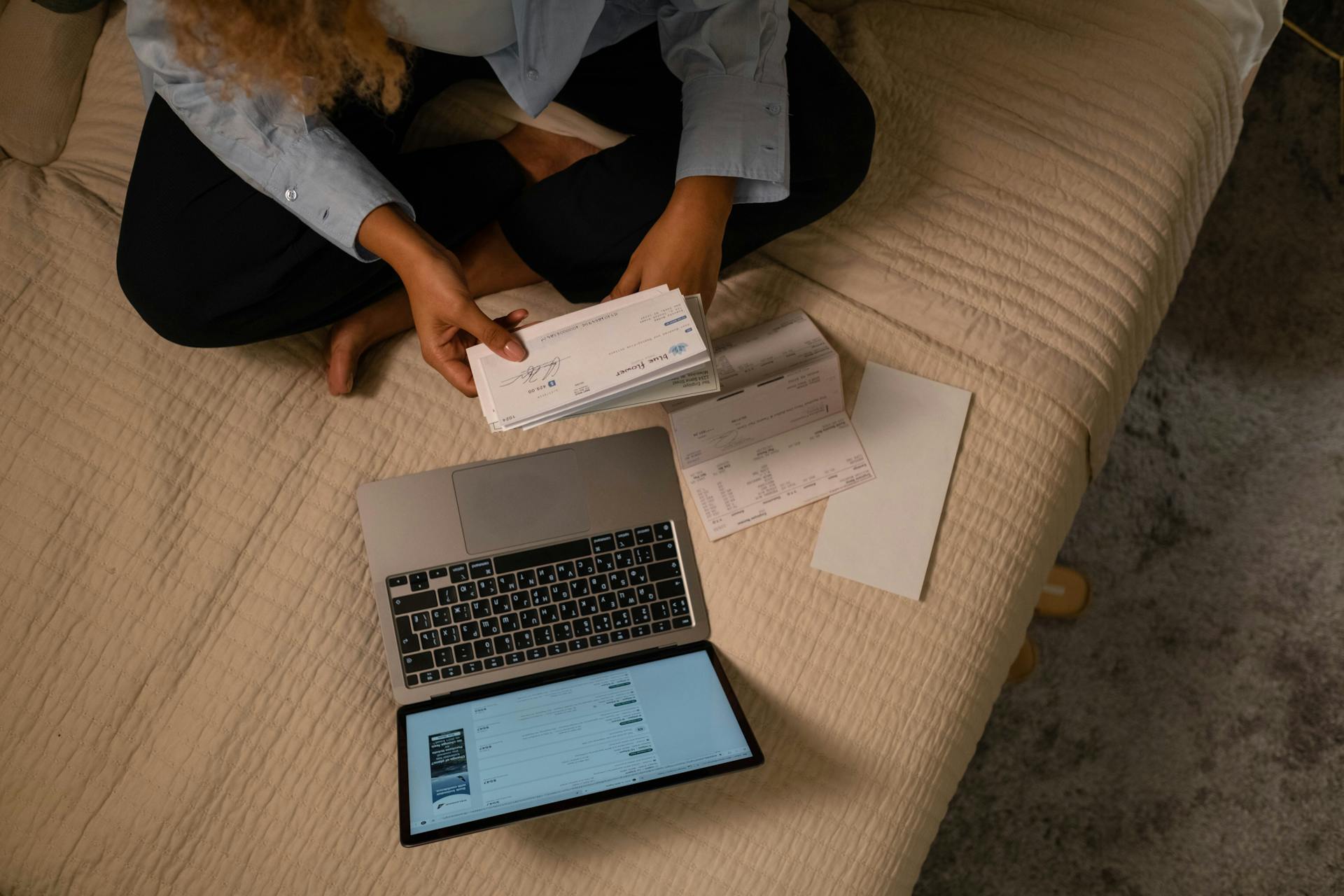
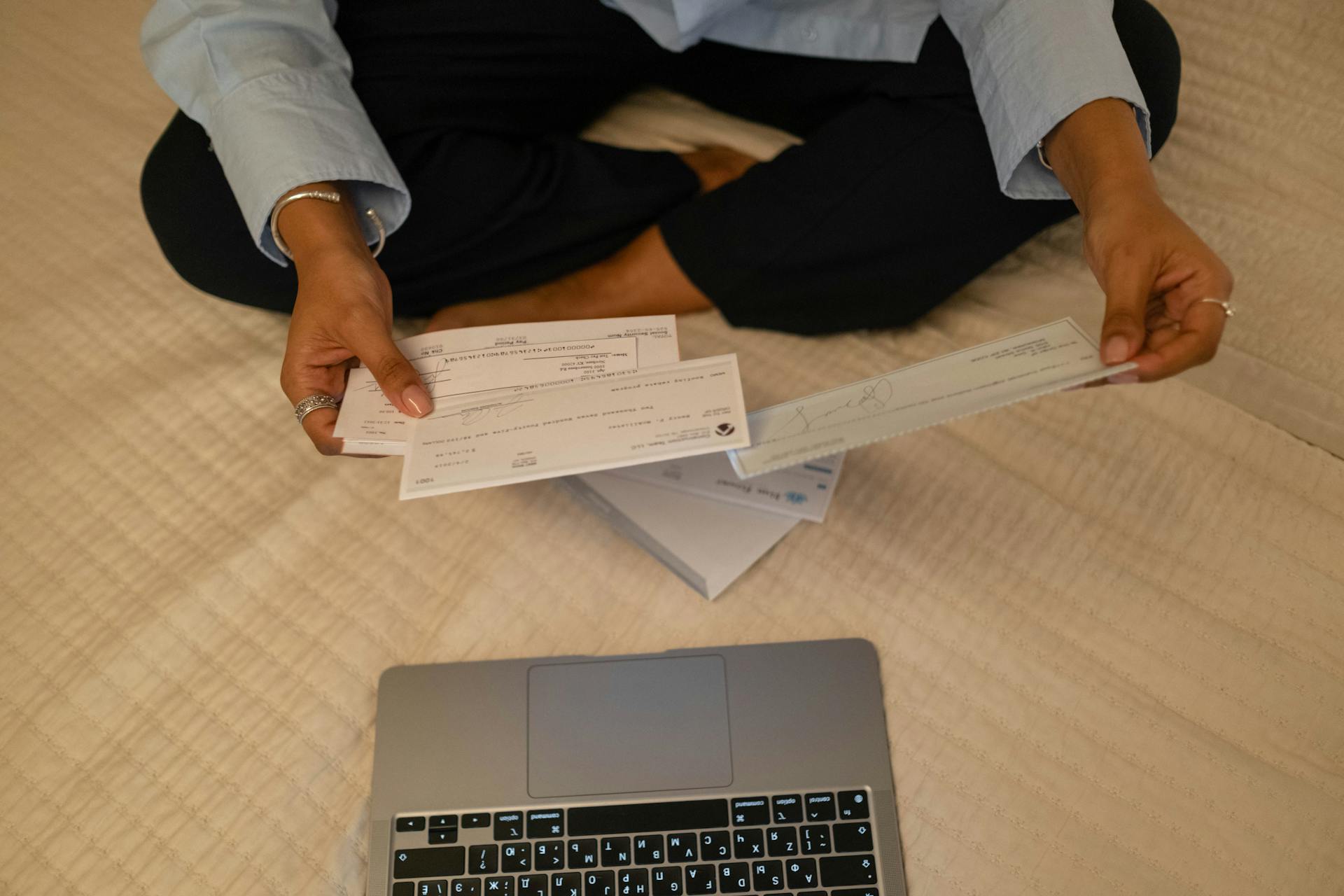
Chequing accounts are a type of bank account that allows you to deposit, withdraw, and manage your money easily.
A chequing account is a liquid account, meaning you can access your money whenever you need it. This makes it a great option for everyday expenses and bills.
To open a chequing account, you'll typically need to provide identification, proof of address, and may need to make an initial deposit. Some banks may also have minimum balance requirements or fees for certain services.
You can choose from a variety of chequing account options, including basic, premium, and student accounts, each with its own set of features and benefits.
What is Checking?
A checking account is a type of bank account that allows you to easily deposit and withdraw money for daily transactions.
You can deposit a check you receive, take out cash with your debit card, or set up direct deposit for your paychecks with a checking account.
Checking accounts are one of the most liquid bank accounts, meaning you have easy access to your money.
They often allow unlimited deposits and withdrawals, though daily maximums ranging from $300 to $5,000 may apply, depending on the bank.
The primary purpose of a checking account is to hold your money in a secure place for the short term, so it's available when you need it to pay your bills and other expenses.
You can have your paycheck sent to your checking account through direct deposit and then move a portion of your earnings to a savings or investment account where it can grow over time.
Checking accounts shouldn't be used for long-term goals, such as saving for a house, since you earn a low interest rate, averaging about 0.04%.
Checking Account Features
A checking account comes with a debit card, allowing you to withdraw money from your account. You can use the debit card to make purchases, pay bills, and more.
Checking accounts often have unlimited withdrawals, giving you flexibility in accessing your money. Savings accounts, on the other hand, cap withdrawals at six times a month per law.
You can use a checking account to link payment apps like Venmo and PayPal, make wire transfers, and mobile check deposits. It's a building block to manage your money and make financial tasks easier.
Here are some common features you can expect from a checking account:
- ATM cards for withdrawing cash
- Debit cards for cashless direct payment
- Cash deposits and withdrawals
- Cheques and money orders
- Direct debit and standing order
- Electronic funds transfers
- Online banking for transferring funds
Checking vs Savings
Checking accounts come with a debit card, allowing you to withdraw money from your checking account. Savings accounts don't provide a debit card, unless your account is linked to a checking account at the same bank.
Checking accounts often have unlimited withdrawals, giving you flexibility on when you can access your money. Savings accounts, on the other hand, cap withdrawals at six times a month per law.
Interest rates are lower for checking accounts, averaging 0.04%. Savings accounts, however, can offer interest rates at or over 1%.
You might enjoy: In Service Withdrawals from 401 K Plans
Checking accounts are meant for everyday purchases and transactions, while savings accounts are meant for saving money. Savings accounts don't often come with debit cards or check-writing abilities.
Checking accounts that earn interest tend to have lower rates than savings accounts. The national average savings rate is 0.40%, while the national interest checking rate is only 0.07%.
Take a look at this: What Car Manufacturers Are Offering 0 Financing
Features and Access
A checking account offers a range of features and access options to manage your finances. You can access your account through various channels, including online banking, mobile banking apps, and in-person visits to a bank branch.
With a checking account, you can make or receive payments using different methods, such as ATM cards, debit cards, cash, cheques, and money orders. You can also set up direct debit and standing orders to transfer funds automatically.
Here are some of the key ways you can access your checking account:
- ATM cards (withdraw cash at any Automated Teller Machine)
- Debit card (cashless direct payment at a store or merchant)
- Cash (deposit and withdrawal of coins and banknotes at a branch)
- Cheque and money order (paper instruction to pay)
- Direct debit (pre-authorized debit)
- Standing order (automatic regular funds transfers)
- Electronic funds transfers (transfer funds electronically to another account)
- Online banking (transfer funds directly to another person via internet banking facility)
Some banks may allow you to overdraw your account if you've previously arranged for this, but be aware that you'll be charged interest and overdraft fees.
Checking Account Fees
Most chequing accounts require a minimum balance of deposits to avoid a monthly account fee. This fee can vary depending on the type of chequing account and the services offered.
Some chequing accounts charge more for features like extra monthly transactions or perks like fee waivers for credit cards.
Savings accounts, on the other hand, usually don't have monthly account fees. However, service charges may apply when you make a debit transaction.
Pros and Cons
A chequing account is a type of bank account that allows you to write checks, make debit card transactions, and access your money as needed.
One of the main pros of a chequing account is that it offers easy access to your money, with many banks allowing you to withdraw cash from ATMs, deposit checks, and make purchases with your debit card.
Having a chequing account can also help you keep your finances organized, as many banks offer online banking and mobile banking apps that allow you to track your spending and stay on top of your account balance.
However, one of the main cons of a chequing account is that it often comes with a monthly maintenance fee, which can range from $5 to $20 per month, depending on the bank and the services you use.
Additionally, chequing accounts may have restrictions on the number of transactions you can make per month, such as a limit on the number of checks you can write or the number of ATM withdrawals you can make.
Pros
A chequing account is a good fit if you're earning paycheques and paying your own bills. It allows you to securely store your money, access it for regular expenses, and withdraw cash almost instantly.
Having a chequing account is especially helpful if you need to cover bills and expenses on a regular basis.
For your interest: Accrued Expenses 会計
Cons
The not-so-great sides of this topic. One major con is that it can be expensive, with some options costing upwards of $1000.
The high cost is largely due to the fact that some of these options require specialized equipment and training, which can be a significant investment.
Another con is that it may not be suitable for everyone, particularly those with certain health conditions or physical limitations.
This is because some options can be physically demanding or require a certain level of physical fitness.
The learning curve can be steep, with some options requiring a significant amount of time and effort to master.
This can be frustrating for those who are eager to start using the option, but need to take the time to learn the basics.
Some options may also have limited availability or accessibility, making it difficult to find a provider or get the necessary support.
This can be a major con for those who need the option urgently or have limited mobility.
In some cases, the option may not be covered by insurance, which can be a significant financial burden.
This can be a major con for those who rely on insurance to cover the costs of the option.
Consider reading: Conto Corrente Con Interesse
Choosing a Bank
A chequing account is only as good as the bank behind it, so choosing a reliable bank is crucial.
Look for banks with a strong reputation and a long history of stability, like the Royal Bank of Canada which has been around since 1869.
Consider the bank's branch and ATM network to ensure you have access to your money when and where you need it.
The bank's online and mobile banking systems should also be user-friendly and secure, allowing you to easily manage your account and pay bills.
Some banks, like the Bank of Montreal, offer a wide range of financial products and services, making it a one-stop-shop for your banking needs.
Ultimately, choose a bank that aligns with your financial goals and values, and don't be afraid to shop around and compare rates and fees.
Here's an interesting read: Management by Wandering around
Frequently Asked Questions
What's the difference between saving and chequing?
Use a chequing account for everyday spending and a savings account to earn higher interest on your money. This simple distinction helps you manage your finances effectively.
Featured Images: pexels.com