Culpa in contrahendo is a concept that can be tricky to grasp, but it essentially refers to the liability that arises from the pre-contractual negotiations between two parties.
In many jurisdictions, including Italy, this liability is considered a form of fault, where one party's breach of duty during the negotiation process can lead to damages.
This concept is rooted in the idea that parties have a duty to act in good faith during negotiations, and any failure to do so can result in liability.
The key takeaway is that culpa in contrahendo is not just about the final contract, but about the entire negotiation process.
See what others are reading: Duty
What is Culpa in Contrahendo?
Culpa in Contrahendo is a principle in contract law that emphasizes the obligation of parties involved in contract negotiations to act in good faith and with due care. This means that they should not mislead or cause harm to each other during preliminary discussions.
The doctrine highlights the importance of good faith in contract negotiations. Parties are required to act in good faith, which means being honest and transparent in their dealings with each other.
During contract negotiations, parties are obligated to disclose essential information that could potentially influence the decision-making process of the other. This is a key aspect of Culpa in Contrahendo, as it ensures that both parties have a fair and equal opportunity to make informed decisions.
If a party decides to withdraw from negotiations without a sound reason, it could possibly lead to liability. This highlights the importance of being transparent and honest in contract negotiations.
Here are some key aspects of Culpa in Contrahendo:
- Good faith: Parties during contract negotiation are required to act in good faith.
- Disclosure of information: Parties are obligated to disclose essential information.
- Withdrawal from negotiations: Withdrawal without a sound reason can lead to liability.
Legal Aspects
Culpa in contrahendo is a principle in civil law that's primarily relevant in contract disputes. It's used to assess the behavior of parties during negotiations and can be invoked when one party believes they were misled or acted to their detriment due to the other party's negligence.
This principle is rooted in the civil law tradition and influences contract law across various jurisdictions. It operates in the intricate juncture between negotiating a contract and its final conclusion, enabling parties to remain protected during the contract negotiation process.
The Culpa in Contrahendo principle is also recognized in the German Civil Code, specifically in section 311(2) BGB. This section outlines the duties arising during contractual negotiations and designates penalties for individuals who negligently breach their duty during the formulation of a contract.
In English law, Culpa in Contrahendo is invoked under pre-contractual fairness and good faith rules. Key elements observed under English law during pre-contractual negotiations include full disclosure of material facts, ensuring free consent, and avoiding misrepresentation.
Here are some key elements of Culpa in Contrahendo in various jurisdictions:
- German Civil Code (BGB): Recognizes the principle of Culpa in Contrahendo in section 311(2), outlining duties arising during contractual negotiations and penalties for negligence.
- English Law: Invokes Culpa in Contrahendo under pre-contractual fairness and good faith rules, emphasizing full disclosure of material facts, free consent, and avoiding misrepresentation.
Understanding Culpa in Contrahendo is crucial for anyone involved in contract negotiations. By recognizing the principle and its implications, parties can ensure fair and responsible negotiations, reducing the risk of disputes and potential liability.
Real World Examples

Culpa in contrahendo is a principle that can have real-world consequences for individuals and businesses. In a real-world example, a company might negotiate a contract with a supplier but provide false information about their financial stability.
This can lead to losses for the supplier when the company cannot fulfill its obligations. The supplier may have incurred costs relying on the company's false information.
A similar situation can arise in a business-to-consumer context, such as a homeowner discussing a renovation project with a contractor who fails to disclose that they do not have the necessary licenses. This can result in financial losses for the homeowner if the project is not completed as agreed.
In another example, a farmer might negotiate with a buyer for the sale of their farming equipment, and the buyer assures them of purchase, leading the farmer to turn down other potential buyers. However, the buyer suddenly ceases all communication and doesn't proceed with the purchase, leaving the farmer with lost opportunities and heavy losses due to the depreciation of equipment.
A different take: Parent Company Guarantee
Comparison and Analysis
Culpa in contrahendo is a concept that focuses on good faith and care in negotiations, particularly in contractual relationships. It's essential to understand the differences between culpa in contrahendo and other related terms like negligent misrepresentation and fraud.
The key differences between culpa in contrahendo and other related terms are as follows:
In the United States, the concept of culpa in contrahendo is recognized in various states, including Alabama, Alaska, and Arizona, among others.
Intriguing read: Central States Indemnity
Comparison With Similar Terms
Culpa in contrahendo is a concept that's often confused with other terms, but understanding the differences is crucial.
One key difference is that culpa in contrahendo focuses on good faith and care in negotiations, whereas negligent misrepresentation can occur after a contract is formed.
Fraud, on the other hand, involves intentional deception to secure unfair or unlawful gain.
Here's a breakdown of the key differences between culpa in contrahendo, negligent misrepresentation, and fraud:
Influence and Interpretation
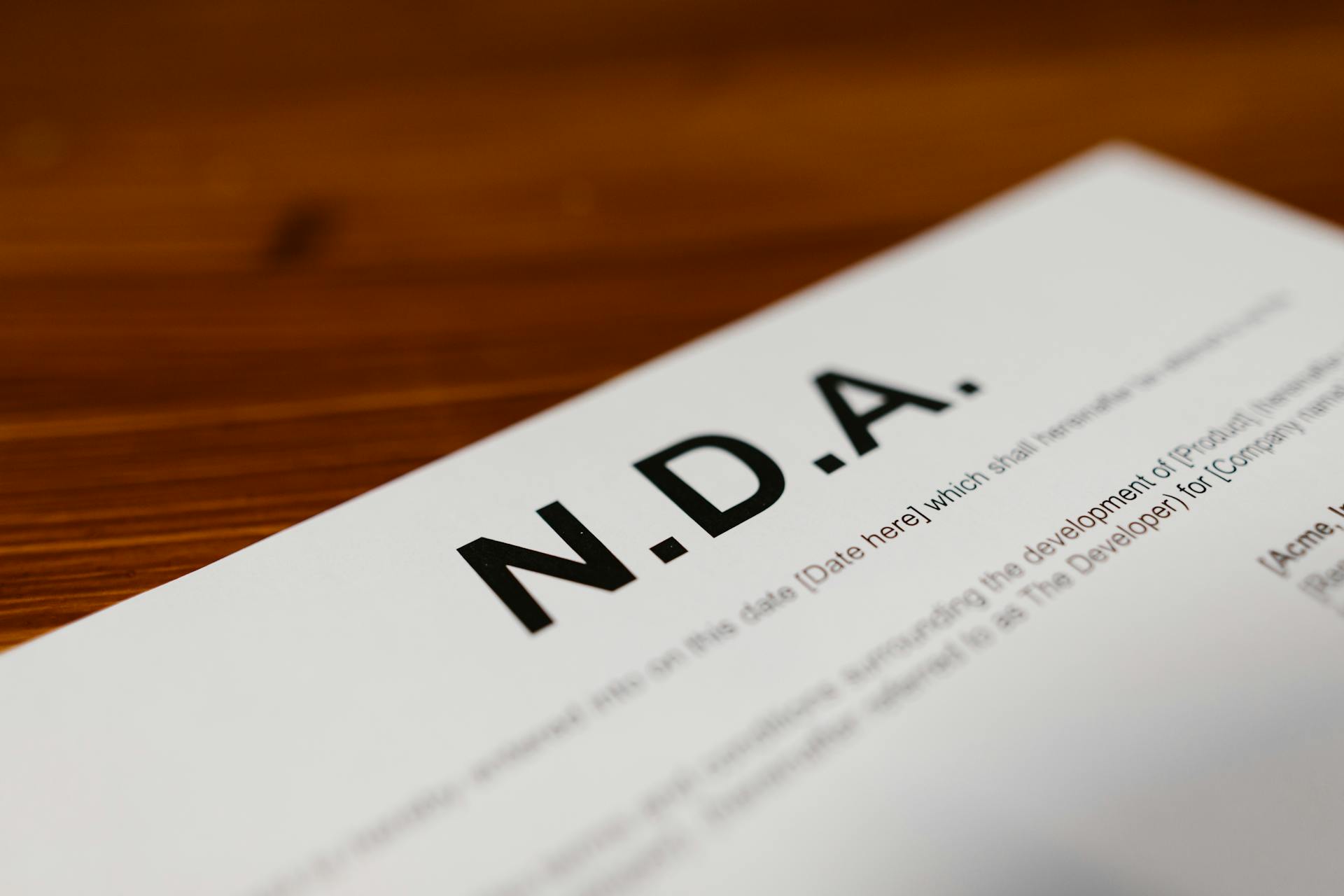
The influence of law on the principle of Culpa in Contrahendo is substantial, with English law bringing the perspective of fairness and good faith into pre-contractual negotiations.
German Law explicitly includes the Culpa in Contrahendo principle in their civil code, laying down clear guidelines for parties during pre-contractual negotiations.
The inclusion of Culpa in Contrahendo in the German Civil Code, BGB, recognizes that parties embarking on a contractual relationship must be considerate of each other's interests and adhere to good faith principles.
Negligence during negotiations, which results in the other party sustaining losses, can lead to the negligent party being held liable under this principle, as per the German Civil Code.
In pre-contractual negotiations, parties must act responsibly and be held accountable for their actions, as the German Law's uptake of the Culpa in Contrahendo principle emphasizes.
This principle is not limited to the German Civil Code, as English law also brings a similar perspective of fairness and good faith into pre-contractual negotiations, adding a punch to this principle.
The German Law's inclusion of Culpa in Contrahendo in their civil code strengthens the premise of this principle by holding erring parties accountable.
Suggestion: Good Faith (law)
German

German law has a unique approach to culpa in contrahendo, crediting Rudolf von Jhering with developing the doctrine in 1861.
Prior to the 2002 reform of the law of obligations, culpa in contrahendo was not provided for by statute, but courts used it to fill a gap in the law.
The German Civil Code now explicitly includes culpa in contrahendo in §311(2), in connection with §§280(1) and 241(2).
This means that parties in Germany are obligated to compensate each other if they negligently breach their duty during contract negotiations.
In German law, the principle of culpa in contrahendo is embodied in Section 311(2) of the Bürgerliches Gesetzbuch (BGB).
This section lays down the duties arising during contractual negotiations, making it clear that parties are responsible for their actions during this process.
Suppose two companies in Berlin are negotiating a contract and one party suddenly retracts without a valid reason, causing financial losses for the other party; under German law, the retracting party would be liable for damages.
Intriguing read: German Contract Law
The inclusion of culpa in contrahendo in the German Civil Code has strengthened the principle, making it clear that erring parties will be held accountable.
The Bürgerliches Gesetzbuch (BGB) designates an entire section to articulate the duties arising during contractual negotiations, incorporating the principle of culpa in contrahendo within its foundational structure.
This unique intersection of the BGB and culpa in contrahendo forms a fascinating chapter in the study and applicability of the principle.
On a similar theme: Arm's Length Principle
Learn Faster with Flashcards
Learning new concepts can be a daunting task, especially when it comes to complex legal topics like Culpa in contrahendo.
Flashcards can be a game-changer for retaining information.
Creating flashcards with key terms on one side and definitions on the other can help solidify understanding.
For instance, a flashcard with the term "culpa in contrahendo" on one side could have the definition "a Latin term referring to a breach of contract before the contract is finalized" on the other.
Reviewing flashcards regularly can help reinforce learning and make it easier to recall information.
Flashcards can also be used to quiz oneself on the material, which can be an effective way to identify areas where more study is needed.
For your interest: Side Letter (contract Law)
What to Do

If you're facing a situation where you're being held liable for a contract that hasn't been signed, it's essential to take immediate action.
First, try to gather as much evidence as possible to support your case. This might include emails, letters, or other written communications that demonstrate the parties' intentions to enter into a contract.
Don't ignore the situation, thinking it will go away on its own. Culpa in contrahendo can lead to significant financial losses if not addressed promptly.
Consider seeking the advice of a lawyer who specializes in contract law. They can help you navigate the complexities of culpa in contrahendo and protect your rights.
If you're unsure about the validity of a contract, it's better to err on the side of caution and seek professional advice.
Featured Images: pexels.com