
A credit event is a significant occurrence in the financial markets that can have far-reaching consequences for investors and borrowers alike. It's essentially a default or a major disruption in a company's ability to meet its financial obligations.
In simple terms, a credit event can be triggered by a company's bankruptcy, debt restructuring, or even a change in its control. This can lead to a significant decline in the company's creditworthiness.
The impact of a credit event can be severe, causing a sharp increase in borrowing costs and a decline in the company's stock price.
Curious to learn more? Check out: Choice Financial Debt Consolidation
What Is a Credit Event
A credit event is a significant occurrence that triggers a credit derivative, essentially an insurance policy against non-payment. The International Swaps and Derivatives Association (ISDA) defines the three most common credit events as filing for bankruptcy, defaulting on payment, and restructuring debt.
Bankruptcy is a legal process where an individual or organization is unable to repay their outstanding debts. A company that is bankrupt is also insolvent, meaning it has more liabilities than assets.
Payment default is a specific event where an individual or organization is unable to make payments on their debts on a timely basis. Continual payment defaults can be a precursor to bankruptcy.
Debt restructuring refers to a change in the terms of the debt, making it less favorable to debtholders. This can include a decrease in the principal amount to be paid, a decline in the coupon rate, or a postponement of payment obligations.
The ISDA also defines several standard credit events, including bankruptcy, failure to pay, restructuring, repudiation, moratorium, obligation acceleration, and obligation default.
Here are the standard credit events as defined by the ISDA:
- Bankruptcy
- Failure to Pay
- Restructuring
- Repudiation
- Moratorium
- Obligation Acceleration
- Obligation Default
These credit events can have huge implications for lenders, putting them at high risk of losing money and contractual obligations.
Types of Credit Events
Credit events can have a significant impact on lenders, and it's essential to understand what they are. Credit events are triggered by specific circumstances that affect a borrower's ability to repay their debts.
The International Swaps and Derivatives Association (ISDA) defines six credit events: BankruptcyObligation accelerationObligation defaultPayment defaultRepudiation/MoratoriumDebt restructuring
Bankruptcy is a common credit event, where a borrower files for bankruptcy due to their inability to repay debts. Payment default occurs when a borrower fails to make timely payments on their debts. Debt restructuring is a change in the terms of the debt, making it less favorable to debtholders.
Types of Credit Events
Credit events can have a significant impact on lenders and investors, so it's essential to understand the different types. The International Swaps and Derivatives Association (ISDA) defines six credit events: Bankruptcy, Obligation acceleration, Obligation default, Payment default, Repudiation/Moratorium, and Debt restructuring.
Bankruptcy is a legal process where an individual or organization is unable to repay their outstanding debts. This is a common credit event, and it's often a precursor to other credit events.
Obligation acceleration is a credit event where a debt is due immediately, even if it wasn't due yet. This can happen when a borrower defaults on a loan or fails to meet their obligations.
Obligation default is similar to obligation acceleration, but it refers to a specific event where a borrower fails to meet their obligations. This can be a precursor to bankruptcy or other credit events.
Payment default is a specific event where a borrower fails to make a payment on time. This can be a precursor to bankruptcy or other credit events.
Explore further: Application Does Not Meet Lender's Risk Threshold
Repudiation/Moratorium refers to a situation where a borrower refuses to pay their debts or puts a hold on payments. This can be a credit event, especially if it's not resolved quickly.
Debt restructuring is a change in the terms of a debt, making it less favorable to lenders. This can be a credit event, especially if it's not agreed upon by both parties.
Here are the six credit events, as defined by the ISDA:
Physical vs Cash
Physical settlement of credit default swaps (CDS) was the norm in the past, but it's no longer the most practical solution. This method involves the buyer of protection delivering a bond to the seller for par value, which worked fine when CDS were used primarily as a hedging tool.
The problem with physical settlement is that it's not feasible when the number of CDS contracts written outnumbers the cash bonds they're based on. In fact, the amount of CDS contracts written is so high that it would be an operational nightmare to physically settle all of them.
Cash settlement was introduced as a more efficient way to settle single-name CDS contracts when credit events occur. It better reflects the intent of the majority of participants in the single-name CDS market, where the instrument has shifted from a hedging tool to a speculation or credit-view tool.
For more insights, see: Discover Credit Card Settlement
Credit Default Swaps
Credit default swaps are a type of financial instrument that allows one party to transfer the risk of a credit event to another party. This is done by paying a series of payments to the other party, known as the seller, in exchange for protection against a credit event.
A credit default swap is not a type of insurance, but rather a bet on whether a credit event will or will not occur. It's like an option, where the buyer is hoping that the credit event won't happen, and the seller is hoping that it will.
The buyer of a credit default swap is essentially insuring against the loss of principal in case of default by the bond issuer. The seller, on the other hand, is taking on the risk of the credit event occurring.
The terms of a credit default swap can vary, but typically involve the buyer making periodic payments to the seller. If a credit event occurs, the seller pays the buyer the remaining interest on the bond.
Broaden your view: Credit Default Swap
There are two sides to the trade: a buyer of protection and a seller of protection. The buyer is insuring against the loss of principal in case of default, while the seller is taking on the risk of the credit event occurring.
Here are the different types of credit events that can trigger a credit default swap:
- Bankruptcy
- Payment default
- Debt restructuring
In the mid-2000s, the CDS market changed significantly, with many new parties becoming involved in trading CDSs, and CDSs being issued for structured investment vehicles such as asset-backed securities and mortgage-backed securities. Speculation also became rampant in the market.
The default settlement process for CDSs has evolved over time, with cash settlement becoming the preferred method. The credit event auction process was developed to make cash settlement more transparent, and is now widely used in the industry.
A fresh viewpoint: Farm Credit Farmers Market
Credit Event Triggers
Credit Event Triggers are the specific events that cause a credit default swap to trigger, and they're crucial in understanding how credit events work. A credit event can be triggered by a reference entity's bankruptcy, failure to pay, obligation acceleration, repudiation, or moratorium.
The International Swaps and Derivatives Association (ISDA) defines the standard credit events that can trigger a credit default swap, including bankruptcy, failure to pay, restructuring, repudiation, moratorium, obligation acceleration, and obligation default. These events can have a significant impact on lenders, putting them at high risk of losing money and contractual obligations.
In the CDS world, credit events are agreed upon when the trade is entered into and are part of the contract. The majority of single-name CDSs are traded with the following credit events as triggers: reference entity bankruptcy, failure to pay, obligation acceleration, repudiation, and moratorium.
Here are the standard credit events that can trigger a credit default swap, as defined by the ISDA:
- Bankruptcy
- Failure to Pay
- Restructuring
- Repudiation
- Moratorium
- Obligation Acceleration
- Obligation Default
Triggers
Credit event triggers are the events that cause a credit default swap to be triggered, resulting in the buyer receiving compensation from the seller. These triggers are crucial in protecting lenders from potential losses.
A credit event can be triggered by a company's bankruptcy, as seen in the example of ABC Company facing deteriorating market conditions and eventually filing for bankruptcy. This is a common credit event that can have severe consequences for creditors.
Credit event triggers can also be caused by a company's failure to pay its debts, which is another common credit event. For instance, ABC Company defaulted on its periodic interest payments due to a steep decrease in revenues caused by a trade war.
Restructuring debt is another credit event trigger that can have significant implications for creditors. If a company restructures its debt to make it less favorable to debtholders, it can be considered a credit event.
Here are the standard credit events that can trigger a credit default swap:
- Bankruptcy
- Failure to Pay
- Restructuring
- Repudiation
- Moratorium
- Obligation Acceleration
- Obligation Default
These credit events are defined by the International Swaps and Derivatives Association (ISDA) and are used to determine the terms of a credit default swap. Understanding these triggers is essential for lenders to minimize their risk and protect their investments.
Auctions
Auctions are a crucial part of the credit event process, allowing buyers and sellers of protection to settle their contracts in a fair and efficient manner.
In a credit default auction, participants have a choice between cash settlement and physical settlement, with the latter being a more streamlined process that reduces the need for bond trading.
The auction process involves two consecutive stages: the first stage determines the inside market midpoint (IMM) and the size and direction of the open interest, while the second stage allows participants to submit limit orders for the auction.
The Lehman Brothers auction in 2008 was a notable example of this process, where a price of 8.625 cents on the dollar was set for Lehman Brothers debt, resulting in recoveries of 91.51 and 94.00 for Fannie Mae and Freddie Mac, respectively.
For sellers of protection on Lehman CDS, this meant they would have to pay 91.375 cents on the dollar to buyers of protection to settle and terminate their contracts.
In the case of a credit event, the auction process can provide a much-needed injection of liquidity and help to stabilize the market, as seen in the Lehman Brothers auction.
Intriguing read: 1455 Market Street Charge on Credit Card
Key Concepts and Examples
A credit event is a negative change in a borrower's capacity to meet its payments, which triggers settlement of a credit default swap. This can be a serious issue for creditors.
The three most common credit events are filing for bankruptcy, defaulting on payment, and restructuring debt. These events can have significant consequences for both the borrower and the creditor.
A credit default swap is a financial instrument that protects the creditor from losses in the event of a credit event. In a credit default swap, the buyer (creditor) pays a premium to the seller (insurer) in exchange for protection against the borrower's default.
Here are the three most common credit events:
- Filing for bankruptcy
- Defaulting on payment
- Restructuring debt
Payment Example
ABC Company is a cyclical business that generates extremely volatile quarterly earnings.
The steep decrease in revenues due to a trade war between the US and China caused ABC Company to default on its periodic interest payments to creditors.
A trade war can have a significant impact on a business's revenue, as seen in ABC Company's case.
Defaulting on payments can lead to severe financial consequences for a business.
ABC Company's situation highlights the importance of managing cash flow and anticipating potential risks.
Key Takeaways
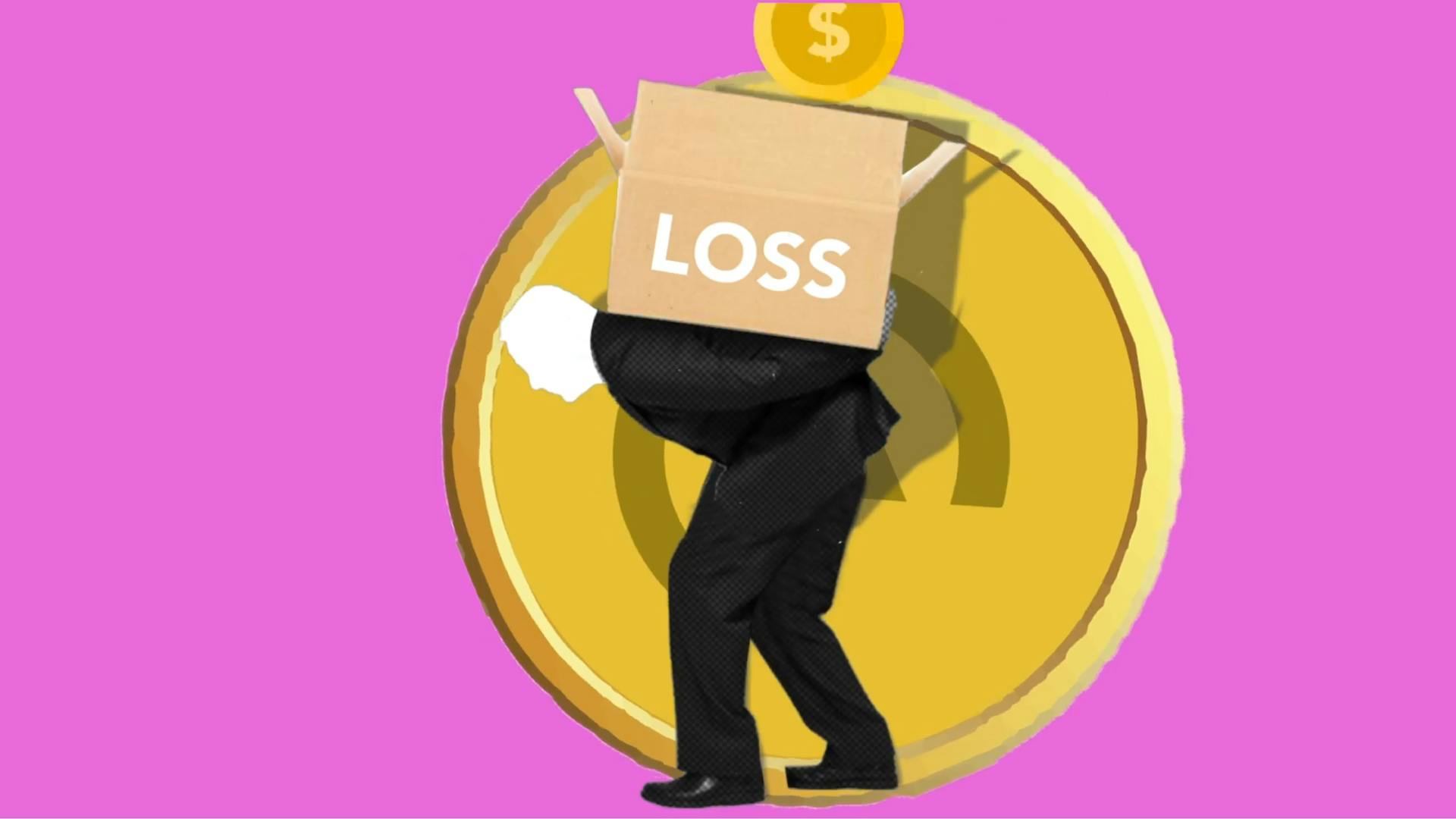
A credit event is a negative change in a borrower's capacity to meet its payments, which triggers settlement of a credit default swap. This can have significant financial implications for both the borrower and the investor.
The most common credit events are filing for bankruptcy, defaulting on payment, and restructuring debt. These events can be triggered by a variety of factors, including economic downturns or changes in market conditions.
Here are the three most common credit events:
- Filing for bankruptcy
- Defaulting on payment
- Restructuring debt
Role in Financial Crisis
The 2007-2008 financial crisis was largely caused by the misuse of credit default swaps, or CDS, which grew 10,000% between 2000 and 2007.
The CDS market reached a notional value of $45 trillion by the end of 2007, but the corporate bond, municipal bond, and SIV market totaled less than $25 trillion. This means that a minimum of $20 trillion was comprised of speculative bets on the possibility of a credit event occurring.
The risk of CDS investments is not eliminated, but rather shifted to the CDS seller, who can default on their obligations, as seen with Lehman Brothers, Bear Stearns, and AIG.
The Early 2000s

The Early 2000s was a time of growth for the CDS market, with a total value of approximately $900 billion by 2000.
In most cases, buyers of protection also held the underlying credit asset, which added a layer of familiarity and understanding to the transactions.
The market was relatively small, with a limited number of parties involved in early CDS transactions.
Here's an interesting read: Fair and Accurate Credit Transactions Act
Role in the 2007-2008 Financial Crisis
The CDS market grew 10,000% between 2000 and 2007, making it the most rapidly adopted investment product in history.
By the end of 2007, the CDS market had a notional value of $45 trillion, dwarfing the corporate bond, municipal bond, and SIV market, which totaled less than $25 trillion.
A minimum of $20 trillion of the CDS market was comprised of speculative bets on the possibility that a credit event would occur on a specific asset not owned by either party to the CDS contract.
CDS contracts were often passed through multiple parties, with some contracts being resold 10-to-12 times.
The risk in CDS investments is not eliminated, but rather shifted to the CDS seller, who may experience a default credit event at the same time as the CDS borrower.
CDS sellers like Lehman Brothers, Bear Stearns, and AIG all defaulted on their CDS obligations, contributing to the 2008 credit crisis.
AON PLC, a professional services firm, paid $10 million after a credit event triggered a payment, but was unable to recover the loss from the downstream buyer due to a mismatch in contract terms.
Determination Committees Should Bolster Independence
Determination committees should bolster independence by having members with diverse backgrounds and expertise, as seen in the International Swaps and Derivatives Association (ISDA) committee, which has members from various financial institutions and law firms.
This independence is crucial in making timely and accurate decisions about credit events, such as the ISDA's definition of a credit event, which can trigger a credit default swap.
The ISDA's committee is also responsible for defining the terms and conditions of credit default swaps, which can have a significant impact on the financial markets.
A well-functioning determination committee can help prevent disputes and ensure that credit events are handled efficiently, as seen in the case of the Lehman Brothers' bankruptcy, which led to a significant increase in credit default swap activity.
The committee's independence can also help maintain market confidence and stability, which is essential for the smooth functioning of the financial markets.
For another approach, see: Consumer Financial Protection Bureau Credit Cards
Conclusion
In the world of finance, a credit event can be a game-changer for investors.
A credit event can have significant consequences for investors, including the potential for major losses.
As we've seen, a credit event can occur due to a variety of reasons, such as a company's failure to meet its debt obligations or a significant change in its credit rating.
Investors who are not prepared for a credit event can suffer severe losses.
On a similar theme: Current Expected Credit Losses
The International Swaps and Derivatives Association (ISDA) defines a credit event as a default, restructuring, or other credit event that triggers a payment or delivery obligation under a credit derivative contract.
In the event of a credit event, investors may be required to pay out on a credit default swap (CDS) contract, which can result in significant financial losses.
The likelihood of a credit event occurring can be influenced by a company's credit rating, its financial health, and market conditions.
Investors who are aware of the potential risks and take steps to mitigate them can minimize their losses in the event of a credit event.
For more insights, see: Hhgregg Synchrony Financial
Featured Images: pexels.com