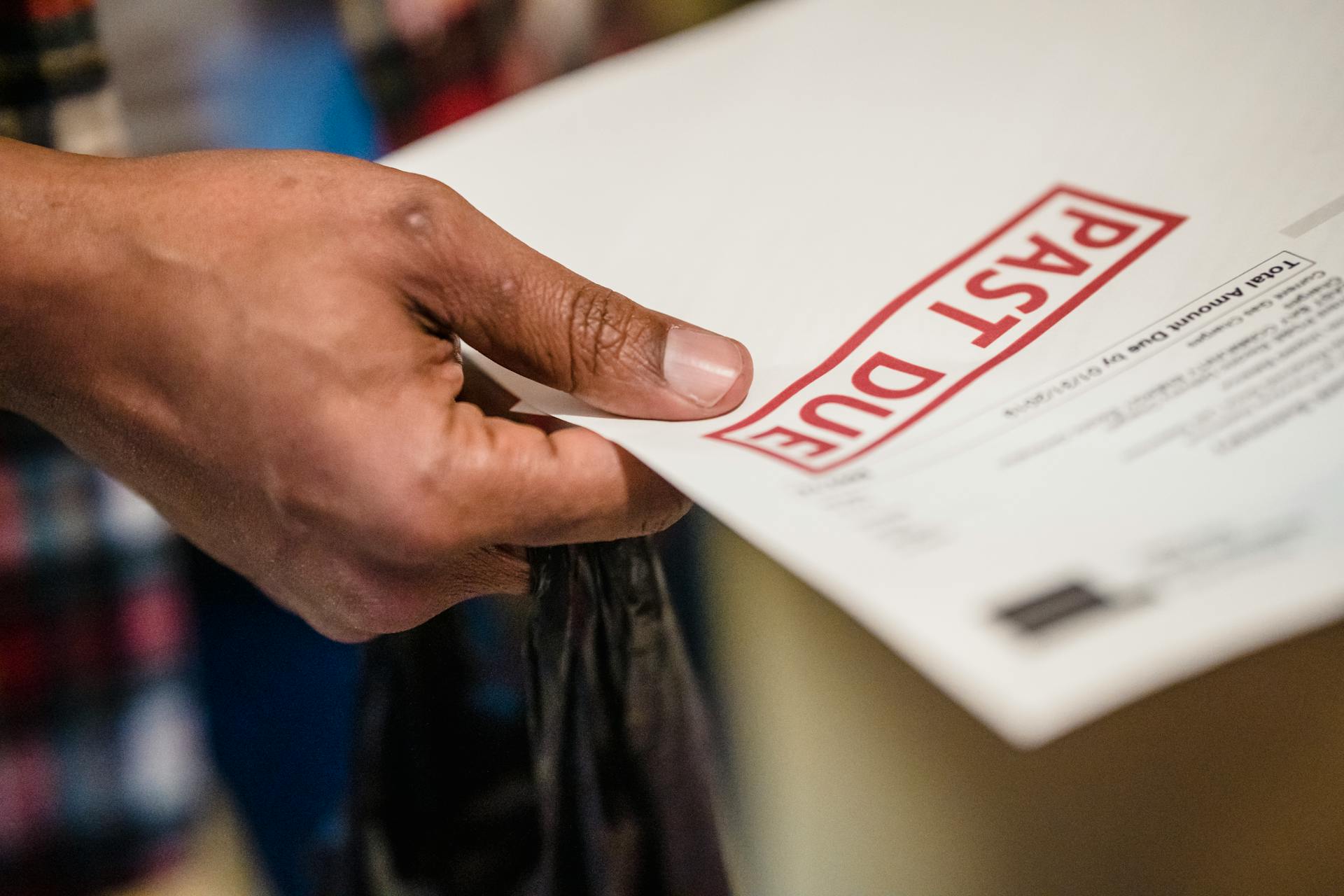
Losing a loved one can be a difficult and overwhelming experience, and dealing with their credit cards can be a daunting task. Typically, credit card issuers will freeze the account of a deceased person within 24 to 48 hours of notification.
The credit card issuer will then notify the credit reporting agencies, which can help prevent identity theft and protect the deceased person's credit score. In some cases, the credit card issuer may require a death certificate or other documentation to verify the person's passing.
It's essential to notify the credit card issuer as soon as possible to prevent any unauthorized charges or activity on the account. This can help prevent financial harm to the estate or loved ones of the deceased person.
Expand your knowledge: Do Credit Cards Help Your Credit Score
What Happens After Death
After a cardholder dies, their credit card accounts need to be closed down to prevent financial issues. This includes notifying the credit card companies and requesting to cancel the accounts. You'll also want to stop any automatic or recurring charges, such as phone or utility bills, to avoid further interest and finance charges.

The executor of the estate, appointed in the will, is responsible for managing the credit card debt and ensuring it's paid off. In some cases, the estate may not have enough assets to cover the debt, leading to debt write-offs.
You'll need to obtain copies of the death certificate, which serves as proof of the cardholder's passing. This document is required when requesting account closures, halting interest accumulation, and stopping automatic payments or withdrawals.
Here's a breakdown of who's responsible for credit card debt after death:
- Co-signers are equally responsible for the debt and must pay off the remaining balance.
- Joint account holders share equal responsibility for the debt.
- In community property states, spouses may be liable for debts incurred during the marriage.
- Authorized users are generally not responsible for the debt, but may be liable if they continue using the card after the cardholder's death.
- Estate heirs are not personally responsible for paying off the credit card balances, but the estate must settle the debt before distributing remaining assets.
It's essential to notify the credit card companies promptly to avoid further charges and complications. You can request a credit freeze from the credit bureaus to protect the deceased's credit identity and prevent identity theft.
Managing Accounts
Organize accounts by requesting a copy of the death certificate, which is usually required by financial organizations to access the accounts. This will also help you identify all associated financial documents.
Request a copy of the deceased's credit report, which will list all accounts in their name. This can be a lengthy process, so it's essential to start early.
Keep an eye out for any mail addressed to the cardmember and monitor mail for six months to a year after a death to ensure that nothing important is missed.
Locate all credit card accounts of the deceased, including identifying which cards were solely in the deceased's name and which were joint accounts.
Create a comprehensive list of debts that need to be addressed, including any credit cards that may have been forgotten.
Here's a list of steps to take after a credit card holder dies:
- Notify credit card companies of the death
- Request to cancel the accounts
- Cancel or transfer any automatic or recurring charges
- Send an official notification letter and supporting documentation
- Flag the account and provide the address to which you'll need to send documentation
The death certificate is a vital document that officially confirms the death of the cardholder. You will need multiple certified copies to provide to various institutions, including creditors, banks, and government agencies.
Worth a look: Bank of America Credit Card Account Holder Death
Beneficiaries and Companies
If you're a beneficiary of an estate, you should know that credit card debt can affect you in several ways. The estate will pay off debts before going to any beneficiaries, so if the estate doesn't have enough assets to pay the debt, you could be held responsible.
A fresh viewpoint: Estate Inherited Ira
There are three specific situations where you might be liable for the remaining debt: if you're a joint cardholder on a card with outstanding debt, if you're a co-signer for a card with outstanding debt, or if you were married to the deceased and live in one of nine community property states.
Here are the community property states: StateProperty is Shared?AzYesCaYesIdYesLaYesNvYesNmYesTxYesWaYesWiYes
A fresh viewpoint: Community Credit Union Credit Cards
How Beneficiaries Are Affected
Beneficiaries are often unaware of the impact that credit card debt can have on their inheritance. If the estate doesn't have enough assets to pay the debt, beneficiaries can be held responsible in several scenarios.
If a beneficiary is a joint cardholder on a card with outstanding debt, they may be liable for the remaining balance. This can be a significant burden, especially if the debt is substantial.
Beneficiaries who are co-signers for a card with outstanding debt are also at risk of being held responsible for the debt. This is another way that credit card debt can affect beneficiaries.
In community property states, the spouse of the deceased may be held responsible for the remaining debt, even if they're not a joint cardholder or co-signer. These states include Arizona, California, Idaho, Louisiana, Nevada, New Mexico, Texas, Washington, and Wisconsin.
Here are the three specific situations where beneficiaries could be liable to pay the remaining debt:
- Joint cardholder on a card with outstanding debt
- Co-signer for a card with outstanding debt
- Spouse of the deceased living in a community property state
Companies
Notify credit card companies as soon as possible to stop interest from accruing and any other fees. This should be done for both primary and joint credit cards.
You can call the number on the back of the card and speak with a customer service representative about your situation. They may ask for an official copy of the death certificate and the deceased's Social Security number.
You'll also want to review card statements to see if there are any recurring charges, such as phone bills or utilities, and transfer them to a different card or bank account. This will help prevent unnecessary charges and fees.
Explore further: Where Is the Card Number on a Credit Card

Credit card issuers may request an official notification letter and supporting documentation, including an official death certificate. Send this documentation by certified mail and keep your receipt.
Contacting credit card issuers is a necessary step to inform them of the cardholder's death. This notification will prompt the issuers to close the accounts and halt any further interest and late fee charges.
You'll need to send a copy of the death certificate and other documentation to the credit card issuers to proceed with closing the accounts officially.
Take a look at this: Payment on Death Account
Why Companies Exist
Companies exist to serve a purpose, and in the context of beneficiaries and companies, their role becomes crucial after a loved one passes away.
Credit card companies, for example, need to be notified to prevent unauthorized use of the deceased person's account.
Notifying credit card companies promptly is essential to prevent hackers and predators from targeting the account.
Here are some reasons why companies exist to serve the needs of beneficiaries after a death:
- Prevent unauthorized use
- Settle outstanding balances
- Prevent interest from building up
- Protect the credit report
- Prevent collection efforts
- Protect against fraud and identity theft
- Settle the estate
Request Freeze from Three Bureaucracies
Request a credit freeze from all three credit bureaus to prevent anyone from opening new credit cards or accounts using the deceased's name and Social Security number.
To request a credit freeze, you'll need to contact Equifax, Experian, and TransUnion. You can start by calling them with the deceased person's name, Social Security number, date of birth, and date of death. The phone numbers for each credit bureau are as follows:
Follow up your request by mail to request that the credit report be flagged as "Deceased. Do Not Issue Credit." Be sure to obtain a tracking number and receipt for your records.
It's also a good idea to ask the credit card company to submit a proof of claim for the estate if a card issuer reaches out with a request for payment. This can be done by including this request with your written notification to the credit card company or submitting it later.
You might enjoy: Do Business Credit Cards Affect Your Personal Credit
Final Steps
You'll need to obtain certified copies of the death certificate to provide to financial institutions, creditors, and government agencies. This document is essential for confirming the death and stopping any automatic payments or withdrawals.
To prevent identity thieves from taking advantage of the situation, notify credit card companies of the death as soon as possible. This can be done by calling the number on the back of the card and requesting to cancel the accounts.
Cancel any automatic or recurring charges set up on each credit card account, such as phone bills or utility bills, to avoid continued charges. Transfer these payments to another card or cancel them altogether.
You'll also need to send an official notification letter and supporting documentation, including the death certificate, to the credit card companies. Send this documentation by certified mail and keep a record of your receipt.
Remember to keep a list of all credit card accounts and notify the necessary parties to manage the debt and assets effectively. This will make the process much smoother for everyone involved.
Here's an interesting read: How to Make Credit Card Payments to Increase Credit Score
Prevention and Responsibility
To prevent any issues with credit card debt after death, it's essential to take a few crucial steps. Collect all credit cards from the deceased, including authorized user cards, and either put them in a safe place or destroy them.
Continuing to use a credit card as an authorized user after the cardholder's death can lead to big trouble, so it's best to stop using the cards immediately.
If you're the primary cardholder and the deceased was an authorized user, you'll need to remove them from your account.
Here's a breakdown of who's responsible for settling credit card debt after death:
The estate is generally responsible for settling the debt, but there are some exceptions. If you live in a community property state like California or Texas, your spouse may be liable for your debts incurred during the marriage.
Frequently Asked Questions
Am I obligated to pay my deceased parent's debt?
You may be responsible for paying your deceased parent's debt if you cosigned the loan or inherited property with an outstanding balance. Check the loan agreement or consult with a financial advisor to determine your specific obligations.
Featured Images: pexels.com