The coupon rate equation is a fundamental concept in finance that can be a bit intimidating at first, but don't worry, it's easier to understand than you think.
The coupon rate is the interest rate paid periodically on a bond, and it's usually expressed as a percentage of the bond's face value. For example, if a bond has a face value of $1,000 and a coupon rate of 5%, the bondholder will receive $50 in interest payments each year.
Understanding the coupon rate is crucial in determining the bond's yield to maturity, which is the total return an investor can expect to earn on the bond over its lifespan. The coupon rate is a key component in this calculation, as it helps investors determine the bond's attractiveness and potential for growth.
By breaking down the coupon rate equation into its simplest terms, we can make informed investment decisions and navigate the world of bonds with confidence.
A different take: What Are the Main Challenges Initial Stage Start Ups Face
Definition
A bond is essentially a loan to a business entity, and you receive interest on the money lent out, known as the coupon payment.
The coupon rate tells you how much the coupon payments are relative to the face value, which is the money you lend to acquire the bond.
Investing in bonds is a form of debt financing, where you essentially lend money to a business entity.
The coupon rate is a crucial factor in determining the value of a bond, and it's essential to understand how it works.
Issuing bonds is a common way for businesses to acquire money from investors or the market, making it a vital part of the financial landscape.
Check this out: Concentrix Acquire
How to Calculate?
To calculate the coupon rate, you need to follow these steps.
Determine the face value of the bond, which is the amount of money the bond issuer borrows from investors. This is usually stated on the bond itself.
The annual coupon payment is the amount of interest the bond issuer pays to the bondholder each year. This is calculated by multiplying the coupon payment per period by the coupon frequency. For example, if the coupon payment per period is $25 and the coupon frequency is semi-annual, the annual coupon payment would be $25 x 2 = $50.
To calculate the coupon rate, divide the annual coupon payment by the face value of the bond. This will give you the percentage of the face value that the bond issuer pays in interest each year.
Here's a simple formula to calculate the coupon rate: Annual Coupon Payment / Face Value of Bond * 100%.
If this caught your attention, see: Apps That Pays Real Money to Your Bank Account
Market Interest
A higher coupon rate bond is more likely to be issued in a high-interest-rate environment, as the issuer is likely to offer a higher coupon rate to attract investors.
Bonds issued in a high-interest-rate environment are more likely to have a higher coupon rate.
Take a look at this: Buckland V Bournemouth University Higher Education Corp
Even when the interest rate goes down, the coupon rate of a bond will still stay the same, hence providing better protection for investors.
A bond's coupon rate is fixed when the bond is issued and does not change with the market interest rates.
A bond's coupon rate is calculated by adding up the total amount of annual payments made by a bond, then dividing that by the face value of the bond.
The coupon rate tells you how much the coupon payments are relative to the face value of the bond.
A unique perspective: In General a Corporate Bond's Coupon Rate
Yield vs
A higher coupon rate can be a good thing, but it's not always the case. A coupon rate can be higher than a yield when an investor purchases a bond at a premium over its face value.
The coupon rate is fixed and doesn't change, whereas the yield can fluctuate based on the market price of the bond. For example, a bond with a $1,000 face value and a 5% coupon rate will pay $50 in interest every six months, regardless of the market price.
Here's an interesting read: Higher Education Loan Authority of the State of Missouri
A bond's yield to maturity is a more comprehensive measure of its rate of return, taking into account the effect of the purchase price on the total rate of return. If a bond's purchase price is equal to its par value, then the coupon rate, current yield, and yield to maturity are the same.
Bonds with higher coupon rates provide a margin of safety against rising market interest rates. A bond's coupon rate can be calculated by dividing the sum of the security's annual coupon payments by the bond's par value.
The yield to maturity (YTM) is the percentage rate of return for a bond assuming that the investor holds the asset until its maturity date. A bond's YTM rises or falls depending on its market value and how many payments remain to be made.
Investors should be aware that a bond's coupon rate can be fixed, but its yield can change based on market conditions. For instance, if a $1,000 bond with a 6% coupon rate sells for $1,000, then the current yield is also 6%.
For more insights, see: Société Par Actions Simplifiée
What Affects?

The coupon rate of a bond is a fixed rate, determined by the bond's face value and annual coupon payment. This rate remains the same even if the market interest rates change.
Bonds issued in a high-interest-rate environment tend to have higher coupon rates to compensate for the increased borrowing costs. This means that investors can earn a higher return on their investment.
Only the annual coupon payment and the par value of the bond affect the coupon rate. These two variables can be influenced by other factors at the time of purchase, such as the bond's maturity date and credit rating.
A higher coupon rate bond provides better protection for investors, as the fixed rate of interest is more attractive in a low-interest-rate environment.
Recommended read: What Is a Hostile Work Environment
Relevance and Uses
The coupon rate equation is a crucial tool in the financial market, and it's essential to understand its relevance and uses. It helps calculate the annual interest payment on a bond, which remains fixed over the bond's life, regardless of market fluctuations.

For example, a bond with a face value of $1,000 and a coupon rate of 5% will pay $50 annually to the bondholder until maturity. This means the annual interest payment will remain at $50 for the entire life of the bond.
The coupon rate formula is useful for comparing the coupon rate of different fixed-income securities and choosing the best one for an investor's requirements. It also helps assess the cycle of interest rates and the expected market value of a bond.
If market interest rates are declining, the market value of bonds with higher interest rates will increase, resulting in higher yield and hence higher return on investment. Conversely, in an increasing market interest rate scenario, the market value of such bonds will decrease.
Readers also liked: Pennsylvania Higher Education Assistance Agency
Calculating with Tools
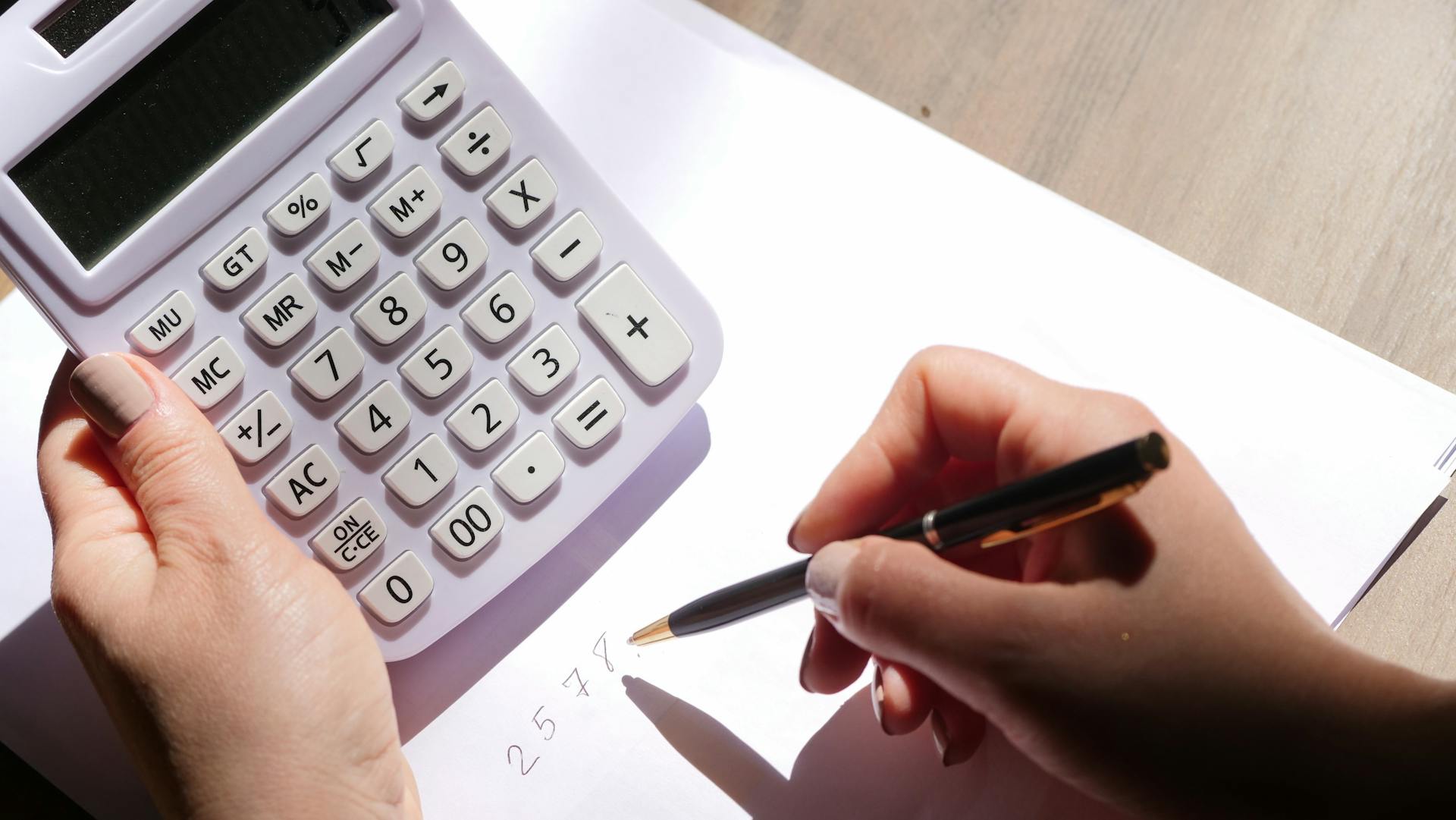
You can use a Coupon Rate Calculator to simplify the calculation process. The calculator provides a formula to calculate the coupon rate.
The Coupon Rate Formula is = (Annual Coupon (or Interest) Payment x 100) / Face Value of Bond. This formula is used in the Coupon Rate Calculator.
To use the calculator, you need to enter the Annual Coupon (or Interest) Payment and the Face Value of Bond. The calculator will then calculate the coupon rate.
The calculator also provides a formula for the Nominal Interest Rate, Capitalization Rate, and Capacity Utilization Rate. These formulas can be used to calculate different financial metrics.
Here are the formulas provided by the calculator:
- Nominal Interest Rate Formula
- Capitalization Rate Formula
- Formula For Capacity Utilization Rate
- Calculate Rate of Return
Frequently Asked Questions
What is the formula for coupon equivalent rate?
The coupon equivalent rate (CER) is calculated by dividing the bond's discount by its market price, then multiplying by 360 and dividing by the number of days until maturity. This formula helps investors compare bond yields across different maturities.
How much interest will you receive annually on a 7% coupon rate bond with a $1000 face value?
You'll receive $70 annually on a $1,000 bond with a 7% coupon rate. This interest is typically paid in two installments of $35 each.
What does a 5% coupon on a bond mean?
A 5% coupon on a bond means the issuer pays $50 per year in interest for every $1,000 face value. This represents the annual interest rate paid to the bondholder.
Featured Images: pexels.com