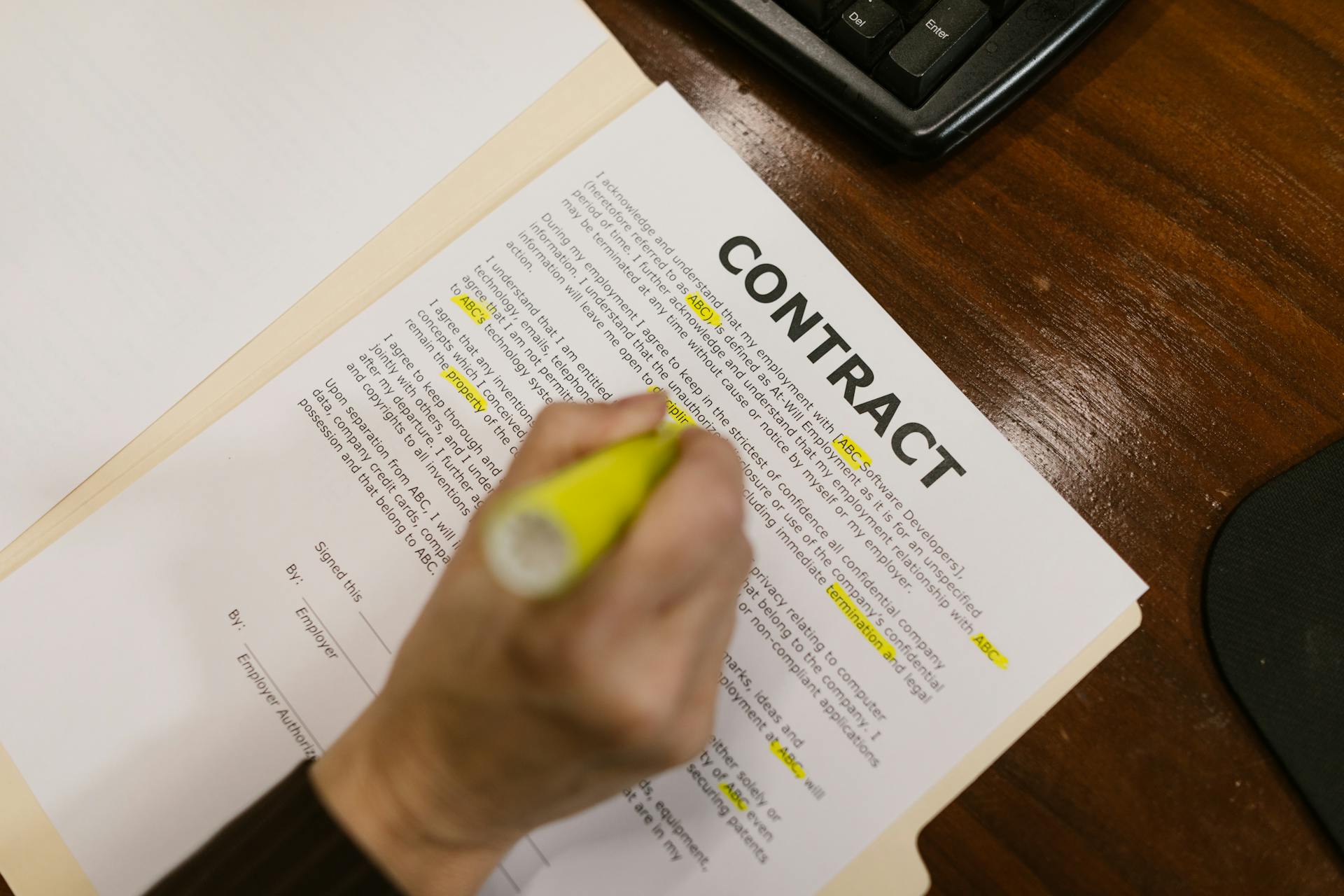
A contingent offer on a house can be a double-edged sword. It's a way for you to make an offer on a home while also protecting yourself in case something goes wrong during the inspection process.
Contingent offers are typically used when a seller is hesitant to accept an offer without some level of assurance that the buyer will follow through. This can be especially true in competitive markets where multiple buyers are vying for a single property.
In a contingent offer, the sale of the house is dependent on the buyer's ability to secure financing, sell their current home, or complete a satisfactory inspection. This means that if any of these conditions aren't met, the buyer can back out of the deal without penalty.
For example, if a buyer makes a contingent offer on a house with a home inspection contingency, they can cancel the sale if the inspection reveals major issues with the property.
A fresh viewpoint: Finance a Phone without Plan
What is a Contingent House?
A contingent house is a property that's been accepted by a buyer, but the sale is dependent on certain conditions being met. These conditions can include things like the buyer selling their current home, obtaining a mortgage, or ensuring the house is in good condition.
The contingent status is literally "depending on certain circumstances", meaning the sale is not yet final. If the conditions aren't met, the buyer is free to walk away, and the house typically goes back on the market.
The seller may have accepted an offer, but the buyer still needs to complete the sale by fulfilling the contingencies. This can take time, and the seller may be able to take their time meeting the contingencies, especially if the offer doesn't have a kick-out clause.
You can still make an offer on a contingent house, and having a backup offer in place can put you in a better position to get the house if the original sale falls through. Your real estate agent can help you submit a backup offer, which means you're next in line if the first deal doesn't work out.
Discover more: What Are Contingent Liabilities
Understanding Contingent Status
A contingent status on a house means the seller has accepted an offer, but certain conditions must be met before closing the deal.
These conditions can include things like an appraisal, inspection, financing, or title search, and if they're not met, the sale will fall through.
A contingent status with a kick-out clause means the seller can cancel the existing contract if they get a better offer, even after accepting the first one.
This can be a big deal for buyers, as it means the deal is far from certain and they need to be prepared for it to fall apart.
Without a kick-out clause, the seller is generally locked in with the current buyer, making the deal much more secure.
There are several types of contingencies, including appraisal, inspection, financing, and title contingencies.
Here are some common types of contingencies:
A buyer's home sale contingency can also be included, which helps protect the buyer from having to own two homes at once.
In some cases, a contingent status may be accompanied by a "no show" designation, which means the seller has decided to no longer show the property or accept other offers.
However, this doesn't necessarily mean the sale is guaranteed to happen – it just means the seller is confident they will meet the contingencies.
For more insights, see: Separated Means
Contingent House Meanings
A contingent house is a property that has had an offer accepted, but the sale is dependent on certain conditions being met. Contingent means the seller has accepted an offer, but the buyer still needs to meet specific requirements before the sale can close.
The conditions can vary, but common examples include an appraisal contingency, inspection contingency, financing contingency, or a buyer's home sale contingency.
A contingent house status can be further categorized into types, including contingent no show, contingent continue to show (CCS), contingent kick out clause, and contingent short sale.
Here are some common contingent statuses and their meanings:
If a buyer's offer is contingent on selling their current home, they may be able to remove the contingency and buy the home even if their current home hasn't sold yet. However, the seller can move forward with another buyer if the original buyer cannot meet the contingency within a specified time frame, usually 24 to 48 hours.
Contingent House Process
The contingent house process can be a bit confusing, but it's actually quite straightforward. A contingent listing means the seller has accepted an offer, but the sale is dependent on certain conditions being met.
A contingent status with a kick-out clause gives the seller a deadline to fulfill all contingencies, while without a kick-out clause, there's no set deadline. This means the seller can take their time meeting the buyer's contingencies.
As a buyer, you can still place an offer on a contingent house, and in some cases, the seller may consider a backup offer. If the original buyer can't meet their contingencies, you'll have the opportunity to move forward with the home.
Here are the steps to make an offer on a contingent home:
- Determine your contingencies: Finance, home sale, and inspection contingency are common.
- Consult with your agent: Work with a real estate agent to ensure your offer is competitive and addresses your contingencies.
- Prepare your offer: Make a competitive offer based on the market and condition of the property, clearly stating your contingencies and a suggested timeline.
- Submit your offer: Present the offer to the seller or seller's agent, highlighting the strengths of your proposal.
If the buyer can't meet their contingencies, they can typically back out of the deal without losing their earnest money deposit. This protection is provided by the contingencies, which give you a way out of the deal if certain conditions aren't met.
Discover more: T Mobile down Payments
How Work
A contingent house offer is a type of offer that includes conditions that must be met before the sale can move forward.
If a buyer makes a contingent offer, they're stating that a certain condition must be met, and if it's not, the contract is void, and the seller can move on to a backup offer.
It's easier to make a contingent offer if you've already found a lender you want to work with, as this can ease sellers' fears of the sale falling through due to lack of financing or the buyer not qualifying for a mortgage.
Contingencies can protect you as a buyer by giving you a way out of the deal if certain conditions aren't met, such as if the home inspection reveals major issues or you can't secure financing.
A contingent listing means the seller has accepted an offer, but the sale depends on the buyer meeting certain conditions, which opens the door for backup offers.
Here's an interesting read: T Rowe 401k Loan
If a property is listed as contingent, it means the seller has chosen to keep the listing active in case certain contingencies aren't met by the prospective buyer.
A pending status indicates the seller and their agent are confident the sale has passed its major hurdles and is on its way to closing.
If contingencies are not met, the buyer can typically back out of the deal without losing their earnest money deposit, which is the protection contingencies offer to buyers.
The seller can then move on to a backup offer, if there is one, or put the property back on the market.
A contingent offer can be a good option for buyers, but it's essential to use the contingency clause judiciously to make sure your offer is as attractive as it can possibly be.
In a "hot" market, adding contingencies can put home buyers at a disadvantage, especially if there's no shortage of buyers.
If this caught your attention, see: Car Loans for First Time Buyers with No Credit
Steps to Make
Making a backup offer on a pending home can be a long shot, but being prepared and presenting a strong proposal can increase your chances.
Determine your contingencies, which may include finance, home sale, and inspection contingency, to ensure you're prepared for any outcome.
Consult with your agent to assess whether the seller might consider backup offers and to develop a strategy. Your agent will help you create a competitive yet reasonable offer based on the market and condition of the property.
Prepare your offer by considering a competitive purchase price, possibly similar to or slightly higher than the pending offer, and specifying your contingencies, such as financing or inspections. Include an expiration date for your offer to prompt the seller to respond promptly.
A well-structured offer may include the following elements:
- Purchase price: This is the price you're offering to pay for the home.
- Contingencies: Specify any conditions that must be met before the sale can proceed, such as securing financing or a satisfactory home inspection.
- Expiration date: Set a deadline for the seller to respond to your offer.
- Earnest money deposit: Include a deposit to show your serious intent and good faith.
Regularly check in with your agent to see if there's any movement on the pending sale. If the primary offer falls through, be prepared to act quickly to finalize negotiations.
Should I Buy a House?
Buying a house can be a thrilling experience, but it's essential to approach it with a clear understanding of the process. You should anticipate the original contract going through to close.
Looking at a house that's listed as contingent won't hurt anything. It's a good idea to submit a backup offer, if possible, but don't get your hopes up.
Difference Between
If a home is in contingent status, it's still technically active, meaning the seller can receive other offers. This is because the buyer and seller haven't yet finalized the deal.
A contingent status has a deadline to fulfill all contingencies, unless there's a kick-out clause, which allows the seller to take their time meeting the contingencies. Without a kick-out clause, the seller can take as long as they want.
On the other hand, a pending status means the seller and their agent are confident the sale has passed its major hurdles and is on its way to closing. This status is no longer active, and the home can no longer hold showings for other prospective purchasers.
If this caught your attention, see: Contingent Contract
Other offers can typically still be made on a property in contingent status, depending on how the buyer and seller structure the contingency agreement. The original buyer who placed an offer on the home will have first dibs, but if they can't remove the contingencies, others will have the opportunity to move forward with the home.
A property listed as contingent is different from one that is pending, as contingent status means the seller has accepted an offer, but is keeping the listing active in case certain contingencies aren't met by the prospective buyer.
Recommended read: Credit Unions That Offer Personal Lines of Credit
Contingent House Risks and Consequences
If a seller fails to satisfy the contingencies of your offer, the sale won't continue on under the agreed-upon terms. Your earnest money deposit will be refunded, or you can continue the home search or renegotiate with the seller in hopes of reaching a new deal.
You can place an offer on a contingent house, and most contingent listings will allow other buyers to do so. This is because contingent deals are still technically active listings and can fall out of the contract if the buyer doesn't meet the requested provisions.
Suggestion: What Banks Offer Home Equity Loans
The seller will typically give the initial prospective buyer a certain amount of time to remove the contingency, usually 24 to 48 hours, before considering other offers. If the buyer can't purchase the home until their current house sells, the seller can move forward with a second buyer.
It's a good idea to look at a house listed as contingent, and you can even submit a backup offer, if possible. Just keep in mind that you should anticipate the original contract going through to close.
Consequences of a Failed Deal
A failed deal can be frustrating, but it's not the end of the world. If a seller fails to satisfy the contingencies of your offer, the sale won't continue on under the agreed-upon terms.
Your earnest money deposit will be refunded, or you can continue the home search or renegotiate with the seller in hopes of reaching a new deal. This is a common outcome when contingencies aren't met.
You can still place an offer on a home that's listed as contingent. Most contingent listings will allow other buyers to place offers on the home, giving you a chance to snag the property if the initial buyer can't remove the contingency.
If the buyer can't remove the contingency, the seller may consider your offer and allow you to move forward with the home. This is because the initial buyer's deal may fall through, and the seller wants to minimize losses.
If the buyer's contingency depends on selling their current home, the seller may receive a second offer while the home is under contingent status. In this case, the seller will give the initial buyer a certain amount of time to remove the contingency, typically 24 to 48 hours.
Take a look at this: What Is a Contingent Beneficiary
Is Waiving Ever a Good Idea?
Waiving contingencies can be a good idea in a seller's market, where there are more buyers than homes available, as it may make your offer stand out from other offers the seller receives.
In such a market, waiving contingencies can increase your likelihood of the seller accepting your offer.
However, it's essential to carefully consider the implications of waiving any contingencies before doing so.
Contingent House Inspection and Appraisal
A home inspection contingency allows a buyer to back out of a purchase contract if their home inspection reveals certain issues with the property.
The inspection typically assesses the condition of the home, checking out all aspects that might not be noticeable, such as landscape grading and exterior flashing. If the inspection reveals serious flaws, the buyer may request that the seller repair the issues or lower the purchase price.
A home inspection contingency allows buyers to respond to results within a specific time frame, giving them the opportunity to negotiate with the seller.
If the home inspection finds several issues, the buyer can place a contingency to fix those issues or request a lower price. If the problems are not resolved or the price is not reduced, the buyer can leave the deal.
An appraisal contingency is generally implemented to ensure a buyer isn't overpaying for a property. If the home does not appraise for the same dollar amount the sellers are asking for, the buyer can request a lower price or walk away from the deal.
Lenders require an appraisal to ensure the loan amount makes sense based on the property's value. If the appraisal comes in lower than expected, the buyer can try to renegotiate with the seller or walk away from the deal.
A low appraisal can impact the loan amount and potentially derail the transaction. This is another area where attention is critical, as it can affect the buyer's ability to get the loan.
Other potential inspections the buyer may request include radon testing, well water testing, checking for mold, and testing for lead paint. These inspections can help identify potential issues that may not be immediately apparent.
For more insights, see: No Appraisal Mortgage Loans
Contingent House Mortgage and Financing
A mortgage contingency is a financing contingency that gives the buyer a specific period of time to secure home financing. This contingency can be mostly handled early on in the process.
To secure preapproval, you want to provide a lender with paperwork that allows them to verify your finances are in order. A preapproval is required for actual mortgage approval, unlike a prequalification which involves self-reporting your financial information.
A preapproval doesn't guarantee you'll ultimately receive final mortgage approval. This will come later on in the process once the lender has taken an even deeper dive into your finances.
A mortgage contingency gives the buyer a specific timeframe to get pre-approved and finalize their financing. If they fail to get the loan, they can withdraw from the deal without penalty.
As a buyer, it's essential to work closely with your lender to meet the financing deadline. This will help you prepare for scenarios where you may not qualify or find a better rate elsewhere.
On a similar theme: Refinance Auto Loan Bad Credit Upside down
Contingent House Sale and Purchase
A contingent house sale and purchase can be a bit tricky, but it's not a deal-breaker. In fact, most contingent listings will allow other buyers to place offers on the home.
You can still make an offer on a contingent house, and it's not uncommon for sellers to receive multiple offers. However, the original buyer who placed an offer on the home will have first dibs, and they can remove the contingency and move forward with the house.
If the original buyer can't remove the contingency, you'll have the opportunity to move forward with the home. The seller will typically give the initial buyer 24 to 48 hours to remove the contingency, and if they can't, the seller can move forward with a second buyer.
Making Offers
Making Offers is a crucial part of the home buying process, especially when dealing with contingent or pending listings.
While it's true that these statuses indicate an accepted offer, it doesn't always mean the sale is guaranteed.
In fact, statistics show that even a small percentage of these deals can fall through.
As a mortgage professional, understanding how to navigate these situations is crucial for advising your clients and potentially salvaging what might seem like a lost opportunity.
It's essential to remember that a contingent or pending listing doesn't mean all hope is lost for your clients.
There's still a chance for your clients to make an offer and potentially secure the house they want.
Sale
A home sale contingency can protect you from losing your new home purchase if your current home doesn't sell. This contingency allows the sale of the new home to be contingent on the sale of your current home.
It's common for sellers to reject this contingency in a seller's market, where they know they'll get an offer without it. However, some sellers might be willing to consider a later-than-normal closing date, which gives you more time to sell your house.
If this caught your attention, see: Usaa New Commission Officer Loan
Your lender may be able to help you with a bridge loan or suggest other financial strategies to carry on with the purchase of the new house before selling your current house. This can be a good option if you're in a situation where you need to move quickly.
A short sale is when the seller accepts less money than is owed on the mortgage, and this process can often take months to complete. A Contingent: Short-Sale status indicates that the home is no longer for sale due to an accepted offer, but the short sale is still in process.
It is usually easier to sell a house before buying another one, but financing and timing don't always work out perfectly. A home sale contingency gives the buyer time to sell and settle on their existing home to finance the new one.
If a house goes from active to contingent, it doesn't mean it's off the market entirely. Other offers can still be made on the property, depending on how the buyer and seller structure the contingency agreement.
You might like: Short Term Bridge Loan Rates
Contingent House Legal Considerations
As a homebuyer, it's essential to understand the legal considerations associated with buying a contingent house. Contingent houses are still technically active, meaning other offers can still be made on the property, depending on how the buyer and seller structure the contingency agreement.
Contingency clauses can protect the buyer by giving them a way out of the deal if certain conditions aren't met. For instance, if the home inspection reveals major issues or the buyer can't secure financing, they can walk away without losing their earnest money deposit.
The buyer should base their decision on contingencies on their circumstances, the real estate market, and their real estate agent's recommendations. States have different laws surrounding contingencies, so it's best to speak with your Realtor about the current local rules for contingent homes.
What Does Estate Mean?
Estate means a large area of land, typically including buildings and surrounding property, that is owned by an individual or organization. In the context of real estate, the term is often used to refer to a house or a piece of property.
Contingent contracts are often tied to the sale of an estate, as we'll explore in more detail. The term contingent literally means "depending on certain circumstances", which is crucial to understand when navigating the complexities of real estate transactions.
Consider reading: A Convertible Arm Means the Loan
11 Key Legal Considerations When Buying
Contingent house sales can be complex, and it's essential to understand the legal considerations involved. Contingent means the seller has accepted an offer, but certain conditions need to be met before the sale closes.
Contingency clauses can be designed to protect the buyer or seller's interests and can be waived by the respective party. If the buyer and seller have agreed to press forward with a transaction provided the home inspection comes back clean, the sale of the house is contingent on the inspection not revealing major issues.
As a buyer, you can choose the contingencies you include in your offer – and whether you include any at all. You should base this decision on your circumstances, the real estate market, and your real estate agent's recommendations.
Homes in outstanding locations typically won't last long, and once they are under contract, they will reflect as 'contingent.' If this home is one you're set on, you'll want to make the backup offer so that in the unlikely event the contract does fall through; you will have first dibs on the potential purchase.
Expand your knowledge: Borrowing Money from a Friend Contract
The contingency clause usually protects the buyer and sometimes the seller if the parties decide to terminate. States have different laws surrounding contingencies, so you'll want to speak with your Realtor about the current local rules for contingent homes.
If the home inspection uncovers an issue or multiple issues that would cause the sale to fall through, the buyer and seller can renegotiate the contract. Or, the buyer can bow out of the deal and reclaim their earnest money.
Contingencies protect you by giving you a way out of the deal if certain conditions aren’t met. For example, if the home inspection reveals major issues or you can’t secure financing, you can walk away without losing your earnest money deposit.
You should always consult your real estate agent before placing an offer on a house, especially one with contingencies. Homes in outstanding locations typically won't last long, and once they are under contract, they will reflect as 'contingent.'
On a similar theme: Earnest Money Lenders
Contingent House Short Sale and Probate
A contingent house sale can be a bit more complicated than a standard sale. These special cases can take longer to close.
A short sale is one type of contingent house sale, where the seller tries to sell the home for less than what's owed on the mortgage. The mortgage lender has to approve the deal.
This can involve extra steps and potential delays. It's essential to be prepared for these possibilities.
Short Sale
A short sale is when the seller, often a bank or other mortgage lender, agrees to accept less money than is owed on the mortgage.
The short-sale process can take months to complete, which can be frustrating for buyers and sellers alike.
A Contingent: Short-Sale status indicates that the home is no longer for sale due to an accepted offer, but the short sale is still in process.
This status means that the sale is contingent on the short sale being approved, which can create uncertainty for all parties involved.
On a similar theme: Short Term House Loan
Short Sale in Probate
A short sale in probate is a complex process that involves both a short sale and a probate sale. It can take longer to close and involves extra steps, so be prepared for potential delays.
The seller is trying to sell the home for less than what's owed on the mortgage, and the mortgage lender has to approve the deal. This can be a lengthy and challenging process.
Both short sales and probate sales have their own set of rules and regulations that need to be followed. The mortgage lender may have specific requirements that need to be met before they will approve the short sale.
Featured Images: pexels.com