Vertical integration can be a double-edged sword for businesses. It requires significant upfront investments in new technologies and processes, which can be a major financial burden.
In the case of companies like Walmart, which has vertically integrated its supply chain, the costs of implementing new systems and training employees can be staggering. Walmart spent over $1 billion on its supply chain overhaul.
A lack of flexibility is another con of vertical integration. Companies that integrate vertically often find it difficult to pivot quickly in response to changing market conditions. This can lead to costly mistakes and lost opportunities.
For example, the oil and gas company, ExxonMobil, has vertically integrated its operations, but this has made it harder for the company to adapt to shifts in global demand and regulatory requirements.
For more insights, see: Integrated Master Schedule
What Is Vertical Integration?
Vertical integration is a business strategy where a company takes control of multiple stages of production or distribution to increase efficiency and profit.
A good example is when a movie distributor decides to produce content and distribute it at the same time, as seen in backward vertical integration. This allows the company to have more control over the entire process.
Taking control of multiple stages can be beneficial, but it also increases costs and complexity. The movie distributor, for instance, would need to invest in production equipment and hire staff to produce content.
This approach can be risky, as a single misstep in production or distribution can have far-reaching consequences. The movie distributor would need to manage the risks of producing and distributing content simultaneously.
The goal of vertical integration is to increase profit margins by reducing costs and improving efficiency. By controlling multiple stages, the company can eliminate intermediaries and negotiate better deals with suppliers.
However, this approach can also lead to a loss of focus on core competencies and a lack of expertise in certain areas. The movie distributor may not have the necessary skills to produce high-quality content.
The decision to pursue vertical integration should be based on a thorough analysis of the company's strengths and weaknesses. It's essential to weigh the potential benefits against the potential risks and challenges.
Ultimately, vertical integration can be a complex and high-risk strategy that requires careful planning and execution.
Risks and Disadvantages
Vertical integration can be a complex and costly endeavor, and understanding its risks and disadvantages is crucial for making informed decisions. High initial costs, including significant capital investment, can strain financial resources.
Operational complexity is another significant risk, as managing diverse operations can be challenging and resource-intensive. This can lead to higher operational costs and reduced flexibility.
Reduced flexibility is a major disadvantage, as dependence on internal operations can limit the ability to adapt to market changes. This can be particularly problematic for companies that operate in highly dynamic or rapidly changing markets.
Here are some of the key disadvantages of vertical integration:
- High Costs: Acquiring or merging with another company requires significant financial investment.
- Integration Challenges: Combining operations, cultures, and systems can be complex and time-consuming.
- Antitrust Concerns: Vertical mergers may raise regulatory concerns and require approval from authorities.
Additionally, vertical integration can fail due to high costs, operational complexity, and reduced flexibility.
What Is a Merger?
A merger is a business combination where two or more companies come together to form a new entity. This can be a horizontal, vertical, or conglomerate merger.
High costs are a significant disadvantage of a merger, as merging companies may need to invest heavily in integrating their operations. Fumao Clothing considers these costs when evaluating potential mergers.
Merging companies may face integration challenges, such as cultural and operational differences, which can complicate the integration process. These differences can make it difficult to achieve a smooth transition.
Potential antitrust issues can also arise from a merger, which can lead to regulatory hurdles and financial penalties.
Key Risks

Vertical integration can be a complex and costly endeavor, and it's essential to understand the key risks involved.
High initial costs are a significant risk of vertical integration, requiring significant capital investment to acquire or build facilities.
Operational complexity can strain resources and lead to inefficiencies, making it challenging to manage diverse operations.
Reduced flexibility is another risk, as dependence on internal operations can limit the ability to adapt to market changes.
Here are the key risks of vertical integration in a concise list:
- High Initial Costs: Acquiring or building facilities requires significant capital investment.
- Operational Complexity: Managing diverse operations can be challenging and resource-intensive.
- Reduced Flexibility: Dependence on internal operations can limit the ability to adapt to market changes.
Impact on Businesses
Vertical integration can be a significant burden on a business's budget. High initial investment and operational complexity can strain budgets, making it difficult for companies to stay afloat.
Managing a vertical integration requires specialized knowledge and skills, which can be a challenge for businesses to find and retain the right talent. This is because managing multiple stages of the supply chain requires expertise.
One of the biggest drawbacks of vertical integration is its impact on a business's ability to respond to market changes. Dependence on internal operations can limit the ability to adapt quickly to shifting market conditions.
Here are some of the key disadvantages of vertical integration on businesses:
- Increasing Costs
- Reducing Agility
- Requiring Expertise
Challenges and Limitations
Vertical integration can be a complex and costly endeavor. High costs can strain financial resources, making it difficult for companies to maintain their operations.
Operational complexity is another common challenge. Managing multiple stages of the supply chain can lead to inefficiencies and losses.
Reduced flexibility is also a limitation of vertical integration. Dependence on internal operations can limit a company's ability to adapt to market changes.
Manufacturing companies that control access to key raw materials and components through vertical integration may create barriers to market entry. This can limit competition and establish a strong market position.
However, companies that engage in vertical integration may face antitrust regulators who believe they are influencing market concentration.
Here are the common reasons for the failure of vertical integration:
- High Costs
- Operational Complexity
- Reduced Flexibility
Examples
Vertical integration can lead to reduced competition, as seen in the case of the oil industry, where a few large companies control a significant share of the market. This can stifle innovation and limit consumer choice.
In the example of the automotive industry, companies like Toyota and Ford have vertically integrated their supply chains, but this has led to higher costs and reduced efficiency. This is because they have to manage and invest in their own manufacturing and distribution processes.
For instance, in the case of the aluminum industry, Alcoa's vertical integration allowed it to control the entire production process, from mining to smelting to manufacturing. However, this has also made it vulnerable to fluctuations in raw material prices and supply chain disruptions.
Ikea
IKEA is a great example of a company that's taken control of its supply chain. It's known as a flat-pack retailer, selling mainly wooden furniture and other fixtures and accessories directly to consumers.
IKEA has made significant moves to ensure vertical integration, starting with the purchase of Forest of Romania in 2015. This allowed the company to control much of its raw material production.
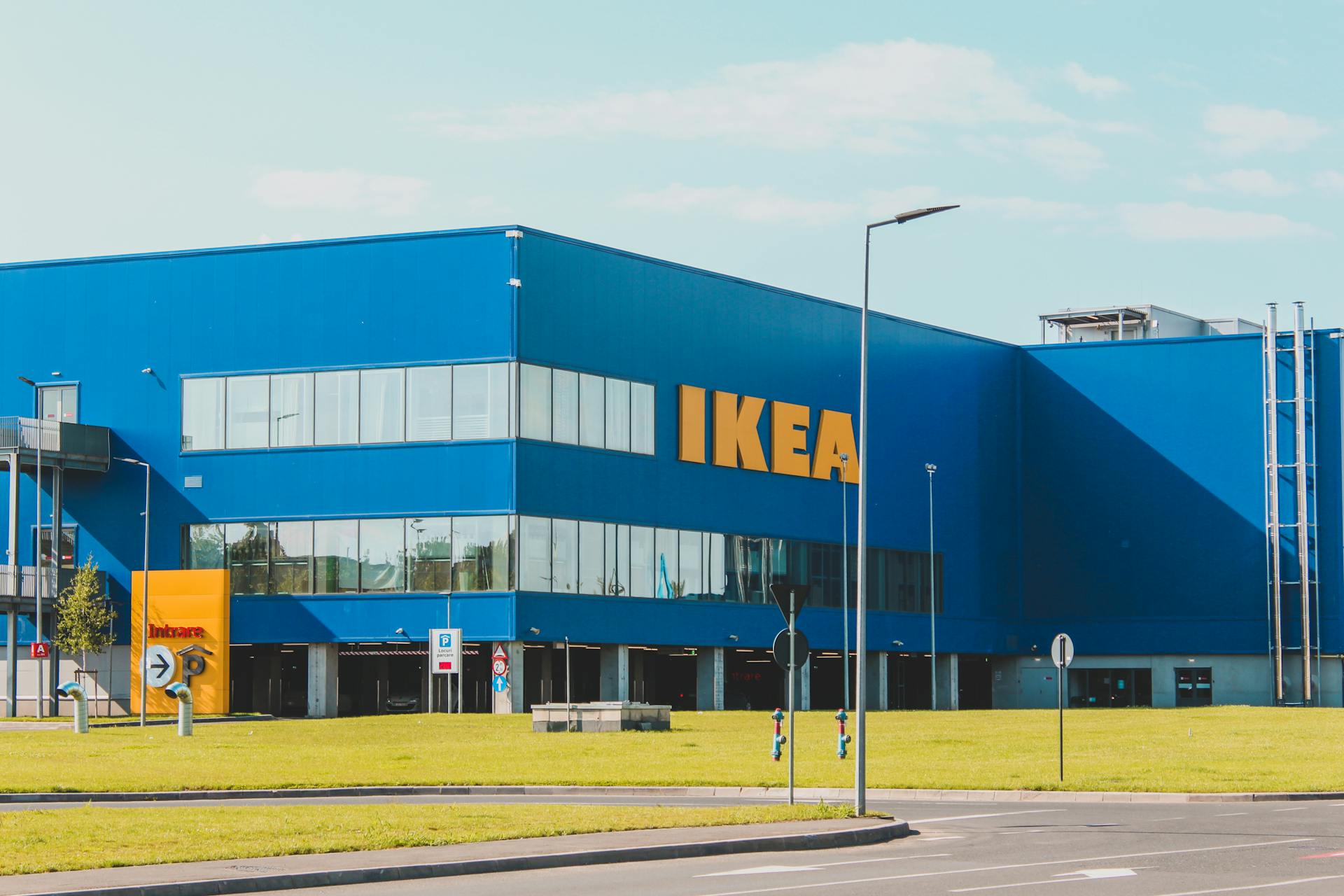
In 2018, IKEA expanded its control by purchasing forest land in Alabama, aiming for a sustainable supply chain. This move further solidified its grip on the production process.
IKEA controls the manufacturing process through its subsidiary Swedwood, which was renamed IKEA Industries in 2013. This allows the company to oversee the entire production process, from raw materials to finished products.
Netflix
Netflix is a streaming media service provider that interacts directly with consumers, offering a platform for the production of movies, television, and other content.
It relies on third parties to deliver new content to its subscribers and has to pay a premium, especially for large shows.
In 2013, Netflix decided to vertically integrate and enter the production business, producing shows and movies and offering a distribution network through its streaming service.
This strategy helped differentiate it from competitors and control the types of shows available.
By controlling production and distribution, Netflix was able to offer a unique selection of content that set it apart from other streaming services.
Featured Images: pexels.com