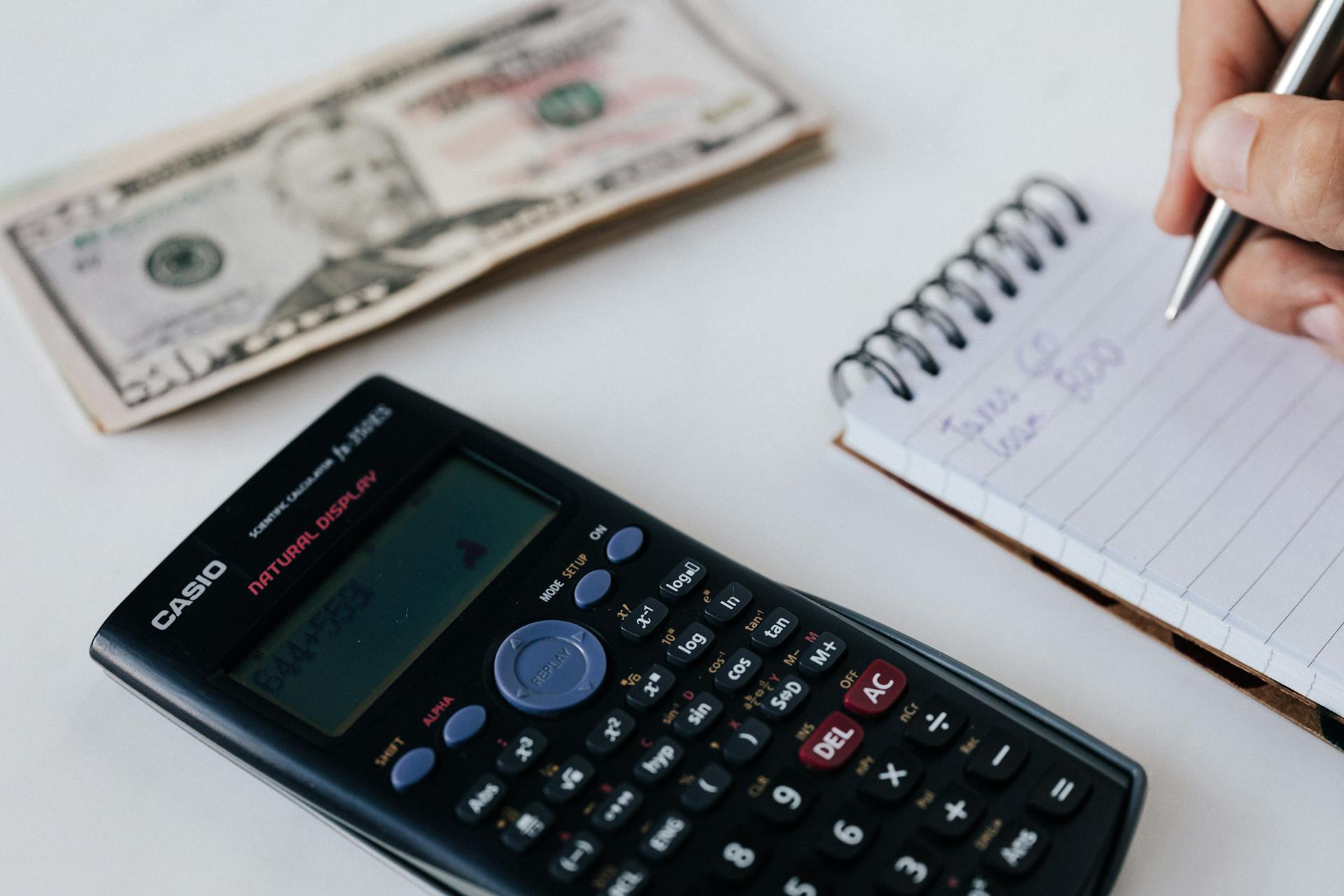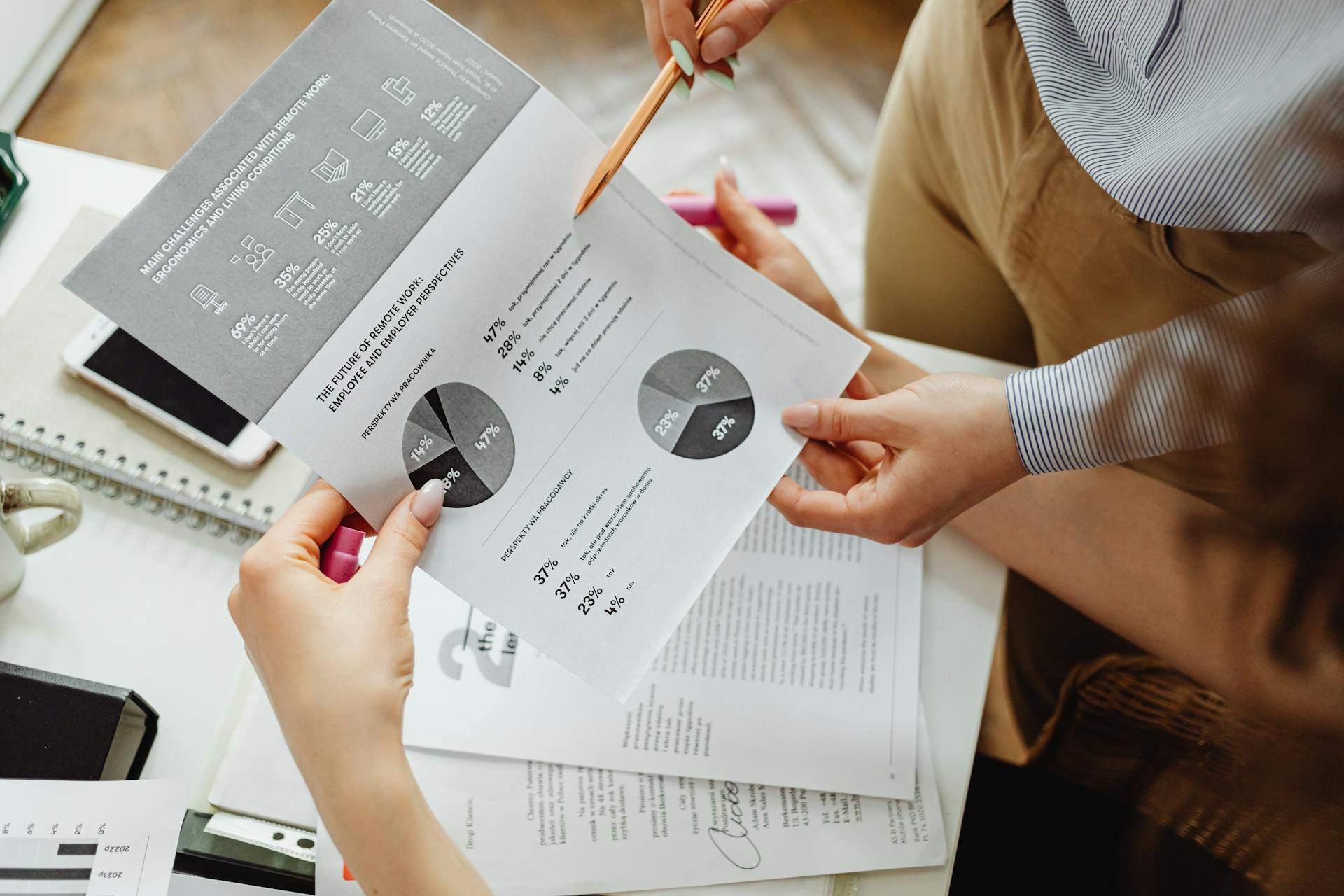
Let's break down the main difference between checking and savings accounts. A checking account is meant for everyday spending and transactions, with no restrictions on the number of withdrawals or deposits you can make.
You can write checks, use your debit card, or make online transactions from your checking account. This convenience comes with some fees, like overdraft charges if you don't have enough money in your account.
In contrast, a savings account is designed for long-term savings and earning interest on your deposits. You can still access your money, but there are typically restrictions on the number of withdrawals you can make per month.
Savings accounts often come with higher interest rates and lower fees, making them a great option for building an emergency fund or saving for a big purchase.
Here's an interesting read: The Four Main Types of Money Are
Key Features and Benefits
Checking and savings accounts have distinct features that set them apart.
Checking accounts are designed for spending, with multiple ways to make payments and withdrawals, but they usually don't pay interest. Savings accounts, on the other hand, are designed for saving and earning interest on your balance.
Here are some key features and benefits of each:
Savings accounts also offer benefits like FDIC insurance, interest earnings, and access to transaction history and statements online.
What Is A Savings Account
A savings account is a type of deposit account that allows you to earn interest on your money while still having easy access to it.
Savings accounts typically offer a low-risk, low-return option for storing your money, with interest rates ranging from 0.01% to 2.00% APY.
You can open a savings account at a bank or credit union, and it's usually a good idea to shop around to compare rates and terms.
Savings accounts often come with minimum balance requirements to avoid monthly maintenance fees, which can range from $5 to $25.
Having a savings account can help you build an emergency fund to cover unexpected expenses, such as car repairs or medical bills.
Readers also liked: Concept of Value of Money
Features
A checking account is designed for spending, making it easy to track your spending online and manage your finances. You can make multiple payments and withdrawals, and it's usually easy to get cash at an ATM.
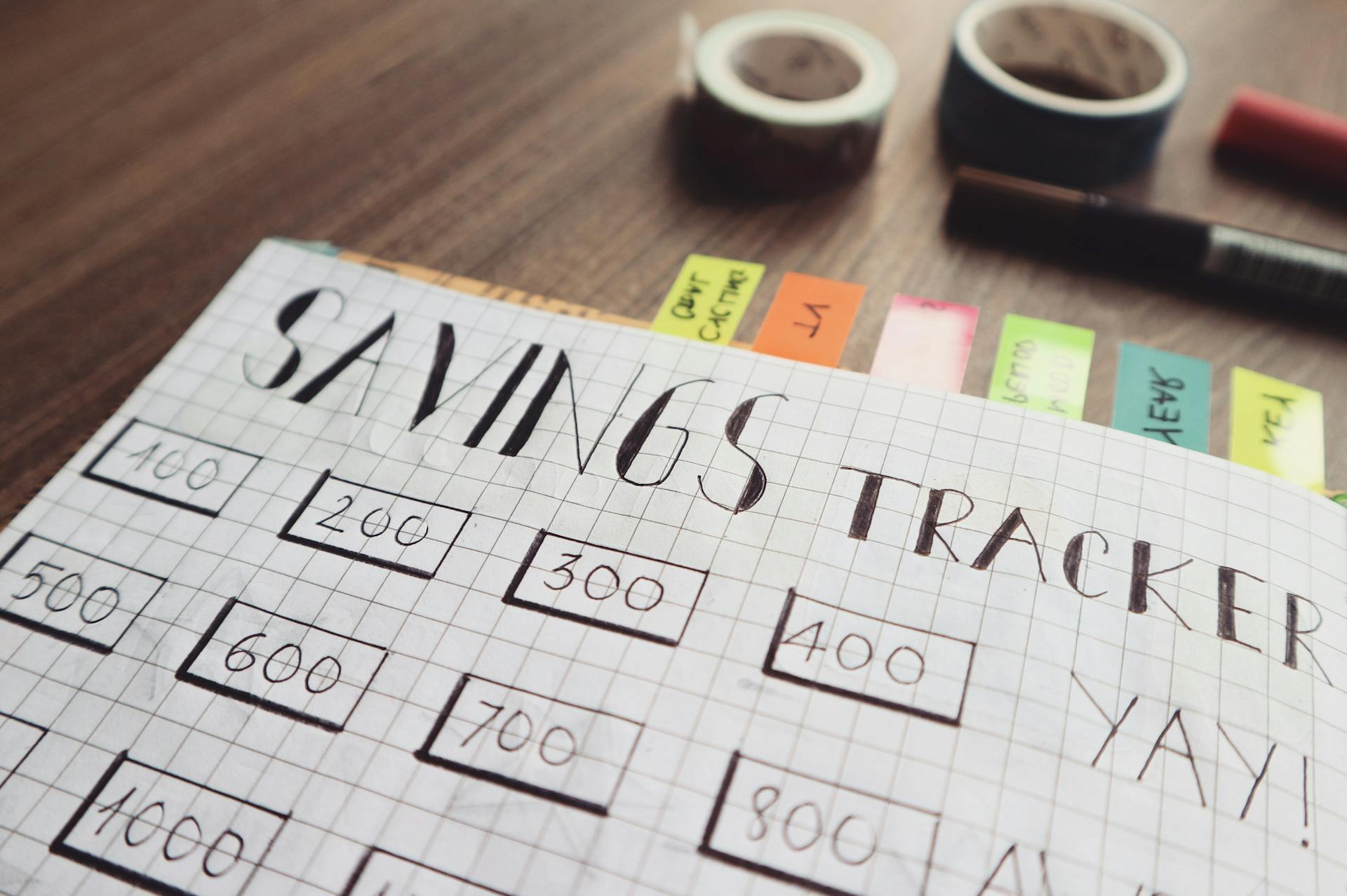
On the other hand, a savings account is designed for saving, limiting access to avoid impulse buys. This can help you build a balance over time and earn interest on your savings.
Here's a comparison of checking and savings accounts:
Some savings accounts, like the Huntington savings account, offer additional benefits such as FDIC insurance, interest earnings, and access to transaction history and statements online.
Benefits
Having a savings account can be a great way to grow your personal wealth, and one of the benefits is that deposits are FDIC insured, up to insurance limits. This means your money is protected in case the bank fails.
You can also earn interest on your savings, which can add up over time. In fact, savings accounts tend to have higher interest rates than checking accounts.
One of the things I like about savings accounts is that you can access your account balance online, in the mobile app, at an ATM, and even through text alerts. This makes it easy to keep track of your money.
You might enjoy: What Are the Four Functions of Money
A savings account also gives you access to household budget and digital money management tools, which can help you stay on top of your finances. And, with online banking, you can view your transaction history and statements at your convenience.
To help you save for specific goals, many savings accounts come with features like Savings Goal Getter, which allows you to create up to 10 goals, including an emergency fund on your savings and money market accounts.
How They Work
Checking and savings accounts work differently in terms of liquidity and accessibility.
Savings accounts are designed for long-term savings and typically have higher interest rates than checking accounts.
They often come with restrictions on withdrawals and transfers, such as limiting the number of transactions per month.
What Is A Checking Account
A checking account is a type of bank account that allows you to deposit, withdraw, and manage your money.
You can think of it like a digital wallet, but instead of using a physical card, you can access your money through online banking or a mobile app.
Checking accounts typically come with a debit card, which you can use to make purchases or withdraw cash from an ATM.
You can deposit money into your checking account through direct deposit, mobile deposit, or by visiting a bank branch in person.
A checking account is usually linked to a debit card, which has a unique account number that's used for transactions.
Most checking accounts come with a minimum balance requirement, which means you'll need to keep a certain amount of money in the account to avoid fees.
You can avoid these fees by keeping your account balance above the minimum requirement or by opting for a checking account with no minimum balance.
Some checking accounts also come with a checking account statement, which shows your account activity and balance over a specific period of time.
Readers also liked: Why Credit Card Debts Are Called Unsecured Debt
How Do These Payment Methods Work?
So, let's dive into how these payment methods work.
Contactless payments use near-field communication (NFC) technology to enable transactions between your card and a payment terminal, allowing for quick and easy payments.

This technology is based on radio waves and doesn't require you to physically insert your card into a terminal.
Payment terminals use a unique code to verify the transaction, which is then transmitted to your bank for authorization.
The entire process typically takes just a few seconds.
Cryptocurrencies, on the other hand, use a decentralized system where transactions are recorded on a public ledger called a blockchain.
Transactions are verified by powerful computers around the world, known as nodes, before being added to the blockchain.
This verification process is what gives cryptocurrencies their security and transparency.
Mobile wallets store your credit or debit card information on your phone, making it easy to make payments.
To make a payment, you simply hold your phone near a payment terminal and authenticate the transaction using a PIN, fingerprint, or face recognition.
This method is convenient and eliminates the need to carry cash or cards.
For more insights, see: How to Properly Use Credit Cards
Limitations and Fees
Checking and savings accounts both come with limitations and fees, so it's essential to be aware of them before opening an account.
Overdraft fees are common in checking accounts, and you may also be charged monthly maintenance fees unless you meet the bank's requirements. Some banks will waive maintenance fees if you bank online, set up direct deposits, or open a student account.
You can avoid minimum balance requirements by banking online or setting up direct deposits. This can save you money and reduce the risk of incurring fees.
Savings accounts have their own set of limitations, including lower interest rates and restrictions on withdrawals. You may be subject to fees if you make too many withdrawals or don't maintain a minimum balance.
Worth a look: Online Banking Account No Deposit
No Fees?
You might be thinking, "No fees? That sounds too good to be true!" Unfortunately, many checking accounts do come with fees, such as overdraft, ATM, and monthly maintenance fees.
A bank may waive maintenance fees if you meet the checking account requirements. There are some free checking accounts available, though, so it's worth shopping around to find one that fits your needs.
Always review the bank's fee schedule before opening an account to avoid any surprises. You can also check into options for overdraft protection if you think you may need it.
Banking online can help you avoid minimum balance requirements, and setting up direct deposits can also help you stay out of trouble.
What Are Limitations?
Savings accounts have some limitations that you should be aware of. They offer relatively lower interest rates than other types of accounts and investments.
You may be subject to fees if you make too many withdrawals or don't maintain a minimum balance. Some accounts may have stricter requirements than others, so it's essential to review the terms and conditions.
Regulation D, a rule imposed by the Federal Reserve, used to limit withdrawals from savings accounts to a maximum of six per month. This included various types of transactions, such as ACH withdrawals, overdraft transfers, and online banking transfers.
If you exceed the limit, your account provider may charge excess withdrawal fees. However, some financial institutions may still charge these fees even after Regulation D was lifted in April 2020.
Unlimited withdrawals from savings accounts are allowed when made in person, via mailed request, or at an ATM.
Recommended read: Different Types of Saving Accounts
Premium
Premium accounts can be a game-changer for those with enough assets to qualify.
Some banks offer premium checking accounts that come with perks like ATM reimbursements.
These accounts often require a minimum balance to qualify, but the benefits can be well worth it.
For example, premium checking accounts may offer discounted mortgage rates, which can save you thousands of dollars in interest over the life of the loan.
If you're considering upgrading to a premium account, be sure to research the specific requirements and benefits of each option.
Intriguing read: Saving Accounts Benefits
Choosing the Right Account
Choosing the right account can be overwhelming with all the options available. No monthly fees are a must-have, as they can add up quickly over time.
Some checking accounts come with decent interest rates, but savings accounts typically offer higher rates, especially for high balances. It's essential to compare fees and withdrawal restrictions when shopping for a savings account.
Here are some key questions to consider when choosing a checking or savings account:
- Fees: Are there monthly maintenance fees, and can they be waived easily?
- Minimum balance: Is there a minimum balance requirement to avoid fees?
- ATM access: Does the account come with a debit card or ATM card for easy access to your money?
- Interest: Does the account earn interest, and what is the APY?
- Special perks: Are there any promotional deals or rewards programs available?
By considering these factors, you can choose the right account that meets your needs and helps you manage your money effectively.
How to Choose
Choosing the right account for your needs can be overwhelming, especially with all the options available. First, consider the fees associated with the account, as monthly maintenance fees can add up over time. Look for accounts that either don't charge a maintenance fee or have an easy way to waive it.
To avoid fees, it's essential to choose an account that offers free access to nationwide ATM networks, allowing you to withdraw cash without incurring extra charges. Some checking accounts even come with sign-up bonuses, which can be a great incentive to open an account.
The interest rate is another crucial factor to consider, especially for savings accounts. A higher interest rate means you'll earn more money, but be aware that some savings accounts may come with balance limits and spending requirements.
Consider your banking needs and whether you require online and mobile banking tools to manage your money digitally. Some banks offer a wide range of ATM locations, while others may have limited branches.
Additional reading: Marcus Saving Account Rate

Here are some key questions to ask yourself when choosing a checking or savings account:
- What are the fees associated with the account?
- Is there a minimum balance requirement?
- Does the account earn interest, and, if so, what is the APY?
- Are there daily limits on ATM withdrawals or deposits?
By considering these factors and doing your research, you can find the right account for your needs and start building a stronger financial future.
Best Choice for Me
Having both a checking and savings account can be a smart move. It allows you to keep your everyday spending money separate from your long-term savings.
You can easily transfer money between linked checking and savings accounts, which can help you avoid overdraft fees. This is especially helpful if you have a debit card connected to your checking account.
Frequently dipping into your savings account can negate your efforts to grow your savings, so be mindful of this. It's essential to budget your money wisely to make the most of your savings.
Opening a bank account is a crucial step toward managing your money and building your financial foundation over time. Consider what you need from your bank account and choose the accounts that are right for you.
Here's a quick summary of the benefits of having both a checking and savings account:
Santander Bank offers a range of checking and savings options, including joint accounts. You can visit their website or speak with one of their banking associates to learn more about their personal banking products.
How Much Money Should You Have in Savings
Having a cushion in your savings account can be a lifesaver in case of an emergency. Aim to save at least one to three months' worth of expenses, so you can cover your living costs and bills if needed.
If you're not sure where to start, consider your bank's minimum balance requirements for savings accounts. You'll want to keep enough money in your account to avoid service charges that can eat away at your balance.
Saving one to three months' worth of expenses will also give you peace of mind and financial security. It's a good idea to review your budget and adjust your savings goal accordingly.
For more insights, see: Should I Open a Saving Account
Interest Rates and APYs
Interest rates and APYs can be a bit confusing, but essentially, they determine how much interest you earn on your savings. The average savings account rate is just 0.40%, but some banks and credit unions offer much more than the average.
A higher APY can make a big difference in your savings balance. For example, if you deposit $5,000 in an account that earns 4% APY, you would have about $200 more after a year compared to an account that earns 0.05% APY.
Interest rates are variable, meaning they can change over time. This is why it's essential to check the rate regularly and consider opening a CD or no-penalty CD if you want a fixed rate.
Take a look at this: What Are Saving Account Interest Rates
Value of High APYs
High APYs can make a big difference in growing your savings over time. The average savings account rate is just 0.40%, but some banks and credit unions offer much more than the average.
You might like: Average American Saving Account Balance
A high APY can earn you significantly more interest than a low one. For example, if you deposit $5,000 in an account that earns 0.05% APY, you'll earn about $3 after a year.
The best savings accounts have rates around 4% APY or higher. This means you could earn about $200 more after the same time period if you deposit that cash in an account that earns 4% APY.
Curious to learn more? Check out: 4 Saving Account
Fixed Interest Rates
Fixed interest rates aren't typically found on savings and checking accounts, which have variable rates that can change over time. If you're looking for a fixed rate, consider opening a CD instead.
A no-penalty CD is an option if you want a fixed-rate account that gives you access to your money before the end of the term. This way, you can have some flexibility if you need to withdraw your funds.
Deposit accounts at most banks and credit unions are federally insured up to $250,000 per depositor. This means your deposit is protected, up to the insured amount, if the bank or credit union goes out of business.
See what others are reading: What Is a Fixed Expense
Alternatives and Options
Regular savings accounts aren't the only option for earning interest on your money. You could also consider a money market account, which pays interest and often comes with a debit card or the ability to write checks.
These accounts usually have higher minimum balance requirements, so if you're not planning to withdraw your money soon, it might be a good fit. Money market accounts can be a good choice if you have a large amount to deposit, such as $10,000 or more.
Another option is a certificate of deposit, or CD. CDs typically offer better rates than regular savings accounts because you have to leave your money deposited for a specified amount of time. The minimum deposit requirements for CDs are often higher, around $10,000 or more.
On a similar theme: Regular Checking Account
Key Takeaways
Checking accounts are designed for everyday banking, making them perfect for handling daily transactions like paying bills and buying groceries.
Savings accounts tend to have higher interest rates than checking accounts, so if you're trying to grow your money over time, a savings account might be the way to go.
Savings accounts may limit your monthly withdrawals, so if you need quick access to your cash, a checking account is a better choice.
Many online banks offer no- or low-fee checking accounts and better interest rates on savings accounts, making them great options to consider.
Here are some key differences between checking and savings accounts at a glance:
- Checking accounts are for everyday banking.
- Savings accounts have higher interest rates.
- Savings accounts may limit monthly withdrawals.
- Online banks offer no- or low-fee checking accounts and better interest rates on savings accounts.
Frequently Asked Questions
Is it better to get paid in checking or savings?
For US residents, depositing your paycheck into a checking account may be more convenient due to fewer transfer restrictions. Consider checking your account type for specific details
Featured Images: pexels.com