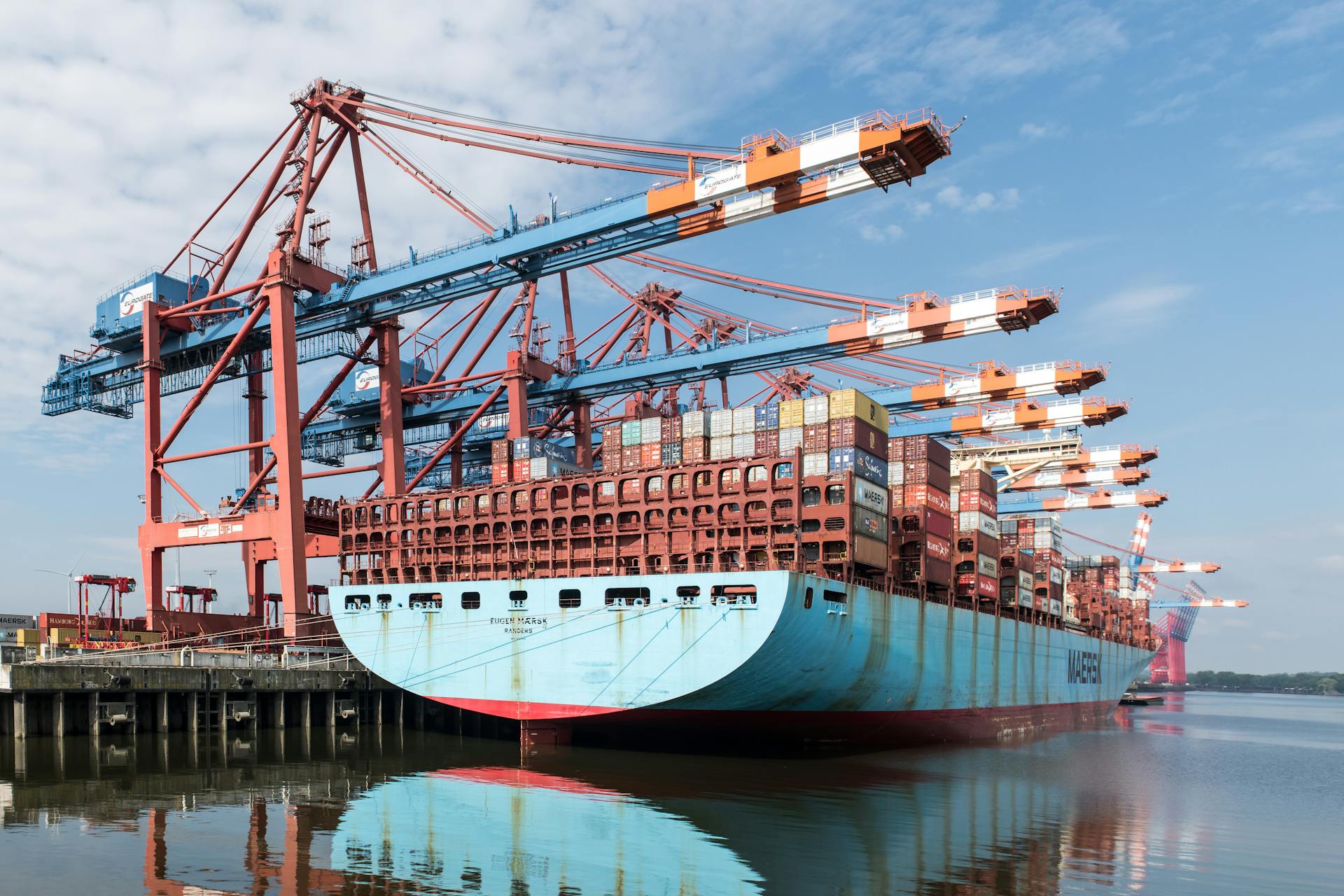
A charterparty agreement is a contract between a shipowner and a charterer that outlines the terms and conditions of a voyage or time charter. This agreement is essential for both parties, as it protects their interests and ensures a smooth operation.
The charterer has the right to hire a ship from the shipowner for a specified period, known as a time charter, or for a specific voyage, known as a voyage charter. This allows the charterer to control the vessel's operations and cargo handling.
The charterparty agreement typically includes details such as the ship's cargo capacity, the charterer's responsibilities, and the payment terms. The agreement must also comply with relevant maritime laws and regulations.
Effective communication between the shipowner and charterer is crucial to avoid any disputes or misunderstandings during the charter period.
For another approach, see: Heads of Terms
Types of Charterparties
There are three main types of charterparties: Time charter, voyage charter, and bareboat charter. Each type serves a different purpose in maritime transport.
Suggestion: Charter
A Time charter allows the charterer to hire a vessel for a specific period, giving them the right to direct its voyages and cargoes within agreed limits. The shipowner retains technical and operational responsibilities, while the charterer covers voyage-related costs like fuel and port fees.
In a voyage charter, the charterer hires the vessel for a specific voyage or a one-way trip. The shipowner typically provides the vessel, crew, and covers operational expenses, and the charterer pays freight for the transport of their cargo.
The most commonly used bareboat charterparty is the Barecon, which gives the charterer full control and possession of the vessel, including crewing and maintenance, for a set period. The charterer assumes nearly all operational responsibilities and expenses, effectively becoming the vessel's temporary owner.
Here are the main types of charterparties:
Popular time charterparties include Baltime, NYPE, and Shelltime, which are used for different types of vessels and cargoes.
Charter Party Agreements
Charter Party Agreements are a crucial part of maritime transport, outlining the terms and conditions between shipowners and charterers. These agreements can be tailored to meet the specific needs of both parties, ensuring a smooth and efficient transportation process.
There are several types of Charter Party agreements, including Voyage Charter, Time Charter, Demise Charter (Bareboat Charter), and Trip Charter. Each type of charter has its own unique characteristics, such as the level of control the charterer has over the vessel and the payment terms.
Some widely used charter parties include GENCON 2022, GENCON 1994, NYPE 2015, BARECON 2017, and ASBAGASVOY. These charter parties provide a framework for the agreement, outlining key clauses such as the description of the vessel, loading and discharge terms, and cost of loading and discharge.
Here are some of the key clauses found in Charter Party agreements:
- Description of the Vessel: This clause details the vessel’s specifications, such as tonnage, cargo capacity, year of build, and any equipment on board.
- Loading and Discharge Terms: Specifies the ports, cargo type, quantity, and responsibilities for loading and unloading operations.
- Loading Rates: This clause defines the rate at which cargo should be loaded or discharged, typically measured in tons per day.
- Laydays and Cancelling Date (Laycan): Laydays specify the range of dates within which the vessel must arrive at the loading port, while the cancelling date is the latest acceptable arrival date.
Main Terms
Main Terms in Charter Party Agreements are essential for clarity and mutual understanding between shipowners and charterers. They outline the key aspects of the agreement, including the vessel's specifications, payment terms, and operational responsibilities.
See what others are reading: Unfair Terms in Irish Contract Law
The Description of the Vessel clause details the vessel's specifications, such as tonnage, cargo capacity, year of build, and any equipment on board. This information is crucial for operational planning, as it affects loading and other capabilities.
The Hire or Freight Rate clause specifies the payment terms, whether a lump sum, daily rate, or based on the cargo quantity. This helps both parties agree on a fair payment structure for the vessel's use.
Loading and Discharging Ports are designated in the charter party, ensuring that both parties are aware of the specific ports where cargo will be loaded and unloaded.
Laytime and Demurrage clauses outline the agreed period for loading and unloading, as well as the penalties for any delays beyond this period. This helps manage risks associated with maritime transport and provides legal protection for both parties.
Responsibilities and Liabilities are clearly outlined in the charter party, specifying who is responsible for operational costs, insurance, and any potential liabilities. This helps manage risks and ensures both parties understand their obligations.
Some of the main terms typically included in a charter party are:
- Description of the Vessel
- Hire or Freight Rate
- Loading and Discharging Ports
- Laytime and Demurrage
- Responsibilities and Liabilities
These main terms provide a solid foundation for the charter party agreement, ensuring that both shipowners and charterers are on the same page.
Trading Limits
Trading limits are a crucial aspect of charter party agreements. This clause specifies the geographical limits that the charter can order the vessel to while it is on time charter.
The geographical limits can be defined by specific coordinates, such as latitude and longitude, or by referencing a particular sea route or port.
Insurance Responsibility
Insurance responsibility is a crucial aspect of charter party agreements. This clause specifies which party is responsible for the insurance of the vessel, as seen in the "Insurance Responsibility" clause.
The party responsible for insuring the vessel is usually specified in the charter party agreement, and it's essential to understand who bears the risk in case of an accident or loss.
Charter Party Structure
A charter party agreement is a complex document that outlines the terms and conditions of a vessel's charter. It contains several essential clauses that define the terms and ensure both parties are aligned.
A fresh viewpoint: Unfair Contract Terms
The charter party structure typically includes a description of the vessel, including its specifications, such as tonnage, cargo capacity, and year of build. This information is crucial for operational planning, as it affects loading and other capabilities.
Some widely used charter parties include GENCON 2022, GENCON 1994, NYPE 2015, BARECON 2017, and ASBAGASVOY. These parties provide a framework for chartering a vessel and can be tailored to meet the specific needs of the parties involved.
Here are some key elements of a charter party:
- Description of the Vessel: Detailed specifications of the vessel, including its capacity, type, and condition.
- Hire or Freight Rate: The payment terms, whether a lump sum, daily rate, or based on the cargo quantity.
- Loading and Discharging Ports: Designated ports where the cargo will be loaded and unloaded.
- Laytime and Demurrage: The agreed period for loading and unloading (laytime) and the penalties for any delays beyond this period (demurrage).
Laycan
Laycan is a critical clause in charter party agreements that defines the timeframe for the vessel's readiness to commence the time charter. It specifies the range of dates within which the vessel must arrive at the loading port.
The Laycan clause is essential for operational planning, as it affects the charterer's ability to prepare for cargo handling and port operations. If the vessel fails to arrive on time, the charterer has the right to cancel the contract, safeguarding them from disruptions caused by delays.
Recommended read: P V S and Cornwall County Council
The Laycan clause is typically specified in the charter party agreement, along with the cancelling date, which is the latest acceptable arrival date. This ensures that both parties are aligned on the expected timeline for the vessel's arrival.
Here are some key details to note about Laycan:
Understanding Laycan is crucial for both shipowners and charterers to ensure smooth and timely logistics. By specifying the expected arrival date, both parties can plan accordingly and avoid potential disruptions.
Laytime
Laytime is a critical aspect of a charter party, and it's essential to understand how it works. Laytime specifies the range of dates within which the vessel must arrive at the loading port, and it's usually stated in the charter party agreement.
The cancelling date, also known as the Laycan, is the latest acceptable arrival date. If the vessel fails to arrive on time, the charterer has the right to cancel the contract. This is crucial for agents managing port operations, as it affects cargo coordination and cost management.
The length of laytime can vary depending on the charter party agreement. For example, the GENCON 2022 charter party specifies laytime, but the exact duration is not provided in the article section. However, some charter parties, like NYPE 2015, may have specific laytime requirements.
To give you a better idea, here are some common laytime requirements:
Keep in mind that laytime requirements can vary depending on the charter party agreement, so it's essential to review the specific terms and conditions of the contract.
Charter Party Costs
Charter Party Costs can be a complex and confusing topic, but it's essential to understand the various expenses involved in a charter party agreement.
The cost of loading and discharge is a significant expense that charterers and shipowners must consider. This includes the labor and costs associated with opening and closing cargo hatches, which is outlined in the charter party agreement.
The freight rate is another critical cost factor, which specifies the amount of money the charterer will pay to the shipowner for the use of the vessel. This can be in USD/mt, EUR/mt, or in lump sums.
For another approach, see: Cost Method Treasury Stock
Demurrage is a penalty paid by the charterer to the shipowner for delays beyond the agreed laytime. This is a crucial aspect of charter party agreements, as it helps manage risks associated with maritime transport.
Here are some key costs associated with charter parties:
- Cost of loading and discharge (labor and equipment costs)
- Freight rate (USD/mt, EUR/mt, or lump sums)
- Demurrage (penalty for delays beyond agreed laytime)
Understanding these costs is essential for both charterers and shipowners to ensure they are prepared for the expenses involved in a charter party agreement.
Charter Party Operations
Charter party operations involve a range of responsibilities for both the shipowner and the charterer. The vessel's specifications are detailed in the charter party agreement, including its tonnage, cargo capacity, and equipment on board.
The charter party agreement outlines the loading and discharge terms, including the ports, cargo type, and quantity. It also specifies who bears the costs associated with loading and unloading operations.
The charterer has the right to cancel the contract if the vessel fails to arrive on time, as specified in the laycan clause. This clause sets a range of dates within which the vessel must arrive at the loading port, and the cancelling date is the latest acceptable arrival date.
Here are some of the key clauses in a charter party agreement:
- Description of the Vessel: This clause details the vessel's specifications, such as tonnage, cargo capacity, year of build, and any equipment on board.
- Loading and Discharge Terms: Specifies the ports, cargo type, quantity, and responsibilities for loading and unloading operations.
- Laydays and Cancelling Date (Laycan): Laydays specify the range of dates within which the vessel must arrive at the loading port, while the cancelling date is the latest acceptable arrival date.
Delivery and Redelivery
Delivery and redelivery are critical aspects of charter party operations. These clauses outline the terms and conditions for the vessel's delivery to the charterer and redelivery to the owner.
The delivery and redelivery clauses specify the port and/or area where the vessel will be handed over. This is usually a designated port where the cargo will be loaded or unloaded.
The charterer is responsible for ensuring the vessel is in good condition and meets the specified requirements at the time of delivery. Conversely, the owner is responsible for ensuring the vessel is redelivered in the same condition.
A bunker clause typically stipulates that the charterer accepts and pays for all fuel oil in the vessel's bunkers at the port of delivery. The owner, on the other hand, pays for all fuel oil in the vessel's bunkers at the port of redelivery at the current price.
Suggestion: Com Data Fuel Card
Here's an overview of the typical terms and conditions for delivery and redelivery:
The delivery and redelivery clauses are essential for ensuring a smooth transition of the vessel from the charterer to the owner and vice versa.
Notice of Readiness
The Notice of Readiness is a crucial clause in charter party operations. It specifies the requirements for the shipowner to give notice of readiness to the charterer, indicating that the vessel is ready to commence the time charter.
This clause is essential to prevent disputes between shipowners and charterers. It helps ensure that both parties are on the same page regarding the vessel's readiness to start the charter.
The Notice of Readiness clause is often included in charter parties to protect shipowner's interests. It's a way to hold charterers accountable for delays in the charter process.
A Ready Berth clause is sometimes included in charter parties to protect shipowners against delays. This clause states that lay days will begin to count as soon as the vessel has arrived at the port of loading or discharge, whether in berth or not.
In summary, the Notice of Readiness clause is a critical component of charter party operations. It helps prevent disputes and ensures that both parties are aware of the vessel's readiness to start the charter.
Intriguing read: Can a Prenup Protect You from Spouse's Debt
Voyage Importance
A voyage charter is a straightforward option for one-time cargo transport, where the shipowner manages the vessel's operation.
The charterer pays freight for the transportation service, and the shipowner bears operational responsibilities like port and crew costs.
This type of charter is ideal for charterers who only need to transport cargo on a single voyage between specified ports.
The charterer has no control over the vessel's operation, and the shipowner retains technical and operational responsibilities.
In a voyage charter, the charterer pays for the transportation service, but not for the vessel's operation or maintenance.
Here are the key types of charter parties:
- Voyage Charter
- Time Charter
- Bareboat (Demise) Charter
These types of charters offer different levels of control and responsibility for the charterer.
Termination
Termination can be a complex aspect of a charterparty, but it's essential to understand the circumstances under which it can be terminated by either party.
International politics in shipping have led to the creation of new clauses that distribute risk between parties, such as those related to pollution and emissions.
Termination clauses are crucial in charterparties, and they can be triggered by various factors, including the implementation of new legislation.
New legislation like ETS, CII, and FuelEU Maritime can significantly impact charterparties, and it's essential to understand how they can affect termination.
Pollution-related issues like SOX, NOX, and Carbon emissions are also covered in termination clauses, as they can have significant consequences for both parties involved.
A unique perspective: Franchise Termination
Charter Party Benefits and Challenges
Charter Party agreements offer numerous advantages for both shipowners and charterers, contributing to the efficiency and flexibility of maritime transport.
Flexibility is one of the key benefits, allowing charterers to choose the most suitable type of contract for their needs, such as a Voyage Charter, Time Charter, or Bareboat Charter.
Charter Parties can be more cost-effective than owning a vessel, especially for companies that require maritime transport services on a temporary or irregular basis.
Operational control is another benefit, with charterers having significant control over the vessel's operations, enabling them to optimize logistics according to their requirements.
Some widely used charter parties include GENCON 2022, GENCON 1994, NYPE 2015, BARECON 2017, and ASBAGASVOY.
However, drafting a Charter Party can be complex, requiring detailed negotiations to ensure all terms are clearly defined and agreed upon.
Understanding the legal implications and ensuring compliance with maritime laws and regulations is crucial to avoid disputes and potential penalties.
Operational risks, such as potential delays, damage, and unforeseen circumstances, are also a consideration for both parties involved in a Charter Party.
Benefits of Charter Party Agreements
Charter Party agreements are a game-changer for maritime transport, offering numerous benefits for both shipowners and charterers.
Flexibility is one of the key advantages of Charter Parties, allowing charterers to choose the most suitable type of contract for their needs.
By using a Charter Party agreement, companies can avoid the high costs associated with owning a vessel, especially if they only require maritime transport services on a temporary or irregular basis.
Charterers can also have significant control over the vessel's operations, enabling them to optimize logistics according to their requirements.
This is especially useful for companies that need to transport large or unusual cargo, as they can work closely with the shipowner to ensure everything runs smoothly.
By clearly outlining responsibilities and liabilities, Charter Parties help manage risks associated with maritime transport, providing legal protection for both parties.
Here are the key benefits of Charter Party agreements at a glance:
- Flexibility in cargo transport
- Cost-effectiveness compared to owning a vessel
- Operational control over the vessel's operations
- Risk management through clear responsibilities and liabilities
Challenges and Considerations
Drafting a Charter Party can be a complex process, requiring detailed negotiations to ensure all terms are clearly defined and agreed upon. This is because the agreement contains several essential clauses that define the terms and ensure both parties are aligned.
The complexity of negotiations is further compounded by the need to understand the legal implications of the agreement. This includes ensuring compliance with maritime laws and regulations to avoid disputes and potential penalties.
Operational risks are also a significant consideration when it comes to Charter Parties. These can include potential delays, damage, and unforeseen circumstances that could impact the agreement.
To mitigate these risks, it's essential to have a clear understanding of the vessel's specifications, such as its tonnage, cargo capacity, and year of build. This information is crucial for operational planning and affects loading and other capabilities.
Here are some of the key operational risks to consider:
- Potential delays
- Damage to the vessel or cargo
- Unforeseen circumstances, such as bad weather or mechanical issues
By being aware of these risks and taking steps to mitigate them, both parties can ensure a smoother and more successful chartering experience.
Frequently Asked Questions
Is a charterparty a contract?
Yes, a charterparty is a type of contract that outlines the terms and conditions of a vessel's hire or lease. It is a legally binding agreement between the vessel owner and the charterer.
Featured Images: pexels.com