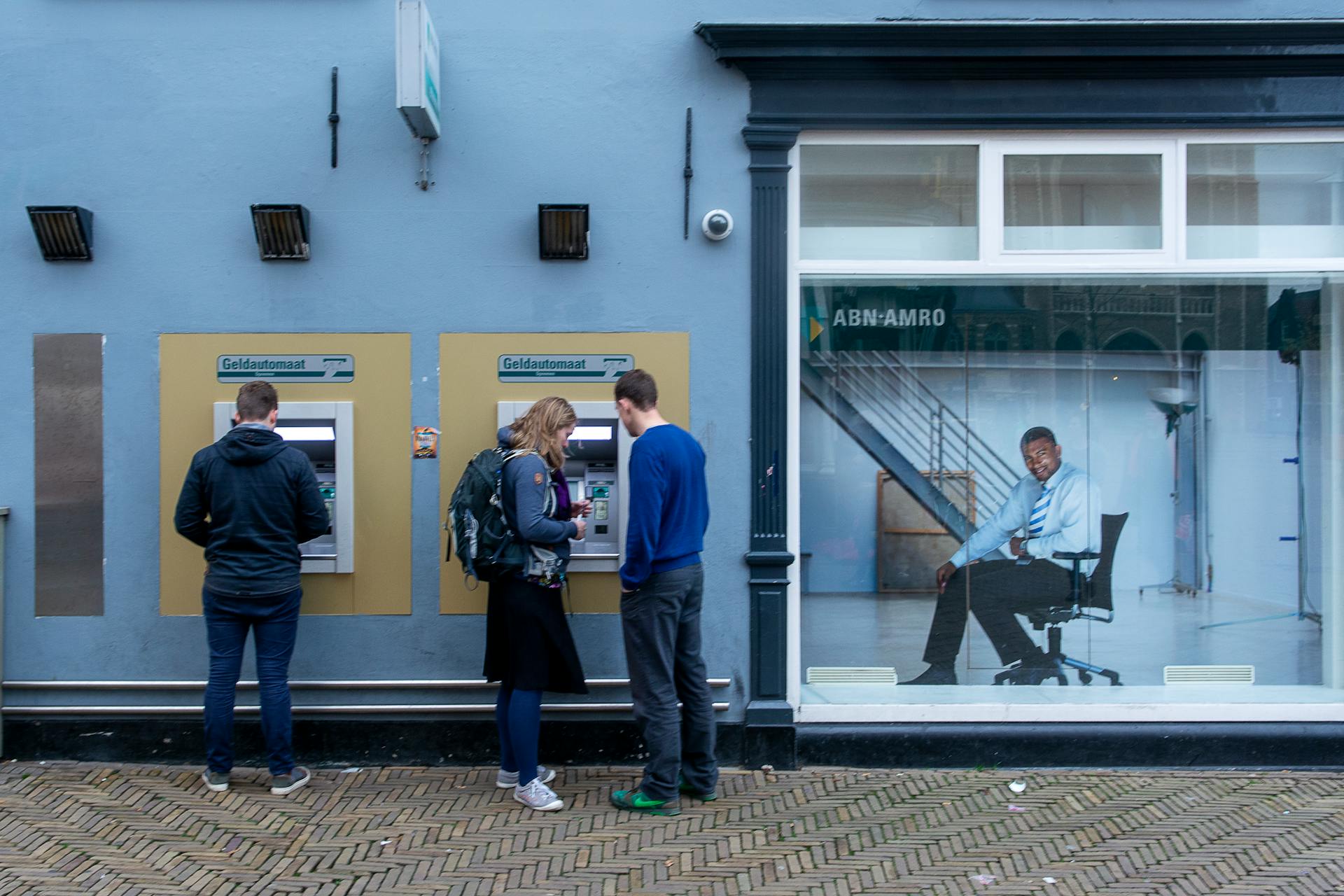
Challenger banks are shaking up the traditional banking industry with their innovative approach to banking services. They've managed to attract over 2 million customers in the UK alone, as of 2022.
These new entrants are focusing on providing a more personalized experience, often through mobile apps and digital channels. They're also offering more competitive interest rates and lower fees compared to traditional banks.
One of the key factors contributing to their success is their ability to adapt quickly to changing customer needs. Challenger banks have been able to respond to customer feedback and make changes to their services in a matter of months, not years.
Their impact on the industry is significant, with many traditional banks taking notice and starting to adopt similar digital strategies.
You might like: Challenger Bank
What is a Challenger Bank?
A challenger bank is a type of bank that's set up to compete with the big four banking giants: Barclays, NatWest Group, HSBC, and Lloyds Banking Group. They're smaller and more agile, often formed since the 2008 financial crisis.
Challenger banks can have different business models, but they're often associated with being digital-only banks that operate entirely through mobile apps and online platforms. This allows them to offer lower fees and faster services.
Some challenger banks have a high street presence, while others are focused on commercial lending or offer Shari'ah-compliant services. There are also digital challenger banks that prioritize user experience and technology.
Challenger banks are authorized by the Prudential Regulation Authority and are covered by the Financial Services Compensation Scheme (FSCS). This means they're just as secure as traditional banks.
Here are some examples of different types of challenger banks:
- Challenger banks with a high street presence, such as TSB and Metro Bank.
- Shari'ah banks, including Bank of London and The Middle East (BLME), Al Rayan and Gatehouse Bank.
- Challenger banks focused on commercial lending, such as Shawbrook Bank, Aldermore and One Savings Bank.
- And the digital challenger banks, such as Atom Bank, Monzo and Starling Bank.
History and Context
The UK's banking landscape has undergone significant changes in recent years, paving the way for the emergence of challenger banks. Prior to 2013, setting up a new bank in the UK was extremely expensive and time-consuming, resulting in a small number of dominant banks with little competition.
You might like: I M B Bank Share Price Today
The regulatory landscape changed with the introduction of the Financial Services Act 2012, which came into force on 1 April 2013. This act opened up the market to new banks, allowing them to enter the UK banking sector.
The creation of the Prudential Regulation Authority (PRA) and the introduction of the Financial Services Act 2012 were significant steps towards diversifying the financial landscape in the UK. Metro Bank received its license in 2010, becoming the first new high street bank for 100 years.
The PRA established the New Bank Start-up Unit to guide firms through the process of obtaining a banking license. This unit helps firms navigate the application process and ensures they meet the necessary requirements.
The UK's implementation of the Payment Services Directive (PSD2) and Open Banking in 2018 further accelerated the rise of challenger banks. These regulations required traditional banks to open their APIs, allowing third-party providers to access customer data with their consent.
Metro Bank was the first challenger bank to receive a license in the UK in over 100 years, becoming a poster child for this movement.
Here's an interesting read: One - Mobile Banking
Key Features and Benefits
Challenger banks are known for their digital-first approach, which has led to the development of several key features and benefits.
They offer a wide range of features such as mobile banking apps, online account management, and real-time transaction updates, making banking more accessible and convenient.
These features allow customers to manage their finances on-the-go, receive alerts and notifications, and even transfer money to friends and family instantly.
Challenger banks also provide real-time account balances and transaction history, giving customers a clear picture of their financial situation.
This level of transparency and control empowers customers to make informed decisions about their money.
Mobile banking apps are also equipped with security features such as biometric login and encryption, providing an additional layer of protection for customers' sensitive information.
This focus on digital security gives customers peace of mind, allowing them to bank safely and securely online.
By leveraging technology, challenger banks are able to offer lower fees and higher interest rates compared to traditional banks.
Intriguing read: Citi Bank Credit Card Offer
This is because digital banking reduces operational costs, allowing challenger banks to pass the savings on to their customers.
Challenger banks also prioritize customer experience, with some offering rewards and cashback programs to loyal customers.
These rewards can add up quickly, providing customers with extra value and motivation to continue banking with the challenger bank.
A different take: Bank of America Unlimited Cash Rewards Credit Score
Challenges and Opportunities
Challenger banks are expanding rapidly, but they face significant challenges. Navigating complex regulatory environments can be costly and time-intensive, which may hinder their growth.
Profitability is another major hurdle, with many challenger banks struggling to retain customers who often switch platforms for better deals. This makes it difficult for them to sustain long-term growth.
The looming presence of Big Tech companies, like Apple and Google, also poses a significant competitive threat, given their extensive resources and user bases. This raises concerns about the future of challenger banks in the market.
Challenges Facing
The challenges facing us today are numerous and complex. One of the biggest hurdles is the lack of access to clean water and sanitation, which affects over 2 billion people worldwide.
The statistics are staggering, with 844 million people lacking basic drinking water services and 673 million people practicing open defecation.
Climate change is another significant challenge, with rising temperatures and more frequent natural disasters threatening the lives and livelihoods of millions. The past decade was the warmest on record, with 2020 being the hottest year ever.
The consequences of inaction are dire, with the World Health Organization estimating that climate change will cause an additional 250,000 deaths per year between 2030 and 2050.
Intriguing read: Change Your Nedbank Card Pin
Increased Competition
Challenger banks have increased competition in the banking industry, forcing traditional banks to innovate and provide more competitive products and services. This is because challenger banks have low overhead costs, allowing them to offer more innovative products and services, as well as more competitive pricing.
Traditional banks are under pressure to keep up with the digital-first solutions offered by challenger banks, which are attracting a growing number of consumers worldwide. The global neo and challenger bank market is projected to reach USD 2,597.03 billion by 2031, growing at a compound annual growth rate (CAGR) of 47.17%.
In the UK, institutions like Monzo, Starling, and Revolut have experienced substantial growth, with Monzo reporting an increase from 7.4 million customers in 2023 to approximately 9.7 million in 2024. This growth is driven by the demand for digital banking services that offer convenience, transparency, and user-friendly interfaces.
A fresh viewpoint: Traditional Saving Account
Digital Innovation and Growth
Digital innovation has been a key driver of growth for challenger banks. They've been at the forefront of implementing new technologies that make banking more convenient and accessible.
Customers can use mobile applications to manage their accounts, make payments, and transfer money while on the go. This is a game-changer for people who need to bank on the move.
By embracing digital wallets and other cutting-edge features, challenger banks have been able to provide a better service to their customers. Traditional banks have been slow to follow suit, but it's clear that digital innovation is the future of banking.
Digital challenger banks have no physical high street presence, which allows them to avoid the high costs of maintaining a branch network. This makes them ideal for customers who prefer to bank online or through their mobile app.
For another approach, see: High Interest Savings Account Kansas City
Digital Innovation
Digital innovation is revolutionizing the way we bank. Challenger banks have been at the forefront of this change.
They offer mobile applications that allow customers to manage their accounts, make payments, and transfer money on the go. This level of convenience is a game-changer for people with busy lives.
Digital challenger banks have no physical high street presence, instead relying on phone, app, and online banking. This approach avoids the high costs of maintaining a branch network.
They also provide digital wallets and other cutting-edge features that traditional banks have been slow to implement. This has helped challenger banks to attract a new generation of customers.
Some digital challenger banks even offer ways for people to pay in money at a counter, through partnerships with other banks or the Post Office. This is a convenient option for those who still prefer to bank in person.
Curious to learn more? Check out: Amazon Usbank Offer
Banking Sector Growth
The banking sector has experienced significant growth in recent years, driven by digital innovation. This growth is evident in the increasing adoption of mobile banking apps, with over 50% of customers using digital channels for banking services.
Digital payments have also become a major driver of growth, with the number of transactions increasing by 20% annually. This shift towards digital payments has led to a significant reduction in cash transactions.
The rise of fintech companies has disrupted traditional banking models, forcing them to innovate and stay competitive. According to a recent survey, 75% of banks are now investing in fintech partnerships.
The growth of the banking sector has also been driven by the increasing use of artificial intelligence and machine learning. These technologies have enabled banks to improve customer experience, reduce costs, and increase efficiency.
For more insights, see: Venmo Business Transaction
Regulatory Compliance and Sustainability
Regulatory compliance is a significant challenge for challenger banks, with increasing compliance costs in areas like cybersecurity and anti-money laundering protocols.
These added expenses can weigh heavily on their already thin margins, making it difficult for them to achieve sustainability and profitability.
Challenger banks must follow the same rules as traditional banks, ensuring regulations governing customer data privacy, anti-money laundering, and other requirements are followed.
To succeed, they need to focus on operational efficiency and scaling effectively, as seen in the case of Revolut, which has reported profits.
Regulatory Compliance
Challenger banks must follow the same rules as traditional banks. They must ensure that regulations governing customer data privacy, anti-money laundering, and other requirements are followed.
Challenger banks are required to be fully regulated and authorised by the Prudential Regulation Authority (PRA) and Financial Conduct Authority (FCA), and are covered by the Financial Services Compensation Scheme (FSCS).
Regulations governing customer data privacy are a top priority for challenger banks, ensuring that customer information is kept secure and confidential.
Challenger banks offer the same financial protections as any other bank, making them as safe for your money as anywhere else.
Being fully regulated and authorised by the PRA and FCA provides a high level of protection for customers, giving them peace of mind when banking with challenger banks.
Intriguing read: Taking Credit Card Payments over the Phone Regulations
Sustainability and Profitability
Achieving sustainability and profitability is a significant hurdle for challenger banks. Analysts suggest that long-term success will require a stronger focus on operational efficiency and scaling effectively.
Many neo banks face high operational costs and reliance on external funding due to prioritizing growth over profitability. These costs can weigh heavily on their already thin margins.
Regulatory scrutiny is another ongoing challenge, particularly in areas like cybersecurity and anti-money laundering protocols. Compliance costs can add up quickly.
The absence of physical locations might reduce overheads, but it also limits opportunities for face-to-face customer interactions in regions where personal connections remain important.
Comparison with Traditional Banks
Challenger banks are changing the way we think about traditional banks. Traditional banks are enhancing their digital offerings to compete with challenger banks, but they still have a significant advantage when it comes to physical locations.
One of the main differences between challenger banks and traditional banks is their pricing. Challenger banks can offer more competitive pricing due to their lower overhead costs, allowing them to charge lower fees and offer higher interest rates on savings accounts and loans.
Take a look at this: Traditional Saving Account Typical Interest Rate
Traditional banks, on the other hand, have a reputation and a network of physical locations that makes them hard to beat. Many consumers are loyal to established brands and value the convenience of in-person services.
Challenger banks, however, offer more features and better customer service, making them a compelling alternative for tech-savvy consumers. They're known for offering budgeting tools and real-time spending notifications, giving customers a more personalized banking experience.
In the end, the choice between a challenger bank and a traditional bank depends on your individual needs and preferences. If you value convenience and a wide range of financial services, a traditional bank might be the better choice. But if you're looking for a more innovative and personalized banking experience, a challenger bank could be the way to go.
A unique perspective: Zelle or Venmo Better
Customer Experience and Trust
Challenger banks have been able to provide a better customer experience thanks to their digital capabilities, allowing customers to open accounts online and manage their accounts digitally.
Customers return to financial solutions because of trust, which continues to erode due to recent bank crises. To earn trust, challenger banks need to show they deserve it.
A main reason why people stay loyal to their local bank branches is personal relationships, which challenger banks can replicate digitally by serving customers notifications and recommended actions where and when appropriate.
Establishing trust will increase retention and present opportunities to cross-sell into more areas of financial portfolios. Challenger banks can differentiate themselves in an uncertain market by understanding their customer's financial goals and helping achieve them in an easy-to-use platform.
Challenger banks often perform very well in customer service statistics, offering a faster response than their larger competitors and showing higher levels of customer satisfaction.
The key to building trust is providing dependable and secure banking services, which is especially important for challenger banks that lack the same level of trust as traditional banks.
Understanding customer goals is crucial to providing a better customer experience. For example, a financial wellness app like WeMoney found that customers who set money goals within the first three days had a higher retention rate than those who did not.
By focusing on the customer's financial goals and helping them achieve their desired outcomes, challenger banks can create a loyal customer base.
On a similar theme: Chase Bank Warns Customers to Prepare for Higher Banking Fees.
Funding and Business Model
Challenger banks face a significant challenge in securing funding due to their new and unproven business model.
Investors may be hesitant to invest in challenger banks because they're taking on a new and unproven business model.
To overcome this hurdle, challenger banks must develop a solid plan to demonstrate their potential for growth and return on investment.
Low overhead costs can be a major advantage for challenger banks, but they still need to invest in digital innovation to stay competitive.
Building a Sustainable Business Model
Developing a sustainable business model is crucial for challenger banks to remain competitive. They must offer competitive pricing and innovative products and services while keeping costs low.
Low overhead costs are a plus for challenger banks, but investing in digital innovation is a significant expense. This can be a difficult balance to strike.
Challenger banks like Revolut have reported profits, but others prioritize growth over profitability, leading to high operational costs and reliance on external funding. This approach can be unsustainable in the long term.
You might enjoy: Wafd Bank Show Low Az
Analysts suggest that long-term success requires a stronger focus on operational efficiency and scaling effectively. This means finding ways to reduce costs and increase revenue.
Regulatory scrutiny is another challenge for neo banks, with increasing compliance costs in areas like cybersecurity and anti-money laundering protocols. These added expenses can weigh heavily on their already thin margins.
Funding
Securing funding is a significant challenge for challenger banks, as investors may be hesitant to invest in a new and unproven business model.
To overcome this hurdle, challenger banks must present a compelling case for investment, highlighting their unique value proposition and growth potential.
Investors may be deterred by the uncertainty surrounding challenger banks, which can make it difficult to secure funding.
However, with a solid business plan and a clear vision for growth, challenger banks can attract investors and secure the funding they need to expand their operations.
Expand your knowledge: Call May Be on Hold Bofa
Featured Images: pexels.com