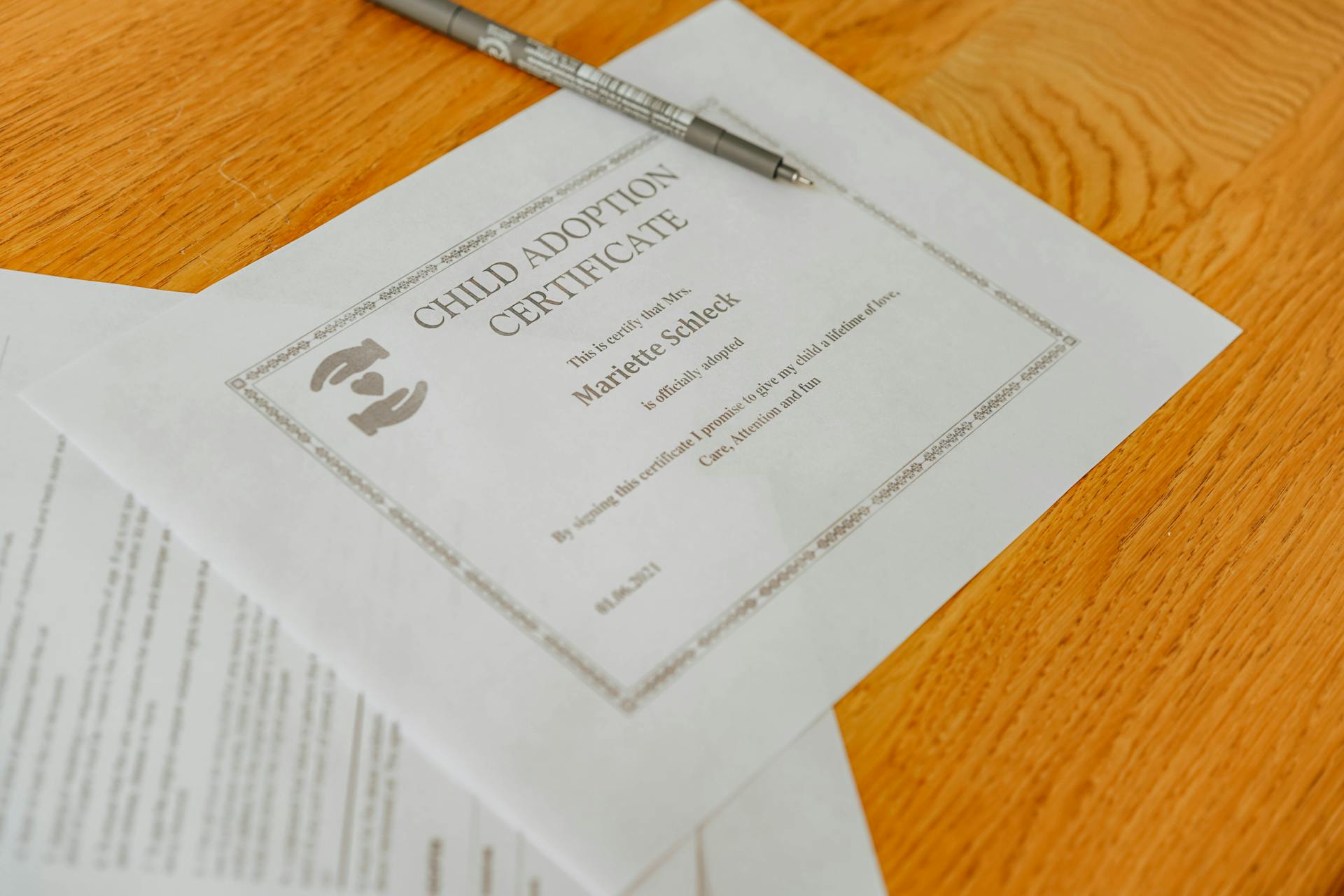
A certified check and a money order may seem like similar payment options, but they have some key differences. A certified check is a type of check that has been guaranteed by a bank.
To use a certified check, you'll need to visit a bank and request one. The bank will verify your account balance and issue a check that's guaranteed to be paid.
Certified checks are often used for large transactions or when a buyer wants added security. They're also commonly used for international transactions, where the buyer may not have a local bank account.
The process of getting a certified check can take some time, often requiring a visit to a bank during business hours.
See what others are reading: How Often Do You Get Bank Statements
What Is a Certified Cheque?
A certified cheque is a guaranteed form of payment issued by a bank. It's similar to a personal cheque with the addition of a stamp and signature from a bank, which tells the recipient that your bank account has enough money to pay for the cheque.
The funds for a certified cheque are frozen in your account until the recipient deposits or cashes the cheque. Once this happens, your bank will release these funds and transfer payment.
Most banks will specify a certain number of days before a certified cheque is no longer valid. This means you have a limited time to use the cheque before it expires.
The fee for a certified check is usually around $15 to $20, which is higher than for a cashier's check. This is because the bank verifies the funds in your account to ensure the cheque can be honoured.
A certified cheque undergoes a verification process by the bank to ensure there are sufficient funds in your account to cover the amount stated on the cheque. This protects the recipient from receiving a bounced cheque.
The money for a certified check is directly debited from the issuer's personal checking account, and their name and account number are stated on the check.
Expand your knowledge: Cash App Mobile Check Deposit Funds Availability
Money Order vs. Cashier's Check
Domestic money orders typically have small fees, ranging from $1 to $5.
Money orders are widely available at places like banks, convenience stores, and post offices, making them easily accessible.
However, cashier's checks are typically only available at financial institutions like banks and credit unions, and those institutions might only sell them to their own customers.
Both cashier's checks and money orders can be safe payment options, as neither shows your account information and can only be cashed by the designated payee.
But, with a money order, you'll likely be filling out the payee information yourself, which can lead to mistakes if not done carefully.
Domestic money orders are typically capped at $1,000, while cashier's checks usually don't have limits, as long as you can pay the full amount up front.
Here's a quick comparison of the two:
How They Work
Money orders can be purchased from a bank or Canada Post with a valid photo ID and a filled-out form. You'll need to pay the amount on the money order to get a cashable certificate.
The maximum amount per money order is $999.99, so you can't send more than that in one go. You can mail the money order or deliver it in person to the recipient.
Money orders are available immediately when cashed, but if you deposit them into a bank account, the funds might take a few days to become available. Some banks might release a portion of the funds right away, but it's not always the case.
Explore further: Are Money Orders Certified Funds
How Money Orders Work
You can purchase a money order from a bank or Canada Post with a valid photo ID. Bring the required form with your name, money order amount, and recipient's name to fill out.
The money order amount must be paid upfront to get a cashable certificate. This is the actual money order you'll be using.
You can mail the money order or deliver it in person to the recipient.
The maximum amount per money order is $999.99.
Related reading: Easypaisa Bank Name
Amount
There is no limit on a bank draft or certified cheque as long as you have the funds available.
Money orders are capped at $999.99, but you can purchase multiple money orders at the same time.
The issuer must record specific information from the sender and complete a financial report for money orders when the total transaction amount (including fees) is $3,000 or more. This is done to prevent fraud.
You might like: I M B Bank Share Price Today
Availability
Availability is key when it comes to getting your money. Bank drafts and certified cheques typically make funds available in the recipient's account within a few business days.
Some banks release a portion of the funds right away, which can be a relief for those who need quick access to cash. Money orders, on the other hand, are available immediately when cashed, making them a convenient option for those who don't have a bank account.
Here's a breakdown of the availability of different types of transactions:
It's worth noting that no bank account is required to send or receive a money order, making it a versatile option for those who don't have access to traditional banking services.
Key Features
A certified check is a more secure option than a money order, as it allows the recipient to verify the check's authenticity with the bank.
A certified check can be cashed immediately, whereas a money order can take a few days to clear.
The bank guarantees the funds for a certified check, whereas a money order is prepaid and non-refundable.
Fees
Fees can vary depending on the bank and payment method. Bank draft fees typically range between $9.50 and $9.95.
Some payment methods can be more expensive than others. Certified cheques, for instance, can cost up to $20 if requested by an account holder with the issuing bank.
Money orders are a more affordable option, with fees starting at $7.50.
Some bank account service plans, usually the premium packages, may waive these fees.
Security
Bank drafts and certified cheques are considered to be more secure because the funds are guaranteed by a bank.
Money orders are guaranteed by the person paying, but funds are required upfront instead of being held in a bank account.
A money order can also be cancelled before it’s cashed, which is a significant difference from bank drafts and certified cheques.
Bank drafts and certified cheques provide a higher level of security because they're backed by a bank's guarantee, giving you more peace of mind when making a payment.
Check this out: E S a Payments
Frequently Asked Questions
How much does a certified check cost?
A certified check typically costs between $15 to $20, but fees may vary depending on your bank. Check with your bank for the exact cost.
Featured Images: pexels.com