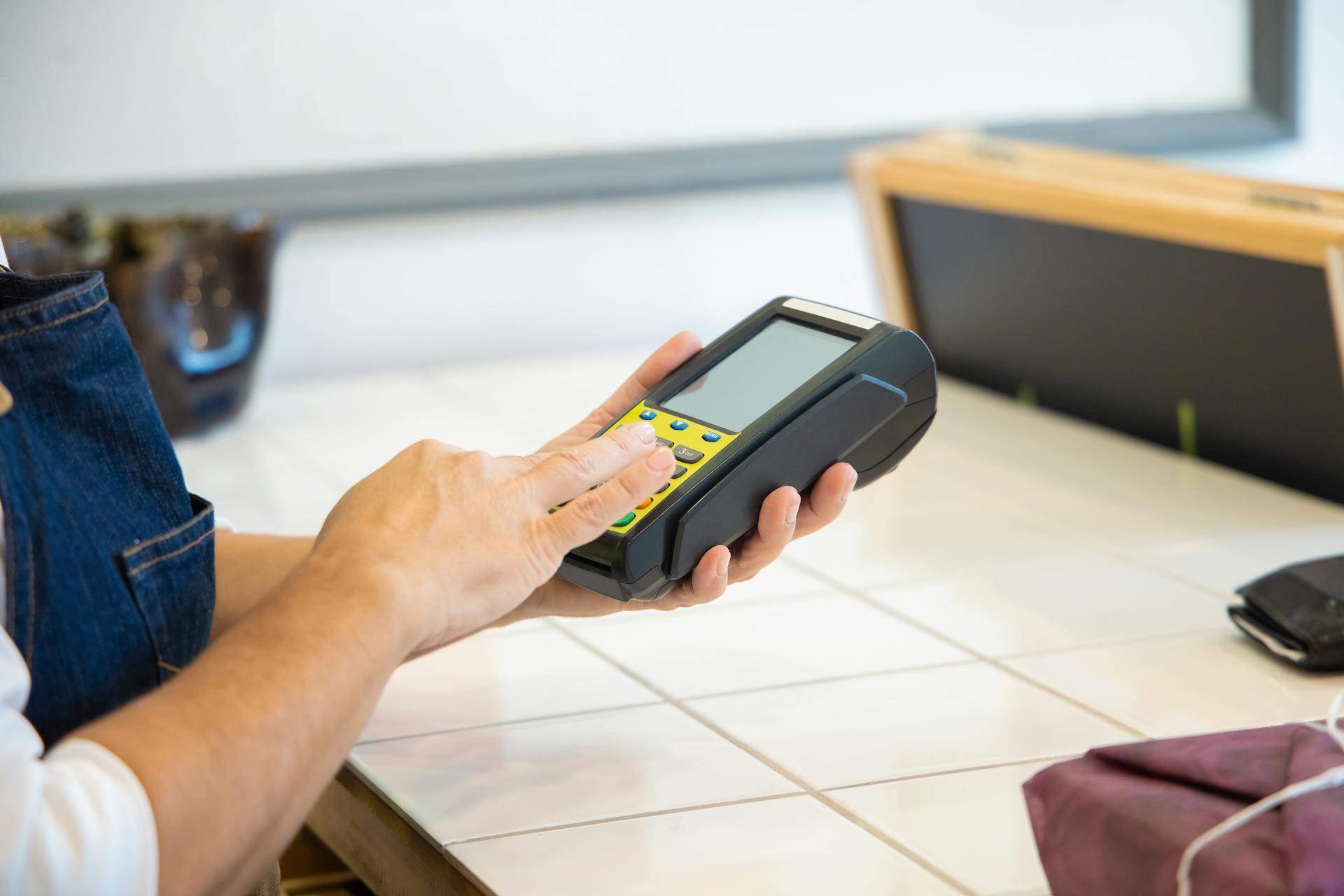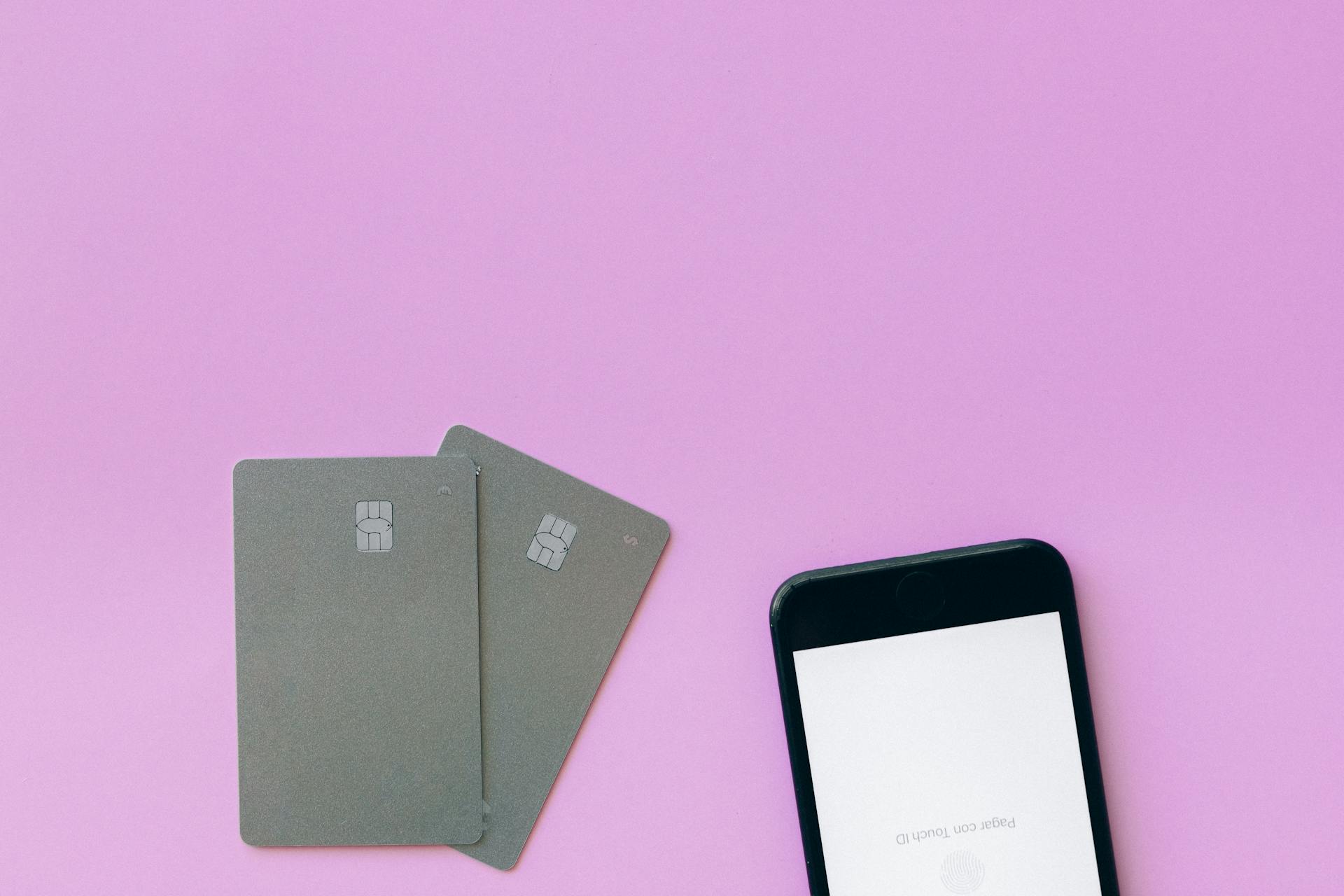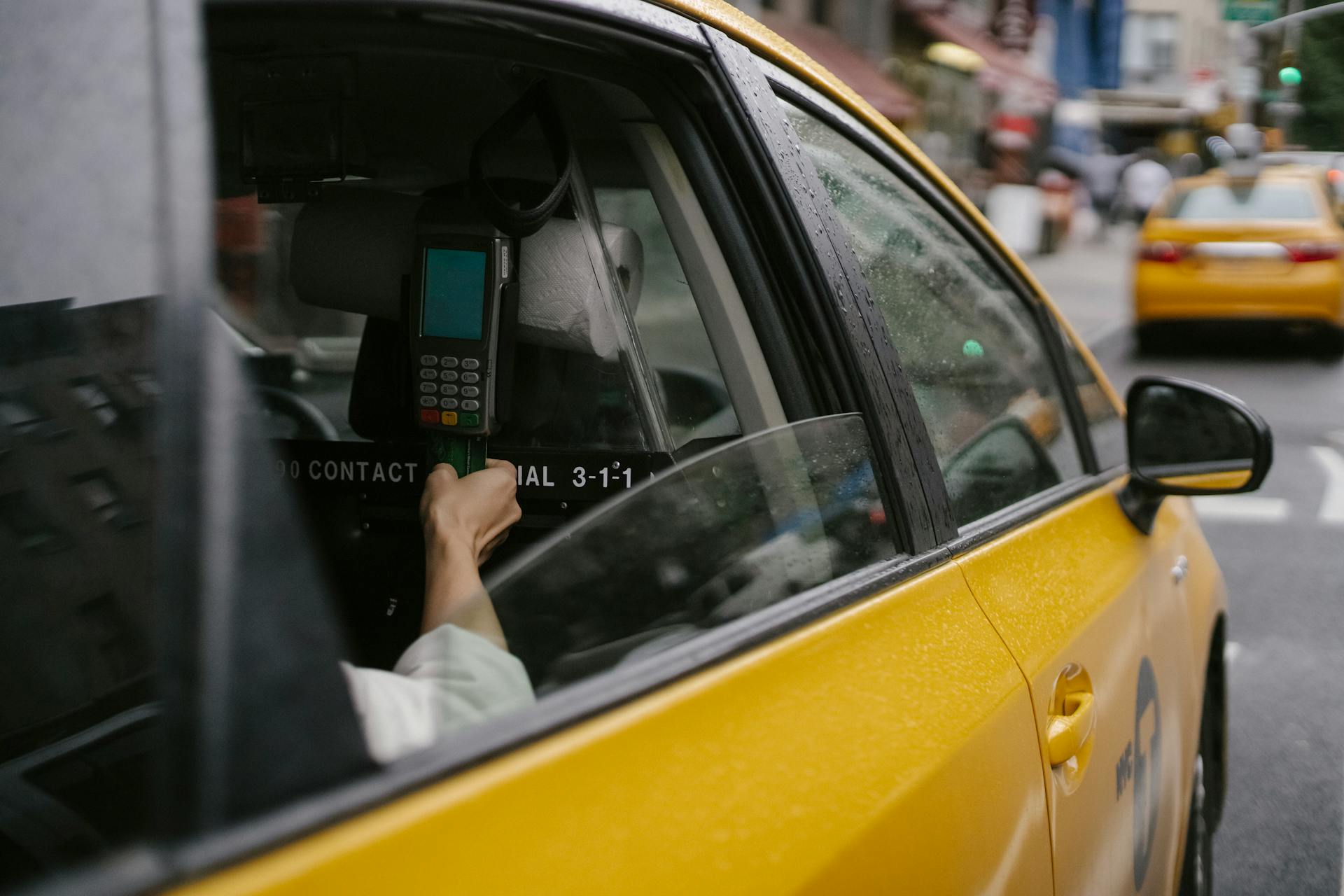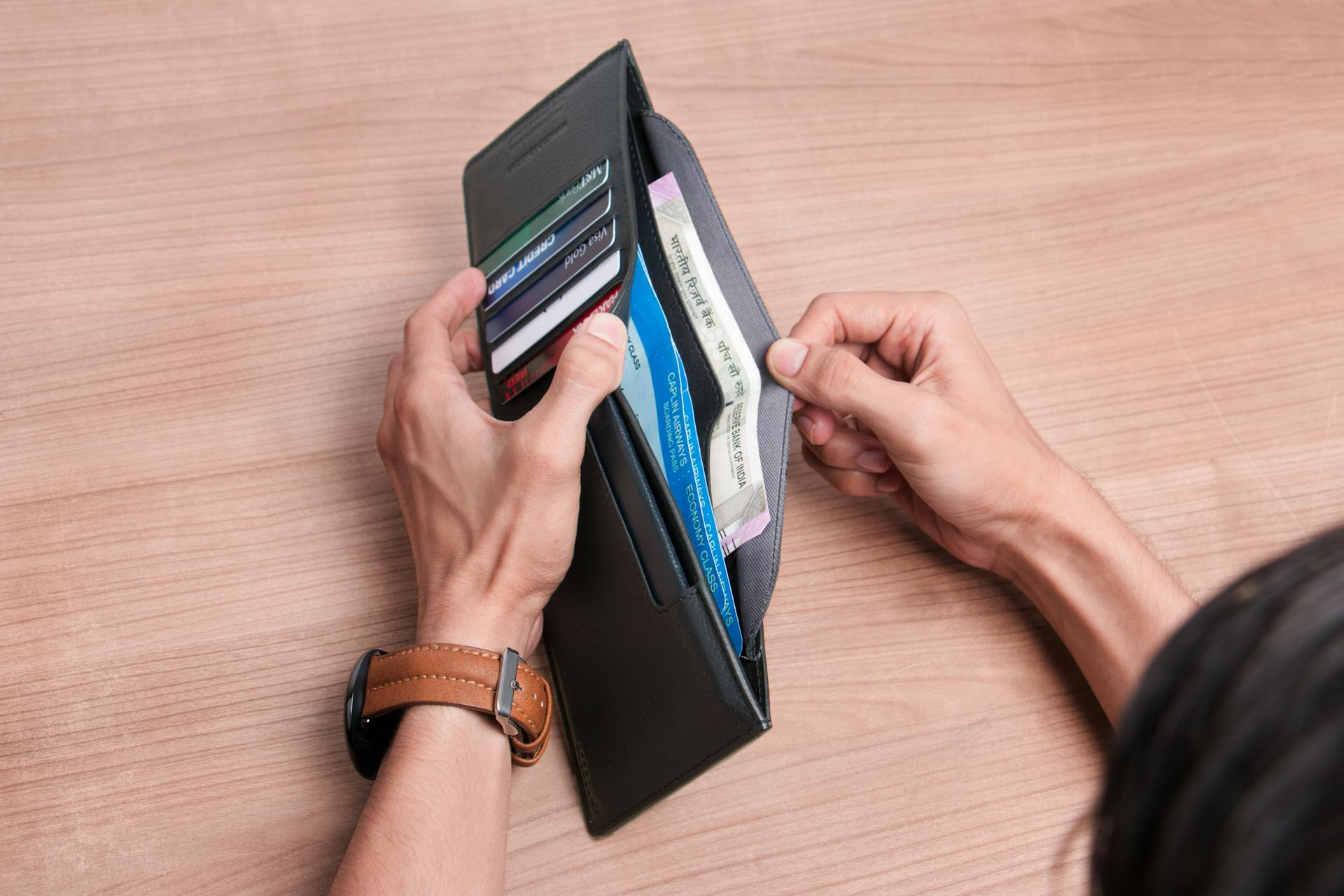
Cash cards are a convenient way to make purchases or withdraw cash, and they're widely accepted. They can be used anywhere that accepts credit or debit cards.
You can load cash onto a cash card at a variety of locations, including online, by phone, or in person at a bank or retail store. Some cash cards can be loaded with a credit or debit card.
Cash cards often come with fees, such as activation fees, monthly fees, and ATM fees. These fees can add up quickly, so it's essential to understand what you're getting into before you sign up.
You might like: Cash App Card Fees
How to Order and Activate?
To order a Cash App card, you just need to open Cash App, click the "Cash Card" tab, and follow the simple steps to get your new card. It's free to order, and you can even customize it with your favorite color, emoji, and signature.
The process is quick and easy, and you'll be done in no time. You just need to be over 18 years old to order a Cash App card.
See what others are reading: Order a Cash App Card
If you already have a Cash App card but it's lost or stolen, don't worry - you can easily report it and get a new one. To do this, open the Cash Card tab on Cash App, select 'Cash Card Support', tap 'Report your Cash Card', and follow the steps.
To activate your Cash App card, you can use a QR code or the CVV code. If you have a QR code, simply open Cash App, click on the Cash Card icon, and scan the QR code located on your card. If not, you can use the CVV code by clicking 'Use CVV Instead' and entering the code and expiration date.
Here are the steps to activate your Cash App card using a QR code:
- Open Cash App
- Click on the Cash Card icon
- Click ‘Activate Cash Card’
- Click ‘OK’ when Cash App requests permission to use your camera
- Scan the QR code located on your Cash Card.
If you prefer to use the CVV code, follow these steps:
- Open Cash App
- Click on the Cash Card icon
- Click ‘Activate Cash Card’
- Click ‘Use CVV Instead’
- Enter your CVV code and the expiration date of your Cash Card.
Understanding Cash Card
A cash card is an electronic payment card that stores cash for various types of payments. This can include bank debit cards, prepaid debit cards, gift cards, and payroll cards.
Cash cards aren't credit cards because they represent cash rather than debt. It's essential to understand the difference to use them wisely.
Cash cards store cash, not credit, which means you can only spend what you have, not what you borrow. This can be a great way to budget and avoid overspending.
The Cash App Card is a type of cash card that allows you to make payments using the Cash App. If you have any questions about how it works, you can find more information on the Cash App website.
You might like: Apple Card Daily Cash Not Showing up
A fresh viewpoint: How to Turn My Gift Card into Cash
Using and Managing
Using your cash card wisely involves managing your funds effectively. You can withdraw up to $100, twice per month, without ATM fees when using a Wise debit card.
To withdraw money from your Cash App balance, simply use the 'Cash Out' button on Cash App and enter the amount you'd like to withdraw. This feature makes it easy to transfer funds to your bank account.
You can also use a Wise debit card to hold 50+ currencies in your account, making it a great option for international travel or online shopping.
A different take: Cash Transfer Using Debit Card
Using a Credit Card at the Store
You can use a credit card at the store, just like you would with a debit card. The Cash App card, for example, works like a normal Visa debit card.
It can be used online and in stores, making it a convenient option for everyday purchases.
You can swipe or insert your credit card at the checkout counter, just like you would with cash or a debit card.
The credit card will be processed and the transaction will be complete.
Using and Managing
Using a Wise debit card abroad can be a game-changer, especially with no conversion fees when you already have the currency in your account. You can withdraw up to $100, twice per month, without ATM fees, and hold 50+ currencies in your account.
To get a Wise debit card, you'll need to open a Wise account online, which comes with a one-time fee of just $9. There are no monthly or subscription fees, and never any hidden charges. I've found it's worth it for the convenience and savings.
Check this out: Cash Advance from Credit Card to Bank Account
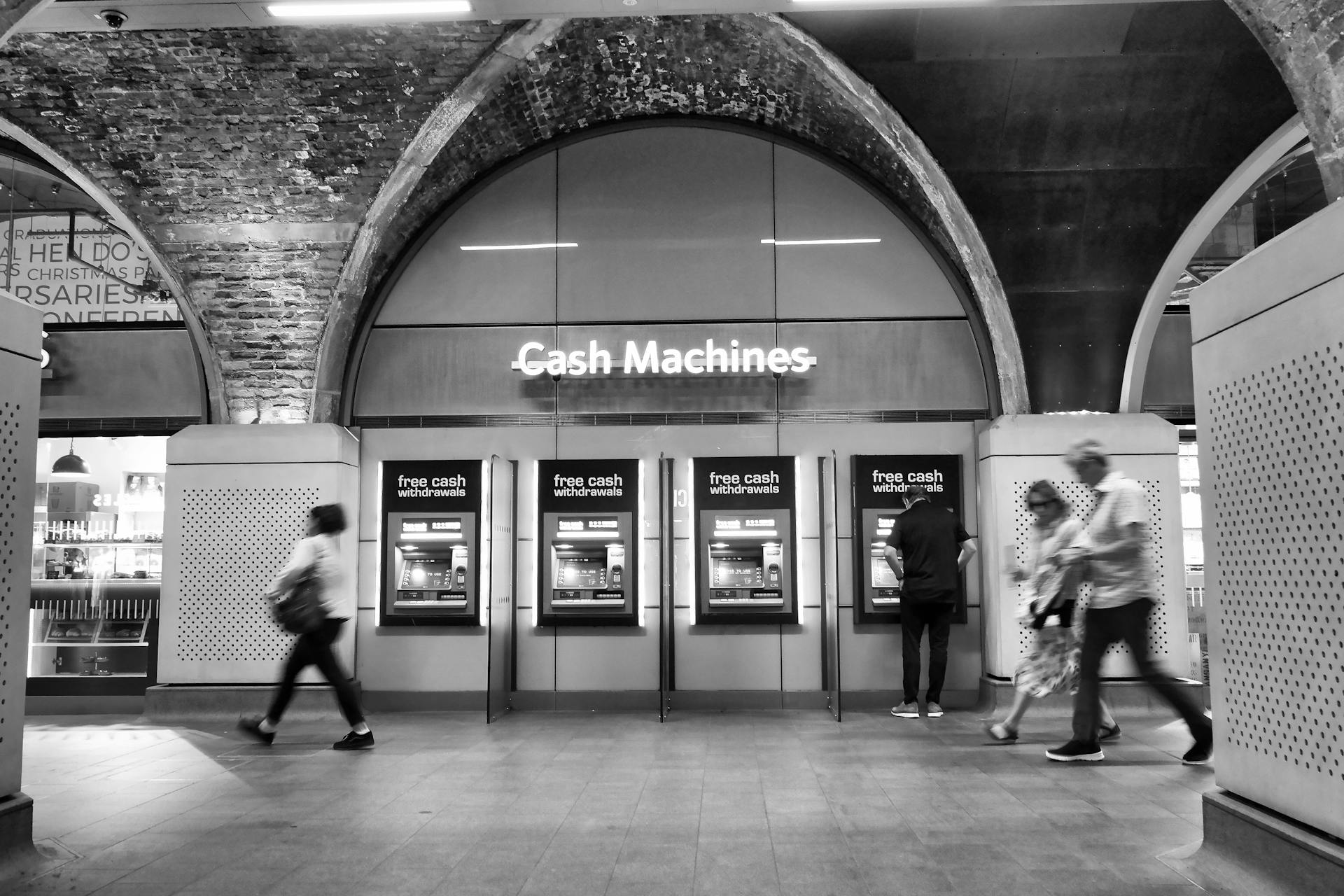
If you're using a Payroll Card, you can easily integrate it into your employer's payroll system, providing easy access to your wages earned. These cards carry a balance from month to month and can be used in the same way as a debit card.
To withdraw money from your Cash App balance, simply use the 'Cash Out' button on Cash App and enter the amount you'd like to withdraw. It's a quick and easy process that's saved me time in the past.
Block's
Block's Cash App Card is a convenient payment option that allows users to make electronic purchases. It's provided through Cash App, Block's mobile payments platform.
The Cash App Card is a type of debit card that stores cash, making it a cash card. This means it's a great way for cardholders to make electronic payments.
You can use the Cash App Card to make all types of electronic purchases, from online shopping to in-store transactions. It's a flexible and widely accepted payment method.

Here are some key features of the Cash App Card:
- Debit card that stores cash
- Used with Cash App mobile payments platform
- Allows users to make electronic purchases
One of the benefits of using the Cash App Card is that it's a cash card, which means it's not a credit card. This can help you avoid debt and stay within your budget.
Fees and Charges
The fees associated with cash cards can be a bit confusing, but don't worry, I've got you covered. If you're considering getting a TD Cash Card, be aware that the Annual Percentage Rate (APR) for purchases can range from 19.49% to 29.49% variable APR based on your creditworthiness.
Some cash cards also charge balance transfer fees, which can be $5 or 3% of the transfer, whichever amount is greater. On the other hand, the PayPal Debit Card has no fees for owning or paying with it in stores or online within the US, or when you withdraw at US MoneyPass ATMs.
Here's a breakdown of some common fees you might encounter:
Rates and Fees
Rates and Fees can be a real headache when it comes to managing your finances. You'll be charged an Annual Percentage Rate (APR) of 19.49%, 24.49% or 29.49% variable APR based on your creditworthiness for purchases.
Some credit cards offer a 0% introductory APR for a certain period, like the 0% introductory APR for first 15 billing cycles after account opening. However, after that, the APR will kick in, ranging from 19.49%, 24.49% or 29.49% variable APR based on your creditworthiness.
You'll also need to be aware of the Balance Transfer Fee, which is $5 or 3% of the transfer, whichever amount is greater. And, if you're using your account to make purchases while having a 0% introductory or promotional APR balance transfer, you can avoid paying interest if you pay the "Payment to Avoid Purchase Interest" amount shown on your account statement.
The minimum Interest Charge is a flat $1, but it can add up quickly if you're not paying your balance in full each month. And, if you're taking cash advances, be prepared for an APR of 29.74% variable APR.
Check this out: Do You Need a Bank Account for Cash App Card
Some fees are unavoidable, like the Cash Advance Fee, which is $10 or 5% of the advance, whichever amount is greater. And, if you're making international transactions, you'll be charged a Foreign Transaction Fee of 3% of each transaction in U.S. dollars.
Here's a breakdown of some common fees:
You'll also want to be aware of the ATM fees, which can range from $2.50 per withdrawal to $40 for late or return payments. Some banks and credit cards offer reimbursement for ATM withdrawals, but be sure to check the terms and conditions.
For another approach, see: How Much Money Can You Withdraw from Wells Fargo Atm
Is a Credit Considered a Liability?
Is a credit considered a liability? Yes, it is. A credit card allows people to pay for things with debt, rather than using money in their banking accounts or that's prepaid.
Using a credit card means you're essentially borrowing money from the credit card company, which is a type of liability. You'll need to pay back the borrowed amount, plus interest and fees.
A fresh viewpoint: How Do You Add a Card to Cash App
Not paying back your credit card debt on time can lead to late fees and damage to your credit score. This can have long-term consequences for your financial stability.
In the same way, not paying back other debts, like loans or mortgages, can also lead to financial difficulties. It's essential to manage your liabilities carefully to avoid these problems.
Readers also liked: Pay Apple Card with Apple Cash Not Available
Types and Options
There are several types of cash cards available, including prepaid cards that support the underbanked population. These cards aren't linked to a bank account, making them a great option for those who don't have a traditional banking relationship.
Prepaid cards can be used for various purposes, and some employers even offer payroll cards as an alternative type of prepaid cash card for their employees.
Here are some key features to consider when choosing a cash card:
- Prepaid cards offer a cash card option for those who don't have a bank account
- Payroll cards are a type of prepaid cash card offered by some employers
Types of
Prepaid cards are a type of alternative cash card that helps support the underbanked population by providing a cash card that isn't linked to a bank account.
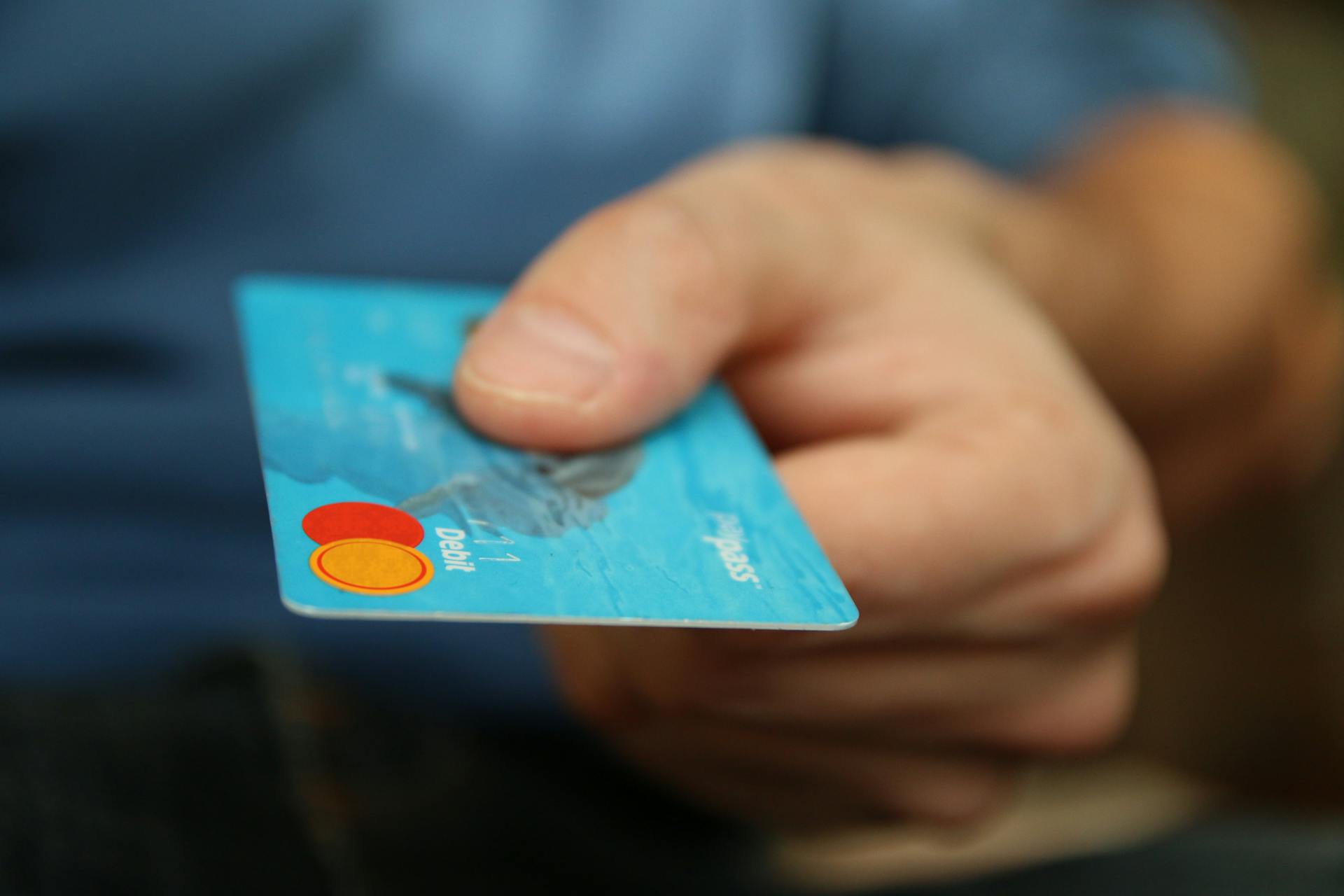
These cards often have varying terms and available uses, making them a popular option for those who need a cash card.
Payroll cards are a specific type of prepaid cash card that employers may provide for their employees, offering a convenient way to receive pay.
They can be used for a variety of purposes, including making purchases and withdrawing cash.
Is the Free?
The Cash App Card is free, and it's a customizable debit card tied to your Cash App balance. You can use it anywhere Visa is accepted, both online and in stores.
Block, the issuing company, is responsible for offering the Cash App Card, and it's not connected to your personal debit card or bank account. This means your Cash App balance is separate from your other financial accounts.
What You Get with TD Credit
With the TD Cash Credit Card, you'll get a special offer of $200 Cash Back when you spend $1,000 within the first 90 days after account opening.
You'll also enjoy a 0% introductory APR on balance transfers for the first 15 billing cycles after account opening, after which the APR will be 19.49%, 24.49%, or 29.49% variable based on your credit worthiness.
The card also comes with Visa benefits, including cell phone protection when you pay your monthly mobile bill with your card.
In addition to these perks, the TD Cash Credit Card offers unlimited 1% Cash Back on all other purchases, and you can choose your top two Spend Categories to earn unlimited 3% and 2% Cash Back.
Here are the key benefits of the TD Cash Credit Card:
- $200 Cash Back after $1,000 spent within 90 days
- 0% introductory APR on balance transfers for 15 billing cycles
- Unlimited 1% Cash Back on all other purchases
- Choose top two Spend Categories for 3% and 2% Cash Back
No annual fee applies to this credit card, making it a great option for those who want to earn cash back rewards without incurring extra charges.
Frequently Asked Questions
Is cash card different from ATM card?
A cash card is essentially the same as an ATM card, as both can only be used for cash withdrawals at an ATM. However, a debit card offers more flexibility with cash withdrawals and in-store or online payments.
Can you use a cash card anywhere?
Yes, you can use a Cash App Card anywhere Visa is accepted, both online and in stores. It's a widely accepted payment method with millions of merchants worldwide.
Featured Images: pexels.com