
Carbon Engineering is a company that's making a big impact in the fight against climate change. They're working on a technology to remove CO2 from the atmosphere.
Their technology, known as Direct Air Capture (DAC), is a game-changer. It can capture CO2 directly from the air, which is then converted into a fuel that can be used to power vehicles.
This technology has the potential to significantly reduce the global carbon footprint. By capturing CO2 from the air, we can reduce the amount of greenhouse gases in the atmosphere.
Carbon Engineering's technology is still in its early stages, but they're making great progress. They've already built a large-scale DAC facility in British Columbia, Canada.
You might like: Machine of Making Money
Environmental Impact
Carbon Engineering's Direct Air Capture (DAC) technology removes CO2 directly from the atmosphere at large scale.
By capturing one million tons of CO2 per year, CE's DAC facility will be equivalent to the work of 40 million trees.
This technology can help countries, companies, and individuals achieve their net zero targets and make a material impact in the fight against climate change.
The Innovation Centre will enable CE to continue to advance its technology, positioning CE as a global leader in the critical and growing field of Direct Air Capture.
Construction of the Innovation Centre will create approximately 45 full-time local jobs over the span of a year, in addition to the current Carbon Engineering team of 90 full-time employees.
CE's DAC facility will capture one million tons of CO2 per year, which can be permanently stored deep underground or used to produce clean, affordable transportation fuels.
The Government of Canada's Strategic Innovation Fund is supporting the development of the Innovation Centre with a CA$25 million repayable contribution.
Here's an interesting read: Tuttle Capital Short Innovation ETF
Funding and Partnerships
Carbon Engineering has secured significant funding from major players in the aviation industry. Airbus and Air Canada invested in the company to support the development of decarbonization solutions.
This investment will help accelerate the development of direct air capture technology and promote the construction of large-scale carbon removal plants. These plants will generate carbon credits that airlines can buy to offset their emissions impact.
The aviation sector is a significant polluter, accounting for 2.4 per cent of global CO2 emissions. Both Airbus and Air Canada have set ambitious emissions reduction targets for their operations.
Carbon Engineering is also partnering with Occidental Petroleum (Oxy) and 1PointFive on the construction of a massive DAC plant in the Texas Permian Basin. This plant will have a capacity to capture 500,000 tons of CO2 per year.
Consider reading: Emissions Reduction Currency Systems
Air Canada and Airbus Funding
Air Canada and Airbus have invested in Carbon Engineering to fund ongoing research and development of direct air capture technology.
This investment will help accelerate the development of decarbonization solutions for the aviation industry, which is responsible for an estimated 2.4 per cent of global CO2 emissions.
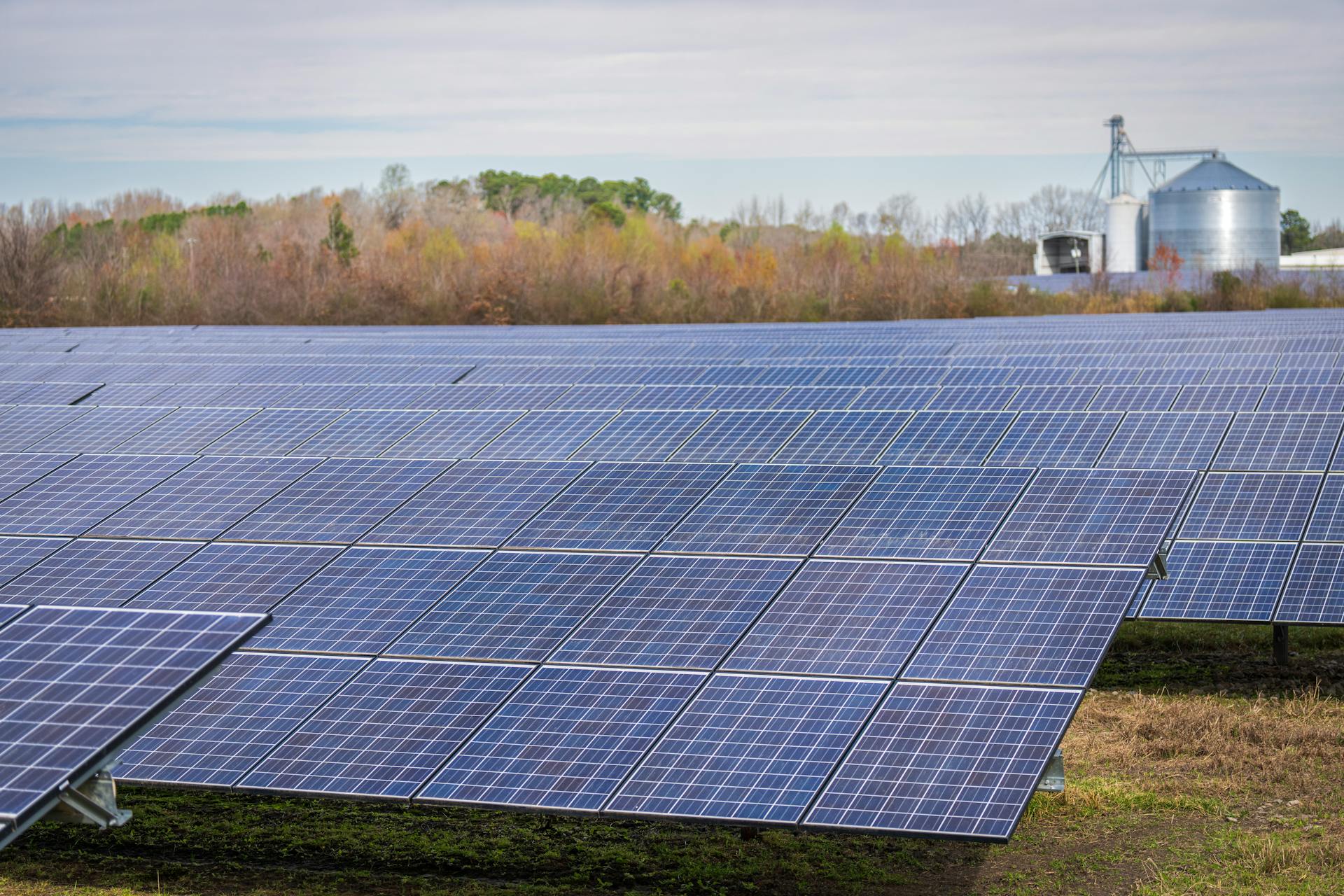
Both companies have set ambitious emissions reduction targets, with Air Canada aiming to achieve net-zero GHG emissions by 2050.
The funding will go towards promoting the construction of large-scale carbon removal plants that generate carbon credits airlines can buy to offset their emissions impact.
Air Canada's president and CEO, Michael Rousseau, sees investing in Carbon Engineering as a key part of their strategy to achieve net-zero emissions.
Airbus' vice president, Karine Guenan, views the investment as a reaffirmation of their commitment to using direct air carbon capture as a solution for decarbonizing the aviation industry.
Supports Largest Plant
Carbon Engineering is supporting the world's largest carbon capture plant in the Texas Permian Basin. This massive facility will have a capacity to capture 500,000 tons of CO2 per year.
The plant is a joint project between Occidental Petroleum (Oxy) and 1PointFive, with Carbon Engineering providing technological support. This is a pivotal moment in the deployment of Carbon Engineering's direct air capture solution.
The facility is expected to be the first of a wave of similar projects, delivering cost-effective solutions to hard-to-decarbonize industries. This represents a major step towards achieving net-zero emissions.
Carbon Engineering's CEO, Friedmann, is thrilled about this project, saying it's a fulfillment of their vision to scale up their 2015 pilot project in Squamish. They're already working on the engineering of the second site, which would host up to 30 such plants.
By 2035, Oxy intends to build a hundred projects on the one-megaton scale, with the first facility being the largest in the world. This is a significant milestone in the fight against climate change.
You might enjoy: Moody's Debt Rating Scale
Expansion and Goals
Carbon Engineering is on a mission to scale up its direct air capture solution, and it's making significant progress. The company is providing technological support to Occidental Petroleum and 1PointFive on the construction of a massive DAC plant in the Texas Permian Basin.
This facility will be the largest in the world, with a capacity to capture 500,000 tons of CO2 per year. It's a pivotal moment in the deployment of Carbon Engineering's large-scale direct air capture solution.
The Oxy plant is expected to be the first of a wave of similar projects intended to deliver cost-effective solutions to hard-to-decarbonize industries. This is a crucial step towards achieving net-zero targets.
Carbon Engineering has been innovating for over a decade to deliver climate solutions at megaton scale. Now, with construction starting on this first, large-scale facility, the company's vision is becoming a reality.
The company is already working on the engineering of the second site, which would host up to 30 such plants. This is just the beginning of a series of projects that will help to make a significant impact on the environment.
Occidental Petroleum has acquired all the outstanding equity of Carbon Engineering for $1.1 billion, a move that will further support the company's ambitious goals.
Discover more: West Point Mint Facility
Method and Purpose
Carbon capture is a crucial piece of the puzzle when it comes to solving the emissions problem. A 2021 finding by the Intergovernmental Panel on Climate Change concluded that emission reductions alone won't limit global warming to the 1.5 C target by 2050.
Currently, there are 35 commercial carbon capture, utilization and storage (CCUS) plants in operation around the world, capturing only 45 megatonnes of CO2. This is a tiny fraction of what's needed.
The International Energy Agency (IEA) data shows that carbon capture capacity needs to be drastically ramped up – by at least 100-fold – to provide the additional means of achieving global CO2 reductions consistent with the pathway to 1.5 C.
CE's partnership with Air Canada and Airbus is the beginning of many similar deals with companies in the aviation and transportation sectors. DAC technology provides a cost-effective means of generating a level of carbon credits that will allow firms to attain their net-zero goals by purchasing such credits while developing alternative technologies that reduce CO2 emissions at source.
The U.S. Treasury guarantee of $180 a ton for carbon is a game-changer for scaling up carbon capture plants. This financial certainty is essential for financing big projects like carbon capture facilities.
For another approach, see: Pre Payment Means
Frequently Asked Questions
What is an example of carbon geoengineering?
Carbon geoengineering involves methods like direct air capture and storage, ocean iron fertilization, and ocean alkalinity enhancement to remove CO2 from the atmosphere. These techniques aim to mitigate climate change by reducing atmospheric carbon levels.
Featured Images: pexels.com