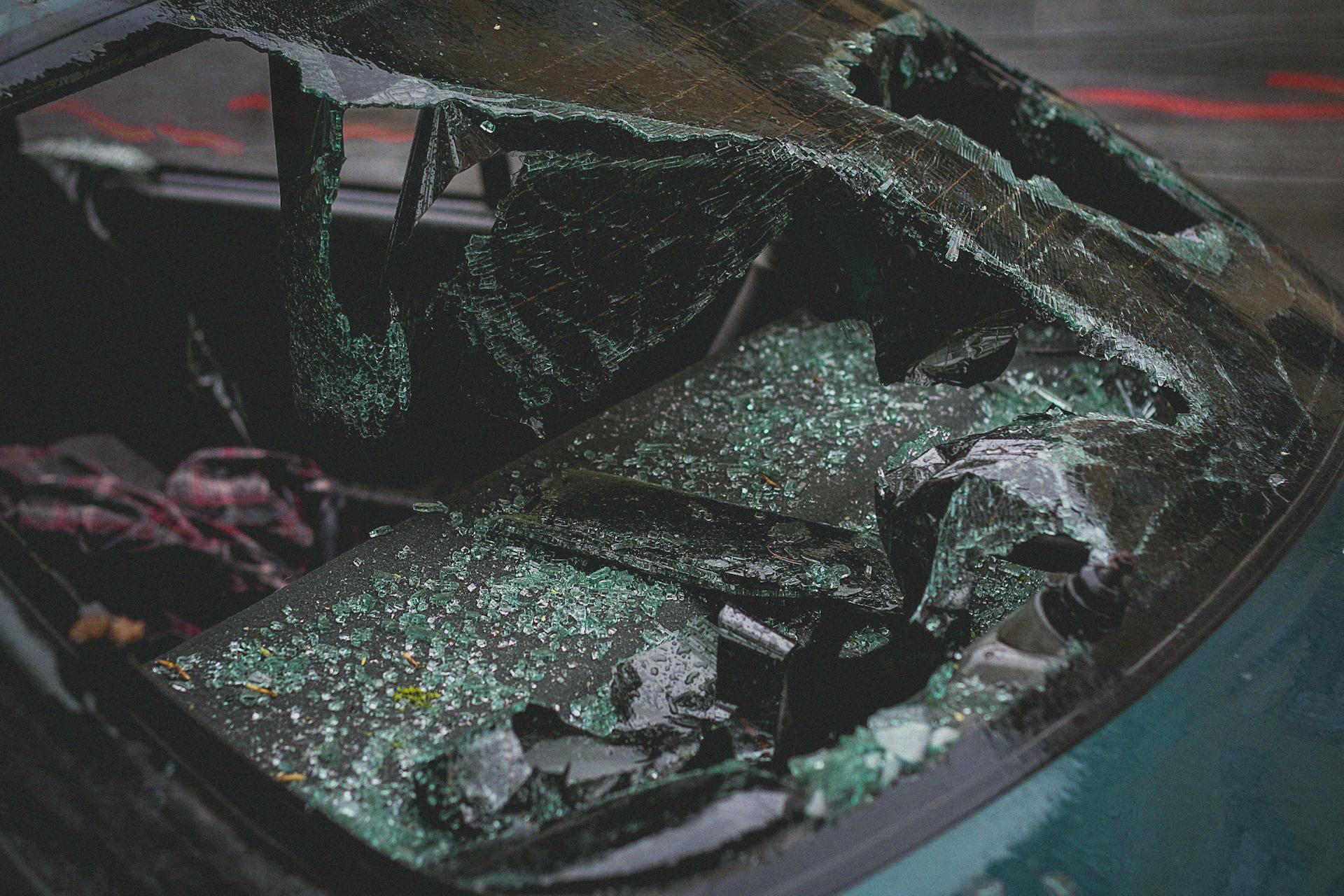
Comprehensive and collision coverage are two types of car insurance that can help protect you financially in the event of an accident or other damage to your vehicle.
Comprehensive coverage typically covers damage caused by events other than collisions, such as theft, vandalism, or natural disasters.
You can expect to pay around 100 to 300 dollars per year for comprehensive coverage, depending on your location and vehicle.
In some states, comprehensive coverage may be mandatory for drivers who finance their vehicles.
What is Comprehensive and Collision Insurance
Comprehensive and collision insurance are two types of car insurance coverage that protect your vehicle from physical damage.
Comprehensive insurance covers damage to your vehicle from unexpected incidents like theft, vandalism, hitting a deer, tree damage, hail damage, and more. This type of coverage is usually optional and not required by state law, but may be required by your vehicle lender.
Collision insurance, on the other hand, covers damage to your vehicle from accidents with other vehicles or objects, such as if you rear-ended someone and need to replace your bumper. This type of coverage is usually required by vehicle lenders.
On a similar theme: Life Insurance That Covers an Insured's Whole Life
The cost of comprehensive and collision insurance can vary based on the insurer, your location, the value of your vehicle, and other factors. Comprehensive coverage usually costs less than collision coverage, but you can adjust the cost by opting for a higher car insurance deductible to lower your premiums.
Here are some examples of events covered by comprehensive and collision insurance:
Both comprehensive and collision insurance policies pay for damages up to the actual cash value of your vehicle, which is the amount that your car is worth on the open market. The deductible for both types of coverage is usually around $500 to $1,500.
Choosing the Right Deductible
You can choose different car insurance deductibles for comprehensive and collision coverages, making it easier to tailor your coverage to your needs.
The key is to determine how much you'd be willing to pay out of pocket if your car was damaged. For example, if you have $500 in savings set aside for non-maintenance vehicle repairs, choose a deductible of $500.
The higher your deductible, the less your premium will be. This is because you're taking on more financial risk, but you'll pay lower monthly payments.
It's easier to expect what you'll pay out of pocket for any physical damage to your vehicle if you choose the same deductible for both comprehensive and collision coverages.
You might enjoy: What Is a Deductible in Car Insurance
Benefits and When to Choose
If you own a new or high-value car, combining comprehensive and collision coverage provides peace of mind. Repairs or replacements for newer vehicles can be expensive and having both policies ensures you’re fully protected.
This is especially important for new vehicles, as they're often more expensive to repair or replace.
Having comprehensive and collision coverage can give you the financial security you need to get back on the road quickly after an accident.
You might enjoy: Why Is Massachusetts Car Insurance so Expensive
When Both Are Beneficial
If you own a new or high-value car, combining comprehensive and collision coverage provides peace of mind. Repairs or replacements for newer vehicles can be expensive and having both policies ensures you’re fully protected.

New vehicles often have higher repair costs, and full coverage ensures you’re not left paying out-of-pocket after an accident or unexpected event. This is especially important for drivers who live in more hazardous areas or drive longer distances.
Accidents can happen even in the safest places, and having comprehensive and collision insurance can provide financial security when they do. In fact, anyone who owns a car would be wise to have comprehensive and collision insurance.
Drivers who live in areas with incredibly low risk of damage might be able to get by without incident, but accidents can still happen. If you live in a state like Montana, ranked the least safe state to drive in for 2022 by WalletHub, then comprehensive and collision are must-haves.
Lenders will usually require that you carry collision coverage during the term of the loan or lease if you've financed a vehicle. This ensures that you're protected in case of an accident or unexpected event.
For your interest: Physician Malpractice Insurance Rates by State
Right to Keep a Totaled Vehicle?
You have the right to keep a totaled vehicle, but you'll need to consider the salvage value deduction from your settlement. This means you'll essentially be "buying back" your vehicle for the salvage value, which will be subtracted from the payout.
The salvage value will be taken into account when determining the settlement amount. If you choose to keep the vehicle, you'll be responsible for re-registering it with the California Department of Motor Vehicles, which may come with additional costs.
A car is considered totaled when the repair costs are ≥ 3/4 of the car's actual cash value plus salvage value. This is a key factor in deciding whether to repair or total your vehicle.
Discover more: Does Insurance Cover Rental Car When Car Is in Shop
Cost Considerations
Cost considerations for comprehensive and collision insurance are crucial to understand.
The cost of comprehensive insurance coverage and auto insurance collision coverage varies based on several factors, including vehicle value, location, and driving habits. Vehicle value is a significant factor, with newer or high-value cars typically having higher premiums for both coverage types.
Consider reading: Cash Value Life Insurance Canada
Living in areas with high accident rates or extreme weather increases costs. Frequent driving or commuting can also impact rates, especially for collision coverage.
To make informed decisions about your coverage, consider your vehicle’s value and how much you will pay out-of-pocket for repairs. Evaluate your driving environment—urban, rural, or high-theft areas—and the risks you face regularly.
The cost for each type of coverage depends on the current market value of the covered vehicle and the deductible you elected. The deductible is the amount you have to pay out of pocket before the insurance will pay any money toward a covered claim.
Here's a breakdown of common deductible levels for collision and comprehensive insurance:
- Collision insurance deductible levels: $100, $200, or $500
- Comprehensive insurance deductible levels: $200, $500, or $1,000
On average, comprehensive premiums are lower than collision premiums. According to the National Association of Insurance Commissioners, the average comprehensive premium in 2022 was $196, while the average collision premium was $400.
Expand your knowledge: Can You Write off Life Insurance as a Business Expense
Claims and Insurance Process
Navigating the claims process with bundled coverage is a breeze, as your policy already addresses both collision-related and non-collision-related events, eliminating gaps in coverage.
Explore further: Insurance Cover on Business - Merchant Services
Bundling comprehensive and collision coverage ensures a more straightforward claims process, which is a relief when you're already dealing with the stress of an accident.
Making a single claim for something like bumper damage from a deer running in front of your car may not affect your rates, but multiple claims in a short period of time could lead to a premium increase.
On a similar theme: How Long Do Comprehensive Claims Stay on Insurance
Will my premium increase after a claim?
Making a claim can be a stressful experience, and you might wonder if it will affect your premium. The short answer is, it depends.
A single claim, like one for bumper damage from a deer, might not increase your rates. However, multiple claims in a short period of time could lead to a premium increase.
Insurers consider many factors, including the frequency and severity of claims, when determining your premium. So, it's essential to review your policy and understand what's covered.
Making a claim should not be a reason to avoid bundling your coverages, as it can actually simplify the claims process and reduce gaps in your coverage.
For another approach, see: Does Using Comprehensive Insurance Raise Rates
Can a Body Shop Waive My Deductible
Bundling comprehensive and collision coverage can make the claims process more straightforward. This ensures no gaps in your coverage, reducing the likelihood of unexpected expenses.
Choosing the right deductibles for comprehensive and collision coverage is crucial. It depends on how much you're willing to pay out of pocket for repairs.
A body shop may waive your deductible, but this is usually only possible if the repair shop's estimate wasn't inflated for that purpose. This means they're doing you a favor, not trying to take advantage of you.
Discover more: Re Quote Car Insurance
Current Progressive Customers
If you're a current Progressive customer, you can easily add comprehensive and collision coverage to your vehicle by logging in to your policy or calling their customer service number at 1-866-749-7436.
Leasing, Financing, and Vehicle Priority
If you're leasing or financing a car, you're likely required to have both comprehensive and collision coverage. Most leasing or financing agreements require these policies to protect the vehicle's value in case of damage. Lenders want to know the vehicle's value is protected, and bundling these policies satisfies those requirements. Combining comprehensive and collision coverage provides peace of mind, especially for new or high-value vehicles. Repairs or replacements for newer vehicles can be expensive, and having both policies ensures you're fully protected. New vehicles often have higher repair costs, and full coverage ensures you're not left paying out-of-pocket after an accident or unexpected event.
A fresh viewpoint: Car Insurance Policies Utah
Understanding Coverage and Liability
Comprehensive and collision insurance policies pay for damages up to the actual cash value of your vehicle, which is the amount your car is worth on the open market.
Liability-only policies, on the other hand, only cover damages to other drivers and their vehicles after an at-fault accident. This means that if you cause an accident or are in an accident with an uninsured driver, your own liability policy won't pay to repair your vehicle.
To determine if you need full-coverage car insurance, consider the value of your vehicle. If your annual car insurance premium exceeds 10% of your vehicle's value, full coverage might not be worth it. According to Kelley Blue Book, this can save you money on the cost of your premiums.
A deductible is typically involved in both collision and comprehensive auto insurance, and is usually around $500 to $1,500. This is the amount you must pay before your insurer begins to cover the cost of damages.
A different take: Should I Get Critical Illness Insurance
What Covers
Comprehensive insurance covers a range of unexpected events that can damage your vehicle, including theft, vandalism, natural disasters like floods and hurricanes, falling objects like tree branches, and animal collisions.
Comprehensive insurance is particularly valuable for drivers who live in areas prone to natural disasters or have a history of vandalism in their neighborhood.
Comprehensive insurance can protect you from damage caused by events like floods, hurricanes, tornadoes, or earthquakes, as well as theft or vandalism.
Collision insurance, on the other hand, covers damage to your vehicle if you're involved in an accident with another vehicle, object, or building.
Collision insurance includes single-car accidents, rollovers, and hitting a stationary object like a tree or pole.
Here's a breakdown of what comprehensive and collision insurance cover:
Both comprehensive and collision insurance policies typically involve a deductible, which is usually around $500 to $1,500.
Liability
Liability is a critical aspect of car insurance that can be a bit confusing. California’s “shared fault” law makes it possible to apportion liability for an accident among more than one party.
If you're partially to blame for an accident, you may still be able to recover some of your damages from another driver. Your own collision policy may then make up the difference.
Liability-only policies or minimum-coverage auto insurance only cover damages to other drivers and their vehicles after an at-fault accident.
If you cause an accident or are in an accident with an uninsured driver, your own liability policy won't pay to repair your vehicle.
A fresh viewpoint: How to Claim Car Insurance for Own Damage
Insurance Options and Providers
Comparing car insurance quotes from multiple providers is the best way to find the lowest premium for comprehensive or collision coverage.
There are several top recommended providers to consider, including USAA and Travelers.
To get started, you can use a tool to compare car insurance quotes from these and other insurers.
For another approach, see: Disability Income Insurance Quotes Online
Top Picks
If you're looking to compare car insurance options, it's a good idea to check rates from multiple providers. Comparing rates can help you find the lowest premium.
USAA is one of our top recommended providers, known for offering competitive rates.
Travelers is another top pick, offering comprehensive and collision coverage options.
The best way to compare car insurance quotes is by using a tool or reading more about top providers like USAA and Travelers.
If this caught your attention, see: Comprehensive Car Insurance Compare
Commonly Bundled Products
Comprehensive and collision insurance are often sold together because they offer full protection for your vehicle. This bundled approach is strongly recommended.
Many insurers bundle these two types of insurance to simplify the claims process. This means you won't have to worry about gaps in your coverage.
Bundling comprehensive and collision insurance ensures that both collision-related and non-collision-related events are covered. This can give you peace of mind, knowing you're protected in any situation.
What if I disagree with my vehicle repair or total decision?
If you disagree with the decision to repair or total your car, you have the right to dispute it. You can choose to keep the car and have the insurer pay the lesser of the car's cash value (before the damage) less salvage value, or the insurer's estimate of the cost to repair the vehicle.
This option is available unless your car is financed. It's a good idea to understand the value of your vehicle and the repair costs involved. You can use the insurer's estimate of the cost to repair the vehicle as a reference point.
Check this out: Bike Insurance Estimate
You may want to keep a vehicle for sentimental reasons, even if the insurer considers it a total loss. In this case, you can negotiate with the adjuster to convince them that the car is worth more or that it should be declared a total loss instead of being repaired.
To get the insurer to agree with your valuation of the vehicle, you may want to consider hiring an experienced California car accident lawyer. They can often help you convince the adjuster to change their decision.
Here are the key options to consider:
- The car's cash value (before the damage) less salvage value
- The insurer's estimate of the cost to repair the vehicle
Getting Started
To get started with comprehensive and collision car insurance, it's essential to understand the basics. Comprehensive insurance covers damages to your vehicle not caused by a collision, such as vandalism, theft, or natural disasters.
Most car owners choose to bundle comprehensive and collision coverage together, as it's often cheaper than purchasing them separately. This is because the insurance company can offer a discount for bundling the two coverages.
Comprehensive coverage typically has a deductible, which is the amount you pay out-of-pocket before the insurance kicks in. For example, if your deductible is $500 and the damage to your car is $1,500, you'll pay the first $500 and the insurance will cover the remaining $1,000.
Collision coverage also has a deductible, which can range from $100 to $1,000 or more, depending on the insurance company and your policy.
Pricing and Comparison
The average annual comprehensive premium in the US is $196, while the average collision premium is $400, according to the National Association of Insurance Commissioners.
You can see the average premiums vary significantly from state to state. For example, in California, the average comprehensive premium is $104.29, while in Louisiana, it's $281.04.
In some states, like Idaho, the average collision premium is lower than the national average, at $283.24. On the other hand, in the District of Columbia, it's significantly higher, at $586.01.
Expand your knowledge: Types of Premium in Insurance
Here's a breakdown of the average premiums by state:
These numbers can give you a rough idea of what to expect when shopping for car insurance. Keep in mind that your individual circumstances, such as your driving history and location, will also play a big role in determining your premiums.
Frequently Asked Questions
What is not covered by comprehensive insurance?
Comprehensive insurance excludes damages from collisions with other vehicles or objects, as well as normal wear and tear on your vehicle. If you're unsure what's covered, learn more about the specifics of comprehensive car insurance.
Can I drive without collision and comprehensive?
No state requires collision and comprehensive insurance, but they're highly recommended to protect your vehicle and finances. If you have a car loan or lease, these insurance types are likely mandatory.
What is an example of comprehensive damage?
Comprehensive coverage includes damage from non-collision events like fire, theft, vandalism, and natural disasters. Examples of comprehensive damage include damage from windstorms, floods, and falling objects.
Featured Images: pexels.com