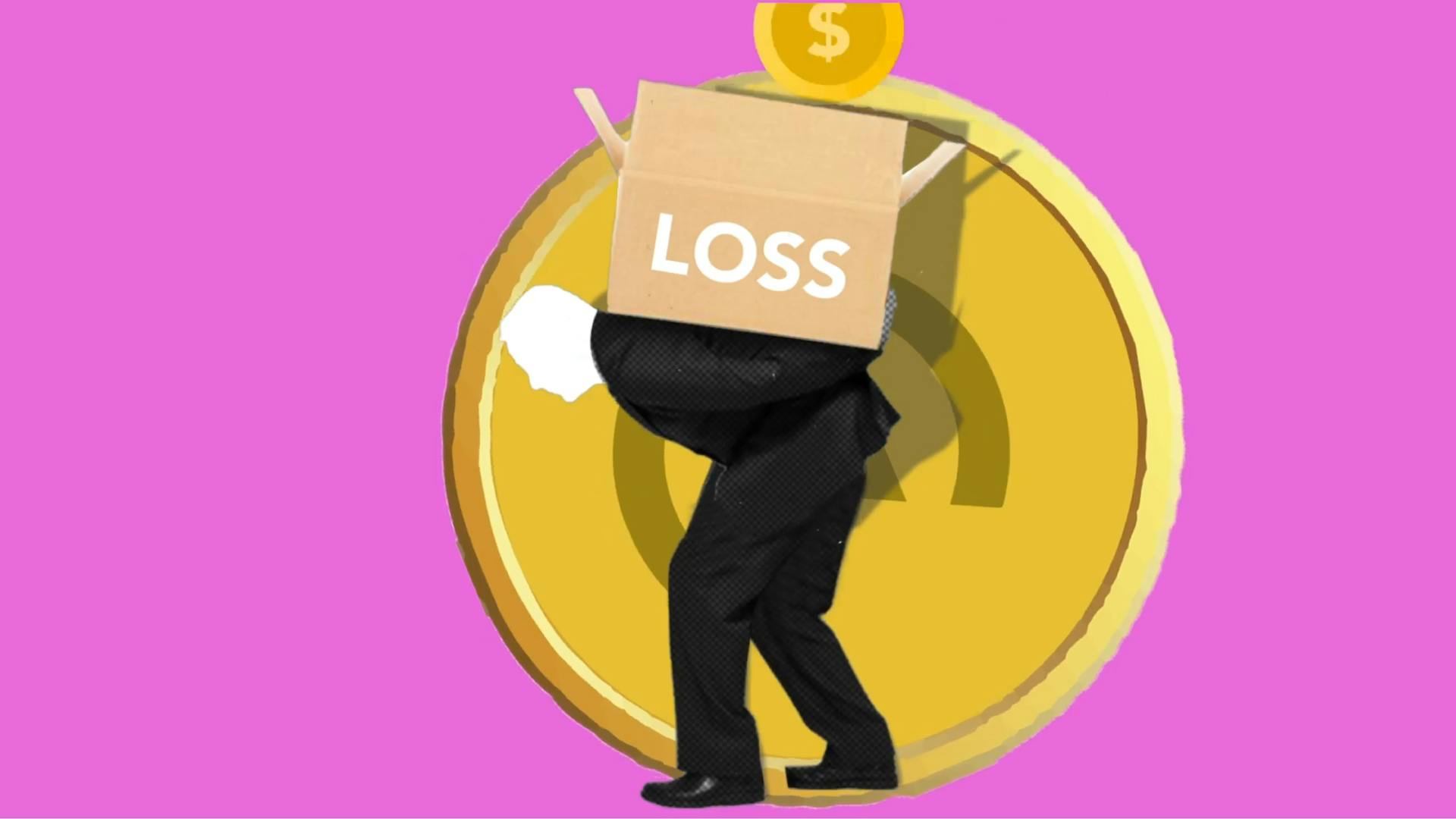
You can use your 401k to pay off debt, but it's not always the best idea. According to the IRS, you can borrow up to 50% of your 401k balance, up to a maximum of $50,000.
Borrowing from your 401k can provide a significant amount of money to pay off high-interest debt, such as credit card balances. However, you'll need to pay back the loan with interest, which can be a challenge if you're struggling to make ends meet.
The interest rate on 401k loans is usually lower than credit card interest rates, but you'll still need to pay it back, which can put a strain on your finances.
A fresh viewpoint: Can an Employer Take Back Their 401k Match
401(k) Withdrawal Rules
If you're considering using your 401(k) to pay off debt, it's essential to understand the withdrawal rules first. You'll incur an automatic 10% penalty if you take money out of your 401(k) account before the age of 59½.
The cost of withdrawing money from your 401(k) primarily depends on your age, with a defining age of 59½ years old. People who are younger are subject to higher withdrawal costs.
Worth a look: 401 K Alternative Crossword
Withdrawing funds from your 401(k) is a serious decision, and it comes with tax consequences and earnings consequences. You'll pay immediate income taxes on any money you withdraw, regardless of amount and regardless of your age.
If you're younger than 59½ years old, you'll also get stuck with a 10% early withdrawal penalty. This penalty can add up quickly, especially if you're much younger than 59½.
Here are some examples of hardship withdrawals that might qualify you for a penalty-free withdrawal:
- Certain medical costs
- Payments for avoiding eviction from or foreclosure on a principal residence
- Expenses to pay for a major repair of a principal residence
- Expenses and losses from a natural disaster (hurricane, tornado, fire or flood) provided the principal residence falls within a disaster zone
- Down payments and costs to buy a principal residence
- Tuition and other related educational expenses
- Burial or funeral expenses
Keep in mind that if you have access to money from a spouse or from children, that often nullifies the "immediate and heavy" argument.
401(k) Withdrawal Options
You have two main options for taking money out of your 401(k): making a withdrawal or borrowing against the account. A withdrawal is permanent, and you can't put the money back in.
You can borrow against your 401(k) up to five years, but you must pay the money back within that timeframe. This is a temporary solution, and you'll need to repay the loan with interest.
A unique perspective: Convert 401k to Roth 401 K
Some 401(k) plans allow for hardship withdrawals, which can be a more flexible option. Hardship withdrawals are typically allowed for immediate and heavy financial needs, such as medical expenses, preventing foreclosure or eviction, or paying for a major repair of your primary residence.
Here are some examples of qualifying expenses for hardship withdrawals:
- Certain medical costs
- Payments for avoiding eviction from or foreclosure on a principal residence
- Expenses to pay for a major repair of a principal residence
- Expenses and losses from a natural disaster (hurricane, tornado, fire or flood) provided the principal residence falls within a disaster zone
- Down payments and costs to buy a principal residence
- Tuition and other related educational expenses
- Burial or funeral expenses
Keep in mind that if you have access to money from a spouse or children, that may nullify the hardship withdrawal argument.
Advantages and Disadvantages
Using your 401(k) to pay off debt can be a viable option in certain situations. For instance, if you have a high-interest debt, such as a credit card with a big balance, you may get a much lower interest rate on a 401(k) loan.
However, it's essential to consider the potential drawbacks. Making an early 401(k) withdrawal to pay back debt can result in taxes and penalties, and will reduce your retirement savings.
You might enjoy: Do You Pay Taxes on Roth 401 K
A 401(k) loan, on the other hand, will not incur taxes or penalties, but it can still reduce your retirement savings in the long run. This is because you'll be using money meant for retirement to pay off debt.
Here are some situations where using your 401(k) to pay off debt might be okay:
- If you have upcoming debt payments and no other alternatives for paying them, borrowing from your 401(k) can reduce fees and penalties.
- If you're about to default on a loan or go into bankruptcy, borrowing from your 401(k) can prevent court action, wage garnishment, or asset repossession.
- If you're about to miss credit card payments or loan payments, borrowing from your 401(k) can help preserve your credit score.
It's worth noting that your 401(k) is meant to be money for retirement, so it's best to use it as a last resort for paying off debt or getting through a financial pinch.
A different take: 401k S and P Index Only Startegy
Taxes and Penalties
If you're considering using your 401(k) to pay off debt, it's essential to understand the taxes and penalties involved. You'll owe income tax based on your tax bracket at the time of the withdrawal, plus a potential 10% penalty if you're under 59½.
Taxes can be a significant burden, with federal and state income taxes combining to take a 20-30% bite out of your withdrawal. For example, if you withdraw $30,000, you might only receive $20,000 or less after taxes and penalties.
Curious to learn more? Check out: 20 401k Contribution
The 10% early withdrawal penalty is automatic if you're under 59½, and it can add up quickly. The younger you are, the more that penalty amount adds up as an opportunity cost. You'll also get hit with a federal income tax from the withdrawal, deducted directly from the amount you borrow.
Here's a breakdown of the taxes and penalties you can expect:
Keep in mind that these taxes and penalties can be a big deal, especially if you're younger than 59½. It's essential to carefully consider your options and explore alternative solutions to paying off debt before dipping into your 401(k).
Alternatives to 401(k) Withdrawal
If you're struggling with debt, withdrawing from your 401(k) might seem like an easy solution, but it's not always the best option.
Using HSA savings is a viable alternative, especially for qualified medical expenses. This way, you can tap into funds that are already set aside for medical costs.
Readers also liked: Medical Debt Credit Report 2024
Tapping into emergency savings is another option, but make sure you have a solid emergency fund in place before using it. This will help you avoid depleting your savings and prevent future financial stress.
Transferring higher interest credit card balances to a new lower (or zero) interest credit card can also help you manage debt. This can save you money on interest and help you pay off your balance faster.
Using other non-retirement savings, such as checking, savings, and brokerage accounts, is also an option. However, be aware that you may pay taxes and penalties on any earnings withdrawn.
A home equity line of credit or a personal loan can also be used to pay off debt, but be cautious of the interest rates and fees associated with these options.
Withdrawing from a Roth IRA is another alternative, but keep in mind that you'll still pay taxes on any earnings withdrawn. Contributions can be withdrawn tax- and penalty-free, but it's essential to understand the rules and implications before making a decision.
Here are some alternatives to consider:
- Using HSA savings for qualified medical expenses
- Tapping into emergency savings
- Transferring higher interest credit card balances
- Using other non-retirement savings
- Using a home equity line of credit or a personal loan
- Withdrawing from a Roth IRA (with tax implications)
Risks and Consequences
Using your 401(k) to pay off debt may seem like a quick fix, but it's a costly one. You'll incur significant penalties and costs if you're younger than 59½, and you'll miss out on stock market gains and compound interest.
Any money you take out of your 401(k) will be subject to income taxes, which could push you into a higher tax bracket. This means you'll have to withdraw more money than you need to pay your debt and still cover taxes and penalties.
You'll also be hit with an additional 10 percent early withdrawal penalty, unless the Rule of 55 applies to you. This is on top of the taxes and penalties, making it a double whammy.
Here are the potential consequences of using your 401(k) to pay off debt:
- Significant penalties and costs if you're younger than 59½
- Missing out on stock market gains and compound interest
- Income taxes, which could push you into a higher tax bracket
- Additional 10 percent early withdrawal penalty
It's worth noting that everyone's financial situation is different, and some people may value the peace of mind that comes with paying off their debt more than they value their 401(k) balance. However, it's essential to consider other ideas before tapping into your retirement account.
Curious to learn more? Check out: 401k Stable Value
Loan and Withdrawal Process
If you're considering using your 401(k) to pay off debt, understanding the loan and withdrawal process is crucial. You have two options: making a withdrawal or taking a loan.
A withdrawal is permanent, meaning you can't put the money back in. You can withdraw up to 50% of your vested account balance or $50,000, whichever is less. However, you'll face income taxes and a 10% early withdrawal penalty if you're under 59½ years old.
Taking a loan, on the other hand, is a temporary solution. You can borrow up to 50% of your vested account balance or $50,000, whichever is less, and repay it within five years. The interest rate on a 401(k) loan is usually lower than what you'd get from other lenders, but it's not tax-deductible.
Before taking a loan or withdrawal, check your plan's rules and regulations. Some plans may have different limits or requirements. For example, you may need consent from your spouse or domestic partner before taking a 401(k) loan.
For another approach, see: S Corp 401k Match
Here are the key differences between a withdrawal and a loan:
Keep in mind that taking a loan or withdrawal from your 401(k) will reduce your retirement savings and may impact your future financial goals. Consider exploring other debt repayment options before tapping into your retirement funds.
Financial Planning and Strategy
Before tapping into your 401(k) to pay off debt, consider other debt management strategies. You can access taxable investments in a brokerage account at any time, although you may own capital gains taxes on any profits.
Taxable investments can be a good alternative to 401(k) withdrawals, as you won't owe fees or penalties. Life insurance policies with significant cash value can also be used to borrow against, but you'll need to pay back the loan or it will reduce the amount of money your loved ones get when you pass away.
If you have a health savings account (HSA), make sure you've reimbursed yourself for all qualified medical expenses incurred after the account was opened. You may be able to use that newly freed money to pay down your debt, especially if you're 65 or older and can use the money on any expense.
To get debt-free, keeping a budget, prioritizing your debts, and making an extra payment whenever possible are all effective strategies. You can also consider consulting a financial advisor to review your larger financial picture and find opportunities to pay off your debt.
Here are some alternative debt management strategies to consider:
- Taxable investments
- Life insurance loan
- Health savings account (HSA)
Bankruptcy might be another option to consider, as it can allow you to eliminate your debt, keep your retirement, and rebuild your credit—all at the same time. This can be a complex and serious decision, so it's essential to weigh the pros and cons carefully.
Featured Images: pexels.com