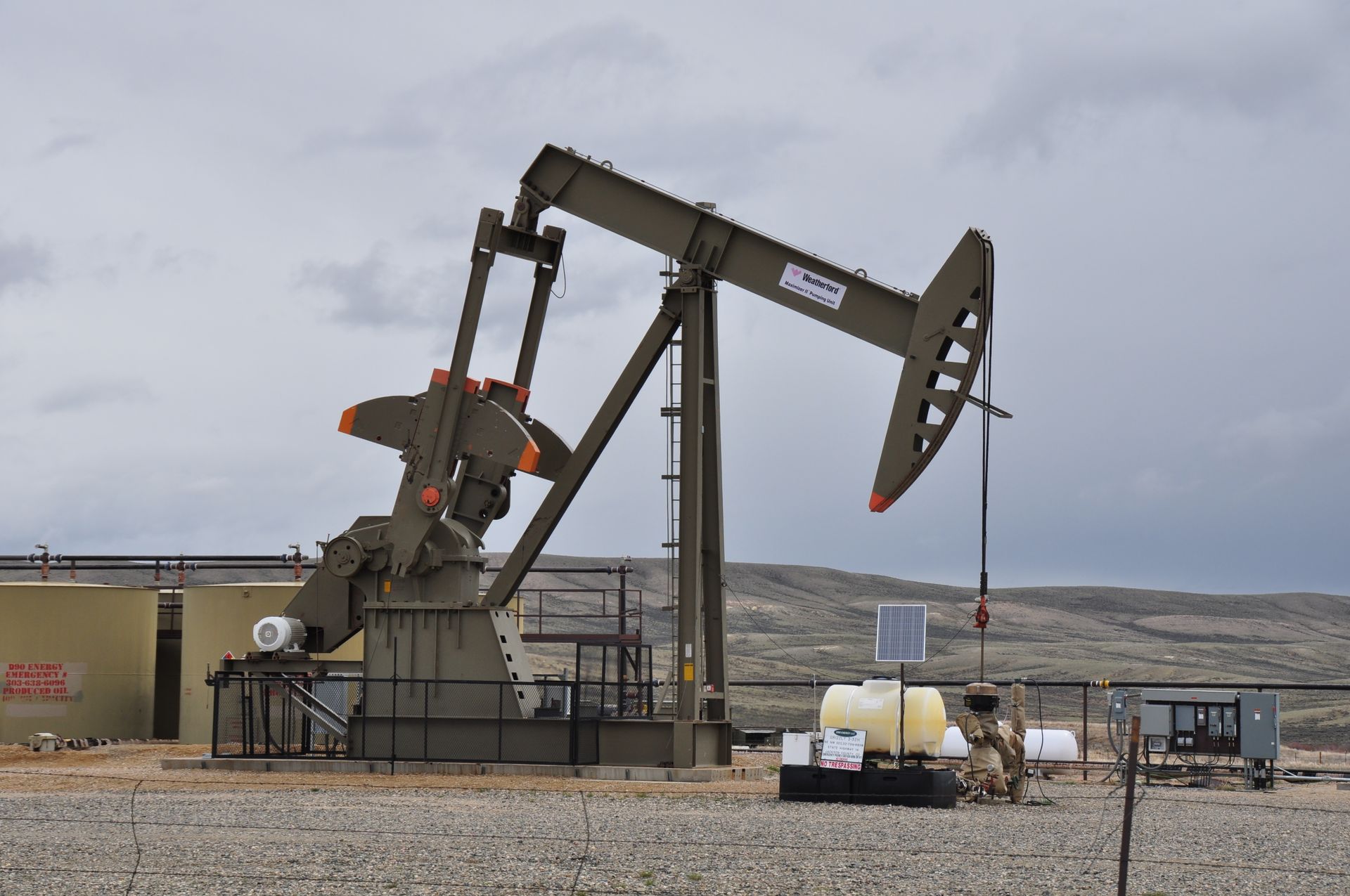
Benchmark Crude Oil is the standard by which the value of other oils is measured. It's a blend of various light crude oils from the Forties field in the North Sea, the Oseberg field in Norway, the Ekofisk field in the North Sea, and the Norwegian North Sea's Alba field.
Benchmark Crude Oil is used as a pricing reference point for other oil grades, and its price is influenced by global demand and supply. The price of Benchmark Crude Oil is set daily by the International Petroleum Exchange (IPE) in London.
The value of Benchmark Crude Oil is used to calculate the prices of other oil grades, making it a crucial factor in global trade.
Suggestion: Essential Oils Enchanted
What Is Benchmark Crude Oil
Benchmark crude oil is a valuable tool for investors and industry stakeholders. It provides a starting point and standard of comparison for evaluating the many different varieties of crude oil. Over 200 varieties of crude oil are actively traded in the market.
The industry relies on benchmarks to establish an initial price reference. This helps provide more stability to the market as a whole. It also promotes and enables liquidity in the market.
Key Takeaways and Fundamentals
Benchmark crude oil is the petroleum used as a pricing reference for other types of oil-based securities and oil itself. It's a gauge that investors use to compare and evaluate other types of crude oil.
Benchmark crude oil primarily tracks three main types of oil: West Texas Intermediate, Dubai crude, and North Sea Brent crude. These are the main players in the oil market, and understanding them is crucial for traders and investors.
The Brent benchmark is used to price over three-quarters of the world's traded oil, making it one of the most liquid crude grades. This is a significant advantage over other crudes.
Physical traders prefer the oil complex based on the Brent benchmark, which enables prices to more accurately reflect global supply and demand. This is because the Brent benchmark is based on waterborne crude oil that can be shipped anywhere, giving it access to global shipping, port, and storage capacity.
Brent oil has access to global shipping capacity, global port capacity, and global storage capacity, both onshore and on vessels. This makes it an attractive option for refiners around the world.
Around 78% of globally traded physical crude oil is priced off the Brent benchmark, either directly or indirectly. This highlights the importance of the Brent benchmark in the global oil market.
Here are the three main types of oil tracked by benchmark crude oil:
- West Texas Intermediate
- Dubai crude
- North Sea Brent crude
Global Crude Oil Flows
Brent oil plays a crucial role in determining global crude flows, serving as a basis for an international oil benchmark. Its location in the European export-import market makes it easy to price against other locations and grades.
The Brent-WTI spread is the most active in the export market, representing the difference between U.S. pricing and the rest of the world. This price differential is key to determining whether it's profitable for U.S. crude oil to be exported to Europe.
Explore further: U. S. Steel Košice, S.r.o.
U.S. producers use the Brent benchmark to determine the destination of exports, either to Europe or to Asia. West Texas Intermediate (WTI) is primarily used for U.S. and Canadian oil trading, but once it reaches the U.S. Gulf Coast as an export barrel, its price relative to Brent oil and Dubai oil matters.
Waterborne Fundamentals
The Brent benchmark is based on a waterborne crude oil that can be shipped anywhere in the world, giving it access to global shipping capacity, port capacity, and storage capacity.
This makes the Brent benchmark reflective of global oil market fundamentals and the global economy.
Around 78% of globally traded physical crude oil is priced off the Brent benchmark, either directly or indirectly.
The global nature of the Brent benchmark offers security to global market participants, especially during times of uncertainty.
Physical traders overwhelmingly choose ICE Brent Futures contracts to manage their risk through all market cycles.
Intriguing read: Does Health Insurance Cover Dot Physicals
Global Part 1
The Brent oilfield plays a crucial role in global trade, straddling Asia and the US, making it a vital hub for oil flows. Its waterborne contract makes it easy to price against other locations and grades, determining whether it's profitable to move crude oil from one location to another.
The Brent-WTI spread is the most active in the export market, representing the difference between US pricing and the rest of the world. This price differential is key to determining whether it's profitable for US crude oil to be exported to Europe.
US producers use the Brent benchmark to determine the destination of exports, either to Europe or Asia. West Texas Intermediate (WTI) is a landlocked crude with logistics and storage constraints, reflecting regional fundamentals in the US midcontinent.
The WTI-Dubai spread regulates crude oil flows between the US and Asia, with WTI prices referring to MEH or Midland, rather than Cushing. This spread is crucial in determining the economics of crude oil movements from the Atlantic Basin and Middle East to Asia.
In the physical oil markets, WTI is primarily used for US and Canadian oil trading, but once it reaches the US Gulf Coast as an export barrel, its price relative to Brent oil and Dubai oil matters.
Consider reading: Is Abnb Profitable
Risk Management and Trade
Brent oil forms the pricing benchmark for over 75% of the world's exported crude oil. This includes Russian Urals, West African crudes from Nigeria and Angola, and Middle Eastern grades from the largest OPEC producers.
Differential contracts for brent oil are central to these connections, allowing physical players to manage their risk exposure. These markets also enable financial traders to take positions and express views on market events and anticipated developments.
Brent oil is the basis of the most influential oil benchmark price, with liquid differentials markets supporting physical players and financial traders alike.
For more insights, see: Sprott Physical Uranium Trust
Risk Management
Risk Management is crucial for traders to manage their exposure to market fluctuations. Brent oil, as one of the world's most liquid crude grades, forms the pricing benchmark for over 75% of the world's exported crude oil.
Differential contracts for brent oil are central to these connections, allowing physical players to manage their risk exposure and financial traders to take positions and express views on market events.
These markets support a wide range of oil benchmarks, including brent versus Dubai, WTI, Russian Urals, Caspian Sea oil, Light Louisiana Sweet, and Gulf Coast Mars oil.
For another approach, see: Exposure at Default
Spot Market and Term Contracts
The spot market is essentially trading oil cargoes for immediate delivery, capturing 40% of internationally traded crude oil.
It's priced on the marginal barrel of oil available, with the last trade setting the price of oil, reflecting demand and supply.
The spot market allocates scarce or abundant supplies in an economically efficient manner, making it a crucial part of the global oil trade.
Some 60% of all oil produced is internationally traded, with crude oil being the key liquid that meets global consumption of refined products.
Of the 100 million barrels per day consumed in 2019, global crude oil production fed 79 million b/d, with the balance of liquids coming from natural gas liquids, biofuels, and refinery gains.
The prices generated by the crude oil spot market set the price for most of the rest of the market, with pricing formula systems for term contracts linking to spot prices.
Term contracts, which make up close to 60% of all oil sold, are essentially a string of spot sales between producers and buyers that have agreed on a certain volume to be shipped during a certain period.
Spot sales are often between buyers and sellers that have established relationships, as these deals are still complex to execute, requiring financing, insurance, storage, and vessels.
Take a look at this: Rrsp First Time Home Buyers Plan
Crude Oil Grades and Quality
Crude oil grades and quality are crucial in the oil industry. The quality of crude oil is directly related to its price, with higher quality oil trading at a premium and lower quality oil trading at a discount.
Benchmark grades must have consistent quality to set accurate price relationships with other crude grades. This is why it's essential for benchmark crudes to be stable and reliable.
API Gravity is a measure of an oil's density, with lighter oils having a higher API Gravity. Heavier crudes tend to be found at shallower depths due to biodegradation.
The quality of crude oil can fluctuate, especially when key fields change volumes. This is evident in the case of North Sea production, where the quality of Forties can change when the Buzzard field changes volumes.
The WTI contract has strict rules for deliverable crudes, which are outlined in the CME/NYMEX delivery handbook. These rules ensure that producers or traders can't blend inferior qualities into a batch and still meet contract specifications.
Suggestion: Pennsylvania Higher Education Assistance Agency
WTI and Global Markets
WTI, the West Texas Intermediate crude, is a key North American marker crude with a 39.6 API and 0.24% sulphur content. It's a blend of lighter and medium oils from west Texas and adjacent areas.
The settlement point for WTI is the town of Cushing, Oklahoma, a major crossroads for many North American pipelines. This delivery point has significant implications, as WTI is essentially a closed internal US market with no traditional outlet to the sea.
Before 2005, WTI always traded at a small premium of $2 to $5 compared to the international Brent Benchmark. However, the advent of light tight oil in the early 2010s led to a sizable discount for WTI compared to Brent.
Readers also liked: Crude Oil Brent versus Wti
North America - WTI
The North American market is centered around West Texas Intermediate, or WTI. WTI is a 39.6 API crude with a sulphur content of 0.24%.
This crude is a blend of lighter and medium oils from all over west Texas and adjacent areas. The settlement point for WTI is the town of Cushing, Oklahoma.
Cushing is a crossroads for many north American pipelines, making it a key location for crude oil transportation. The crude is then shipped from Cushing to refineries all over Texas and Oklahoma.
The delivery point of Cushing has implications because WTI is effectively a closed internal US market with no traditional outlet to the sea and thus overseas exports. Crude exports from the US were banned by congress between 1977 and 2015.
The storage facilities at Cushing have a capacity of 85 million barrels, which is about 4 days of total US consumption. The facilities came close to being full on several occasions in 2011 to 2015, causing a local fall in WTI prices.
Before 2005, WTI always traded at a small, $2 to 5 premium to the international Brent Benchmark.
Discover more: 2015 Munnar Plantation Strike
Price Discovery
Oil prices and differentials determine global crude flows, which is why Brent crude plays a crucial role as an international oil benchmark.
The accessibility of Brent oil, being a waterborne contract, makes it easy to price against other locations and grades, determining whether it's profitable to move crude oil from one location to another.
The "arbitrage window" is open or closed based on these dynamics, cementing Brent oil's role as a global crude.
U.S. producers use the Brent benchmark to determine the destination of exports, either to Europe or to Asia.
West Texas Intermediate (WTI) is primarily used for U.S. and Canadian oil trading, but its price relative to Brent oil and Dubai oil matters once it reaches the US Gulf Coast as an export barrel.
Brent sets the standard for global crude benchmarks, with WTI being a landlocked crude with logistics and storage constraints that reflects regional fundamentals in the US midcontinent.
Markets in Transition
The oil markets are in a state of transition, with significant shifts in international dynamics. Dubai crude oil has been the main Asian benchmark since the mid-1980s.
The growth in Asian demand and the increase in US tight oil production have led to a shift in crude oil trade dynamics. This has resulted in increased liquidity in the Platts 'window'.
The Dubai benchmark is no longer the only game in town, as regional players in the Asian market have become more assertive in price formation. The Shanghai Futures Exchange is one example of this increased regional participation.
Oil prices are no longer solely determined by Brent, with other benchmarks like DME and Dubai gaining importance. This shift is a result of the growing influence of Asian markets in global oil trade.
The Dubai Window has seen a significant increase in liquidity, but there are still some issues to be addressed. The Oil & Middle East Programme will need to consider these challenges to ensure the continued relevance of the Dubai benchmark.
For your interest: Increased Limit Factor
Crude Oil Exchanges and Success
Crude oil exchanges have developed highly liquid markets for prompt and forward supplies, with ICE Futures Europe for Brent and CME's NYMEX for WTI being the most visible exchanges.
On a similar theme: Instrument in Support of Trade Exchanges
The success of these exchanges is linked to the highly liquid futures contracts they trade, which strengthen the price signals coming from the physical trade of benchmark grades.
Over the years, the oil exchanges have grown their trading liquidity multifold, with more activity from producers, merchants, and investors contributing to this growth.
Crude oil production has increased by 22% since 2000, creating more activity from producers and merchants in the exchanges.
For your interest: Ngpf Activity Bank Taxes Answer Key
Crude Oil Characteristics and Acceptance
Crude oil is a complex mixture of hydrocarbons, with a typical API gravity of around 38-40 degrees, which is a measure of its density.
The viscosity of crude oil can vary greatly, ranging from a thin, watery consistency to a thick, tar-like substance.
Crude oil can contain a variety of impurities, including water, sediment, and other contaminants, which must be removed before it can be refined.
Its sulfur content can be as high as 3-4%, which can make it difficult to process and refine.
The flash point of crude oil is typically around 40-60°C, which is the temperature at which it can ignite.
Crude oil is also highly flammable, with a fire point of around 150-200°C.
Its boiling point range is typically between 200-400°C, which is the temperature at which it can vaporize.
A fresh viewpoint: What Types of Investments Are Typically in Target Date Funds
Why Benchmark Crude Oil Matters
Benchmark crude oil is a widely used reference point for the global oil market. It's essentially a standard against which other types of crude oil are measured.
The price of benchmark crude oil is a key factor in determining the cost of oil production, which affects the price of gasoline and other petroleum products at the pump.
Benchmark crude oil is typically extracted from wells in specific regions, such as the North Sea or the Gulf of Mexico.
Regional Crude Oil Markets
Regional Crude Oil Markets are a crucial part of the global oil trade, with some 60% of all oil produced being internationally traded. The spot market captures 40% of internationally traded crude oil, trading oil cargoes for immediate delivery.
In the spot market, the last trade sets the price of oil, reflecting demand and supply. This market is particularly active in regions with established relationships between buyers and sellers, such as between Angola and China.
For your interest: Gcash Can Be Used Abroad
Refiners in regions without short-haul crude, like Asia, rely on term contracts with producers to ensure a secure supply of crude oil. These contracts are essentially a string of spot sales between producers and buyers.
The Dubai crude oil benchmark has been the main Asian benchmark since the mid-1980s, with the Platts ‘window’ experiencing a significant increase in liquidity in recent years.
Discover more: Producers Releasing Corporation
Featured Images: pexels.com