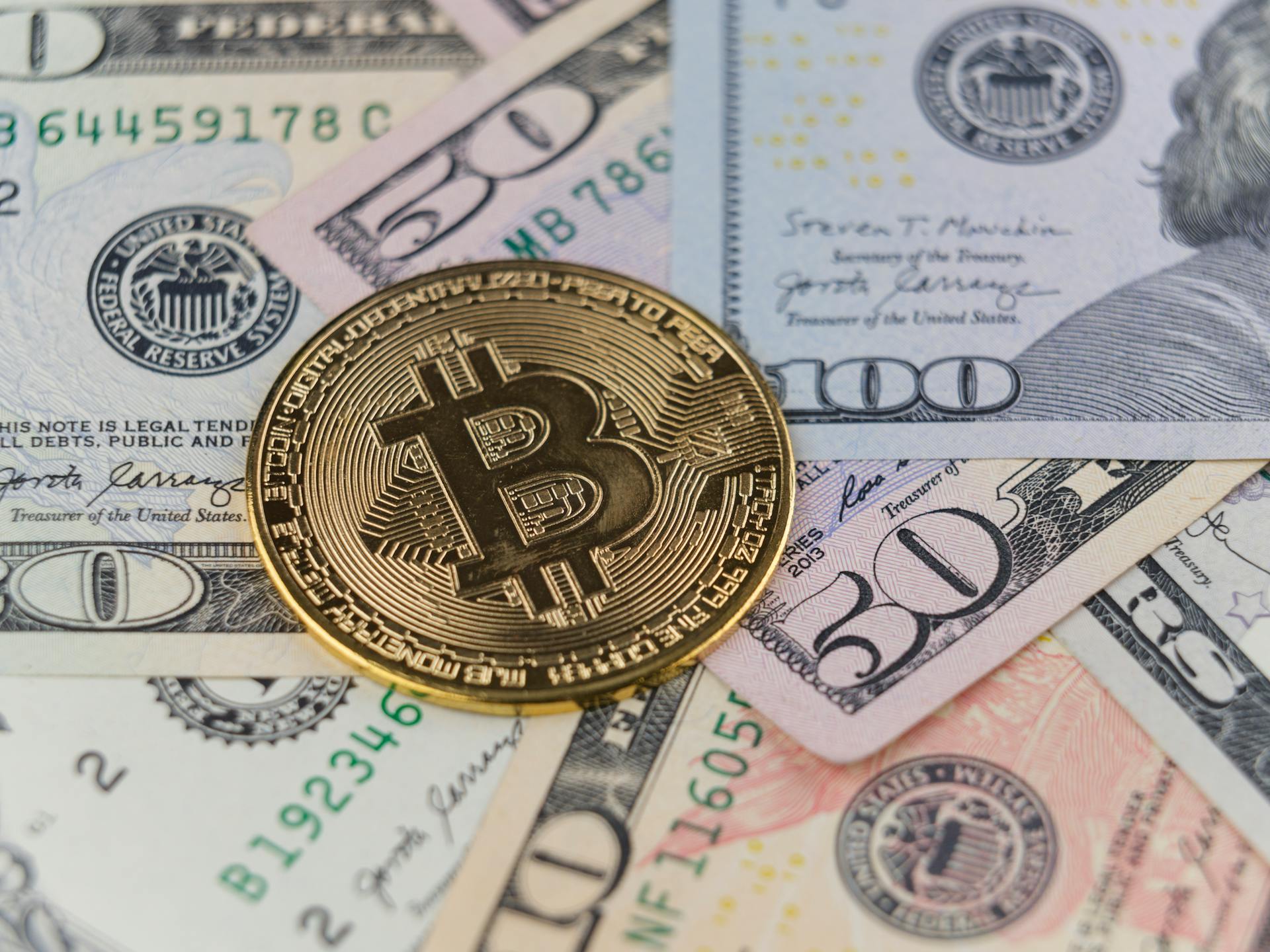
Asset price inflation can be a complex and confusing topic, but understanding its basics is essential to grasping its economic effects.
Asset prices have been increasing steadily over the past few decades, with the S&P 500 stock market index more than tripling since 2009.
This rise in asset prices has led to a significant increase in wealth for many individuals, particularly those who own assets such as stocks, real estate, and bonds.
However, this inflation also has a darker side, as it can lead to decreased purchasing power and increased inequality.
What is Asset Price Inflation?
Asset price inflation occurs when the value of assets like real estate, gold, and stocks increases sharply due to high demand from investors.
The Federal Reserve Bank's decision to lower interest rates can trigger asset price inflation, causing traditional fixed income investments to become less attractive.
A house that costs $500,000 one year can be priced at $650,000 the next year, a significant increase in asset value.
Investors may turn to real assets like real estate, gold, or stocks to secure more gains, which in turn drives up their prices and leads to asset price inflation.
Art, luxury watches, and fine wine are also attractive alternative assets that can experience asset price inflation.
Causes and Factors
Monetary policy has a direct impact on asset prices, making it easier for investors to borrow money to invest in assets like stocks, bonds, and real estate.
Lowering interest rates can lead to an increase in demand for these assets, driving up their prices. Central banks injecting liquidity into the economy can also lead to higher asset prices due to the increased money supply.
Fiscal policy, such as government spending and taxation policies, can also contribute to asset price inflation. Increased government spending can lead to higher economic growth, increasing demand for assets.
Cutting taxes can leave consumers with more disposable income, which they may choose to invest in assets, further driving up prices. The rise of globalization has led to increased trade and investment flows across borders, increasing demand for assets like stocks and bonds.
Globalization has particularly increased demand for assets in emerging markets, pushing up asset prices. Technological advancements have made it easier and cheaper for investors to access a range of assets.
The rise of online trading platforms and robo-advisors has made it easier for retail investors to invest in stocks and bonds, increasing demand for these assets and driving up their prices.
Broaden your view: Has Anyone Made Money with Fundrise
Impact on Economy and Investments
Asset price inflation can give the illusion of economic growth, but it doesn't directly impact economic growth. This is because liquidating a high-value asset provides significant capital that can be spent, saved, or invested, indirectly contributing to GDP growth.
The impact of asset price inflation is not evenly distributed, with wealthy individuals benefiting from rising asset prices, while those who do not own assets are left behind. This can lead to widening inequality and social unrest.
Core inflation and asset price inflation are not always aligned, as the former is influenced by supply and demand factors, while the latter is influenced by financial market conditions.
The Gap Between Menace and Economic Growth
Asset price inflation has created a high inflation bubble, giving the illusion of growth even in times of volatility. Core inflation measures the change in prices of goods and services, excluding food and energy, and is influenced by supply and demand factors, whereas asset price inflation is influenced by financial market conditions.
The current economic climate has created a favorable environment for asset price inflation, with low-interest rates and fiscal stimulus providing a boost to asset prices. The Federal Reserve has signaled that it will keep interest rates low for the foreseeable future, which could further fuel asset price inflation.
The impact of asset price inflation is not evenly distributed across society, with wealthy individuals who own assets benefiting from asset price inflation, while those who do not are left behind. This can lead to widening inequality and social unrest.
Rising asset prices don't directly impact economic growth, but can create a false sense of growth. If you liquidate a high-value asset, you'll possess significant capital on hand, which can then be spent, saved, or invested, contributing to the country's GDP growth.
The rise in the value of net household wealth is a potential indicator of households' consumption choices in emerging markets, and can be influenced by asset price inflation.
Wealth Effect
The Wealth Effect is a powerful force that can significantly impact the economy and investments. It's the phenomenon where people feel wealthier and more confident when the value of their assets, such as stocks and real estate, increases.
As a result, they tend to spend more and invest more, which can boost economic growth. This is exactly what happened during the housing bubble of 2005-2007, when rising home prices made people feel wealthier and more likely to spend.
The Wealth Effect is closely tied to consumer spending, which accounts for about 70% of the US economy. When people feel wealthier, they're more likely to buy big-ticket items like cars and vacations.
This can create a self-reinforcing cycle where rising asset prices lead to increased consumer spending, which in turn drives economic growth.
For more insights, see: Us Cpi Inflation Data
On Employment
The unemployment rate in the country has been steadily decreasing over the past few years, from 7.5% in 2018 to 4.2% in 2022, according to the latest data from the Bureau of Labor Statistics.
This decline is largely due to the growth of the service sector, which has created over 2 million new jobs since 2015.
Many of these new jobs are in industries such as healthcare and technology, which are expected to continue growing in the coming years.
The average salary for these jobs is around $60,000 per year, which is higher than the national average.
However, some industries, such as manufacturing, have seen a decline in employment, with over 1 million jobs lost since 2010.
This shift in the job market has required workers to adapt and acquire new skills to remain competitive.
In fact, a recent survey found that 75% of employers believe that workers need to have some level of technical skills, such as coding or data analysis, to be hired.
Suggestion: Transport Asset Manager of New South Wales
Asset Price Inflation in Specific Markets
Asset price inflation can manifest differently in various markets. Real estate prices, for instance, have contrasting impacts on homeowners and renters - a hike in house prices can increase a homeowner's home value and rent, but also makes buying a house a costly ordeal for renters.
You might enjoy: House Prices
Wine prices, on the other hand, are on an upward trajectory, providing good financial stability. Over the past two decades, the Liv-ex Fine Wine 100 index rose by 270.7%, outperforming the S&P 500 index.
Fine wine offers an average annual return of 18% to investors, much higher than the 10.6% return from gold, and is also a low-risk investment compared to real estate.
A unique perspective: Total Assets - Total Equity / Total Assets
Real Estate
A hike in house prices can bring in more rent for homeowners, increasing their home value in financial markets.
Homeowners can also benefit from renting their property during inflation, yielding a higher fixed income.
For tenants, a higher inflation rate in property prices causes a spike in rent, making buying their own house a costly ordeal.
Investing in real estate during a slow market and holding it till asset values leap can be a sound investment advice.
Wine
Rising real estate prices can be a double-edged sword, increasing your home value but also making it harder for renters to afford their own homes.
A hike in house prices can bring in more rent for homeowners, but it also causes a spike in rent for tenants, making buying their own house a costly ordeal.
Fine wine is an alternative asset that can provide financial stability against rising inflation, with prices on an upward trajectory and less affected by market volatility.
The Liv-ex Fine Wine 100 index has risen by 270.7% over the past two decades, outperforming the S&P 500 index.
Wine is a low-risk investment compared to real estate, with the Liv-ex 1000 wine index falling by only 4% during the COVID-19 pandemic, while property market transaction volume declined by over 26%.
Fine wine offers an average annual return of 18% to investors, much higher than the 10.6% return from gold.
If you're targeting inflation hedging and hoping to collect high-return wines, consider signing up with Vinovest to start building your portfolio.
Central Banks' Role and Policies
Central banks have a crucial role in regulating the economy, and their policies can have a significant impact on asset price inflation.
One of the main risks of quantitative easing is that it can lead to inflation, as it increases the money supply and demand for goods and services, causing prices to rise.
QE can also lead to asset price inflation, as it drives up the prices of assets like stocks and real estate, creating a bubble that may eventually burst.
This is because QE can create a moral hazard, where investors are encouraged to take on more risk because they believe that central banks will always bail them out.
Central banks should carefully consider these risks before implementing QE and alternative policies such as fiscal stimulus or structural reforms.
QE can also lead to an unequal distribution of wealth, as it benefits the wealthy more than the poor, who are more likely to own assets like stocks and real estate.
In fact, the wealthy have more assets that can benefit from QE, making it a regressive policy that can exacerbate income inequality.
Curious to learn more? Check out: Mortgage Notes for Sale from Banks
Risks and Drawbacks of QEAA
QEAA can lead to inflation risks as it increases the supply of money in the economy. This can lead to an increase in the demand for goods and services, which in turn can increase their prices.
The potential for asset price inflation is also a concern with QEAA. It can drive up prices of assets such as stocks and real estate, creating a bubble that may eventually burst.
Inflation can have a negative impact on economic growth, as higher interest rates can decrease consumer spending and investment. Central banks may have to increase interest rates to control inflation, which can be detrimental to the economy.
Currency depreciation is another risk associated with QEAA. It can lead to the devaluation of the currency, making imports more expensive and exports cheaper.
QEAA can also create moral hazard, encouraging banks and financial institutions to take excessive risks, knowing that the central bank will bail them out if they fail.
See what others are reading: If Total Assets Increase Then
An unequal distribution of wealth is another potential outcome of QEAA. It can benefit the wealthy more than the poor, as they have more assets such as stocks and real estate that can benefit from QEAA.
The risks and drawbacks of QEAA should not be taken lightly, and central banks should carefully consider them before implementing this policy.
Financial Markets and Implications
Rising asset prices can scale up your returns in the short term, but a bull market isn't sustainable if the economy suffers a downturn.
The relationship between core inflation and asset price inflation is complex and multifaceted, with many different factors influencing its dynamics. By understanding these factors, investors can gain a better understanding of the risks and opportunities associated with different asset classes.
Inflation risks are a potential consequence of QEAA, as it increases the supply of money in the economy, leading to higher prices for goods and services. This can have a negative impact on economic growth, as higher interest rates can decrease consumer spending and investment.
The Federal Reserve has a dual mandate to promote maximum employment and price stability, and its decisions about interest rates and the money supply can have significant implications for both core inflation and asset prices. As such, investors and policymakers alike need to closely monitor the Fed's actions and statements.
QEAA can lead to asset price inflation as it increases the demand for assets such as stocks and real estate, leading to an increase in their prices. This can create a bubble that may eventually burst, having a negative impact on the economy and leading to a financial crisis.
Investors and policymakers need to stay attuned to the latest economic developments and adapt their investment strategies and policy decisions accordingly, as the drivers of inflation and asset prices are likely to shift and change in unpredictable ways.
Worth a look: Capital Budgeting Decisions Include
Conclusion and Future Outlook
The relationship between core inflation and asset price inflation is complex and multifaceted, with many different factors influencing its dynamics. By understanding these factors and staying attuned to the latest economic developments, investors and policymakers can make informed decisions that help to promote sustainable economic growth and stability.
For another approach, see: Turkish Economic Crisis (2018–current)
One key takeaway from this analysis is the importance of considering the underlying drivers of inflation. Asset price inflation can be driven by a variety of factors, including changes in interest rates, shifts in market sentiment, and changes in the supply and demand for specific assets.
The Federal Reserve has a dual mandate to promote maximum employment and price stability, and its decisions about interest rates and the money supply can have significant implications for both core inflation and asset prices. As such, investors and policymakers alike need to closely monitor the Fed's actions and statements in order to stay informed about the direction of monetary policy.
Looking to the future, it is clear that the relationship between core inflation and asset price inflation will continue to be an important topic of discussion and analysis. As the global economy continues to evolve and new technologies emerge, the drivers of inflation and asset prices are likely to shift and change in unpredictable ways.
Quantitative easing (QE) has been a widely used monetary policy tool by central banks around the world since the 2008 financial crisis, but it has also been subject to criticism. Inflationary pressure, asset price inflation, and unequal distribution of wealth are some of the main criticisms of QE.
The long-term implications of QE are still uncertain, and policymakers must carefully consider the risks and benefits of this monetary policy tool. While it may have helped to stimulate economic growth in the short term, it is unclear whether it will lead to sustainable growth in the future.
Broaden your view: Core & Satellite
Featured Images: pexels.com