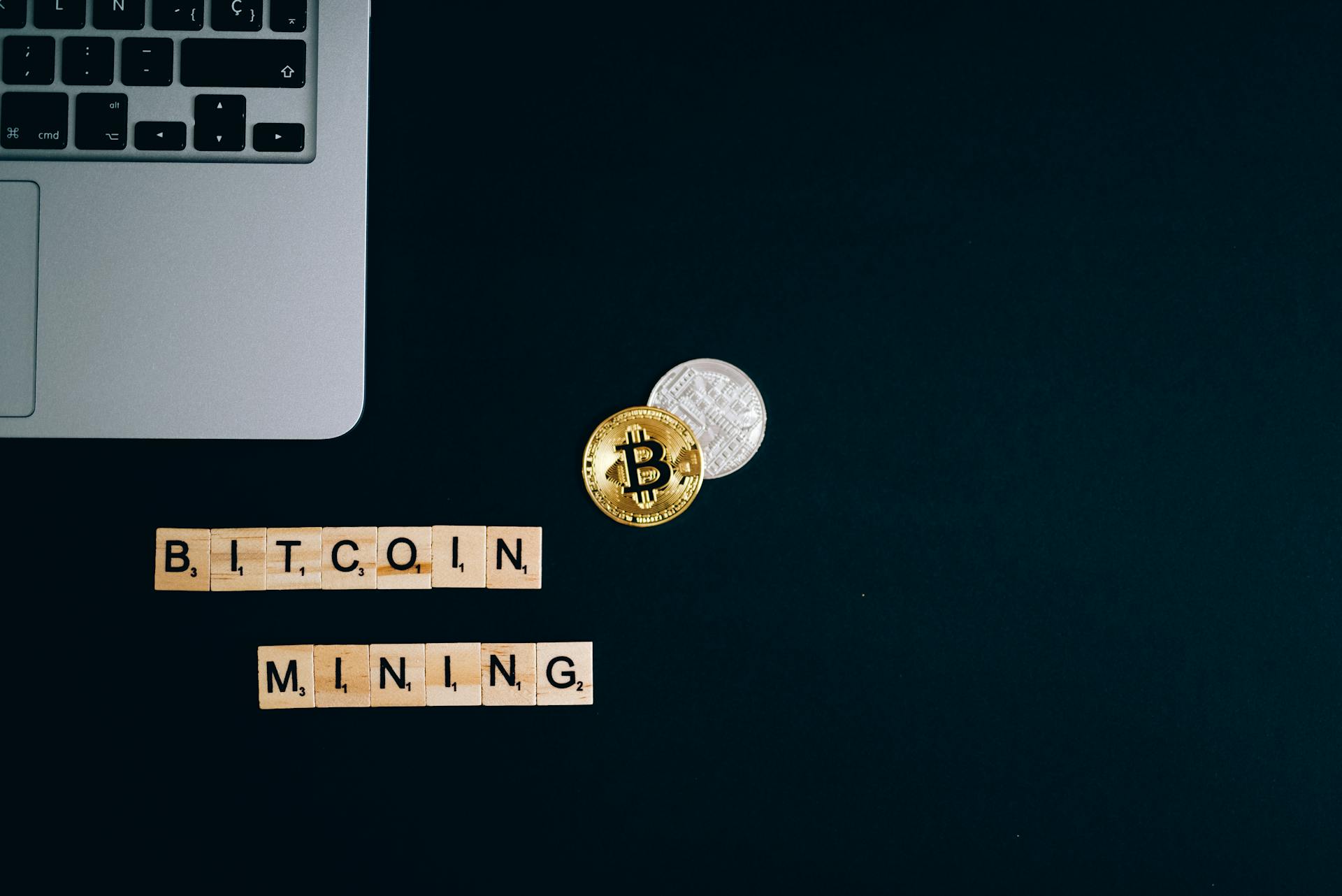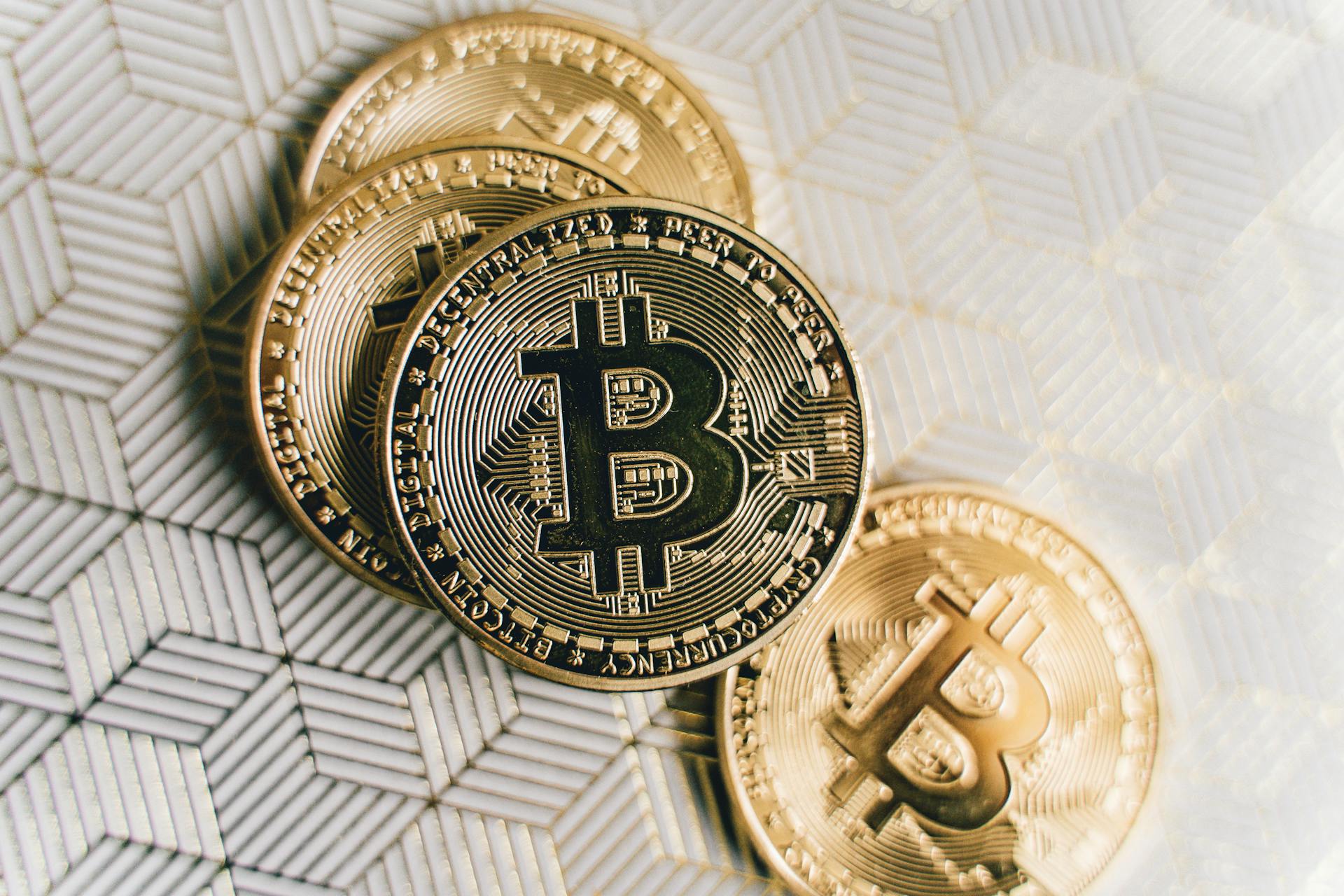
So, you're wondering if there's a physical form to Bitcoins? Well, the answer is no, there isn't a physical Bitcoin coin or bill.
The first Bitcoin was mined in 2009, and since then, the number of Bitcoins in existence has been capped at 21 million.
Bitcoins exist only in digital form, existing on a decentralized network of computers around the world.
What is Bitcoin?
Bitcoin is a digital currency that exists entirely in the digital space, running on a decentralized network of computers around the world.
It's not like traditional money, with no physical form at all, no paper notes, and no shiny coins to store in a piggy bank.
The symbol for Bitcoin is often represented by the capital letter “₿”, styled like the dollar sign but with a unique flair.
Bitcoin is essentially an entry in a digital ledger, a constantly updated, secure system that keeps track of who owns what, without the need for banks or governments.
You might enjoy: Is Crypto a Digital Asset
Characteristics and Types
Physical bitcoins are a tangible representation of the digital currency, and they come in different forms. Some resemble traditional coins with the Bitcoin logo.
The value of physical bitcoins varies based on the actual bitcoin stored and the collector's market. This means that the value can fluctuate over time.
Some physical bitcoins contain real bitcoin, which can be redeemed using a private key. Others are simply commemorative items.
Physical bitcoins are often created by private entities or individuals, rather than originating from the Bitcoin network itself. This means you should be cautious when purchasing physical bitcoins to ensure authenticity.
To verify the authenticity of a physical bitcoin, look for a private key or QR code that links to a specific amount of BTC. This is usually a sign that the physical bitcoin is genuine.
Here are some common types of physical bitcoins:
- Paper wallets: A physical representation of a Bitcoin wallet.
- Trinkets: Small, collectible items that represent a certain amount of BTC.
- Commemorative coins: Coins designed to commemorate a specific event or milestone.
Physical and Digital Presence
Bitcoin exists entirely on the blockchain, a decentralized network maintained by thousands of computers.
You don't own physical coins or bills, but a private key that lets you access and spend a certain amount of BTC stored on the blockchain.
Bitcoin is made up of lines of computer code, stored and verified across a global network known as the blockchain.
You can see your Bitcoin balance in a digital wallet or by using a blockchain explorer, but you'll never hold a Bitcoin in your hand the way you would a dollar bill or a gold coin.
Some creators have made physical bitcoins, like Casascius, but these are not the real deal – the actual Bitcoin lives digitally.
For more insights, see: Where Are Bitcoins Stored
BTC Coin Series 1
The BTC Coin Series 1 was a unique creation by Casascius, consisting of solid brass coins with a diameter of 1.125 inches and weighing approximately 0.24 ounces.
These coins were first introduced in September 2011 and featured an eight-digit "firstbits" inkjetted onto the surface of a hologram sticker. A spelling error in the small lettering of the hologram, "CASACIUS" instead of "CASASCIUS", can be found on some of the coins.
You might enjoy: Virtual Coins
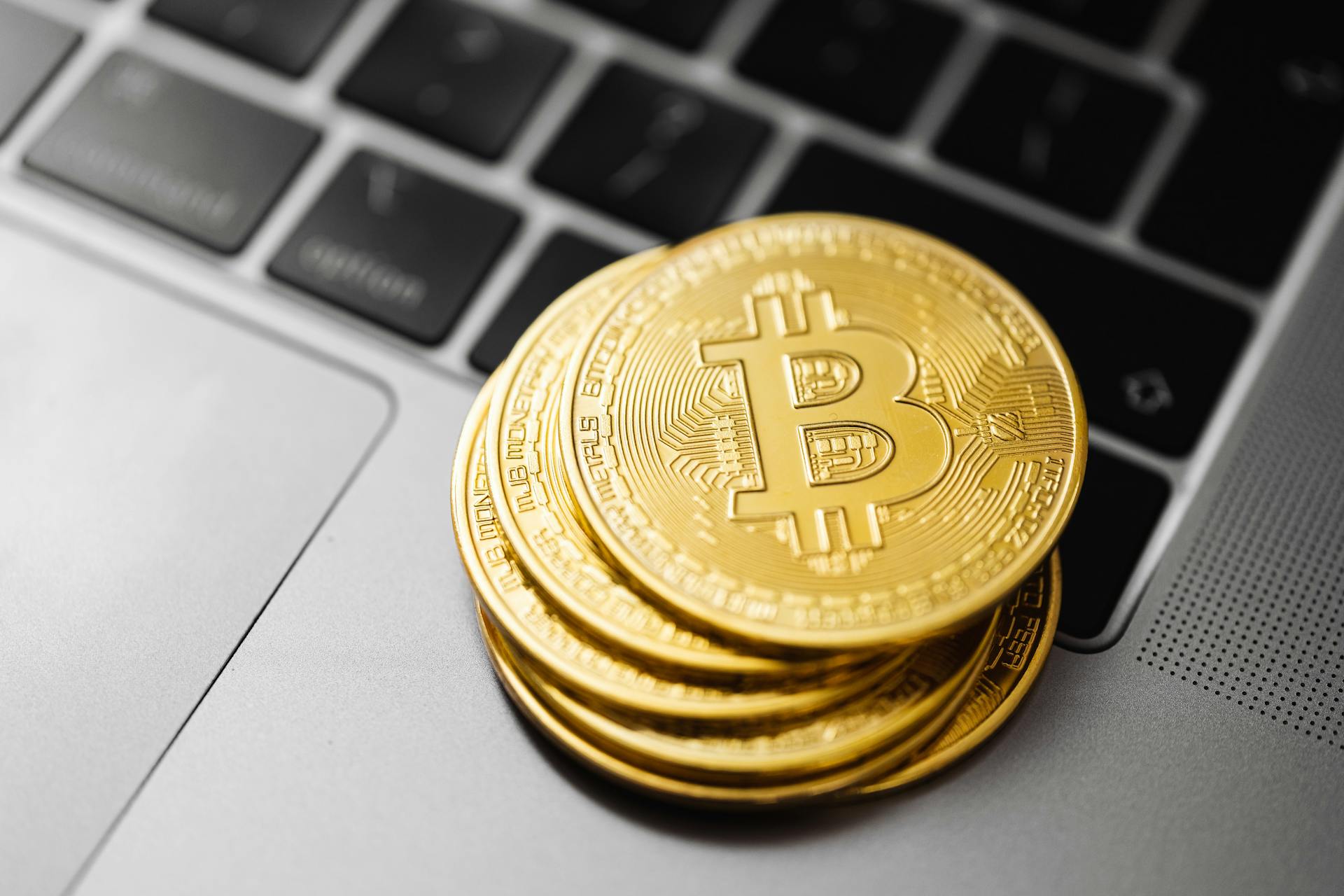
The coins had a private key, a 22 character string inside the coin, which was hashed using SHA256 to generate the 256-bit private key. Approximately 3,500 of these coins were produced as of November 2011, and Casascius stated that no more than 11,000 may be produced in total.
A signed text file was published containing all 11,000 Bitcoin addresses pre-generated for the series.
Here are the key features of the original BTC Coin Series 1:
- Diameter: 1.125 inches
- Material: Solid brass
- Year printed: 2011
- Weight: Approximately 0.24 ounces
- Private key: 22 character string inside the coin
What Does Bitcoin Look Like?
Bitcoin's appearance can be a bit misleading. It's not something you can hold in your hand like a traditional coin.
In concept, Bitcoin is digital, just code, addresses, and keys. It exists solely in the digital world.
But, there are physical forms of Bitcoin that have been created, inspired by the original idea of Casascius. These physical bitcoins look like traditional coins.
One notable example is the Physical Bitcoin MJB 2013, which was released as part of a series of collectible physical coins. It follows the same principle as Casascius' coins, with the added appeal of being a collector's item.
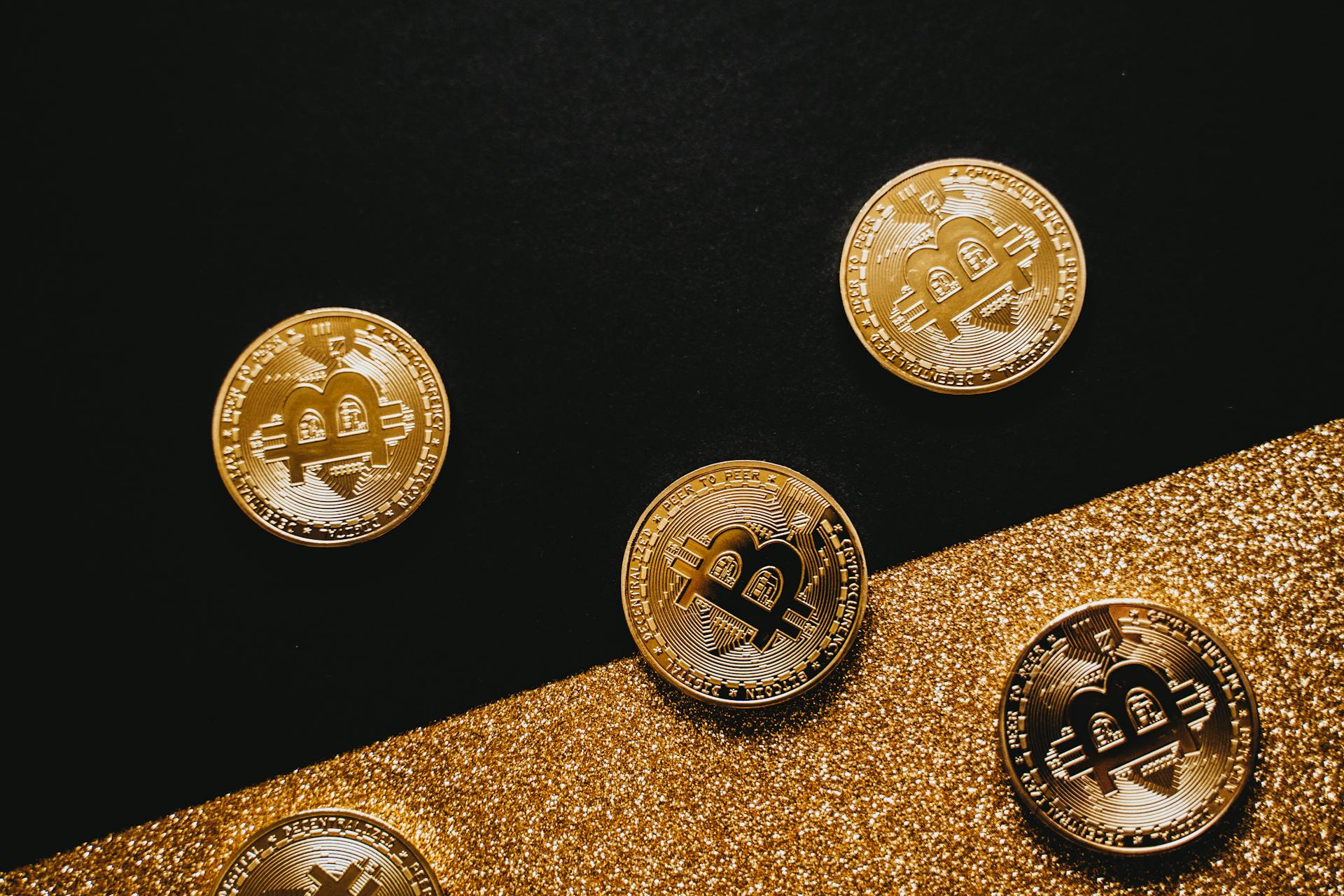
To verify the authenticity of a physical bitcoin, look for a private key or QR code that links to a specific amount of BTC. This connection is crucial to ensure the physical bitcoin is genuine.
In reality, Bitcoin is a record on a blockchain, accessible through wallets, confirmed by cryptographic proofs, and stored across thousands of computers.
Bitcoin's Digital Location
Bitcoin exists entirely on the blockchain, a decentralized network maintained by thousands of computers.
This means that there's no physical location where Bitcoin is stored, unlike traditional currencies that have a tangible form.
The blockchain is a public ledger that records every transaction, balance, and piece of ownership, making it a transparent and secure system.
You can see your Bitcoin balance in a digital wallet or by using a blockchain explorer, but you'll never hold a Bitcoin in your hand.
What you really own when you have Bitcoin is a private key that lets you access and spend a certain amount of BTC stored on the blockchain.
A different take: What Is Bitcoins Blockchain
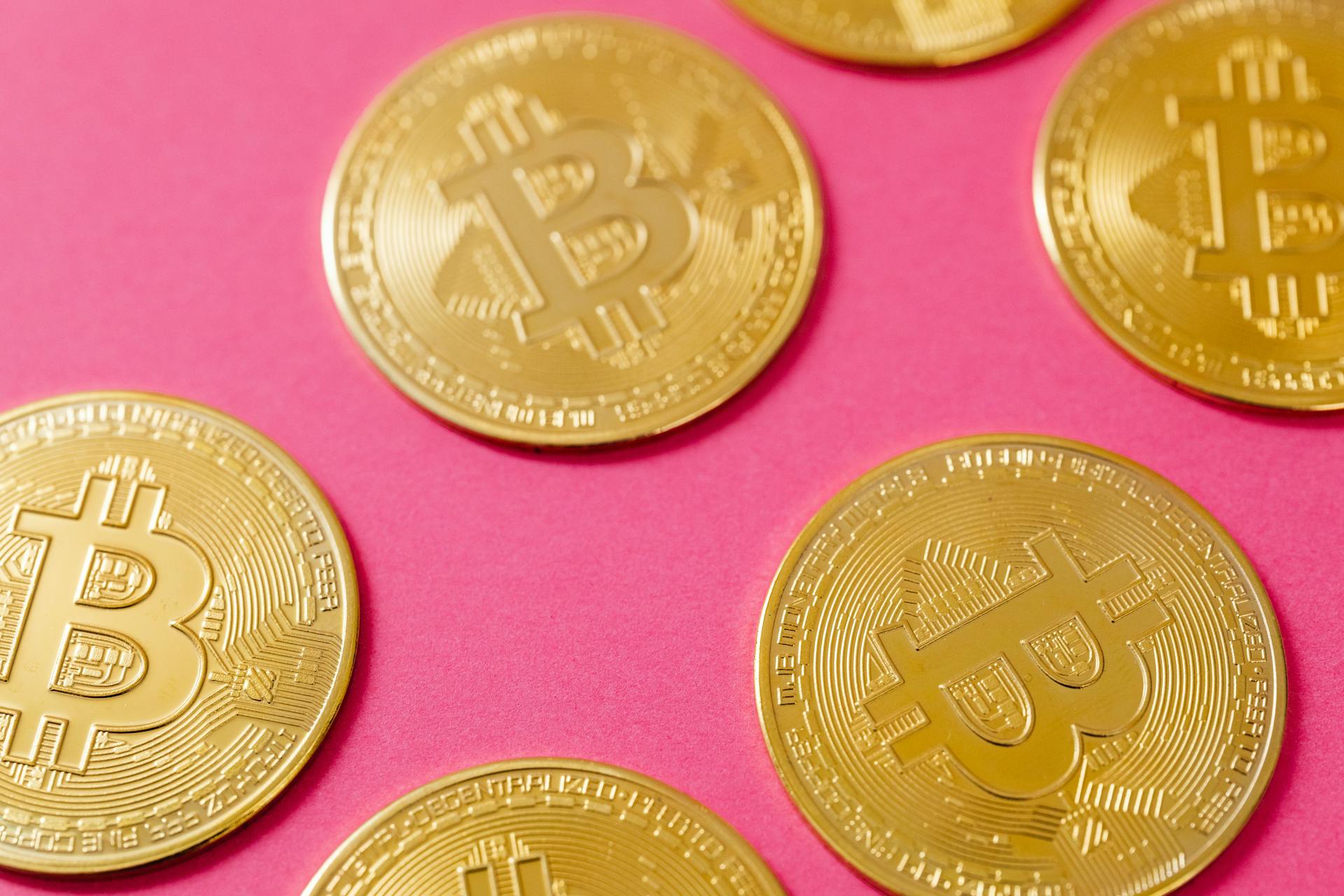
This private key is the key to your digital wallet, and it's what allows you to send and receive Bitcoins.
To verify the authenticity of physical Bitcoins, look for a private key or QR code that links to a specific amount of BTC.
Counterfeits do exist, so it's essential to ensure that your physical Bitcoin is genuine before considering it legitimate.
Circulation and Existence
So, let's talk about the existence of physical bitcoins. Approximately 15,000 physical bitcoins have been minted by known manufacturers.
These physical bitcoins are not just a novelty, but some have real value attached to them. About 6,000 of these coins have been loaded with actual Bitcoin.
Other physical bitcoins exist, but their numbers are harder to track. A few thousand more physical bitcoins have been minted, but the exact numbers are debated.
It's worth noting that not all physical bitcoins are created equal. Some were funded but later redeemed, leaving the majority of loaded coins to be about 6,000.
To verify the authenticity of a physical bitcoin, check for a private key or QR code that links to a specific amount of Bitcoin.
Introduction and Basics
Bitcoin is a digital currency that was created in 2009 by an individual or group of individuals using the pseudonym Satoshi Nakamoto. It was first introduced as a whitepaper outlining a peer-to-peer electronic cash system.
The Bitcoin network is decentralized, meaning that it's not controlled by any government or institution. Transactions are recorded on a public ledger called the blockchain, which helps to ensure the integrity and security of the network.
Bitcoin is a form of cryptocurrency, which is a digital or virtual currency that uses cryptography for security. It's not printed or minted like traditional currencies.
In 2010, the first real-world transaction using Bitcoin took place, when a programmer named Laszlo Hanyecz offered 10,000 Bitcoins to anyone who could get him two Papa John's pizzas delivered to his doorstep.
Frequently Asked Questions
How much is $1 USD worth in Bitcoin?
One US Dollar is currently equivalent to approximately 0.0000090 Bitcoin. This exchange rate has fluctuated by -0.16% in the last 24 hours.
How much would I have if I invested $1000 in Bitcoin 5 years ago?
If you invested $1,000 in Bitcoin 5 years ago, your investment would be worth approximately $9,689. This is a significant return on investment, but the potential for even greater growth is evident in the returns from longer-term investments.
Featured Images: pexels.com