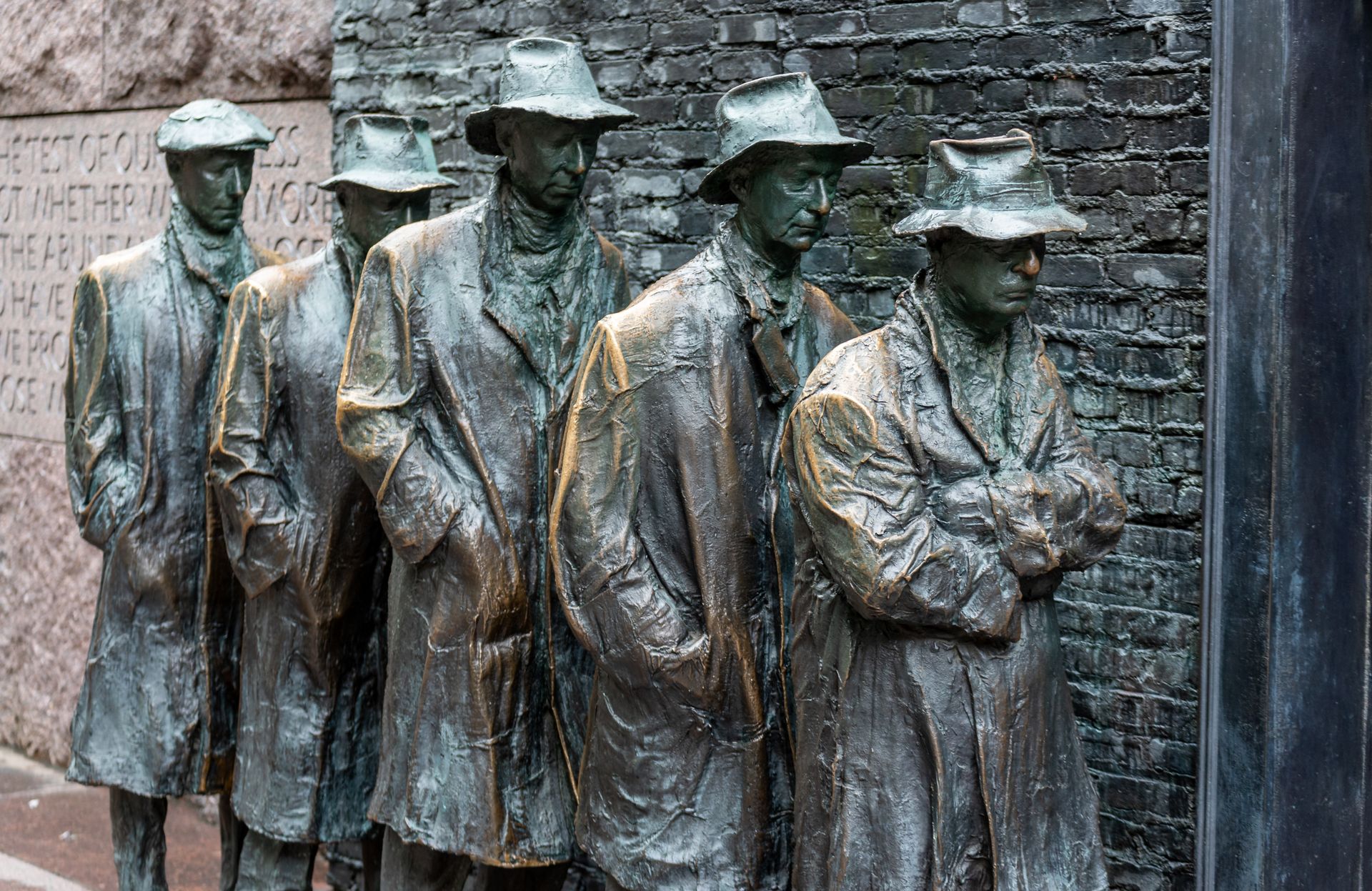
The Great Depression was a pivotal moment in American economic history, marking the worst economic downturn in the country's history. It lasted for over a decade, from 1929 to 1939.
Stock prices plummeted, with the Dow Jones Industrial Average falling by 47% in 1929 alone. This triggered a wave of panic selling, as investors rushed to sell their stocks, further exacerbating the decline.
The stock market crash was not the sole cause of the Great Depression, but it was a significant contributing factor. The collapse of the banking system, which was heavily invested in the stock market, made it difficult for people to access their money.
The Great Depression had a profound impact on American society, with widespread unemployment, poverty, and homelessness.
Expand your knowledge: Wall Street Crash of 1929
What Was the Great Depression?
The Great Depression was the longest and most severe economic downturn in modern history. It began in the United States in 1929 and spread worldwide.
It was marked by steep declines in industrial production, which had a ripple effect on the economy. Mass unemployment was a direct result of these declines.
Banking panics were another consequence of the economic downturn, as people lost faith in the banking system. Sharp increases in rates of poverty and homelessness were also a tragic outcome.
The economic downturn lasted for years, causing widespread suffering and disruption to people's lives.
If this caught your attention, see: Card Declines but Shows Charge
Causes and Origins
The Great Depression and the Great Recession were two significant economic downturns in American history. The causes of these events were complex and multifaceted.
The stock market crash of 1929 shattered confidence in the American economy, resulting in sharp reductions in spending and investment. This was further exacerbated by banking panics in the early 1930s, which caused many banks to fail and decreased the pool of money available for loans.
The gold standard played a role in the Great Depression, requiring foreign central banks to raise interest rates to counteract trade imbalances with the United States, depressing spending and investment in those countries. The Smoot-Hawley Tariff Act (1930) also imposed steep tariffs on many industrial and agricultural goods, inviting retaliatory measures that ultimately reduced output and caused global trade to contract.
In contrast, the Great Recession was caused by a combination of factors, including the failure of the government to regulate the financial industry and the growth of the shadow banking system, which was not under the same scrutiny or regulation. This led to excessive borrowing by consumers and corporations, along with lawmakers who did not fully understand the collapsing financial system.
The 2001 dot-com bubble implosion and the terrorist attacks of September 11, 2001, also contributed to the Great Recession. The Fed responded by cutting interest rates to stimulate the economy, but this ultimately led to a boom in real estate and financial markets, which burst in 2007, causing a credit crisis.
Here are some key factors that contributed to the Great Recession:
- Failure of the government to regulate the financial industry
- Excessive borrowing by consumers and corporations
- Lawmakers who did not fully understand the collapsing financial system
- Growth of the shadow banking system
Causes of the Depression
The stock market crash of 1929 shattered confidence in the American economy, resulting in sharp reductions in spending and investment.
One of the most significant factors that contributed to the Great Depression was the banking panics in the early 1930s. This led to many banks failing, which in turn decreased the pool of money available for loans.
The gold standard played a role in the Depression by requiring foreign central banks to raise interest rates to counteract trade imbalances with the United States. This had the effect of depressing spending and investment in those countries.
The Smoot-Hawley Tariff Act of 1930 imposed steep tariffs on many industrial and agricultural goods. This move invited retaliatory measures from other countries, ultimately reducing output and causing global trade to contract.
The combination of these factors created a perfect storm that led to the Great Depression. The stock market crash, banking panics, gold standard, and Smoot-Hawley Tariff Act all contributed to a sharp decline in economic activity.
Origins and Consequences
The Great Recession was a complex and multifaceted event, but its origins can be traced back to the 2001 dot-com bubble implosion and the terrorist attacks of September 11, 2001, which hammered the US economy.
The Federal Reserve responded by cutting interest rates to the lowest levels since Bretton Woods to stimulate the economy, and held them low through mid-2004. This led to a boom in real estate and financial markets, with a dramatic expansion of the volume of total mortgage debt.
Low interest rates also sparked a surge in homeownership, with financial innovations like subprime and adjustable mortgages allowing borrowers to obtain home loans on generous terms. Many of these borrowers might not have qualified otherwise.
However, from 2004 through 2006, the Federal Reserve raised interest rates to control inflation, which slowed the flow of new credit into real estate and caused rates on existing adjustable mortgages to reset at much higher rates than borrowers expected. This led to a housing bubble burst in 2007.
The collapse of the housing market caused financial institutions to sell mortgage-backed securities and complex derivative products at unprecedented levels, which then declined precipitously in value. This led to a credit crisis in 2007, which hit a breaking point with the collapse of Bear Stearns in March 2008.
The bankruptcy of Lehman Brothers in September 2008 further exacerbated the crisis, causing a contagion that spread to other economies around the world. The US alone lost over 8.7 million jobs, doubling the unemployment rate, and households lost roughly $19 trillion in net worth as the stock market plunged.
Suggestion: Chinese Stock Bubble of 2007
Impact and Effects
The Great Depression had a devastating impact on the American economy, with industrial production plummeting by nearly 47 percent between 1929 and 1933.
Unemployment reached a staggering 20 percent, leaving countless people without a steady income or a sense of security.
The economic downturn also led to widespread bank failures, with 20 percent of banks in existence in 1930 having failed by 1933.
The decline of the economy was so severe that the gross domestic product (GDP) fell by a whopping 30 percent, making it extremely challenging for people to make ends meet.
Curious to learn more? Check out: 1933 Banking Act
Depression's Impact on the Economy
The Great Depression had a devastating impact on the American economy. Industrial production plummeted by nearly 47 percent between 1929 and 1933.
The economic decline was staggering, with the gross domestic product (GDP) falling by 30 percent during the same period.
Unemployment soared, reaching more than 20 percent, leaving millions of people without a steady income.
Banking panics led to widespread bank failures, with 20 percent of banks in existence in 1930 having failed by 1933.
Duration
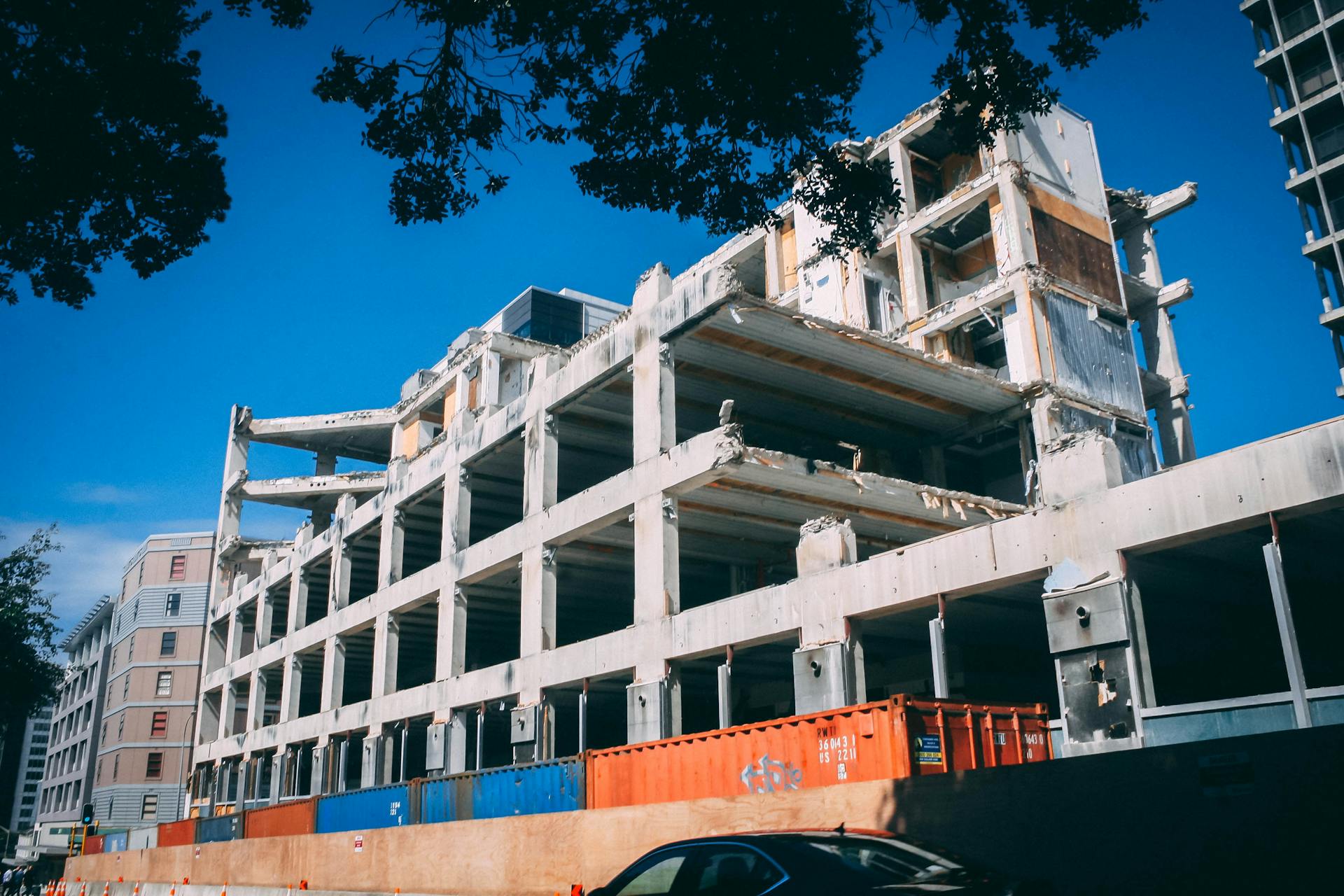
The Great Recession's impact on people's lives was far-reaching, and understanding its duration can help us grasp the severity of the situation.
The Great Recession lasted a long 18 months, from December 2007 through June 2009, as official Federal Reserve data shows.
This prolonged period of economic downturn affected many people, causing financial stress and uncertainty.
News
The Great Depression was a worldwide economic downturn that began in 1929 and lasted until about 1939.
It was the longest and most severe depression ever experienced by the industrialized Western world.
The Great Depression caused drastic declines in output in almost every country of the world.
Severe unemployment was a result of the Great Depression in almost every country of the world.
Acute deflation was another consequence of the Great Depression in almost every country of the world.
The social and cultural effects of the Great Depression were no less staggering, especially in the United States.
The Great Depression represented the harshest adversity faced by Americans since the Civil War.
Worth a look: What Business Does Every Small Town Need
Key Facts and Takeaways
The Great Recession, which lasted from 2007 to 2009, was the most severe economic recession in the United States since the Great Depression of the 1930s.
The root cause of the Great Recession was excessive mortgage lending to borrowers who normally wouldn't qualify for a home loan, greatly increasing risk to lenders.
Lenders were willing to take this risk by packaging the loans into an instrument they sold, passing the risk on to investors. This was made possible by low interest rates and poor regulatory oversight following the repeal of the Glass-Steagall Act.
Here are some key statistics from the Great Recession:
- The U.S. government launched a massive bailout program, including assistance for consumers and the many unemployed people via the $787 billion American Recovery and Reinvestment Act (ARRA).
- The GDP during the Great Recession was impacted significantly, with the Gross Domestic Product (GDP) being a key indicator of economic health.
- The Federal Reserve Bank of St. Louis reported a significant decline in the Federal Funds Effective Rate (FEDFUNDS) during this period.
Some credit the bailouts and the ARRA with providing much-needed relief to the public and saving the financial industry from total failure.
Featured Images: pexels.com