Expanding your Amazon FBA business to Germany can be a game-changer, but it requires careful planning and execution.
To start selling on Amazon Germany, you'll need to set up a German bank account, as Amazon requires sellers to have a local bank account for payment purposes.
Amazon Germany has a different set of rules and regulations than the US platform, so it's essential to familiarize yourself with the local laws and requirements.
You'll also need to ensure your products comply with German regulations, including labeling and packaging requirements.
Curious to learn more? Check out: A Unilateral Contract Requires Action
Getting Started
To sell on Amazon Germany, you'll need to register for a tax ID number (Steuernummer) and a VAT ID number (Umsatzsteuer-ID number), which can take up to four to six weeks to obtain. You can register for these numbers through the Elster platform.
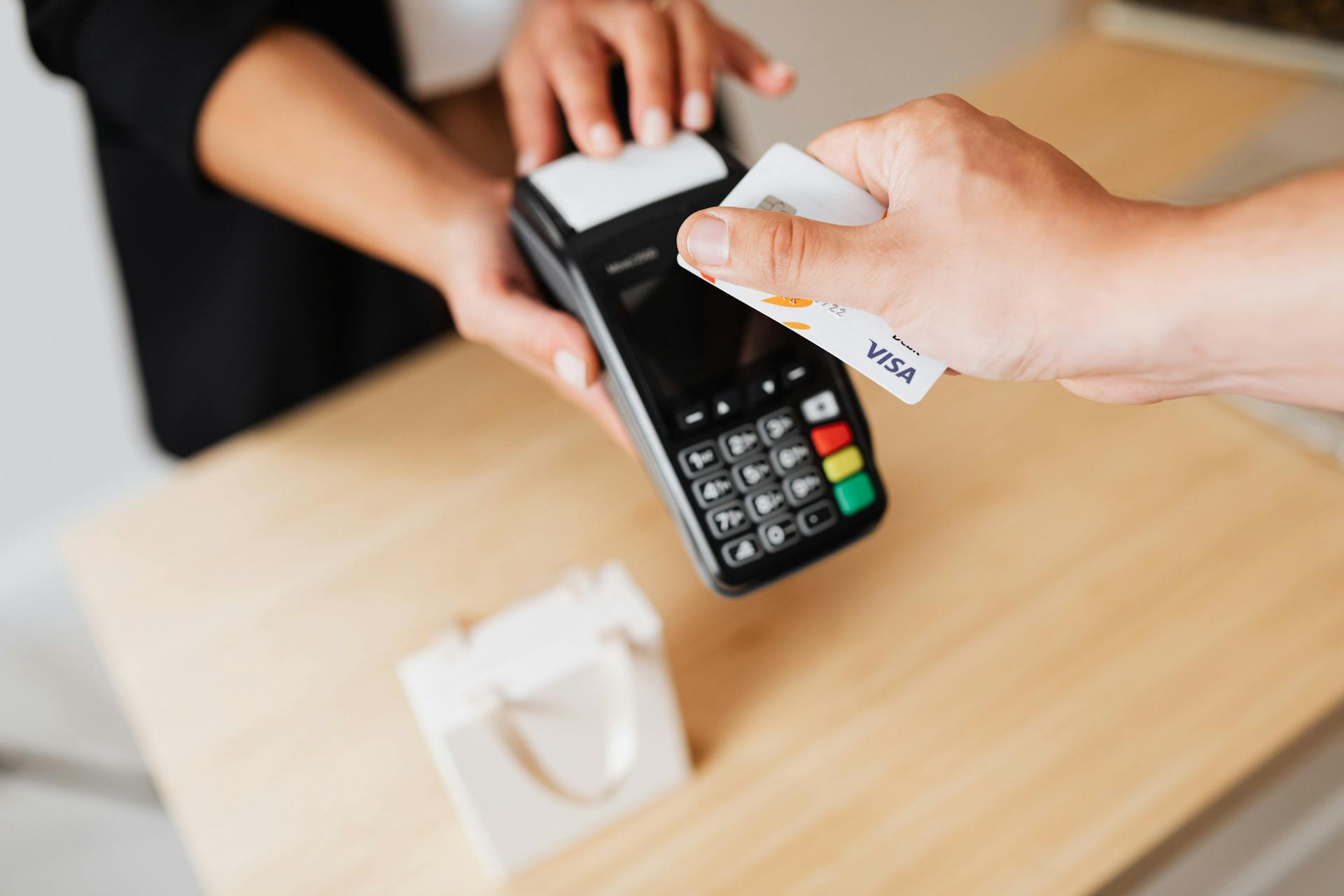
You'll need to provide a scanned copy of your passport, a PDF file of your bank statement, and a credit or debit card with a Visa or MasterCard logo when applying for the Amazon account. The application process also includes a video verification of your identity.
Here are the steps to register for an Amazon Germany seller account:
- Register with Amazon
- Provide required documents, including a valid business email address, chargeable credit card, and business registration documents
- Wait for account verification and access to the Seller Central dashboard for Germany
Best Starting Point for US Sellers
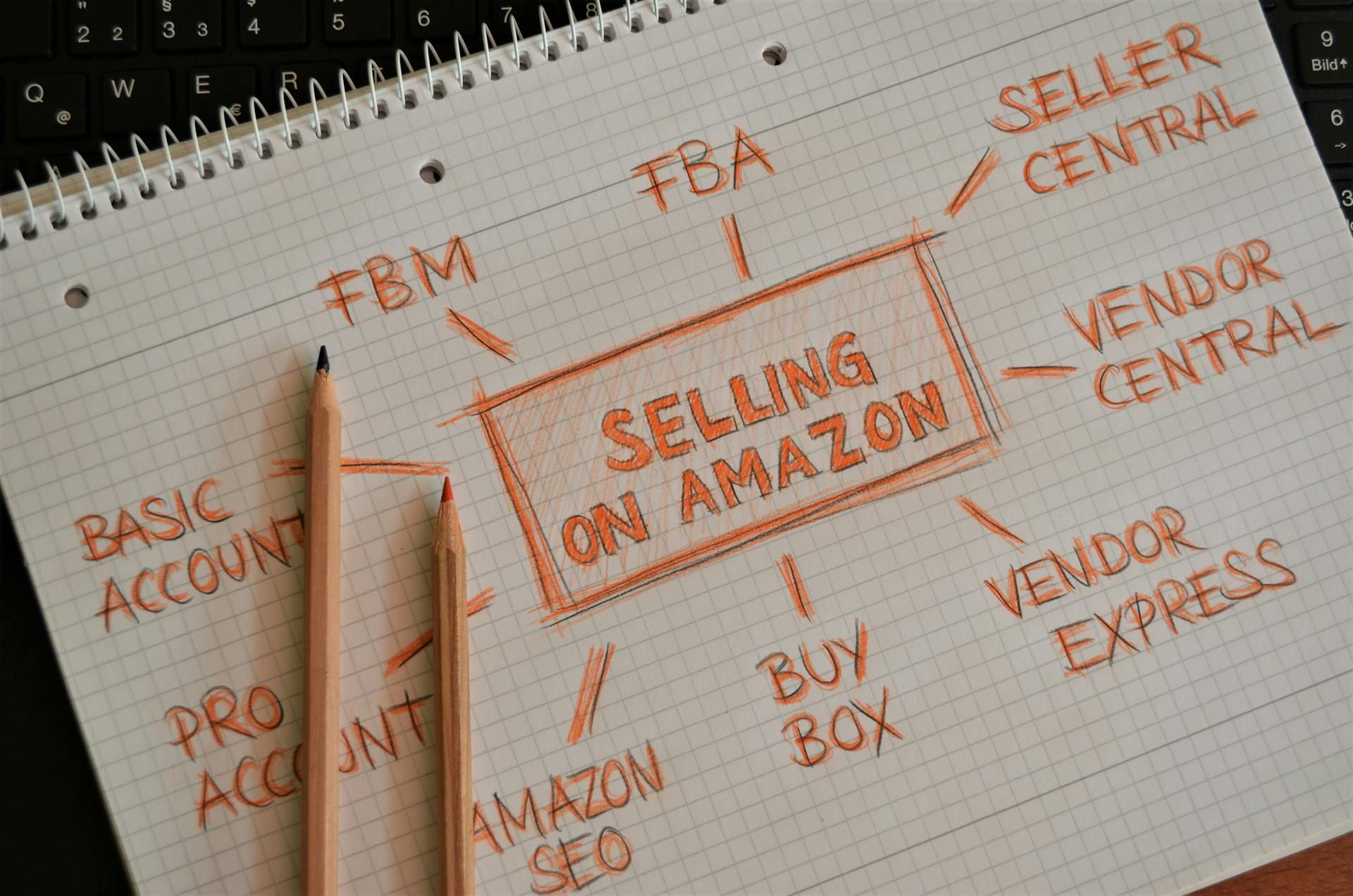
As a US seller, Amazon's Fulfillment by Amazon (FBA) Germany is a great starting point. Amazon handles the entire fulfillment chain, including storage, delivery, customer service, and returns in Germany, taking the responsibilities off your plate.
You'll need to ship your inventory from the source to Amazon's EU fulfillment center, which can be done via sea or air freight. Customs clearance and import VAT handling are also your responsibilities, so consider partnering with a customs broker.
EU VAT registration is another requirement, and you'll need to ensure your products meet EU safety and labeling regulations. If you're already selling in the UK, you can use EFN to fulfill orders to German customers on Amazon.de, but post-Brexit, shipping from the UK to Germany via EFN now requires customs clearance.
Here are the key responsibilities of a US seller using FBA Germany:
- Ship inventory from the source to Amazon's EU fulfillment center.
- Customs clearance and import VAT handling.
- EU VAT registration.
- Ensure products meet EU safety and labeling regulations.
Essentials for Selling
To get started with selling on Amazon Germany, you need to understand the core regulations that apply to the market. German consumers and regulators expect nothing less than full compliance with safety and quality standards.
You'll need to register for a tax ID number (Steuernummer) and a VAT ID number (Umsatzsteuer-ID number). These numbers can be obtained through the Elster platform, which is the website provided by the German tax authorities for businesses to communicate with them.
It's worth noting that Amazon requires you to have your VAT number almost immediately for a professional account. You can use a U.S. bank account to open a seller account on Amazon Germany.
There are two account types on Amazon: an individual account and a professional account. If you intend to sell professionally, you need the professional account, which costs €39.99 plus an additional €8 for each additional EU country you include.
Here are the steps to register with Amazon:
- Register with Amazon
You'll need a scanned copy of your passport, a PDF file of your bank statement, and a credit or debit card with a Visa or MasterCard logo. A video verification of your identity will seal the deal.
To set up your Amazon Germany seller account, you'll need to ensure VAT and EPR compliance is underway. This is where you'll list your products, manage inventory, and handle ads and orders on Amazon.de.
Create and Upload Listings
Creating and uploading listings on Amazon.de is a crucial step in selling on Amazon FBA Germany. You'll need to create your product listings specifically for the German market, as you can't simply copy and paste listings from other Amazon marketplaces.
To start, make sure your German seller account is active and you have your VAT and EPR registrations in place. This is a critical step, even if you're already selling on other Amazon marketplaces.
There are two ways to list your products on Amazon.de: you can either list products manually or use a file upload. If you have a small catalog or are launching just a few products, listing manually might be the way to go.
Here's a step-by-step guide to listing products manually:
- Log in to your Amazon Germany Seller Central
- Go to Inventory
- Choose whether you’re creating a new listing or selling an existing product
- Fill in the required fields: title, bullet points, description, images, keywords, and product details — all in German
- Set your price (VAT-inclusive), select your fulfillment method, and save the listing.
If you're uploading manually, make sure to include the following important listing elements:
- Title: Clear, keyword-rich, and written in German. Follow Amazon.de’s title style guides for your category.
- Bullet Points: Use them to highlight your product’s main benefits and features. Avoid long sentences and vague claims.
- Product Description: Keep it informative, honest, and localized. Use line breaks for easy reading.
- Images: Include at least 6 high-quality images. If you use infographics or callouts, translate them to German.
- Search Terms: Fill in the backend keyword fields with relevant German keywords.
Fulfillment and Shipping
If you're planning to sell on Amazon Germany, you'll need to choose a fulfillment method that suits your business needs.
Fulfillment by Amazon (FBA) Germany is a popular option, offering fast Prime delivery, higher Buy Box win rates, and hands-off logistics. However, it requires upfront shipping and inventory planning, and storage fees apply.
Alternatively, you can use the European Fulfillment Network (EFN), which allows you to ship your inventory to one place and have orders fulfilled from there. This option is convenient, but you'll need to pay cross-border fulfillment fees and endure longer shipping times.
If you prefer to handle fulfillment yourself, you can opt for Fulfilled by Merchant (FBM), which allows personalized packaging and direct oversight of shipping. However, you'll need to meet Amazon's strict shipping requirements and manage fulfillment in-house as order volumes increase.
Here are the key differences between FBA Germany, EFN, Pan-European FBA, and FBM:
Regardless of the fulfillment method you choose, make sure to comply with Amazon's requirements, including obtaining a VAT number and tax ID number, which can take up to six to eight weeks or longer.
When shipping to Amazon FBA warehouses in Germany, remember to prepare your items correctly, including using unique SKU identification codes and easily identifiable barcodes or scannable labels.
Finally, consider partnering with a German-based 3PL warehouse to help store your inventory and ship products as orders come in. This can be a great option for FBM sellers with a local advantage.
German Market and Regulations
To sell on Amazon Germany, you'll need to comply with the country's regulations, which can be complex. You must register for a German VAT ID, either directly through the German Federal Central Tax Office or through a VAT service provider like hellotax or Taxdoo.
You'll also need to ensure your product listings are in German, using a native German copywriter to craft your listings and localize them for the German market. Don't rely on automated translations.
Here are some key regulations to consider:
- REACH Regulation
- CE Marking
- LFGB and the Glass & Fork Label
These regulations affect various product categories, including electrical products, food-contact products, and cosmetics. You'll need to provide a Certificate of Conformity to prove your products meet these regulations. Consider working with a certified testing lab to ensure compliance.
German Listings and Support

To create a successful German listing, you need to speak the language – literally and figuratively. German shoppers are detail-oriented and expect precision in product descriptions and customer service.
Hire a native German copywriter to craft your listings, as automated translations won't cut it. Localize not just language, but also metric units, cultural expectations, and even customer service tone.
Use Amazon's Customer Service by Amazon (CSBA) program to ensure fast, native-language support 24/7.
Here are the critical elements to include in your German listing:
- Title: Clear, keyword-rich, and written in German, following Amazon.de's title style guides for your category.
- Bullet points: Use them to highlight your product's main benefits and features, avoiding long sentences and vague claims.
- Product description: Keep it informative, honest, and localized, using line breaks for easy reading.
- Images: Include at least 6 high-quality images, translating infographics or callouts to German.
- Search terms: Fill in the backend keyword fields with relevant German keywords.
If you're already selling on Amazon.com or Amazon.co.uk, you can use Amazon's Build International Listings (BIL) tool to copy your listings to Amazon.de. However, make sure to manually update the content in proper German for optimal performance.
See what others are reading: Open Listings
General Product Safety Regulation
The General Product Safety Regulation (GPSR) is a game-changer for sellers on Amazon Germany. Starting December 13, 2024, all products sold on Amazon Germany must comply with the updated GPSR.
To be compliant, your product must have clear, scannable labels that identify the origin and other relevant safety information, such as the name, type, batch number, serial number, or other identifying details.
You'll also need to appoint a "Responsible Person" (RP) in the EU who is responsible for ensuring your product complies with the rules. This RP must be based in the EU as a resident or a legal entity with a physical address in an EU member state.
The RP must have written authorization from the brand owner, be legally able to fulfill compliance responsibilities, and agree to appear on product labeling with their name and EU address.
Here are the key conditions to meet to be a Responsible Person in Germany:
Product labels and safety instructions must be written in German, and your Amazon product pages need to clearly show the manufacturer's name and your designated Responsible Person's contact details.
The EU wants someone accountable within EU borders, so it's essential to have a clear understanding of the GPSR and its requirements to avoid any issues with your product listings.
Recommended read: EU Natural Gas Price Cap
VAT and Compliance
VAT and Compliance are crucial aspects of selling on Amazon FBA Germany. You must register for German VAT if you store inventory in Germany, exceed the EU-wide distance selling threshold (€10,000), or import goods into the EU.
To register for VAT, you can apply directly through the German Federal Central Tax Office or use a VAT service provider like hellotax, Taxdoo, AVASK, or SimplyVAT. These services handle VAT registration, submit your monthly or quarterly filings, and help you stay compliant with German tax laws.
Here are the key VAT requirements for selling on Amazon FBA Germany:
Don't forget that VAT is not static and varies depending on the country you're selling in. Calculating VAT can be difficult, so it's best to let Amazon help or use a third-party service to handle VAT obligations.
Suggestion: What Is a Vat Number
Understanding VAT and Legal Obligations
You need to register for German VAT if you store inventory in Germany, exceed the EU-wide distance selling threshold of €10,000, import goods into the EU, or want to reclaim VAT paid on business expenses.
A different take: Apple Tax in Ireland
The standard VAT rate in Germany is 19%, although some products like books or groceries are subject to a reduced rate of 7%. You must include this VAT in your listing price on Amazon.de.
Amazon's VAT Calculation Service can generate compliant invoices automatically, but you need to enable this feature. You'll also need to get your tax ID number and VAT number.
To get your VAT ID, you can apply directly through the German Federal Central Tax Office or use a VAT service provider like hellotax, Taxdoo, or SimplyVAT.
Amazon offers to handle VAT registration, filing, and submission processes, but it's not a DIY-friendly process. Calculating VAT can be complicated, and issues related to VAT are one of the leading causes of European Seller Central account suspensions.
Here are the key points to understand VAT registration:
- You need to register for German VAT if you store inventory in Germany, exceed the EU-wide distance selling threshold, import goods into the EU, or want to reclaim VAT paid on business expenses.
- The standard VAT rate in Germany is 19%, although some products are subject to a reduced rate of 7%.
- You must include VAT in your listing price on Amazon.de.
- Amazon's VAT Calculation Service can generate compliant invoices automatically.
- You need to get your tax ID number and VAT number.
- You can apply for your VAT ID through the German Federal Central Tax Office or use a VAT service provider.
In addition to VAT, you'll also need to comply with other legal obligations, such as:
- Intellectual property rights
- Markings and labels
- Customs and Commercial invoicing
- Product compliance, including medical and electronic goods
- Consumer rights
- Environmental, health, and safety regulations
Pro Tip: Before you begin, go through Amazon's article on European Tax and Regulatory Considerations. Once operations pick up steam, it's recommended to get in touch with a business lawyer to ensure compliance.
Get EPR Compliant
To get EPR compliant, you'll need to take responsibility for how your products impact the environment, especially when it comes to packaging and electronic waste. EPR laws require sellers to register with the Zentrale Stelle Verpackungsregister and get a LUCID ID, which must be added to your Amazon Seller Central account.
Packaging registration is mandatory if your product has any kind of packaging, including a simple box or plastic wrapping. You'll need to register as a producer on verpackungsregister.org and sign a license agreement with a dual system provider, such as Interseroh or Reclay, to ensure your packaging is recycled properly in Germany.
If you sell electronic or electrical devices, you must also register under the WEEE Directive (Waste Electrical and Electronic Equipment). This involves registering with Germany's EAR Foundation, getting a producer number for your product category, and providing a local authorized representative if you're based outside Germany.
Here's a quick rundown of the EPR compliance steps:
- Register with LUCID and get a LUCID number
- Sign a license agreement with a dual system provider
- Register with Germany's EAR Foundation for WEEE compliance
Failure to comply with EPR regulations can result in fines and your listings being removed from Amazon.de. So, make sure to take these steps seriously and get EPR compliant to avoid any issues.
Advertising and Promotion
Advertising on Amazon Germany is a game-changer, with CPC rates that are significantly lower than in the US, ranging from $0.50–$1.50 compared to $2–$4 in the US.
To get your products seen by potential customers, you'll need to run ads, starting with Sponsored Products that appear in search results and on competitor product pages. You can start small, testing 5–10 keywords per product and scaling what works.
To boost your early traction, consider offering a launch promotion, such as a coupon, limited-time deal, or slightly lower launch pricing to undercut competitors. Even just 3–5 strong early reviews can make a huge difference in clickthrough and conversion rates.
Here are some effective advertising strategies to keep in mind:
- Sponsored Products: Appear in search results and on competitor product pages.
- Coupons: Show a green discount badge on your listing and offer a small discount at checkout.
- Limited-time deals: Time-sensitive promotions like Lightning Deals or 7-Day Deals.
- Slightly lower launch pricing: Undercut competitors for a few weeks.
By following these strategies and tailoring your advertising to the German market, you can drive traffic and sales on Amazon Germany.
Lower Advertising Costs for Higher ROI
Selling on Amazon Germany can be a cost-effective way to advertise your products, with CPC rates ranging from $0.50 to $1.50, significantly lower than in the US.
This means you'll have more room in your budget to experiment with different ad strategies and keywords.
In the Amazon.de marketplace, average CPCs are lower due to fewer competitors actively bidding on keywords, allowing you to achieve lower ACoS and a higher return on investment.
By taking advantage of these lower advertising costs, you can dominate keyword rankings at a fraction of the cost compared to the US.
For another approach, see: How to Get Medical Bills Lowered
Launch and Promote
To get started with promoting your products on Amazon Germany, you need to drive traffic and make sales. Launching on Amazon Germany isn't just about showing up - you need to get visibility and earn clicks.
Start by running ads, specifically Sponsored Products, which appear in search results and on competitor product pages. As a new seller, it's essential to start small, test 5-10 keywords per product, and scale what's working.
Offer a launch promotion to boost your early traction. You can offer coupons, limited-time deals, or slightly lower launch pricing to undercut competitors for a few weeks. Make sure your price is still profitable after fees and VAT.
A unique perspective: Ecommerce Website Launch Marketing Plan
Even just 3-5 strong early reviews can make a huge difference in clickthrough and conversion rates. Use the "Request a Review" button in Seller Central (available for 5-30 days after delivery) to encourage customers to leave reviews.
To run effective precision advertising on Amazon Germany, think beyond auto campaigns and consider the cultural preferences of your target audience. Use retargeting campaigns to re-engage users who viewed your product but didn't convert.
Check this out: Levelup Campaigns
Logistics and Fulfillment Network
You can partner with a German-based 3PL warehouse to store your inventory and ship products as orders come in, a great substitute for FBA with local delivery and a German address for product return and processing.
To use a 3PL warehouse, you'll need to ship inventory to the 3PL in Germany, complete VAT registration in Germany, maintain product compliance with EU regulations, and set up your FBM account to reflect German shipping rates and delivery times.
Explore further: 3pl Billing Software
There are four main fulfillment options available when selling on Amazon Germany: Fulfilled by Amazon (FBA Germany), European Fulfillment Network (EFN), and using a 3PL warehouse. FBA Germany requires upfront shipping and inventory planning, while EFN is the most convenient fulfillment method, allowing you to easily manage inventory across multiple marketplaces.
You can also use a European Fulfillment Network (EFN) to easily manage inventory across multiple marketplaces, get seller central pages in English for all EU markets, and view information via a single dashboard. However, you'll have to pay cross-border fulfillment fees and endure longer shipping times.
Here are the main differences between FBA Germany and EFN:
European Fulfillment Network (EFN)
The European Fulfillment Network (EFN) is a convenient fulfillment method that allows you to ship your inventory to one place and have orders fulfilled from there. This option is great for managing inventory across multiple marketplaces.
You can easily manage products from the seller central dashboard with EFN. This is especially useful if you're selling on multiple platforms, as it allows you to view information in a single dashboard.
Consider reading: Multiple Factor Models
EFN also offers the opportunity to become Prime eligible, which can be a big plus for sellers. However, keep in mind that you'll have to pay cross-border fulfillment fees and endure longer shipping times.
Here are some key benefits of using EFN:
- Easy inventory management across multiple marketplaces
- Single dashboard to view information
- Opportunity to become Prime eligible
Shipping to Distribution Centres
Shipping to distribution centres in Germany can be a bit complex, but don't worry, I've got you covered.
To ship to Amazon FBA warehouses in Germany, you'll need to register as a Seller on Amazon and create your shipping plan. You can find the list of Amazon FBA fulfilment centre addresses in Germany online.
Before shipping, make sure your products meet Amazon's requirements. Each product must have a unique SKU identification code, and each unit must have an easily identifiable barcode or scannable label.
When sending items, pack them securely to prevent damage during transit. If you're shipping sets of products, mark the package as a set and label the item accordingly.
Intriguing read: Amazon Fba Es Rentable
To avoid delays, book a loading ramp at the destination warehouse via Carrier Central at least 24 hours before the scheduled delivery if you're shipping bulky or heavy shipments.
Here are the steps to follow when shipping to Amazon FBA warehouses in Germany:
Shipping to distribution centres in Germany requires some planning, but with these steps, you'll be well on your way to getting your products delivered to your customers efficiently.
Account and Seller Requirements
To start selling on Amazon Germany, you'll need to meet certain account and seller requirements. First, you'll need to register with Amazon, which involves creating a professional account that costs €39.99 per month plus an additional €8 for each additional EU country you include. This account type is necessary if you intend to sell professionally.
You'll also need a tax ID number (Steuernummer) and a VAT ID number (Umsatzsteuer-ID number), either of which can be obtained through the Elster platform. These numbers can take up to four to six weeks to register, so it's essential to get started as soon as possible.
Consider reading: Do You Need Insurance to Register a Motorcycle
To register for these numbers, you'll need to create an account on the Elster platform, which is primarily in German but can be translated with a browser. Alternatively, you can use third-party services that offer translation for free.
You'll also need a separate bank account specifically for your business, which should not be mixed with personal finances. Additionally, you'll need a dedicated email address for your online business.
Here are the specific requirements for creating an Amazon account:
- A scanned copy of your passport
- A PDF file of your bank statement
- A credit or debit card with a Visa or MasterCard logo
- A video verification of your identity
Note that these requirements are the same for both individual and professional accounts, but the professional account is necessary for selling on Amazon Germany.
If you're an existing Amazon seller, you can expand into Germany using your existing seller account. To do this, you'll need to navigate to the Global Selling section in Seller Central, select "Link Accounts", and follow the prompts to connect to your German marketplace.
Finally, if you're planning to sell on Amazon Germany using the private label method, you'll need to have the following:
- A business email address or an Amazon customer account
- Company registration details (preferably with a VAT identification number)
- A bank account
- Valid ID or passport
- Phone number
- A debit or an international credit card
German Marketplace Legal Requirements
Selling on Amazon Germany requires compliance with strict rules and regulations. The EU Market Surveillance Regulation sets the tone for product compliance, and you must ensure your products meet all laws and regulations within the German marketplace.
REACH Regulation is a must-know for all sellers, as it aims to protect human health and the environment by identifying the intrinsic properties of chemical substances. CE Marking is also crucial for electrical products, as it's the manufacturer's declaration that the product meets EU standards for health, safety, and environmental protection.
To prove product compliance, you need a Certificate of Conformity, which can be obtained by working with a certified testing lab. This lab can check the product, analyze which tests are needed, and execute the product testing.
Some products may require the CE-sign on the product and/or packaging, while others may need the glas-fork label. In any case, you'll need to put your full address of your German representative on the label.
Take a look at this: Belift Lab Ceo
Here are the key product compliance requirements:
- REACH Regulation
- CE Marking (for electrical products)
- LFGB and the Glass & Fork Label (for products in contact with food)
Translating your listing to German is a must, and using Google translate won't be enough. You'll need to work with a specialized agency to translate your Amazon listings accurately and effectively.
It's not just about translating the listing from one language to another; it also needs to resonate with German buyers. They prefer details and facts over showy marketing language.
On a similar theme: Listing De Amazon
Shipping and Distribution
Shipping to Amazon FBA logistics distribution centres in Germany is a straightforward process. You need to register as a Seller on Amazon and create your shipping plan.
To manage your inventory, select the products you want to ship, and arrange shipping to the designated Amazon FBA fulfilment centre in Germany. For bulky or heavy shipments, book a loading ramp at the destination warehouse via Carrier Central at least 24 hours before the scheduled delivery.
If your inventory consists of several parcels or small packages, you won't need to book a loading ramp. However, it's recommended to book this service during peak periods to avoid delays.
Recommended read: Amazon Commingled Inventory
Once your products are delivered to the chosen Amazon FBA warehouse in Germany, you can use Amazon Logistics tracking. Amazon will then pick, pack, and ship products from the Amazon FBA distribution centre in Germany to your customers.
To prepare your items for shipping, make sure each product has a unique SKU identification code and an easily identifiable barcode or scannable label.
Check this out: Curso De Amazon Fba
Frequently Asked Questions
How much does Amazon Germany charge to sell?
Amazon Germany charges a per-item fee of €0.99 for individual sellers, but offers a professional plan with no fees. Find out which plan is best for you and learn more about selling on Amazon.de.
How to sell on Amazon Germany for beginners?
To start selling on Amazon Germany, create a seller account and choose a selling plan that suits your business needs. Follow the steps to create your product listings and fulfill orders to get started on your Amazon Germany selling journey.
Featured Images: pexels.com