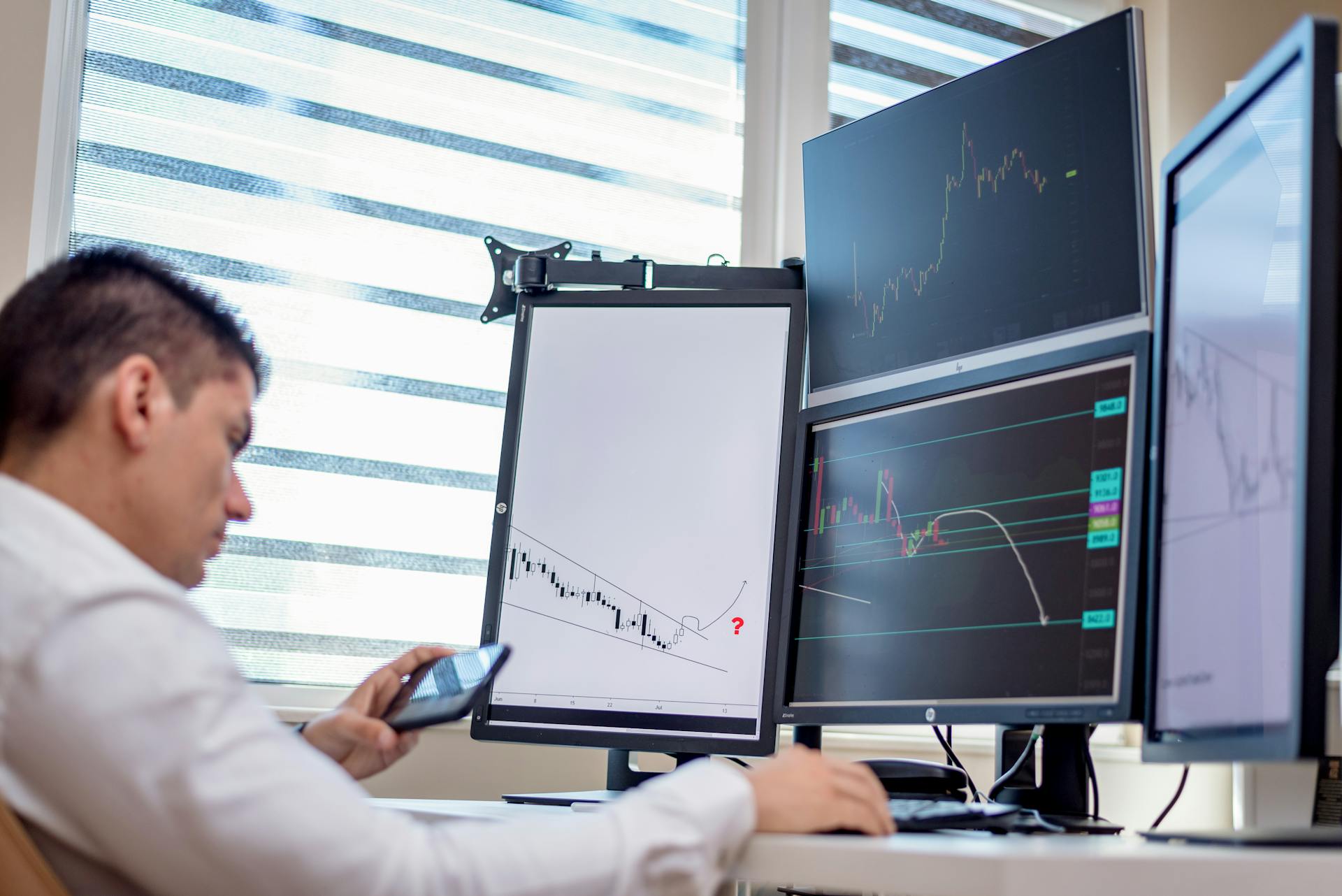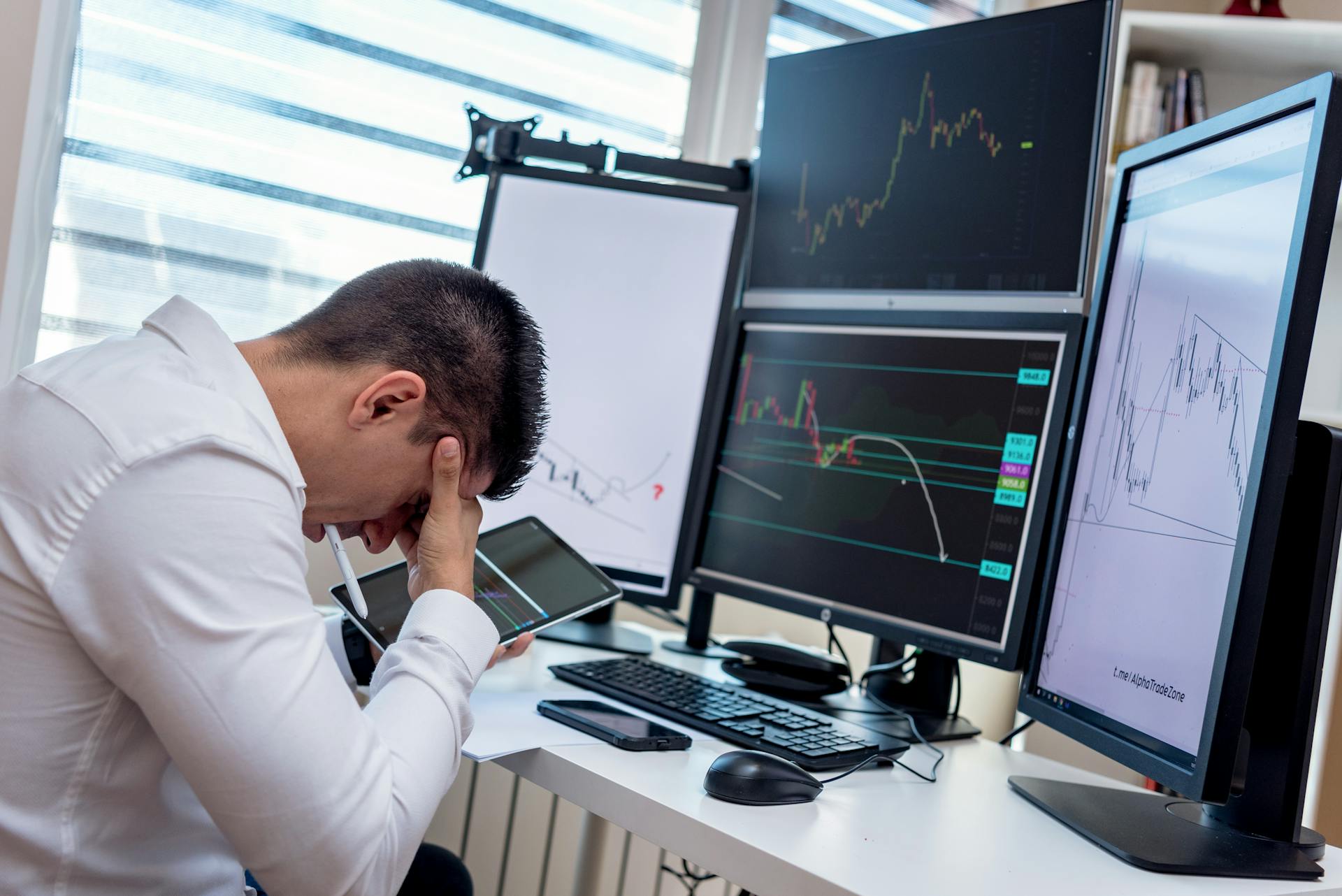
Algo trading is a way to trade financial instruments using computer programs that can make decisions faster and more accurately than humans. These programs use complex algorithms to analyze market data and make trades based on that data.
The goal of algo trading is to minimize losses and maximize profits by making trades at the right time and in the right amount. This can be achieved by using historical data to identify patterns and trends in the market.
Algo trading can be used for various financial instruments, including stocks, bonds, and currencies. It can also be used for other types of financial instruments, such as commodities and cryptocurrencies.
You might like: Placing Trades with Trading View from Tradestation
What Is Algo Trading
Algo trading, also known as algorithmic trading, is a type of trading that uses computer programs to automatically execute trades based on predefined rules and algorithms.
The use of algorithms in trading has a long history, dating back to the 1970s when computerized trading systems were introduced in American financial markets.
On a similar theme: Algo Trading Algorithms
In 1976, the New York Stock Exchange introduced its designated order turnaround system for routing orders from traders to specialists on the exchange floor.
By 2009, upward of 60% of all trades in the U.S. were executed by computers, marking a significant shift towards electronic trading.
Michael Lewis' book Flash Boys brought HFT algorithmic trading to the public's attention, highlighting the arms race among traders to build ever faster computers that could communicate with exchanges quickly.
Here's an interesting read: Forum for Stock Traders
How Algo Trading Works
Algo trading works by using a set of instructions, or rules, to automatically buy and sell stocks based on specific conditions. These conditions are usually related to technical indicators, such as moving averages.
A simple example of an algo trading rule is to buy 50 shares of a stock when its 50-day moving average goes above the 200-day moving average, and sell shares when the 50-day moving average goes below the 200-day moving average. This rule helps identify trends and automatically places trades when the defined conditions are met.
A different take: Difference between Buy Stop and Buy Limit Order
An algo trading system typically consists of three parts: data reception, data analysis, and order execution. The data reception part receives market data, such as the latest order book, traded volumes, and last traded price, from exchanges. The data analysis part analyzes the data to identify trading opportunities, and the order execution part sends the order to the exchange.
Intriguing read: Amo Order Timing in Zerodha
How Works
Algorithmic trading systems use simple instructions, like buying 50 shares of a stock when its 50-day moving average goes above the 200-day moving average, to automatically place trades.
These instructions are fed into the system and analyzed by the application side, where trading strategies are executed.
A traditional trading system has two main blocks: one receives market data and the other sends order requests to the exchange. However, algorithmic trading systems have three parts: receiving data from exchanges, analyzing it, and sending order requests.
The data received from exchanges includes the latest order book, traded volumes, and last traded price (LTP) of scrip.
A fresh viewpoint: Demat Account Definition
The system's server acts as a store for historical database and receives data simultaneously.
The application side, where trading strategies are fed from the user, can be viewed on the GUI.
Once an order is generated, it is sent to the order management system (OMS), which transmits it to the exchange.
The complex event processing engine (CEP) is the heart of decision making in algo-based trading systems, used for order routing and risk management.
With the FIX protocol in place, connecting to different destinations has become easier, reducing the go-to market time when connecting with a new destination.
The standard protocol makes integration of third-party vendors for data feeds less cumbersome.
Recommended read: Trading Advisor Selection System
Time-Weighted Average Price (TWAP)
Time-weighted average price strategy breaks up a large order and releases dynamically determined smaller chunks of the order to the market using evenly divided time slots between a start and end time.
The goal is to execute the order close to the average price between the start and end times.
For more insights, see: Spot Price vs Strike Price
This approach aims to minimize market impact by spreading out the order execution over time.
By doing so, the order is executed at a more stable price, reducing the risk of significant price movements.
The computer program should perform the following: break up the large order into smaller chunks, determine the dynamic time slots, and execute the order at the specified times.
Recommended read: Best Time to Trade Spx500
Automated System Differences
Automated trading systems are relatively simple and rely on technical indicators, whereas algorithmic trading systems are complex and involve using more sophisticated models for analysis.
Automated trading systems can only buy or sell securities when prompted by a manual signal, whereas algorithmic traders can be programmed to take advantage of market opportunities and make decisions without human intervention.
Automated trading systems tend to excel in stable market conditions, where patterns are more predictable, and deviations are minimal. This is because they follow a set of fixed rules.
Check this out: Algorithmic Trading
Algorithmic trading systems, on the other hand, can be designed to learn from historical data and adjust their strategies in response to evolving market dynamics.
Here are some key differences between automated trading and algo trading:
Automated trading systems are not as adaptable to market conditions as algo trading systems, which can adjust their strategies in response to evolving market dynamics.
Related reading: Algo Trading System
Advantages and Disadvantages
Algorithmic trading, or "algo trading" for short, has both advantages and disadvantages. One of the biggest advantages is that it can execute trades at the best possible prices, thanks to its ability to analyze vast amounts of data in real-time.
Algorithmic trading also offers low latency, meaning that trade order placement is instant and accurate, reducing the risk of significant price changes. This is especially important in today's fast-paced markets where even a fraction of a second can make a big difference.
Another advantage is that algo trading can automate simultaneous checks on multiple market conditions, reducing the risk of human error and emotional decision-making. This can lead to a more disciplined approach to trading.
A fresh viewpoint: Quantitative Trading: How to Build Your Own Algorithmic Trading Business
Here are some of the key advantages of algo trading:
However, algo trading also has its disadvantages, including the risk of complacency, complexity, and system failure. These risks can lead to significant losses or missed opportunities if not properly managed.
Pros and Cons
Algorithmic trading has several advantages that make it an attractive option for traders. It provides faster and more efficient responses to market changes and events, allowing for quicker capitalization on market opportunities.
One of the key benefits of algorithmic trading is its ability to execute trades faster than humans. According to Example 3, this speed can be attributed to the fact that algorithms can trade 24/7 without fatigue, making them more efficient than human traders.
Algorithmic trading also reduces the risk of manual errors, as computers and networks process orders with greater accuracy than humans. This is evident in Example 2, where it's stated that algorithmic trading reduces the chances of manual errors.
Additional reading: Algorithmic Trading Platforms
Another advantage of algorithmic trading is its ability to adapt to changing market conditions. As mentioned in Example 4, algorithmic trading thrives in varying market conditions, adjusting strategies to capitalize on different scenarios effectively.
However, algorithmic trading also has its disadvantages. One of the main risks is system failure, which can cause significant losses. This is highlighted in Example 5, where it's noted that technical glitches can cause losses.
Additionally, algorithmic trading can lead to over-optimization, where algorithms are optimized for historical data but fail in real-market conditions. This is also mentioned in Example 5, where it's stated that there's a risk of creating complex algorithms that fit historical data but fail in real-market conditions.
Here are some of the key advantages and disadvantages of algorithmic trading:
It's worth noting that algorithmic trading is not a one-size-fits-all solution. As mentioned in Example 6, automated trading suits simpler strategies and stable markets, while algorithmic trading excels in complexity and adapts to changing conditions.
In conclusion, algorithmic trading has both advantages and disadvantages. While it provides faster and more efficient responses to market changes, reduces manual errors, and adapts to changing market conditions, it also poses risks such as system failure, over-optimization, and liquidity issues.
Human Intervention

Automated trading systems require minimal human intervention, which can minimize emotional biases and human errors.
However, this can also mean the system might struggle in situations where human judgment is necessary, such as during unprecedented events.
Algo trading algorithms can be designed to allow for more human intervention if desired, striking a balance between automation and human oversight.
Traders can set parameters for when the algorithm should alert them or seek approval before executing a trade, giving them more control over the process.
This approach can be especially useful during unexpected market fluctuations, where human judgment is essential to making informed decisions.
Algo Trading Strategies
Algo trading strategies can be broadly classified into several categories. Trend-following strategies follow trends in moving averages, channel breakouts, price level movements, and related technical indicators, which are easy to implement through algorithms without predictive analysis.
These strategies don't require making predictions or price forecasts, making them a popular choice for algo trading. Using 50- and 200-day moving averages is a well-known trend-following strategy.
For another approach, see: What Types of Cards Sell Well for Money Making
Mathematical model-based strategies, on the other hand, use proven mathematical models like the delta-neutral trading strategy, which allows trading on a combination of options and the underlying security. This strategy involves creating a portfolio with offsetting positive and negative deltas.
Algorithmic trading can also involve more complex strategies that incorporate historical and real-time market data, news sentiment, market volatility, and more. These strategies are designed to adjust their tactics based on changing market dynamics to optimize trade execution and risk management.
See what others are reading: Day Trader Strategies
Strategies
Algorithmic trading strategies are diverse and can be categorized into various types. One common strategy is the delta-neutral trading strategy, which involves a combination of options and the underlying security to minimize risk.
Delta-neutral trading is a proven mathematical model that allows for trading on a combination of options and the underlying security. This strategy is particularly useful for managing risk and maximizing returns.
Another strategy is the mean reversion strategy, which is based on the concept that the high and low prices of an asset are a temporary phenomenon that revert to their mean value periodically. This strategy involves identifying and defining a price range and implementing an algorithm based on it.
A different take: Algo Trading Strategy
Mean reversion strategy is based on the concept that the high and low prices of an asset are a temporary phenomenon that revert to their mean value periodically. Identifying and defining a price range and implementing an algorithm based on it allows trades to be placed automatically when the price of an asset breaks in and out of its defined range.
Trend-following strategies are also popular in algorithmic trading, and they involve following trends in moving averages, channel breakouts, price level movements, and related technical indicators. These strategies are easy to implement through algorithms without getting into the complexity of predictive analysis.
The most common trend-following strategy is the use of 50- and 200-day moving averages. This strategy is popular because it is straightforward to implement and does not require making any predictions or price forecasts.
Market timing strategies are designed to generate alpha and involve using technical indicators such as moving averages, as well as pattern recognition logic implemented using finite-state machines. These strategies are typically tested through backtesting, forward testing, and live testing to ensure their effectiveness.
Backtesting is the first stage of developing a market timing strategy, and it involves simulating hypothetical trades through an in-sample data period. Optimization is then performed to determine the most optimal inputs.
For your interest: Does Robinhood Allows Api Based Trading for Stocks
Automated trading systems are relatively rigid in adapting to market conditions, whereas algo trading focuses on adaptability. Algorithms can be designed to learn from historical data and adjust their strategies in response to evolving market dynamics.
Algo trading systems can potentially perform better during periods of high volatility, sudden news events, or unusual market behavior, making them more adaptable to market conditions.
Black box algorithms are a type of algorithm that function differently than those above, and they are at the heart of debates over using artificial intelligence in finance. These algorithms are characterized by their goal-oriented approach and are often used in high-frequency trading and other advanced investment strategies.
Black box algorithms are popular in high-frequency trading and other advanced investment strategies because they can outperform more transparent and rule-based approaches.
If this caught your attention, see: Crypto Bot Trading Strategies
Scalping
Scalping is a liquidity provision strategy where traders aim to earn the bid-ask spread by quickly establishing and liquidating positions, usually within minutes or less.
Market makers, who are essentially specialized scalpers, trade in massive volumes using sophisticated systems and technology, but are bound by exchange rules that require them to post at least one bid and one ask at some price level.
Scalpers, unlike market makers, typically trade in smaller volumes and use less complex systems, but still aim to profit from the bid-ask spread.
A key aspect of scalping is the need to quickly adapt to changing market conditions, as the spread can widen or narrow rapidly.
Registered market makers, such as those on NASDAQ, are required to maintain a two-sided market for each stock represented, which can be a challenge given the fast-paced nature of scalping.
Some scalping algorithms, like "Stealth", are designed to detect algorithmic or iceberg orders on the other side of the market, giving them an edge in the trading process.
Implementation and Requirements
To implement algorithmic trading, you'll need computer programming knowledge to write the trading strategy, or you can hire programmers or use premade trading software. This is the final component of algorithmic trading, accompanied by backtesting to see if the strategy would have been profitable.
To get started, you'll need network connectivity and access to trading platforms to place orders. You'll also need access to market data feeds that the algorithm will monitor for opportunities to place orders. This is crucial for the algorithm to work effectively.
Here are the key requirements for algorithmic trading:
- Computer programming knowledge
- Network connectivity and access to trading platforms
- Access to market data feeds
- The ability and infrastructure to backtest the system
- Available historical data for backtesting
Percentage of Volume
The Percentage of Volume (POV) strategy is a key component of some trade order algorithms.
It continues sending partial orders until the trade order is fully filled, based on the defined participation ratio and the volume traded in the markets.
This strategy is often used in conjunction with a "steps strategy" that sends orders at a user-defined percentage of market volumes.
The participation rate can be increased or decreased when the stock price reaches user-defined levels.
This approach allows for more flexibility and adaptability in trading, as the algorithm can adjust its strategy based on market conditions.
Check this out: Volume in Trading Stocks
Technical Requirements
To implement algorithmic trading, you'll need to transform your strategy into a computerized process that can place orders. This requires computer programming knowledge, which can be acquired through hiring programmers or using premade trading software.
To get started, you'll need to have access to a trading account and a network connection to place orders on trading platforms. Market data feeds are also essential for monitoring opportunities to place orders.
Backtesting is a crucial step in the algorithmic trading process, allowing you to try out your strategy on historical data to see if it would have been profitable. This requires available historical data, depending on the complexity of your rules.
Here are the key technical requirements for algorithmic trading:
- Computer programming knowledge
- Network connectivity and access to trading platforms
- Access to market data feeds
- Ability and infrastructure for backtesting
- Available historical data
Low-latency trading systems, which are used by high-frequency trading firms, require ultra-low latency networks to execute trades quickly. This is measured in milliseconds, with under 1 millisecond considered ultra-low latency.
System Architecture
A traditional trading system has two primary blocks, but an algorithmic trading system is broken down into three parts.
The exchange provides market data to the system, including the latest order book, traded volumes, and last traded price (LTP) of scrip.
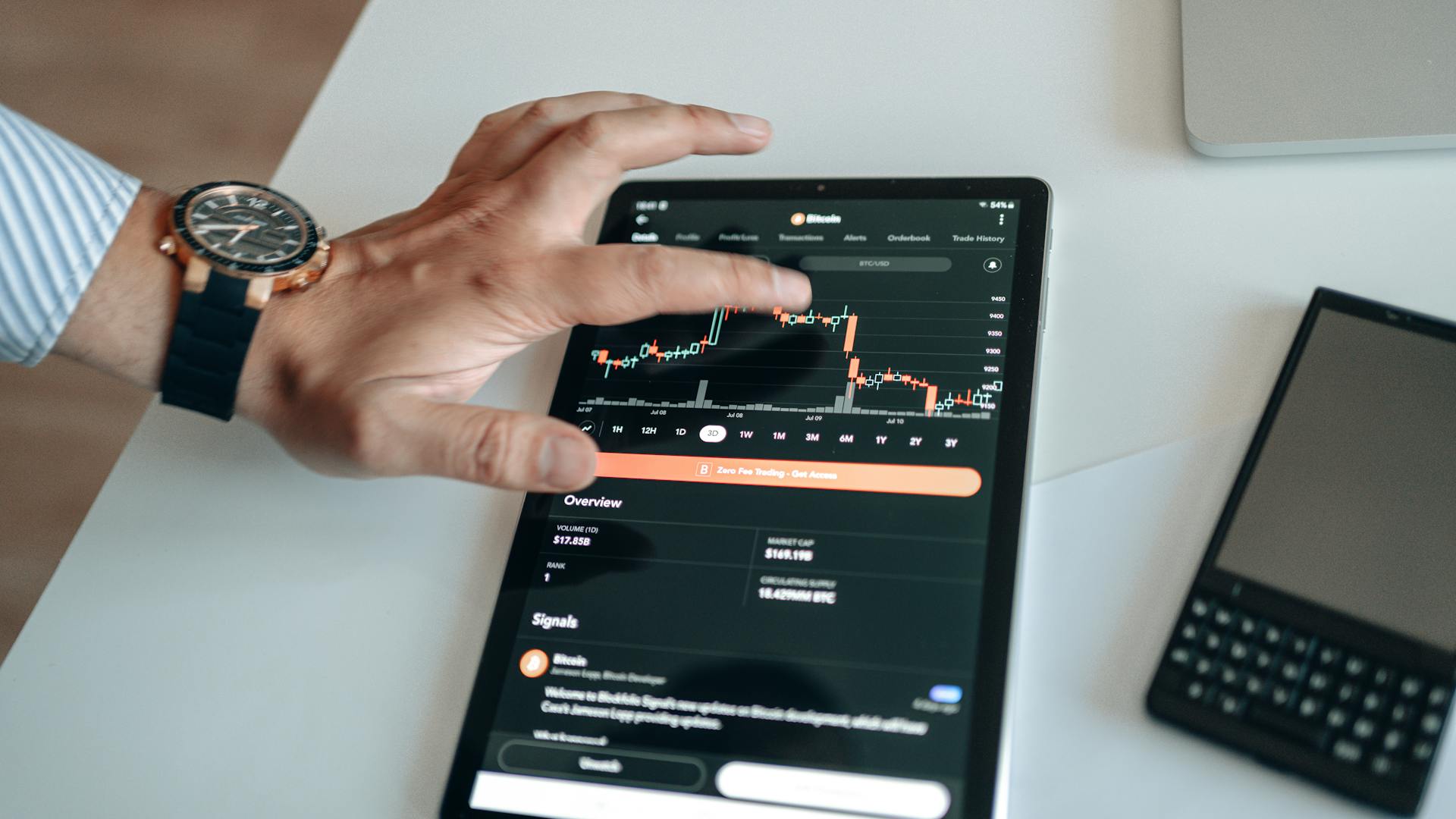
The server receives this data simultaneously and acts as a store for the historical database.
Trading strategies are fed from the user and viewed on the GUI at the application side.
The complex event processing engine (CEP) is the heart of decision making in algo-based trading systems, used for order routing and risk management.
The FIX protocol has made it easier to connect to different destinations, reducing the go-to market time when connecting with a new destination.
Integration with third-party vendors for data feeds is no longer cumbersome with the standard protocol in place.
Communication Standards
Communication Standards play a crucial role in algorithmic trading, requiring the exchange of a vast number of parameters between traders and execution systems.
Algorithmic trades involve communicating a large number of parameters, which can be overwhelming for traditional market and limit orders.
The FIX Protocol is a trade association that publishes free, open standards in the securities trading area, including the FIX language, which was originally created by Fidelity Investments.
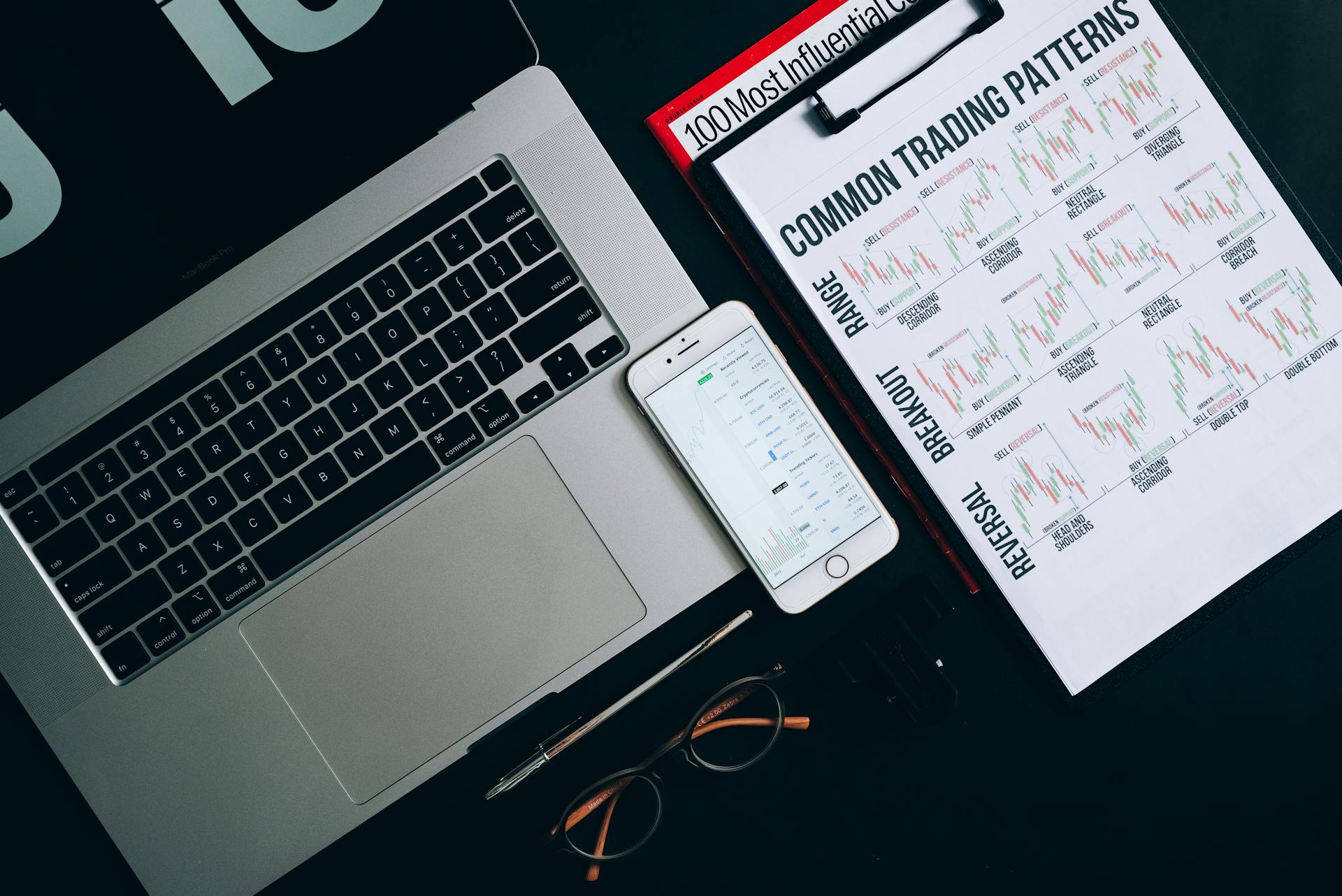
The FIX Protocol dominates standard setting in the pretrade and trade areas of security transactions, with its members including virtually all large and many midsized and smaller broker dealers, money center banks, institutional investors, mutual funds, etc.
A draft XML standard for expressing algorithmic order types was published by several FIX Protocol members in 2006-2007, called FIX Algorithmic Trading Definition Language (FIXatdl).
Open Source
Open source has transformed the world of algorithmic trading, allowing non-specialists to create tailored applications and APIs. This shift has enabled individual traders and amateur programmers to participate in what was once the domain of specialized professionals.
Hedge funds and investment firms like Two Sigma and PanAgora have leveraged this shift by crowdsourcing algorithms and releasing improvements to open-source applications. They even host competitions where amateur programmers can propose their trading algorithms, with the most profitable applications earning commissions or recognition.
The Fintech Open Source (FINOS) Foundation reported that about a quarter of financial service professionals are involved in open-source data science and artificial intelligence/machine learning platforms. This indicates a significant adoption of open-source solutions in the financial sector.
However, there may be limits to how far open-source can go in the financial sector, as two-thirds of those surveyed by FINOS worried about using open-access systems due to the need to safeguard proprietary knowledge.
Suggestion: PNC Financial Services
Benefits and Risks
Algorithmic trading can provide a more systematic and disciplined approach to trading.
It can help traders identify and execute trades more efficiently than a human trader could, and execute trades at the best possible prices.
However, algorithmic trading carries the same risks and uncertainties as any other form of trading, and traders may still experience losses.
The development and implementation of an algorithmic trading system can be quite costly, and traders may need to pay ongoing fees for software and data feeds.
It's essential to carefully research and understand the potential risks and rewards before making any decisions.
Here's an interesting read: How Do Day Traders Make Money
Is Legal
Algorithmic trading is a legitimate practice that's been around for a while. In fact, there are no rules or laws that limit the use of trading algorithms.
The law is clear on this, and investors are free to use trading algorithms to make their trades. This means that anyone can use algorithms to buy and sell securities.
The legality of algorithmic trading has been debated by some investors who claim it creates an unfair trading environment. However, there's nothing illegal about it, according to the current regulations.
Automated Benefits
Automated trading offers several benefits that can be a game-changer for traders.
One key advantage is that it's relatively simple to implement, requiring only basic programming skills. This makes automated trading accessible to a broader range of traders.
By removing emotional biases from trading decisions, automated systems ensure consistency and rationality in executing strategies. This results in a more disciplined approach to trading.
Automated trading shines in straightforward strategies where rule-based actions are effective and easy to program. It's particularly well-suited for simple trading scenarios.
In stable market conditions, automated trading tends to excel, where patterns are more predictable and deviations are minimal. This provides a stability advantage over manual trading.
Here are some key benefits of automated trading at a glance:
- Simple implementation: accessible to a broader range of traders.
- Emotion-free trading: consistency and rationality in executing strategies.
- Suitable for simplicity: straightforward strategies where rule-based actions are effective.
- Stability advantage: excels in stable market conditions.
Risks
Algorithmic trading carries the same risks and uncertainties as any other form of trading, and traders may still experience losses even with an algorithmic trading system.
The development and implementation of an algorithmic trading system is often quite costly, keeping it out of reach from most ordinary traders—and traders may need to pay ongoing fees for software and data feeds.
Consider reading: What Percent of Day Traders Lose Money
The Financial Services Authority has warned about the risk of systems failure resulting in business interruption, particularly with sophisticated technology and modeling.
In 2012, Knight Capital Group experienced a technology issue in their automated trading system, causing a loss of $440 million due to erroneous orders sent into the market.
Algorithmic and high-frequency trading have been linked to increased volatility in financial markets, as seen during the May 6, 2010 Flash Crash, when the Dow Jones Industrial Average plummeted 600 points only to recover those losses within minutes.
Other concerns include the possibility of a complete system breakdown leading to a market crash, and the technical problem of latency or delay in getting quotes to traders.
Types and Examples
Algorithmic trading, or algo trading, is a fascinating field that uses rules or instructions to make trading decisions automatically. This type of trading has been around for a while, as seen in the example of Royal Dutch Shell (RDS) being traded on the Amsterdam Stock Exchange (AEX) and the London Stock Exchange (LSE).
Worth a look: Equal Exchange
There are various types of algorithms used in financial trading, including arrival price algorithms, basket algorithms, implementation shortfall algorithms, and more. These algorithms are designed to execute trades at optimal times for the least cost-to-maximum profit ratio.
Some algorithms are specifically designed for single-stock trading, while others focus on minimizing market impact and risk. For example, arrival price algorithms aim to execute trades as close as possible to the stock price when the order was placed, while basket algorithms consider the effects on other decisions and securities in a portfolio.
Here are some common types of algorithmic trading strategies:
- Arrival price algorithms: execute trades as close as possible to the stock price when the order was placed.
- Basket algorithms: consider the effects on other decisions and securities in a portfolio.
- Implementation shortfall algorithms: aim to minimize implementation shortfall, the cost of executing an order when it differs from the decision price.
- Percentage of volume algorithms: adjust order sizes in reaction to real-time market trading volume.
- Single-stock algorithms: optimize the trade execution of a single security.
- Volume-weighted average price (VWAP) algorithms: execute orders at a price that closely matches the volume-weighted average price of the stock over a specific period.
- Time-weighted average price (TWAP) algorithms: distribute trades evenly across a set period to attain an average price mirroring the time-weighted average of the stock price.
Statistical Arbitrage
Statistical arbitrage is a type of arbitrage strategy that involves identifying deviations from statistically significant relationships between securities. This strategy can be applied to various asset classes, including stocks, bonds, and currencies.
Statistical arbitrage strategies are based on the idea that prices of related securities should move together, and deviations from this relationship can be exploited for profit. The TABB Group estimates that annual aggregate profits of low latency arbitrage strategies currently exceed US$21 billion.
A fresh viewpoint: Securities Account Control Agreement
One example of a statistical arbitrage strategy is covered interest rate parity, which involves four transactions to guarantee a risk-free profit. This strategy is based on a model that relates the prices of a domestic bond, a bond denominated in a foreign currency, the spot price of the currency, and the price of a forward contract on the currency.
Statistical arbitrage can be used to identify opportunities in various markets, including the foreign exchange market. For instance, the model can be used to identify deviations between the prices of a domestic bond and a bond denominated in a foreign currency.
The following table illustrates the types of securities that can be used in statistical arbitrage strategies:
Statistical arbitrage strategies can be complex and require stringent backtesting before they are put into action. However, the potential rewards can be significant, making it an attractive option for investors and traders.
Types
Algorithmic trading types are numerous and varied, each designed to execute trades in a specific way. Arrival price algorithms aim to execute trades as close as possible to the stock price when the order was placed.
For your interest: Currency Carry Trade
Basket algorithms, also called portfolio algorithms, execute orders while calculating the effects on other decisions and securities in a portfolio. This helps minimize risk for the portfolio as a whole.
Implementation shortfall algorithms aim to minimize the cost of executing an order when it differs from the decision price. This is crucial for traders who need to make quick decisions.
Percentage of volume algorithms adjust order sizes in reaction to real-time market trading volume. This helps balance market impact and timing.
Single-stock algorithms are designed to optimize the trade execution of a single security, considering factors like market conditions and order size. They're useful for traders who focus on a specific stock.
Here are some examples of algorithmic trading types:
- Arrival price algorithms
- Basket algorithms
- Implementation shortfall algorithms
- Percentage of volume algorithms
- Single-stock algorithms
- Volume-weighted average price (VWAP) algorithms
- Time-weighted average price (TWAP) algorithms
Risk-aversion parameters can be adjusted based on the trader's risk tolerance, making trading more or less aggressive. This is an important consideration for traders who need to balance risk and reward.
Example Of
Algorithmic trading is a complex process, but let's break it down with some examples. Royal Dutch Shell (RDS) is listed on two exchanges, Amsterdam Stock Exchange (AEX) and London Stock Exchange (LSE), which have different trading hours and currencies.

A computer program can read current market prices and identify arbitrage opportunities by comparing prices on both exchanges. This program requires price feeds from both LSE and AEX, a forex rate feed for GBP-EUR, and order-placing capability.
If a price discrepancy is detected, the program places a buy order on the lower-priced exchange and a sell order on the higher-priced exchange. This strategy aims to make a profit from the price difference.
However, this strategy is not foolproof. Prices can fluctuate rapidly, and even a brief delay can result in a loss. System failures, network connectivity errors, and imperfect algorithms can also lead to losses.
Let's look at some examples of algorithmic trading types. Arrival price algorithms execute trades as close as possible to the stock price when the order was placed. These algorithms are useful for minimizing market impact and risk.
Basket algorithms execute orders while calculating the effects on other decisions and securities in a portfolio. They consider constraints such as cash balancing, self-financing, and minimum and maximum participation rates.
Implementation shortfall algorithms aim to minimize implementation shortfall, the cost of executing an order when it differs from the decision price. Percentage of volume algorithms adjust order sizes in reaction to real-time market trading volume.
If this caught your attention, see: How Put Volume from on Subchart Thinkorswim
Single-stock algorithms are designed to optimize the trade execution of a single security, considering factors like market conditions and order size. Volume-weighted average price (VWAP) algorithms execute orders at a price that closely matches the volume-weighted average price of the stock over a specific period.
Time-weighted average price (TWAP) algorithms distribute trades evenly across a set period to attain an average price mirroring the time-weighted average of the stock price. They are employed to minimize market upheaval when putting in large orders.
Here are some examples of algorithmic trading in action:
- Buying 100 shares of Company XYZ whenever the 75-day moving average goes above the 200-day moving average.
- Executing trades as close as possible to the stock price when the order was placed.
- Calculating the effects on other decisions and securities in a portfolio.
- Adjusting order sizes in reaction to real-time market trading volume.
- Executing orders at a price that closely matches the volume-weighted average price of the stock over a specific period.
Algorithmic trading has been used in various markets, including equities, futures, and foreign exchange. In 2006, a third of all European Union and United States stock trades were driven by automatic programs.
High-Frequency Trading
High-frequency trading is a form of algorithmic trading characterized by extremely high speed and a large number of transactions. It uses high-speed networking and computing, along with black-box algorithms, to trade securities at very fast speeds.
High-frequency trading firms represent 2% of the approximately 20,000 firms operating today, but account for 73% of all equity trading volume. This shows just how significant a role HFT plays in the market.
There are four key categories of HFT strategies: market-making based on order flow, market-making based on tick data information, event arbitrage, and statistical arbitrage. All portfolio-allocation decisions are made by computerized quantitative models.
HFT firms benefit from proprietary, higher-capacity feeds and the most capable, lowest latency infrastructure, which allows them to profit from artificially induced latencies and arbitrage opportunities.
Check this out: How to Do Hft Trading
Quote Stuffing
Quote stuffing is a tactic employed by malicious traders to gain an advantage over slower market participants by flooding the market with rapidly placed and canceled orders.
These orders cause market data feeds to delay price quotes, which can be particularly problematic for ordinary investors who rely on these feeds to make informed decisions.
High-frequency traders, however, benefit from proprietary feeds and infrastructure that allows them to operate with lower latency and capitalize on the artificially induced delays caused by quote stuffing.
Researchers have shown that HFT firms can profit from these delays and arbitrage opportunities, highlighting the unfair advantage that quote stuffing can provide to these traders.
A fresh viewpoint: Limit Orders
High-Frequency
High-Frequency Trading is a form of algorithmic trading characterized by extremely high speed and a large number of transactions. It uses high-speed networking and computing, along with black-box algorithms, to trade securities at very fast speeds.
HFT firms represent 2% of the approximately 20,000 firms operating in the U.S. today, but account for 73% of all equity trading volume. This means that a small group of firms is responsible for the majority of trading activity.
High-frequency trading firms are market makers and provide liquidity to the market, which has lowered volatility and helped narrow bid–offer spreads making trading and investing cheaper for other market participants. This is a significant benefit of HFT.
The four key categories of HFT strategies are market-making based on order flow, market-making based on tick data information, event arbitrage, and statistical arbitrage. All portfolio-allocation decisions are made by computerized quantitative models.
HFT firms benefit from proprietary, higher-capacity feeds and the most capable, lowest latency infrastructure, which allows them to profit from artificially induced latencies and arbitrage opportunities.
Execution Speed
Execution speed is crucial in high-frequency trading, and it's a key area where automated traders fall behind.
Automated traders typically rely on a single source for data, which makes their execution slower due to the requirement to manually collect information before executing trades.
Algorithmic traders, on the other hand, can access multiple data sources in real-time and analyze them much faster, allowing for quick trades based on changing conditions.
This speed advantage is a direct result of algorithmic traders' ability to process and analyze large amounts of data quickly and efficiently.
As a result, algorithmic traders can execute trades much faster than automated traders, giving them a significant competitive edge in the high-frequency trading market.
On a similar theme: Fully Automated Trading Broker Tradingview
Market Making and Arbitrage
Market making involves placing limit orders to sell above the current market price or buy below it to capture the bid-ask spread. Automated Trading Desk, for example, accounted for about 6% of total volume on both NASDAQ and the New York Stock Exchange.
A unique perspective: Ibkr Pre Market
Market making is a strategy that can be applied in all asset classes, and it's a key component of high-frequency trading (HFT). In fact, the TABB Group estimates that annual aggregate profits of low latency arbitrage strategies currently exceed US$21 billion.
Arbitrage, on the other hand, is the practice of taking advantage of a price difference between two or more markets. It involves striking a combination of matching deals that capitalize upon the imbalance, with the profit being the difference between the market prices.
Arbitrage
Arbitrage is a practice that takes advantage of price differences between two or more markets, allowing traders to capitalize on the imbalance and earn a risk-free profit. This is achieved by striking a combination of matching deals that exploit the disparity in market prices.
The law of one price is temporarily violated when the same asset trades at different prices on various markets, creating arbitrage opportunities. For example, the price of stocks listed on the NYSE and NASDAQ markets may diverge from the price of S&P futures traded on the CME market.
Take a look at this: Otc Markets Penny Stocks
Arbitrage is not just about buying low and selling high; it requires simultaneous execution of long and short transactions to minimize market risk. This is typically possible with securities and financial products traded electronically.
The conditions for arbitrage involve three key factors: the same asset does not trade at the same price on all markets, two assets with identical cash flows do not trade at the same price, and an asset with a known future price does not trade at its future price discounted at the risk-free interest rate.
Here are the three conditions for arbitrage:
- The same asset does not trade at the same price on all markets.
- Two assets with identical cash flows do not trade at the same price.
- An asset with a known price in the future does not today trade at its future price discounted at the risk-free interest rate.
Statistical arbitrage involves using complex models to identify deviations from statistically significant relationships between securities, allowing traders to make informed decisions and profit from the disparities. This strategy can be applied in all asset classes and has been used by hedge funds to generate significant profits.
Market Making
Market making involves placing limit orders to capture the bid-ask spread. This is done by placing a limit order to sell above the current market price or a buy limit order below the current price on a regular and continuous basis.
Automated Trading Desk, which was bought by Citigroup in 2007, has been an active market maker. It accounted for about 6% of total volume on both NASDAQ and the New York Stock Exchange.
Issues and Developments
Algorithmic trading has been shown to substantially improve market liquidity among other benefits.
One of the main benefits of algo trading is the improvement in market liquidity, which can lead to faster and more efficient trades.
However, this improvement in productivity has been opposed by human brokers and traders facing stiff competition from computers.
Algorithmic trading has disrupted the traditional trading landscape, forcing human traders to adapt and find new ways to stay competitive.
Despite the challenges, many traders have found ways to work alongside algorithms, using their skills to interpret market trends and make informed decisions.
Featured Images: pexels.com