
Depreciation expense is a crucial part of business accounting, and Section 179 is a valuable tax deduction that can help reduce your taxable income.
The Section 179 deduction allows businesses to deduct the full cost of qualifying equipment and software purchases in the first year of use, rather than depreciating them over several years.
This can be a significant tax savings, especially for small and medium-sized businesses that invest in equipment and software to grow their operations.
For example, if you purchase a piece of equipment for $100,000, you can deduct the full $100,000 in the first year if you qualify for the Section 179 deduction.
Recommended read: How Much Does a House Depreciate per Year
What is Section 179
Section 179 property can be tangible property or computer software, as long as it's used in the active conduct of a trade or business.
To qualify, the property must also be section 1245 property, which includes assets with a recovery period of 20 years or less. However, the taxpayer can elect to treat qualified real property as section 179 property.
The property must be acquired by purchase, not lease, and it's essential to note that property described in section 50(b) is excluded from this definition, except for paragraph (2).
Curious to learn more? Check out: Taxes on Sale of Business S Corp
Eligibility and Limitations
To be eligible for the Section 179 depreciation expense, you need to understand the limitations that come with it. The maximum deduction you can take in a year is $1,040,000 for tax year 2020.
There's also a second limitation to be aware of: if you place more than $2,500,000 worth of Section 179 property into service during a single taxable year, your deduction is reduced dollar for dollar by the amount exceeding this threshold.
See what others are reading: How Much Does a Boat Depreciate per Year
Qualified Real Property
Qualified real property is any qualified improvement property described in section 168(e)(6).
To qualify, the property must be nonresidential and placed in service after the original property was first placed in service.
Roofs are considered qualified real property, regardless of the year.
However, there are dollar limits to consider. For taxable years beginning after 2009 and before 2015, the limit is $2,000,000.
For taxable years beginning after 2014, the limit is $200,000.
Expand your knowledge: How Many Years Do You Depreciate a Building
Limitations
The Section 179 deduction has some important limitations to keep in mind.
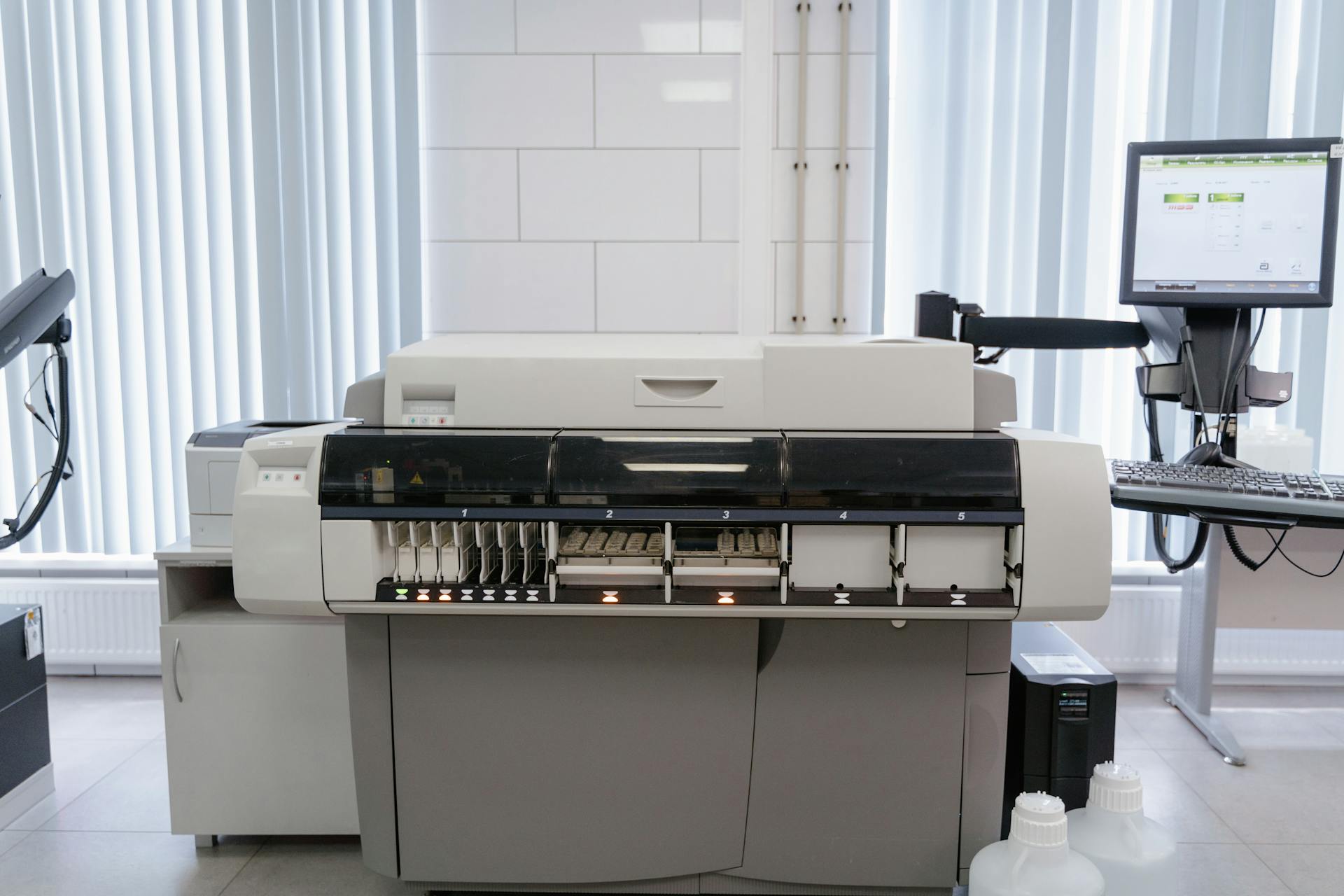
The maximum deduction a taxpayer may take in a year is $1,040,000 for tax year 2020.
If a taxpayer places more than $2,000,000 worth of section 179 property into service during a single taxable year, the § 179 deduction is reduced by the amount exceeding the $2,500,000 threshold.
A taxpayer's § 179 deduction for any taxable year may not exceed their aggregate income from the active conduct of trade or business by the taxpayer for that year.
This means if a taxpayer's net trade or business income is $72,500, their § 179 deduction cannot exceed $72,500.
The § 179 deduction not allowed for any year because of this limitation can be carried over to the next year.
In terms of qualified real property, the term means any qualified improvement property and improvements to nonresidential real property, such as roofs.
The aggregate cost of section 179 property taken into account under subsection (a) for any taxable year shall not exceed the aggregate amount of taxable income of the taxpayer for such taxable year.
On a similar theme: Foreign Investment in Real Property Tax Act
This means you can't deduct more than your business income for the year.
If you buy too much in one year, the excess is carried over to the next year.
The cost of section 179 property is computed without regard to the cost of any section 179 property for purposes of this paragraph.
This means you can't double-dip on deductions.
In the case of a partnership, the dollar limitation contained in subsection (b)(1) applies with respect to the partnership and each partner.
A similar rule applies in the case of an S corporation and its shareholders.
The Section 179 deduction starts to phase out when you buy $2,890,000 of assets in a year and is completely gone after you buy $3,500,000.
This is to ensure the deduction is only available for small businesses.
Suggestion: True Cost Accounting
Tax Deduction Considerations
If your business tax rate is high, taking the Section 179 deduction can save you a significant amount of money in taxes. You can deduct up to 80% of the purchase price of eligible equipment, which can be a huge relief for small businesses.

For example, if your business tax rate is 35 percent and you buy $200,000 of equipment, you can save $56,000 in taxes by using the 179 deduction. This is a much better option than spreading the tax break over several years.
On the other hand, if your current business tax rate is low and you expect to owe more in the future, it might make sense to skip the 179 deduction and use the regular depreciation schedule instead. This way, you can delay the deduction for buying the equipment later when it will save you more in taxes.
The 179 deduction starts to phase out when you buy $2,890,000 of assets in a year and is completely gone after you buy $3,500,000. This limit is in place to ensure the deduction is only available for small businesses.
See what others are reading: Depreciate Machinery
Treatment and Carryover
The amount you can deduct under Section 179 is subject to certain carryover rules. If you've had deductions disallowed in prior years, you can add those amounts to your current deduction.
The total amount of deductions you can carry over is the lesser of the aggregate amount disallowed in prior years or the excess of your taxable income over your current deduction. This can add up to a significant amount.
For example, if you had $800,000 in deductions disallowed in prior years, that's the maximum amount you can carry over.
A unique perspective: Over How Many Years Is a Commercial Property Depreciated
Treatment as
Treatment as expenses is a great way to save on taxes. According to the tax code, a taxpayer may elect to treat the cost of any section 179 property as an expense that's not chargeable to capital account.
This allows the taxpayer to deduct the cost in the same year the property is placed in service. For example, if a business purchases a new piece of equipment, they can choose to write off the entire cost as an expense, rather than depreciating it over time.
The cost treated as an expense is allowed as a deduction for the taxable year in which the section 179 property is placed in service. This can provide a significant tax savings for businesses, especially those with high upfront costs for equipment or property.
For another approach, see: What Is Prior Year Accumulated Depreciation
Carryover of Disallowed Deduction
The carryover of disallowed deduction can be a bit tricky to understand, but it's essential for business owners to grasp its implications.
For taxable years beginning after 2007 and before 2010, the disallowed deduction is capped at $800,000.
The carryover of disallowed deduction is calculated by adding the aggregate amount disallowed under a certain condition for all prior taxable years to the amount allowable as a deduction for the current year.
To calculate the carryover, you need to determine the lesser of two amounts: the aggregate amount disallowed or the excess of the limitation over the amount allowable as a deduction without regard to the carryover.
This carryover rule can help you maximize your deductions and reduce your tax liability in future years.
A different take: Are Land Improvements Depreciated over 15 Years
Examples and Exceptions
You might be surprised to learn that claiming 179 depreciation expense isn't always the best move. If you've invested heavily in building improvements that are eligible for bonus depreciation as QIP and plan to sell the building in the near future, you may be stepping into a tax trap by claiming the QIP write-off.
You might enjoy: Can Building Improvements Be Depreciated
This is because your gain on the sale – up to the amount of bonus depreciation or Sec. 179 deductions you've claimed – will be treated as "recaptured" depreciation that's taxable at ordinary-income tax rates as high as 37%.
If you deduct the cost of QIP under regular depreciation rules (generally, over 15 years), any long-term gain attributable to those deductions will be taxable at a top rate of 25% upon the building's sale.
You should also consider the 199A deduction, which allows eligible business owners to deduct up to 20% of their qualified business income (QBI) from certain pass-through entities. Claiming bonus depreciation or Sec. 179 deductions reduces your QBI, which may deprive you of an opportunity to maximize the 199A deduction.
Here are some key points to consider:
Frequently Asked Questions
How do I record a Section 179 expense?
To record a Section 179 expense, claim the deduction on Part I of Form 4562 by describing the property, its cost, and the deduction amount on Line 6. You can also attach a list if additional space is needed.
Featured Images: pexels.com